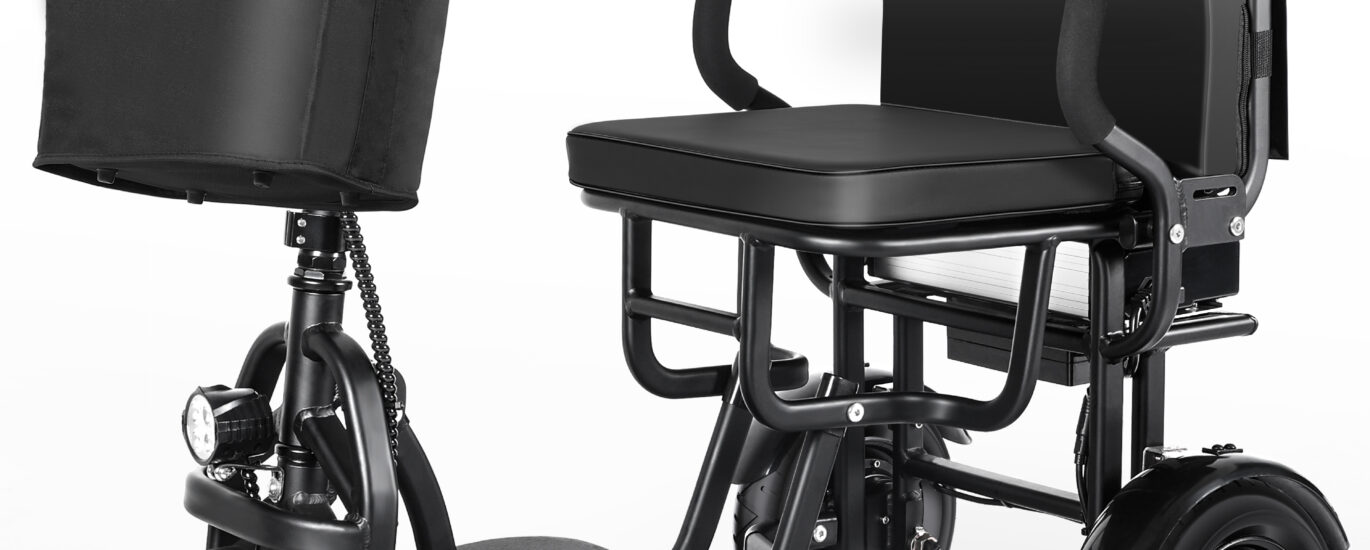
A folding mobility scooter can make a weekend road trip much easier, but bringing one along is more than a matter of putting it in the trunk. You need to think about how much space it takes when folded, how it will be lifted, where it will be charged, how far you expect to ride, and what surfaces you will encounter at your destination.
The easiest way to plan a folding mobility scooter road trip is to treat the scooter as part of your transportation plan rather than another piece of luggage.
That means checking the car, hotel, destinations, battery, and daily routes before you leave.
What to Plan Before a Folding Mobility Scooter Road Trip
A weekend trip usually involves more than one type of mobility situation.
You might drive for several hours, stop at a roadside attraction, walk through a visitor center, eat at a restaurant, shop downtown, and spend the night at a hotel. The scooter needs to fit into all of those situations.
Before leaving home, check:
- Your vehicle’s cargo opening and usable storage space
- The scooter’s folded dimensions
- The actual weight you need to lift
- How the battery should be transported and charged
- The scooter’s expected range under real conditions
- Hotel entrance, elevator, and room access
- Sidewalks, parking areas, ramps, and other surfaces at your destination
- Where the scooter can be stored overnight
- What you will do if the scooter develops a problem
This planning may take a little extra time, but it can prevent the most frustrating problems from appearing after you are already on the road.
1. Start With the Car, Not the Destination
One of the easiest mistakes is checking whether a scooter folds without checking whether the folded scooter actually fits your vehicle alongside everything else.
A trunk may have plenty of overall volume but still have a narrow opening. The rear seats may also need to accommodate passengers, while suitcases, groceries, and other belongings compete for the remaining space.
Before the trip, measure:
- Cargo-area length
- Cargo-area width
- Cargo-area height
- Trunk or hatch opening
- Available space with the rear seats in their normal position
- Space remaining after packing your luggage
If possible, do a practice load.
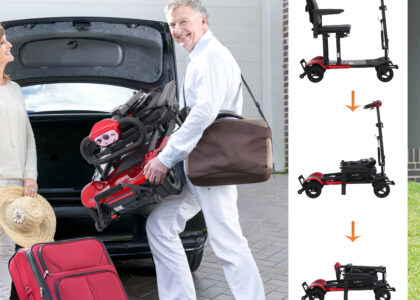
Put the scooter in the vehicle exactly as you expect to transport it, then add the luggage. This is much more useful than relying only on the vehicle’s advertised cargo capacity.
Don’t Forget the Lifting Weight
A scooter can be compact when folded and still be difficult for one person to lift.
Look at the actual lifting weight, not just the manufacturer’s description of the scooter as portable.
If the scooter separates into components, check how those components are removed and how much each piece weighs. This can make a meaningful difference for someone who has limited lifting strength.
A person traveling alone may have very different requirements from two people who can load the scooter together.
2. Pack the Scooter Like Equipment, Not Luggage
Once the scooter is folded, it can be tempting to treat it like another suitcase.
That is not a great idea.
Heavy luggage can press against controls or other components, while loose items can shift during the drive. Position the scooter where it is protected from being crushed or struck by other bags.
A simple road-trip checklist can include:
- Scooter
- Key
- Battery, if removable
- Correct charger
- User manual or important specifications
- Manufacturer-recommended accessories
- Basic manufacturer-recommended spare items
- Phone and emergency contact information
Don’t automatically pack every accessory you own. Focus on the items you are actually likely to need.
If the battery is removable, follow the manufacturer’s instructions for removing, transporting, storing, and charging it. Battery handling requirements can differ between scooter models.
3. Think About the Drive in Terms of Your Energy
A long drive can make it easy to focus entirely on the car’s fuel or charging needs.
For a mobility scooter user, the more useful question may be: Where can I stop without creating another long walk?
A rest stop with a distant parking area, a large service station, or a busy roadside attraction may require more walking than expected.
Plan stops around your comfort and mobility needs, not just the vehicle’s range.
This can also help when traveling with family members. Instead of waiting until someone is already tired, build reasonable breaks into the itinerary.
4. Roadside Attractions Can Be Less Accessible Than They Look
The first stop on a weekend trip may be a small attraction, scenic viewpoint, historic site, or visitor center.
From the road, it may look like a short walk from the parking area.
The actual route can be very different.
Parking may be farther away than expected. The path may include uneven pavement, gravel, a slope, or a narrow entrance. A viewpoint may also require traveling farther than the initial parking area suggests.
This is why checking the actual route from parking to the destination can be more useful than simply checking whether a location describes itself as accessible.
If an attraction provides an accessibility map or route information, review it before the trip.
5. Check the Hotel Before Booking
Hotel accessibility is another area where a little planning can prevent problems.
A hotel may have an accessible entrance but still be inconvenient for someone traveling with a folding mobility scooter.
If the hotel website does not answer these questions, contact the property directly.
You do not need a large storage area. For a folding scooter, the more important question is whether the folded device can be stored safely without blocking a doorway or creating a trip hazard.
6. Use the Scooter Before You Are Exhausted
One useful change in approach is not waiting until your legs are already tired.
Imagine a visitor center with several long corridors and exhibits. The distance might not seem significant when you first arrive. After an hour of walking, however, the return trip can feel very different.
Using the scooter earlier can help conserve energy for the rest of the day.
7. Check the Surfaces Along Your Route
A folding mobility scooter may work well on a smooth sidewalk but feel very different on uneven pavement.
At your destination, look for:
- Cracked sidewalks
- Loose gravel
- Grass
- Steep slopes
- Wet surfaces
- Narrow pathways
- Steps
- Uneven transitions
- Crowded pedestrian areas
A route that looks short on a map is not necessarily an easy route for a mobility scooter.
8. Plan Charging Into the Trip
Charging is easy to overlook because it happens while you are doing something else.
After a full day of sightseeing, it is tempting to leave the scooter in the room and deal with charging later.
A better approach is to make overnight charging part of your normal routine.
The scooter’s advertised range should also be treated as a planning reference rather than a guaranteed distance. Actual performance can vary with factors such as rider weight, terrain, speed, temperature, battery condition, and riding conditions.
For that reason, avoid planning a full day around using every available mile of theoretical range.
If the next day’s itinerary involves several attractions, start the day with enough charge to cover the planned riding plus a reasonable reserve.
9. Build the Second Day Around the Places You Actually Need to Reach
After the first day, you will usually have a better understanding of how much riding the trip requires.
Use that information.
For example:
- At a shopping area, check the distance from parking to the entrance.
- At a museum, consider the length of the interior route.
- At a restaurant, look at the entrance and sidewalk conditions.
- At a hotel, consider the distance between parking, elevator, and room.
- At an outdoor attraction, check the surface and slope before committing to a route.
This is more useful than simply asking whether a destination is “scooter friendly.”
The important question is whether your planned route through that destination works for your scooter and your mobility needs.
10. Don’t Forget Weather
Weather can change a mobility plan quickly.
Rain can make surfaces slippery. Hot or cold temperatures may affect battery performance. Poor visibility can also make an outdoor route less practical.
Check the forecast before leaving and again during the trip.
If severe weather is expected, have an alternative activity that requires less outdoor travel. A flexible itinerary is often easier than trying to force the original plan when conditions have changed.
11. Have a Simple Backup Plan
A road trip does not need an elaborate emergency kit, but it is worth thinking about what happens if the scooter cannot be used.
Keep important contact information available and carry any basic backup items recommended by the manufacturer.
Folding Mobility Scooter Road Trip Checklist
Before leaving home, run through this checklist.
Vehicle
- Measure the cargo opening.
- Measure usable cargo space.
- Include passengers and luggage.
- Practice loading the scooter.
- Make sure the scooter is protected from shifting luggage.
Scooter
- Confirm the folded dimensions.
- Confirm the actual lifting weight.
- Understand how removable components are handled.
- Pack the key and charger.
- Bring manufacturer-recommended items.
Battery
- Follow the manufacturer’s transport instructions.
- Know where you will charge overnight.
- Start with an adequate charge.
- Leave a reasonable range reserve.
- Check destination-specific battery restrictions when applicable.
Destination
- Check parking.
- Check entrances and doorways.
- Check elevators.
- Look at sidewalks and other surfaces.
- Consider slopes, gravel, grass, and wet areas.
- Check hotel storage and charging arrangements.
Daily itinerary
- Estimate the amount of riding you will actually do.
- Avoid packing too many distant stops into one day.
- Leave extra time for parking and access.
- Plan rest stops around your mobility needs.
Which Folding Scooter Makes Sense for a Weekend Road Trip?
There is no single scooter configuration that works for every road trip.
The right fit depends on how you will transport and use it.
For example, someone living in a small apartment and frequently loading a scooter into a car may place a high value on light weight, compact folding, and easy transportation. Someone who expects to use the scooter for regular outdoor activities may place more emphasis on the balance between portability and everyday use.
Within TopMate’s range, the positioning can be thought of this way:
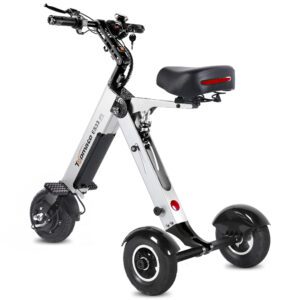
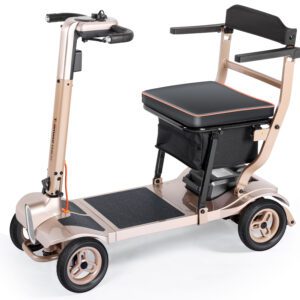
- TopMate ES15: A lightweight, portable option suited to small spaces, frequent transportation, and travel-oriented use.
- TopMate ES35: Focused on everyday use while maintaining portability and outdoor capability.
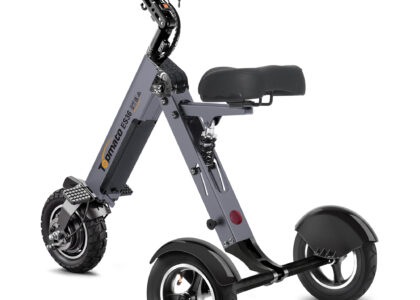
- TopMate ES36: More oriented toward everyday use where comfort and stability are important considerations.
- TopMate ES40: Travel-focused, with compact folding and transportation in mind for vacations, cruises, and longer-distance travel situations.
These are starting points for comparison, not automatic recommendations. Before choosing a model, compare its verified specifications with your vehicle, lifting ability, storage space, planned routes, and expected daily use.
What I Would Do Differently Next Time
The biggest lesson from a weekend road trip is simple: the scooter should be planned as part of the journey, not packed at the last minute.
Before leaving, I would practice loading it into the vehicle, confirm where the luggage will go, check the hotel route, look at the surfaces around the main attractions, and decide where overnight charging will happen.
I would also avoid planning the itinerary too tightly.
A weekend trip is easier when there is enough time to park, unload, get through an entrance, take a break, and change plans if a route turns out to be unsuitable.
A folding mobility scooter can make longer trips much more manageable, but the benefit comes from matching the scooter to the actual journey. Vehicle space, lifting weight, battery planning, destination access, and route conditions matter just as much as the fact that the scooter folds.
FAQ
Can I take a folding mobility scooter on a weekend road trip?
Yes. A folding mobility scooter can be practical for a road trip when its folded size, lifting weight, battery setup, and expected range fit the vehicle and itinerary. The most important preparation is confirming that the scooter fits alongside passengers and luggage and that you have a plan for charging and storage.
How do I transport a folding mobility scooter in a car?
Measure the vehicle’s cargo opening and usable storage area, then compare those measurements with the scooter’s folded dimensions. Practice loading it before the trip and protect it from heavy or shifting luggage. If the battery or other components are removable, follow the manufacturer’s transportation instructions.
Should I charge my mobility scooter every night during a trip?
If overnight charging is permitted and practical, charging after a full day of use can help you start the next day with an adequate battery level. Do not assume the advertised maximum range will always be achieved. Terrain, rider weight, temperature, speed, battery condition, and riding conditions can affect actual range.
What should I check at a hotel when traveling with a folding mobility scooter?
Check the entrance, elevator, room doorway, parking access, storage space, and a suitable place to charge the scooter. A hotel can have an accessible entrance while still requiring a long or difficult route from parking to the room, so checking the complete route is useful.