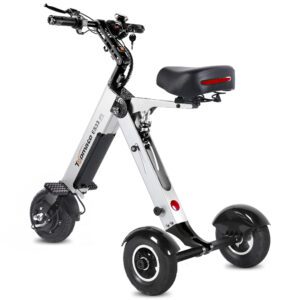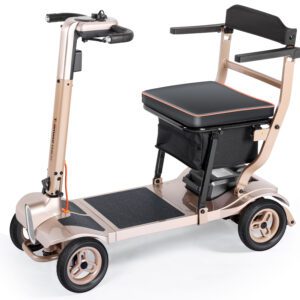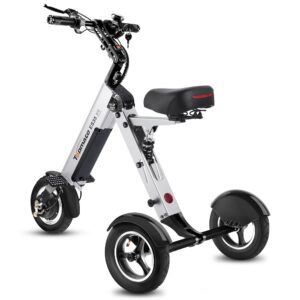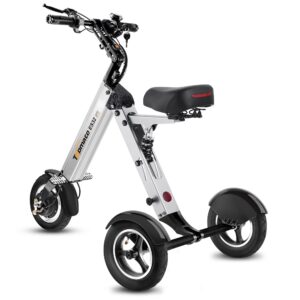
Yes, you can generally use a mobility scooter in an elevator if the scooter fits through the elevator doorway and there is enough interior space to position it safely. The key measurements are the scooter’s width and length, elevator door width, interior floor space, and room needed to maneuver.
The easiest mistake to make is checking only whether the scooter can fit through the doors. A scooter may clear the entrance but still be difficult to position inside a small elevator.
If you live in an apartment, regularly visit medical offices, shop in multi-level buildings, or use elevators while traveling, it is worth checking these measurements before relying on a particular elevator.
What Actually Matters When Using a Mobility Scooter in an Elevator?
Four measurements usually tell you whether the combination will work:
- Elevator door width: The opening needs to be wider than the scooter, with enough clearance to avoid catching the frame or door.
- Elevator interior dimensions: Once inside, you need enough floor space for the scooter to sit without blocking the doors.
- Scooter length and turning ability: A longer scooter can be harder to reposition in a compact elevator.
- Available passenger space: Even a correctly sized scooter may not be practical when several people are already inside.
The scooter’s unfolded dimensions are what matter here. Folded dimensions are useful for storage and car transportation, but they do not tell you whether you can ride the scooter into an elevator.
For someone comparing scooters specifically for apartment living, a compact folding design can make everyday transportation easier because the scooter takes up less space when it is not being ridden.
How Do You Measure an Elevator Before Taking Your Scooter Inside?
If you use the same building regularly, measuring once can save a lot of trial and error.
Measure the elevator doorway at its usable opening rather than relying only on the advertised elevator size. Then check the interior floor dimensions. Pay particular attention to the distance between the doors and the opposite wall.
Next, measure your scooter at its widest and longest points when ready to ride.
A simple comparison looks like this:
| What to measure | Why it matters |
|---|---|
| Elevator door width | Determines whether the scooter can enter comfortably |
| Scooter overall width | Shows how much doorway clearance is available |
| Elevator interior depth | Helps determine how far the scooter can sit inside |
| Scooter overall length | Affects positioning and turning |
| Space near the doors | Prevents the scooter from interfering with door operation |
| Turning space | Determines whether repositioning is possible |
Do not assume that a scooter advertised as “compact” will fit every elevator. Compact is a relative description; the actual dimensions are what matter.
How Should You Enter an Elevator on a Mobility Scooter?
Approach the elevator slowly and squarely. Wait for the doors to open completely before moving forward.
Keep your speed low as you cross the threshold. Avoid turning sharply while entering, especially if the doorway is narrow.
Once inside, position the scooter so that it does not interfere with the doors. If there is limited room, make small steering adjustments rather than trying to make a large turn.
If other passengers are waiting, give them enough time to enter or exit without having to squeeze around the scooter.
When the elevator reaches your floor, wait until the doors are fully open. Look at the space outside before moving. A narrow hallway, doorway, ramp, curb, or uneven surface immediately outside the elevator can require more attention than the elevator ride itself.
What If You Cannot Turn Around Inside the Elevator?
You do not necessarily need to turn around inside an elevator.
In a small elevator, you may be able to enter facing forward and leave by reversing carefully, depending on your scooter’s controls, visibility, and the available space. Some riders may instead position the scooter at an angle if the elevator permits it.
The important point is to know what maneuvering method works for your specific scooter and elevator before you are in a crowded building.
If reversing is uncomfortable or difficult, an elevator with more interior space may be a better option.
This is one reason turning radius and steering control can matter for indoor use, even though they receive less attention than battery range.
Can a Folding Mobility Scooter Make Elevator Use Easier?
A folding mobility scooter can be useful in buildings where space is limited, but folding capability does not automatically mean the scooter can be ridden into a small elevator.
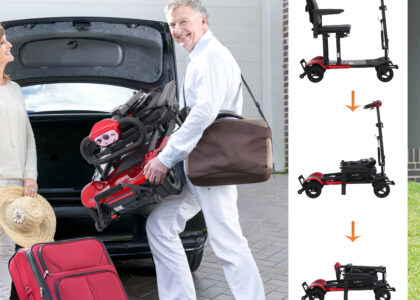
Some folding scooters are designed primarily for transportation and storage. Their advantage may be that they can be folded and placed in a car, stored in an apartment, or taken into another space when not being ridden.
For example, someone living in a small apartment may ride the scooter to an elevator, use the elevator to reach the lobby, and then fold the scooter for transportation in a vehicle.
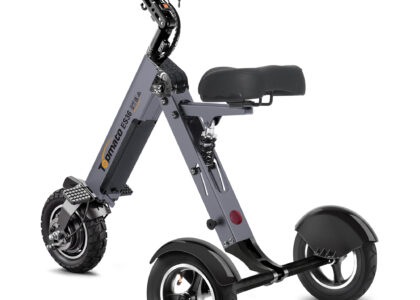
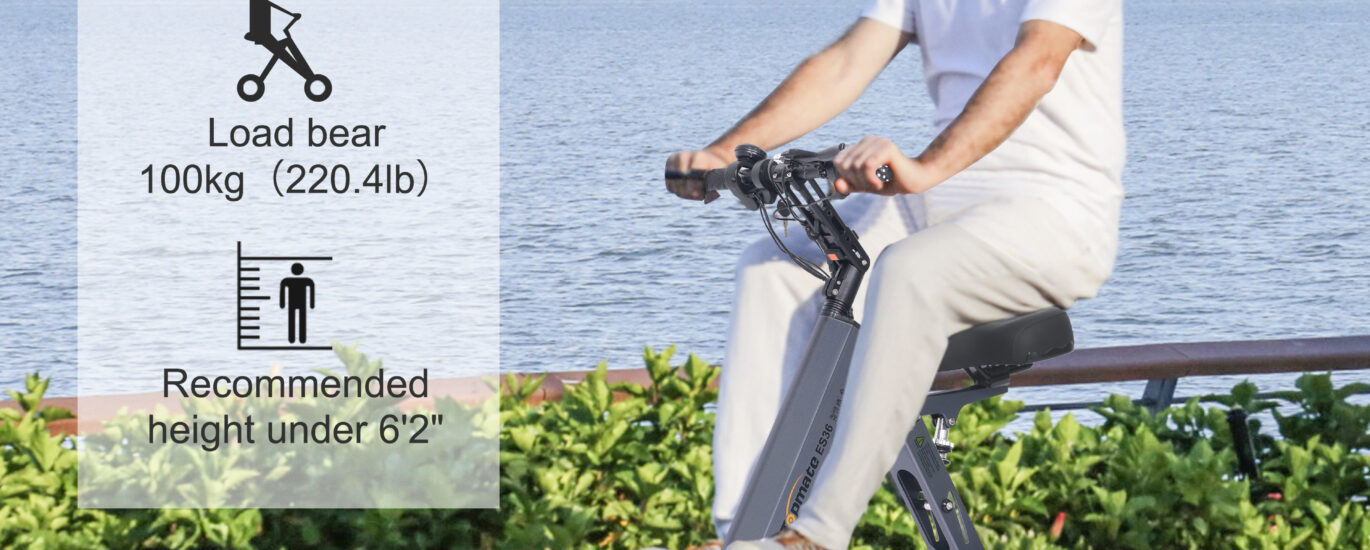
TopMate’s models illustrate different use cases. The ES15 is positioned around lightweight portability and frequent transportation, while the ES35 is intended to balance portability with everyday use. The ES36 places more emphasis on everyday comfort and stability. The ES40 is more travel-focused, with compact folding and transportation in situations such as vacations and cruises.
Those differences matter more when the scooter will also be stored or transported. For elevator access itself, the deciding factor remains the scooter’s actual dimensions and how easily you can maneuver it.
What About a Crowded Elevator?
A crowded elevator can change an otherwise simple trip.
If there is only enough room for the scooter but not enough space for passengers to move safely, waiting for the next elevator may be more practical.
When entering a busy elevator:
- Move at walking speed.
- Make sure passengers can see where you are going.
- Avoid blocking the doorway.
- Position the scooter away from the doors when possible.
- Keep your controls steady while the elevator is moving.
- Allow passengers to exit before you move toward the doorway.
There is no benefit to rushing into an elevator just because the doors are open. Waiting for a little more space can make the entire trip easier.
What If the Elevator Has a Narrow Door but a Large Interior?
This situation can be surprisingly common.
The elevator may have plenty of interior space but a relatively narrow entrance. In that case, the doorway becomes the limiting factor.
Approach the entrance as straight as possible and leave enough clearance on both sides. If the scooter barely fits through the opening, repeated use could become frustrating even if there is plenty of room once you are inside.
For frequent elevator users, a scooter with a narrower overall width may therefore be more practical than a larger model with similar features.
Common Mistakes to Avoid
Checking only the elevator doorway.
A scooter can fit through the entrance but still be difficult to position inside.
Using folded dimensions.
If you are riding the scooter into the elevator, compare its unfolded dimensions.
Ignoring the space outside the elevator.
The destination floor may have a narrow corridor, doorway, ramp, or uneven surface.
Assuming every elevator works the same way.
Buildings have different elevator layouts and operating conditions.
Trying to force the scooter into a crowded elevator.
If there is not enough room to position the scooter without obstructing passengers or doors, wait.
Relying on general accessibility assumptions.
An accessible building does not necessarily mean that every mobility scooter will fit every elevator. The actual dimensions still matter.
A Simple Elevator Check Before You Travel
If you are visiting an unfamiliar building, you do not need a complicated calculation.
Check these five things:
- Can the scooter clear the elevator doorway?
- Can it fit inside without touching the doors?
- Can you position or reverse it safely?
- Will passengers still have enough room?
- Can you exit safely onto the next floor?
If the answer is yes to all five, the elevator is much more likely to be practical for your scooter.
For regular destinations such as an apartment building, workplace, shopping center, or medical facility, it is worth measuring the elevator and keeping those dimensions with your scooter information.
The Bottom Line
A mobility scooter can generally be used in an elevator when the doorway, interior space, scooter dimensions, and maneuvering requirements are compatible.
The most useful measurement is not simply whether the scooter fits through the door. You also need enough room to position it without blocking the doors and enough control to enter and exit safely.
For everyday elevator use, think beyond maximum range or battery size. Width, length, maneuverability, and practical indoor dimensions can have a much bigger impact on whether the scooter works comfortably in your building.
FAQ
Can a mobility scooter fit in a standard elevator?
It depends on the scooter and the elevator. Compare the scooter’s unfolded width and length with the elevator doorway and interior floor dimensions. A scooter may fit through the doorway but still be difficult to position in a small elevator.
Do I need to fold my mobility scooter before using an elevator?
Not necessarily. Many scooters can be ridden directly into an elevator if there is enough space. Folding may be useful when the scooter is designed to be transported or stored rather than ridden into a particularly small space.
Can I reverse a mobility scooter out of an elevator?
Yes, if your scooter provides adequate control and visibility and there is enough space to reverse safely. Practice the maneuver in a familiar location if you expect to use small elevators regularly.
What mobility scooter dimensions matter for elevator use?
The most important dimensions are the scooter’s overall width and length when unfolded. You should also consider turning or maneuvering ability because an elevator may provide enough doorway clearance but not enough room to reposition a longer scooter.