A mobility scooter can handle your daily route when its range, width, turning radius, ground clearance, weight capacity, hill-climbing ability, and terrain capability match the conditions you actually encounter. The easiest way to check is to map your regular journey from storage at home to your destination and compare each part of the route with the scooter’s specifications.
A scooter that looks suitable on paper may still be awkward to use if it cannot clear a doorway, turn comfortably on a sidewalk, manage a hill, or make the return trip with enough battery remaining.
Start With Your Route, Not the Scooter
Before comparing models, think about the journey you make most often.
It might look something like:
Home → doorway → sidewalk → uneven pavement → small hill → road crossing → grocery store → parking area → home
Break that journey into sections. Each section creates a different requirement.
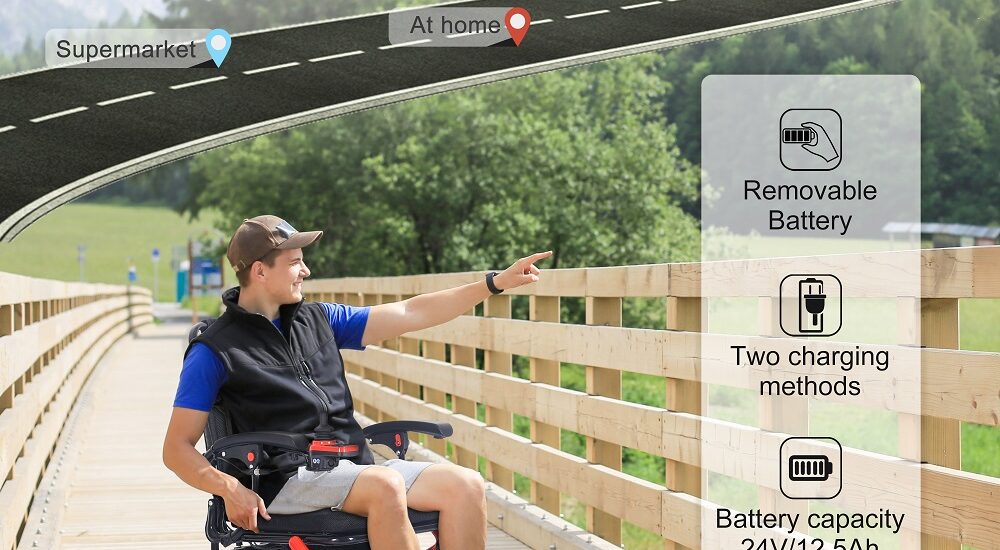
For example, a 4-mile round trip does not automatically become an easy trip just because a scooter is advertised with a 10-mile range. Hills, rider weight, cargo, frequent stops, speed, temperature, tire condition, battery age, and rough surfaces can all affect practical range.
That is the basis of a useful route audit.
The Daily Route Checklist
| Route section | What to check | Scooter specification |
|---|---|---|
| Home entrance | Narrowest doorway and turning space | Overall width, turning radius |
| Sidewalk | Usable width and obstacles | Width, turning radius |
| Uneven pavement | Cracks, transitions, gravel, grass | Ground clearance, tires, suspension |
| Hill | Steepest section and surface | Hill-climbing capability |
| Road crossing | Distance, slope and surface | Speed, braking, stability |
| Store | Aisle and turning space | Width, turning radius |
| Parking area | Potholes, slopes and loose surfaces | Ground clearance, traction |
| Return journey | Total distance and remaining charge | Practical battery range |
You do not need to measure every inch of your neighborhood. Focus on the parts of the route most likely to create a problem.
1. Measure the Narrowest Doorway at Home
Start where the scooter will be stored.
Measure the narrowest usable doorway, not simply the front entrance. Include interior doors, exterior doors, gates, and any passage the scooter must use.
For example, a 30-inch doorway and a 27-inch-wide scooter leave approximately 3 inches of total clearance. That may be enough, but the usable space can feel smaller when you have to approach the doorway at an angle or avoid the frame.
Storage matters too. A scooter may fit through the entrance but still be difficult to position, fold, or charge once inside.
Check:
- Narrowest doorway
- Hallway width
- Storage footprint
- Space needed to turn
- Location of the charging outlet
For an apartment resident, this can matter more than maximum outdoor range. A scooter that is easy to store and move through the building may be more practical than one with specifications that are unnecessary for the route.
2. Look at Usable Sidewalk Width
Measure the part of the sidewalk you can actually use.
A path may appear wide until you encounter:
- Utility poles
- Trash bins
- Parked vehicles
- Mailboxes
- Landscaping
- Street furniture
- Other pedestrians
A 26-inch-wide scooter may technically fit on a 36-inch path, but frequent obstacles can make the route much harder to navigate.
Turning space is equally important. Consider where you need to turn into a driveway, avoid an obstacle, enter a building, or turn around.
If there is one particularly tight corner on your regular route, measure that area rather than relying only on the width of the straight path.
3. Check the Roughest Surface
A short route can still be demanding.
Cracked sidewalks, uneven paving, gravel, grass edges, curb transitions, and potholes can create more difficulty than a smooth road.
Look at the scooter’s:
- Ground clearance
- Tire design
- Wheel configuration
- Suspension
- Manufacturer guidance for outdoor surfaces
Do not assume that having suspension automatically makes a scooter suitable for every rough surface. The important question is whether the scooter is designed for the particular conditions you encounter.
If your route includes a raised transition or obstacle, compare its size with the manufacturer’s stated guidance. Avoid treating a measurement as permission to cross an obstacle if the manufacturer does not say the scooter is suitable for it.
4. Measure the Steepest Hill
“There’s a small hill near my house” is not precise enough when comparing scooters.
If possible, find the approximate grade of the steepest section. A mapping tool, smartphone measurement tool, or physical measurement can help.
Then compare that grade with the manufacturer’s hill-climbing specification.
For example, if your route includes a 6% grade, a scooter’s published climbing capability gives you a reference point. It is not a guarantee that every rider will experience identical performance.
Real-world climbing can also be affected by:
- Rider and cargo weight
- Battery charge
- Wet or loose surfaces
- Tire condition
- Frequent stopping and starting
- Temperature
If a hill is one of the most difficult parts of your route, give it more attention than a long stretch of flat pavement.
5. Treat a Road Crossing as Its Own Route Section
At a road crossing, top speed is only one consideration.
Measure the approximate crossing distance and look at the surrounding conditions. Do you have enough space to stop safely?
A 40-foot crossing may take longer than expected if you slow down, stop, or need to negotiate a transition.
Braking, steering control, visibility, stability, and local traffic rules all matter.
Always use designated crossings where available and follow the traffic and accessibility rules that apply in your location.
6. Check Whether the Scooter Works Inside Your Destination
The route does not end when you reach the grocery store, pharmacy, shopping center, or other destination.
A scooter that feels comfortable outdoors may be less convenient inside a building.
Check:
- Entrance width
- Automatic door clearance
- Aisle width
- Checkout area
- Elevator door width
- Turning space
- Space around shopping carts or displays
Turning radius becomes particularly useful here.
Also include anything you normally carry. Your operating load is not just your body weight.
For example:
Rider: 190 lb
Personal items: 10 lb
Groceries: 15 lb
Total operating load: 215 lb
Compare the total with the scooter’s stated weight capacity. Keeping some margin is preferable to operating continuously near the maximum.
7. Do Not Forget the Return Trip
One of the easiest mistakes is planning the outward journey and treating the return as an afterthought.
Suppose you travel:
- Home to store: 2 miles
- Store to home: 2 miles
- Total: 4 miles
A scooter advertised with a 10-mile range appears to have plenty of capacity. However, advertised range is normally based on particular test conditions rather than every possible real-world journey.
Range can change with rider weight, cargo, hills, speed, temperature, tire condition, battery age, and repeated acceleration and stopping.
A useful calculation is therefore:
Round-trip distance + likely detours + a reasonable reserve
rather than:
Round-trip distance compared with advertised maximum range
Example
If a scooter’s advertised range is 10 miles and you use a hypothetical 25% reduction for planning purposes:
10 × 0.75 = 7.5 miles
For a 4-mile trip:
7.5 − 4 = 3.5 miles of estimated remaining range
This is only a planning example, not a guaranteed battery calculation. Actual performance depends on the scooter, rider, battery condition, terrain, weather, and operating conditions.
The main point is simple: do not plan a regular route around the maximum published range with almost no reserve.
What About a Scooter for Travel or Everyday Use?
Your route can also help determine what type of scooter makes sense.
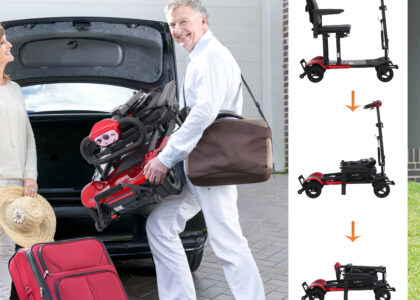
Someone who regularly lifts a scooter into a car may place greater importance on portability and folded size. Someone using a scooter every day around a neighborhood may care more about outdoor capability and ride comfort.
For example:
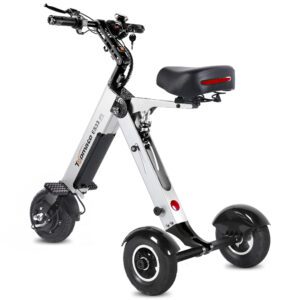
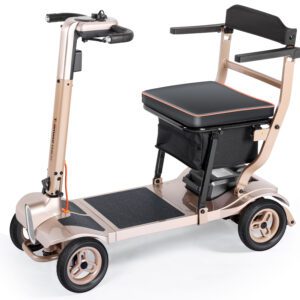
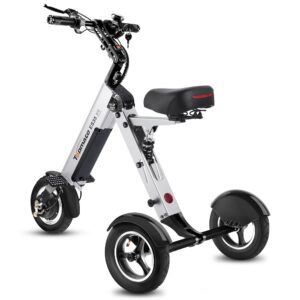
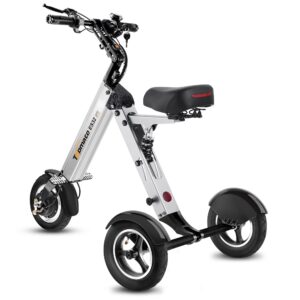
- TopMate ES15: Its lightweight, portable design makes it relevant when frequent transportation, small-space storage, or travel-oriented portability is a major requirement.
- TopMate ES35: Its positioning fits users looking for a balance between portability, everyday use, and outdoor capability.
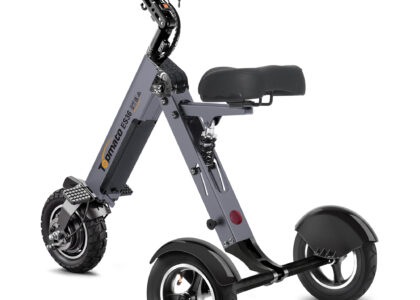
- TopMate ES36: It is more relevant when everyday comfort and stability are higher priorities.
- TopMate ES40: Its compact folding and travel-focused design make it relevant for vacation, cruise, and transportation-heavy use cases.
These examples should be considered only after checking the actual route. A travel-focused scooter is not automatically the right option for a rough daily route, just as an everyday-use model may not be the easiest model to transport frequently.
A Simple Route-Audit Worksheet
Before buying, record the conditions that matter most:
Distance
- One-way distance: ______ miles
- Round-trip distance: ______ miles
- Extra stops or detours: ______ miles
Access
- Narrowest doorway: ______ inches
- Narrowest usable path: ______ inches
- Tightest turning area: ______ inches
Terrain
- Steepest slope: ______% grade
- Roughest surface: __________________
- Largest transition or obstacle: ______ inches
- Gravel, grass, wet or loose surfaces: Yes / No
Load
- Rider weight: ______ lb
- Typical carried items: ______ lb
- Total operating load: ______ lb
Battery
- Advertised range: ______ miles
- Expected practical range: ______ miles
- Charging location: __________________
- Charging available during the route: Yes / No
Storage
- Storage location: __________________
- Charging outlet available: Yes / No
- Scooter can pass through storage access: Yes / No
Once these measurements are written down, comparing scooters becomes much easier.
Common Mistakes to Avoid
Choosing by range alone
A long advertised range does not solve a doorway, turning, hill, or storage problem.
Measuring only the front door
The narrowest doorway inside the home may be the real restriction.
Ignoring cargo
Shopping bags, personal belongings, and other items contribute to the operating load.
Assuming outdoor use means all-terrain use
Outdoor capability does not mean every scooter is appropriate for gravel, grass, potholes, steep transitions, or other difficult surfaces.
Planning to use the full advertised battery range
Real-world conditions can reduce usable range. A regular route should leave a reasonable reserve.
Forgetting the destination
The scooter still has to work once you arrive. Store aisles, elevators, entrances, and turning areas can be just as important as the sidewalk outside.
The Practical Decision Rule
After auditing your route, look for mismatches.
A scooter deserves closer consideration if:
- Its width fits your narrowest access points.
- Its turning characteristics suit your tightest spaces.
- Its weight capacity comfortably covers your actual operating load.
- Its ground clearance and design suit the surfaces you regularly encounter.
- Its hill-climbing specification is appropriate for the steepest section.
- Its practical range leaves a reasonable reserve for the complete trip.
- You can store and charge it where you normally use it.
You do not need the scooter with the highest advertised speed, longest range, or largest capacity.
You need a scooter whose specifications make sense for your actual route.
That is why measuring the journey first is often more useful than starting with a list of scooter features.
FAQ
How much extra range should I allow for a daily mobility scooter route?
There is no single reserve that works for every rider or route. Avoid planning around the maximum advertised range. Consider hills, rider and cargo weight, temperature, speed, stopping and starting, tire condition, battery age, and possible detours. A regular route should leave enough remaining charge to avoid relying on the battery’s maximum tested performance.
How do I know if my doorway is wide enough for a mobility scooter?
Measure the narrowest usable part of the doorway and compare it with the scooter’s overall width. A 30-inch doorway and a 27-inch-wide scooter provide approximately 3 inches of total clearance. Also consider the approach angle, door frame, threshold, and whether there is enough space to turn.
Does rider weight affect mobility scooter range?
Yes. Rider weight and carried items can affect energy use and practical battery range. If a rider weighs 190 lb and carries 20 lb of groceries and belongings, the operating load is approximately 210 lb. Compare that total with the scooter’s stated weight capacity rather than using body weight alone.
Should I measure my daily route before buying a mobility scooter?
Yes. A route check can reveal problems that a specification sheet cannot. Measure the total distance, narrowest access point, tightest turning area, steepest slope, roughest surface, typical operating load, charging location, and storage access. Then compare those measurements with the scooter’s specifications.