Quick Answer
Most mobility scooters can travel anywhere from 8 to 30+ miles on a single charge, depending on the model, battery size, rider weight, terrain, speed, weather conditions, and driving habits. Lightweight travel scooters often provide enough range for daily errands and short trips, while larger scooters may offer extended battery life for full-day use. In real-world conditions, actual range is usually lower than the maximum range advertised by manufacturers.
Introduction
One of the most common questions mobility scooter buyers ask is: “How long can I use a mobility scooter before recharging?”
The answer depends on several factors, including the scooter’s battery size, the rider’s weight, the type of terrain, and how the scooter is used throughout the day. Mobility Scooter Battery Range
Battery range plays a major role in determining whether a scooter can comfortably handle shopping trips, medical appointments, community activities, family outings, or travel adventures without frequent charging.
Understanding Mobility Scooter Range
Battery range refers to the distance a scooter can travel on a full charge before needing to be recharged.
Manufacturers often provide an estimated maximum range based on ideal testing conditions.
These conditions usually include:
- Smooth surfaces
- Moderate speeds
- Average rider weight
- Fully charged battery
- Minimal stopping and starting
In everyday situations, actual range may differ.
Typical Mobility Scooter Range by Type
Travel Mobility Scooters
Travel scooters are designed for portability and convenience.
Typical range:
- 8 to 15 miles per charge
Best for:
- Shopping trips
- Doctor appointments
- Indoor use
- Short outings
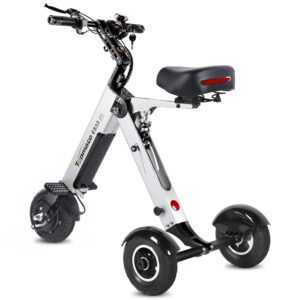
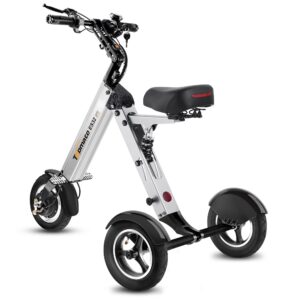
Travel-oriented models such as the TopMate ES15 are often chosen by users who prioritize portability and easy transportation.
Mid-Size Mobility Scooters
Mid-size scooters balance comfort and portability.
Typical range:
- 12 to 20 miles per charge
Best for:
- Daily errands
- Community use
- Outdoor pathways
- Regular activities
Full-Size Mobility Scooters
Full-size scooters generally feature larger batteries.
Typical range:
- 20 to 30+ miles per charge
Best for:
- Extensive outdoor use
- Long days away from home
- Larger properties
- All-day mobility needs
What Factors Affect Battery Range?
Rider Weight
Heavier loads require more power.
As rider weight increases, battery consumption generally increases as well.
This can reduce overall travel distance.
Terrain
Flat pavement is easier on batteries than uneven terrain.
Range may decrease when traveling on:
- Hills
- Grass
- Gravel
- Rough sidewalks
- Uneven pathways
The more resistance the scooter encounters, the harder the battery must work.
Speed
Driving at higher speeds typically consumes more energy.
Users who frequently travel at maximum speed may notice reduced range compared to those who drive at moderate speeds.
Frequent Stops and Starts
Battery efficiency decreases when a scooter repeatedly accelerates from a complete stop.
This commonly occurs in:
- Shopping centers
- Crowded sidewalks
- Tourist attractions
- Airports
Weather Conditions
Temperature can affect battery performance.
Cold weather may temporarily reduce available range.
Hot weather can also place additional stress on batteries over time.
Battery Age
Like all rechargeable batteries, mobility scooter batteries gradually lose capacity.
Older batteries often provide:
- Shorter range
- Longer charging times
- Reduced efficiency
Regular battery maintenance can help maximize lifespan.
Real-World Range Examples
Grocery Shopping
A senior visits a grocery store twice a week and travels approximately 2 miles total during each trip.
Most travel scooters can handle multiple shopping trips before requiring a recharge.
Retirement Community Use
A resident uses a scooter daily to visit dining areas, community centers, and outdoor spaces.
A mid-range scooter may comfortably support several days of use before needing a recharge.
Full-Day Attraction Visit
A user spends the day at a large museum or theme park.
Battery range becomes especially important because charging opportunities may be limited.
In these situations, choosing a scooter with ample battery capacity provides additional peace of mind.
What Does a 10-Mile Range Really Mean?
Many buyers misunderstand advertised range figures.
A scooter rated for 10 miles may not always achieve 10 miles under real-world conditions.
Actual range depends on:
- Rider weight
- Terrain
- Speed
- Battery condition
- Weather
For many users, a scooter rated for 10 miles may realistically deliver between 7 and 10 miles during everyday use.
What Does a 15-Mile Range Mean for Daily Use?
For many seniors, a 15-mile range is sufficient for:
- Grocery shopping
- Doctor visits
- Community activities
- Family outings
- Local errands
A scooter with this level of range often provides a full day of mobility without requiring mid-day charging.
What Does a 20+ Mile Range Mean?
Long-range scooters are ideal for users who:
- Spend significant time outdoors
- Visit large attractions
- Attend community events
- Travel frequently
These scooters may provide enough capacity for extended outings with fewer charging concerns.
How Long Does It Take to Recharge a Mobility Scooter?
Charging times vary depending on battery size and charger specifications.
Most scooters require:
- 4 to 8 hours for a full charge
Some larger battery systems may require additional time.
Many users charge their scooter overnight.
How Often Should You Recharge?
Best Practice
Most manufacturers recommend charging after each day of use.
Even if the battery is not fully depleted, regular charging helps maintain battery health.
Avoid
- Leaving batteries completely discharged
- Storing a scooter for long periods without charging
- Using incompatible chargers
Proper charging habits can extend battery lifespan significantly.
Airport Travel and Battery Considerations
Frequent travelers should pay close attention to battery specifications.
Airports often involve:
- Long terminal distances
- Extended waiting periods
- Transportation between gates
Travel-friendly scooters with reliable battery performance can make air travel more manageable.
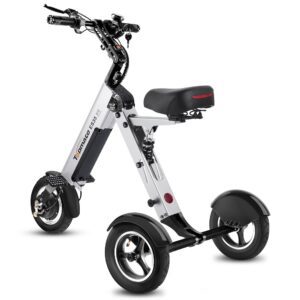
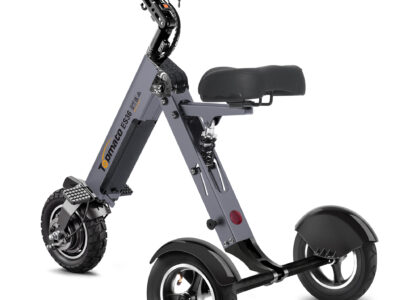
Portable models such as the TopMate ES35 and TopMate ES36 are often considered by users who value mobility and transportation convenience.
Cruise Travel and Battery Range
Cruise ships can require substantial daily travel.
Passengers may move between:
- Cabins
- Restaurants
- Pools
- Entertainment venues
- Shore excursions
A scooter with sufficient battery capacity helps ensure uninterrupted mobility throughout the day.
Decision Matrix: How Much Range Do You Need?
| Usage Pattern | Recommended Range |
|---|---|
| Occasional Indoor Use | 8–10 Miles |
| Grocery Shopping | 10–15 Miles |
| Community Living | 12–20 Miles |
| Frequent Daily Use | 15–20 Miles |
| Airport Travel | 15+ Miles |
| Cruise Vacations | 15+ Miles |
| Theme Parks & Attractions | 20+ Miles |
| Extended Outdoor Activities | 20–30+ Miles |
Common Mistakes That Reduce Battery Life
Ignoring Regular Charging
Consistent charging helps maintain battery health.
Allowing Batteries to Fully Discharge
Deep discharge can shorten battery lifespan.
Storing Batteries Without Charging
Long-term storage requires periodic charging.
Overloading the Scooter
Exceeding weight recommendations can reduce efficiency.
Driving at Maximum Speed Continuously
Higher speeds often increase battery consumption.
Who Should Prioritize Long Battery Range?
Extended battery capacity is especially important for:
- Active seniors
- Frequent travelers
- Cruise passengers
- Airport travelers
- Retirement community residents
- Theme park visitors
- Outdoor enthusiasts
Users who spend long periods away from home generally benefit from larger battery systems.
Conclusion
The amount of time you can use a mobility scooter before recharging depends on several factors, including battery size, rider weight, terrain, speed, and daily usage patterns. While many scooters offer between 8 and 30+ miles of range, real-world performance is often lower than manufacturer estimates.
The best way to determine the right battery capacity is to consider how you plan to use the scooter. For occasional errands, a travel scooter may provide more than enough range. For full-day outings, community activities, airport travel, or cruise vacations, a larger battery may offer greater confidence and convenience.
FAQ
Toggle title1. What is a good mobility scooter battery range for daily use?
A good mobility scooter battery range for most users is between 10 and 20 miles per charge.
What affects mobility scooter battery range the most?
The biggest factors affecting mobility scooter battery range are rider weight, terrain, speed, battery age, weather conditions, and how frequently the scooter stops and starts during use.
How often should I recharge my mobility scooter battery?
Most manufacturers recommend recharging your mobility scooter battery after each day of use. Regular charging helps maintain battery performance and extend battery life.
Why is my mobility scooter battery range shorter than advertised?
Advertised ranges are often tested under ideal conditions. Hills, rough terrain, heavier rider weight, cold weather, and older batteries can all reduce real-world mobility scooter battery range.