Quick Answer
Most mobility scooters travel between 4 and 8 mph (6–13 km/h), although some heavy-duty models can reach 10–15 mph. For most seniors, a speed range of 4–6 mph provides a comfortable balance between safety and convenience. The safest speed depends on the rider’s mobility, reaction time, environment, and experience level. In many cases, slower speeds improve stability and confidence while still allowing users to travel efficiently for shopping, appointments, and daily activities.
Introduction
One of the first questions seniors and caregivers ask when shopping for a mobility scooter is:
“How fast does it go?”
Speed is important because it affects travel time, convenience, and confidence. However, many first-time buyers focus too much on top speed and not enough on safety, stability, and real-world usability.
A mobility scooter is not designed to function like a motorcycle or electric bike. Instead, it provides safe, reliable transportation for individuals with limited mobility.
Understanding how fast mobility scooters travel—and whether those speeds are appropriate for seniors—can help buyers make a better decision.
This guide explains typical mobility scooter speeds, factors that affect safety, and how to choose a scooter that matches your lifestyle. Mobility Scooter Speed
How Fast Do Mobility Scooters Typically Go?
Most mobility scooters fall into several speed categories.
| Scooter Type | Typical Top Speed |
|---|---|
| Portable Travel Scooter | 4–5 mph |
| Foldable Mobility Scooter | 4–6 mph |
| Standard Mobility Scooter | 5–8 mph |
| Heavy-Duty Mobility Scooter | 8–10 mph |
| High-Performance Scooter | 10–15 mph |
Many seniors discover that a scooter capable of 4–6 mph is more than adequate for everyday activities.
For comparison:
- Average walking speed: 2–3 mph
- Fast walking speed: 4 mph
- Typical mobility scooter: 4–8 mph
Even entry-level scooters can move noticeably faster than walking.
Why Aren’t Mobility Scooters Faster?
Manufacturers intentionally limit scooter speeds for safety reasons.
Mobility scooters are designed for:
- Sidewalks
- Shopping centers
- Retirement communities
- Parks
- Airports
- Indoor environments
Higher speeds can increase risks such as:
- Loss of control
- Longer stopping distances
- Reduced stability during turns
- Increased injury risk during collisions
For seniors, controlled and predictable movement is usually more valuable than maximum speed.
What Is the Best Speed for Seniors?
For most seniors, a speed range of 4–6 mph provides the ideal balance.
This range allows users to:
- Keep pace with family members
- Navigate shopping centers comfortably
- Travel around neighborhoods efficiently
- Maintain control in crowded environments
Many mobility experts recommend prioritizing stability and handling over top speed.
A scooter that feels comfortable and easy to control often delivers a better experience than a faster model that feels unstable.
Is a 4 mph Mobility Scooter Fast Enough?
For many users, yes.
A 4 mph scooter is roughly:
- Twice the speed of a leisurely walk
- Fast enough for shopping trips
- Suitable for medical appointments
- Comfortable in retirement communities
- Easy to control in crowded areas
Many seniors find that 4 mph provides plenty of mobility without feeling intimidating.
Is an 8 mph Mobility Scooter Safe?
An 8 mph scooter can be safe when used appropriately.
However, riders should consider:
Experience Level
New users may initially feel more comfortable with slower scooters.
Physical Ability
Reaction time, vision, and balance can influence safe operating speeds.
Environment
Busy sidewalks may require slower speeds than open pathways.
Terrain
Uneven surfaces often require speed reduction.
An 8 mph scooter is generally best suited for users who have experience operating mobility devices and frequently travel outdoors.
What Factors Affect Safe Scooter Speed?
Rider Confidence
Confident riders often control scooters more effectively.
However, confidence should be paired with good judgment.
Terrain Conditions
Different surfaces require different speeds.
Examples include:
- Smooth sidewalks
- Shopping mall floors
- Gravel paths
- Grass
- Inclines
Uneven terrain generally requires slower travel.
Traffic and Pedestrians
Crowded areas demand extra caution.
Scooters should operate at speeds appropriate for surrounding foot traffic.
Weather Conditions
Rain, snow, and wet surfaces can reduce traction.
Many users slow down significantly during poor weather.
Does Scooter Speed Affect Stability?
Yes.
As speed increases:
- Turning becomes more sensitive
- Stopping distances increase
- Weight shifts become more noticeable
- Uneven surfaces feel less stable
This is especially important for three-wheel scooters.
Four-wheel scooters generally offer greater stability at higher speeds.
However, three-wheel scooters often provide a tighter turning radius for indoor use.
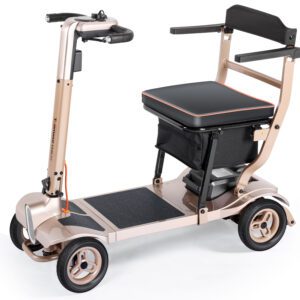
How Fast Are Foldable Mobility Scooters?
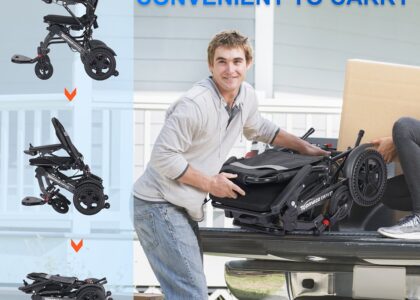
Foldable scooters prioritize portability rather than maximum speed.
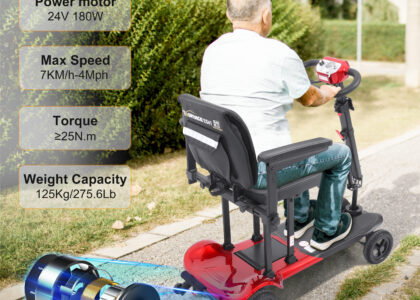
Most foldable models travel between 4 and 6 mph.
This range is typically ideal for:
- Seniors
- Travelers
- Caregivers
- Everyday errands
Examples include travel-focused scooters such as:
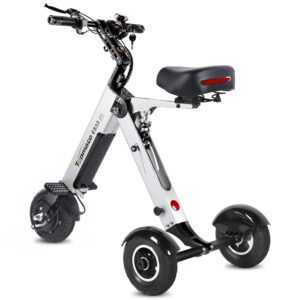
TopMate ES15
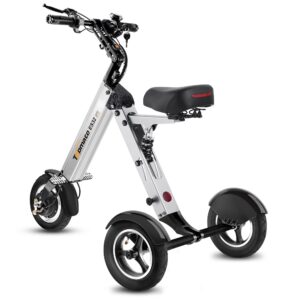
The TopMate ES15 focuses on lightweight portability and convenience, making it suitable for short trips, shopping centers, and travel environments.
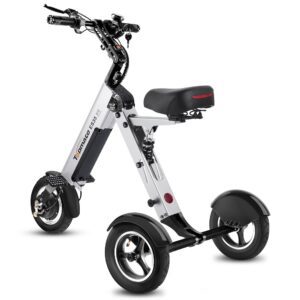
TopMate ES35
The TopMate ES35 balances portability with everyday usability, making it a practical option for airport travel, local errands, and recreational outings.
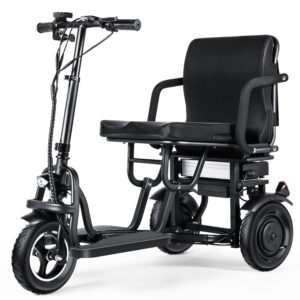
TopMate ES36
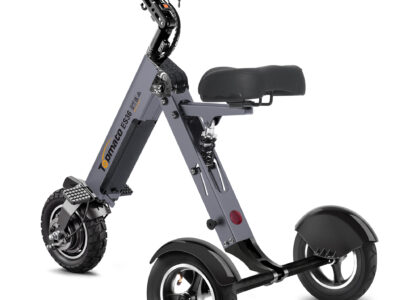
The TopMate ES36 is often considered by users seeking a combination of travel-friendly storage and comfortable daily mobility.
As always, buyers should verify current manufacturer specifications before purchasing.
How Does Speed Affect Battery Range?
Higher speeds typically consume more battery power.
When riding at maximum speed:
- Battery drain increases
- Travel distance may decrease
- Charging frequency may increase
Conversely, moderate speeds often improve efficiency.
For many seniors, slower and steadier travel helps maximize battery range throughout the day.
Are Faster Mobility Scooters Better?
Not necessarily.
A faster scooter may seem attractive initially, but it is not always the best choice.
Benefits of Faster Scooters
- Reduced travel time
- Better performance in large communities
- Greater outdoor mobility
Drawbacks of Faster Scooters
- Increased stopping distance
- More challenging handling
- Potentially lower battery efficiency
- Greater learning curve
For most seniors, comfort and safety outweigh the benefits of higher speed.
How Seniors Can Operate Mobility Scooters Safely
Start Slowly
New users should begin at lower speed settings.
Practice in Open Areas
Parking lots and empty pathways provide safe learning environments.
Reduce Speed Around People
Crowded environments require extra caution.
Avoid Sharp Turns at High Speeds
Turning too quickly can affect stability.
Check Brakes Regularly
Proper maintenance improves safety and performance.
Stay Visible
Bright clothing and reflective accessories can improve visibility outdoors. For additional guidance, see our tips for mobility scooter safety at night.
Who Should Consider a Faster Mobility Scooter?
A faster scooter may be appropriate for:
- Active outdoor users
- Residents of large retirement communities
- Users covering longer daily distances
- Experienced scooter operators
However, these riders should still prioritize stability and safety features.
Common Myths About Mobility Scooter Speed
Myth: Faster Scooters Are Always Better
Reality: Many seniors prefer moderate speeds because they feel safer and easier to control.
Myth: All Mobility Scooters Travel at the Same Speed
Reality: Speed varies significantly between travel, standard, and heavy-duty models.
Myth: A Slow Scooter Is Inefficient
Reality: Even a 4 mph scooter can significantly reduce walking effort and improve independence.
Myth: Speed Is the Most Important Feature
Reality: Comfort, battery range, stability, and portability often matter more.
Conclusion
So, how fast do mobility scooters go, and is it safe for seniors?
Most mobility scooters travel between 4 and 8 mph, with many foldable and travel-friendly models operating comfortably in the 4–6 mph range. For most seniors, this speed provides an excellent balance of convenience, control, and safety.
While some scooters can reach higher speeds, safety should remain the primary consideration. Stability, braking performance, battery range, and rider confidence all play a significant role in determining the right scooter.
FAQ
What is the average mobility scooter speed?
Most mobility scooters travel between 4 and 8 mph. Travel and foldable scooters typically operate at 4–6 mph, while larger heavy-duty models may reach higher speeds.
Is mobility scooter speed safe for seniors?
Yes. Most seniors find that a mobility scooter speed of 4–6 mph provides a comfortable balance between safety, control, and convenience for daily activities.
Does higher mobility scooter speed reduce battery range?
Yes. Riding at higher speeds usually consumes more battery power, which can reduce the total distance a scooter can travel on a single charge.
What mobility scooter speed is best for shopping and everyday errands?
For shopping centers, sidewalks, and community use, a mobility scooter speed of 4–6 mph is generally ideal because it offers good maneuverability and safe operation around pedestrians.