Quick Answer
Most mobility scooters use between 0.3 and 1.2 kilowatt-hours (kWh) of electricity for a full battery charge, depending on battery capacity. Even when used daily, mobility scooters consume relatively little household electricity compared with many common appliances.
Key Takeaways
- Most mobility scooters use 0.3–1.2 kWh of electricity per full charge.
- Larger batteries consume more electricity than compact travel scooters.
- Lithium batteries are more energy efficient than older lead-acid batteries.
- Riding habits, terrain, and battery size affect electricity consumption.
- Proper charging habits improve battery efficiency and extend battery life.
What Does Electricity Consumption Mean?
Electricity consumption refers to the amount of electrical energy your mobility scooter draws from a wall outlet while charging.
Electricity is measured in kilowatt-hours (kWh).
A mobility scooter stores this energy in its rechargeable battery, which powers the motor during use.
Average Electricity Consumption of a Mobility Scooter
The amount of electricity used depends primarily on battery size.
| Scooter Type | Typical Battery Capacity | Electricity Used Per Full Charge |
|---|---|---|
| Compact Travel Scooter | 250–300 Wh | 0.30 kWh |
| Lightweight Foldable Scooter | 350–500 Wh | 0.40–0.60 kWh |
| Mid-Size Scooter | 500–700 Wh | 0.60–0.80 kWh |
| Heavy-Duty Scooter | 800–1200 Wh | 0.90–1.20 kWh |
Even larger mobility scooters consume far less electricity than many everyday household appliances.
Chart: Average Electricity Consumption by Battery Size
| Battery Capacity | Electricity Consumption |
|---|---|
| 300 Wh | 0.30 kWh |
| 450 Wh | 0.45 kWh |
| 600 Wh | 0.60 kWh |
| 900 Wh | 0.90 kWh |
| 1200 Wh | 1.20 kWh |
Chart Insight: Electricity consumption increases gradually as battery capacity increases.
Factors That Affect Electricity Use
Several factors influence how much electricity your mobility scooter uses over time.
1. Battery Capacity
Larger batteries require more electricity to recharge because they store more energy.
2. Riding Distance
Longer daily trips consume more battery power and require more frequent charging.
3. Rider Weight
Heavier loads increase the amount of energy required by the motor.
4. Terrain
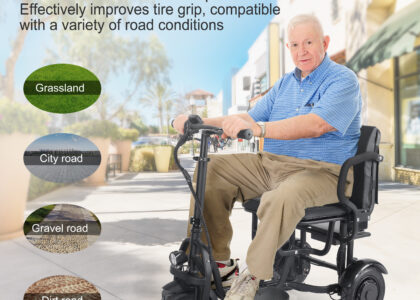
Driving uphill, on grass, gravel, or uneven paths uses more electricity than traveling on smooth pavement.
5. Tire Condition
Properly inflated tires reduce rolling resistance and improve battery efficiency.
6. Battery Age
Older batteries gradually lose capacity, meaning they may need to be charged more often.
Battery Size Comparison
| Battery Capacity | Typical Daily Use | Energy Consumption |
|---|---|---|
| 250 Wh | Short Indoor Trips | Very Low |
| 350 Wh | Shopping & Errands | Low |
| 450 Wh | Daily Outdoor Use | Moderate |
| 600 Wh | Longer Trips | Moderate |
| 900 Wh+ | Heavy Daily Use | Higher |
Choosing the correct battery size helps balance driving range and energy efficiency.
Charging Frequency
How often you charge depends on how frequently you use your scooter.
Typical charging recommendations include:
- Charge after a full day of riding.
- Recharge before the battery becomes completely empty.
- Recharge periodically during long-term storage.
- Follow the manufacturer’s recommended charging schedule.
Modern lithium batteries generally tolerate regular charging very well.
Example Electricity Consumption Calculation
Suppose a mobility scooter has a 480 Wh battery.
Step 1
Convert watt-hours to kilowatt-hours:
480 Wh ÷ 1000 = 0.48 kWh
Step 2
This means a full recharge uses approximately:
0.48 kWh of electricity
This simple calculation can be used for nearly any mobility scooter by replacing the battery capacity.
Battery Efficiency
Battery efficiency refers to how effectively stored electricity is converted into driving distance.
Modern lithium batteries provide several advantages:
- Faster charging
- Higher energy efficiency
- Longer service life
- Reduced energy loss during charging
- Lightweight construction
- Consistent performance throughout the charge cycle
Efficient batteries help maximize driving range while minimizing electricity consumption.
Mobility Scooter vs Electric Wheelchair vs Electric Bike
| Device | Typical Battery Size | Electricity Used Per Charge |
|---|---|---|
| Foldable Mobility Scooter | 350–500 Wh | Low |
| Electric Wheelchair | 500–700 Wh | Moderate |
| Electric Bike | 500–750 Wh | Moderate |
Mobility scooters remain among the most energy-efficient electric personal transportation devices available.
TopMate Battery Comparison
| Model | Approximate Battery Capacity* | Estimated Driving Range | Estimated Electricity Per Full Charge |
|---|---|---|---|
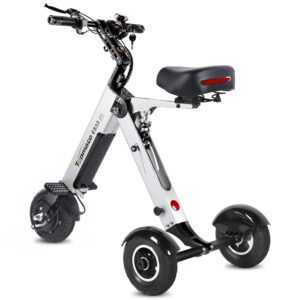
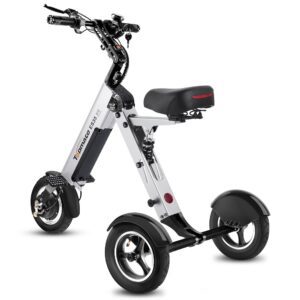
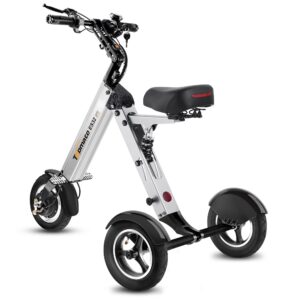
| TopMate ES15 | ~288 Wh | Up to 13 miles | 0.29 kWh |
| TopMate ES35 | ~360 Wh | Up to 18 miles | 0.36 kWh |
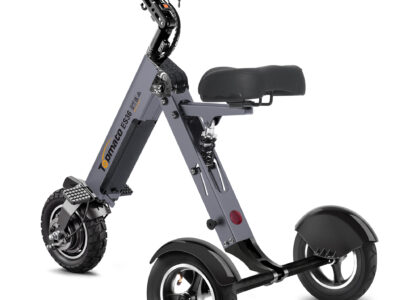
| TopMate ES36 | ~480 Wh | Up to 22 miles | 0.48 kWh |
*Approximate values. Always refer to the latest TopMate product specifications for current battery information.
Energy-Saving Charging Tips
Even though mobility scooters already use very little electricity, these habits can improve battery efficiency.
Charge Before the Battery Is Completely Empty
Frequent deep discharges reduce long-term battery performance.
Use the Original Charger
Approved chargers provide the correct charging voltage and protect battery health.
Charge Indoors
Avoid charging in extremely hot or freezing temperatures.
Disconnect When Fully Charged
Once charging is complete, unplug the charger unless the manufacturer specifically recommends otherwise.
Maintain Proper Tire Pressure
Well-inflated tires reduce rolling resistance and improve overall battery efficiency.
Drive Smoothly
Gradual acceleration and consistent speeds reduce unnecessary battery drain.
Store Batteries Properly
When storing the scooter for several weeks:
- Keep the battery partially charged according to the manufacturer’s recommendations.
- Store indoors in a cool, dry location.
- Recharge periodically during storage.
Who Benefits Most from Energy-Efficient Mobility Scooters?
Energy-efficient mobility scooters are ideal for:
- Seniors
- First-time mobility scooter owners
- Budget-conscious households
- Daily users
- Travelers
- RV owners
- Cruise travelers
- Apartment residents
- Caregivers managing multiple mobility devices
These users benefit from efficient battery performance, longer driving range, reduced charging frequency, and lower overall energy consumption.
Real-World Example
John uses his foldable mobility scooter every day for neighborhood walks, grocery shopping, and medical appointments.
He typically rides around 5 miles per day.
His scooter’s 480 Wh lithium battery uses approximately 0.48 kWh of electricity for a complete recharge.
Because the battery is highly efficient, John enjoys reliable daily mobility while using very little household electricity.
Final Thoughts
Mobility scooters are among the most energy-efficient forms of personal transportation. Most models require only a small amount of electricity for a complete recharge, making them practical for everyday use.
Battery capacity, terrain, rider weight, and driving habits all influence electricity consumption. Choosing a scooter with an appropriately sized lithium battery and following proper charging practices helps maximize battery life, improve efficiency, and ensure dependable performance for years.
FAQ
How much electricity does a mobility scooter use?
Most mobility scooters use 0.3 to 1.2 kWh of electricity for a full battery charge, depending on battery size.
Does a larger battery use more electricity?
Yes. Larger batteries store more energy and therefore require more electricity to recharge.
Are lithium batteries more energy efficient?
Yes. Lithium batteries are lighter, charge more efficiently, last longer, and generally provide better overall performance than traditional lead-acid batteries.
How often should I charge my mobility scooter?
Most manufacturers recommend charging after regular use and avoiding complete battery discharge whenever possible.
What affects a mobility scooter's electricity consumption?
Battery size, riding distance, terrain, rider weight, battery age, and driving habits all influence electricity usage.