Quick Answer
Buying a used mobility scooter can save money, but only if the scooter is in good condition. Before purchasing, inspect the battery, motor, tires, brakes, frame, folding mechanism, charger, and service history. Also consider whether repair costs, battery replacement, and missing warranty coverage make a new mobility scooter a better long-term investment.
Key Takeaways
- Inspect the battery because replacement is often the biggest hidden expense.
- Test drive the scooter before buying whenever possible.
- Check the frame for cracks, rust, or accident damage.
- Verify that the brakes, lights, and controls work properly.
- Ask about maintenance records and the scooter’s age.
- Compare the total ownership cost of a used scooter versus a new one.
- Foldable mobility scooters may provide better portability and warranty protection when purchased new.
Introduction
A used mobility scooter often looks like an excellent bargain. At first glance, paying hundreds of dollars less than the price of a new model seems like an easy decision. However, the purchase price tells only part of the story.
Unlike many household items, mobility scooters contain batteries, motors, controllers, electronic systems, and moving parts that wear over time. If these components have not been maintained properly, a “cheap” scooter can quickly become an expensive repair project.
Fortunately, buying second hand does not have to be risky. With a careful inspection and the right questions, you can identify whether a scooter offers genuine value or whether it is better to invest in a new model.
This guide explains exactly what to check before buying a used mobility scooter so you can make a confident purchasing decision.
Why Buying a Used Mobility Scooter Can Be Risky
There are many reasons someone sells a mobility scooter.
Some owners simply upgrade to a newer model. Others no longer need it.
However, some scooters are sold because they have:
- Declining battery performance
- Electrical problems
- Reduced driving range
- Expensive repair needs
- Damage from accidents
- Poor maintenance
Since many of these problems are difficult to notice immediately, inspecting every major component is essential.
1. Check the Battery Condition First
The battery is the most expensive wearable component on a mobility scooter.
Even if the scooter appears clean, the battery may have lost much of its original capacity after several years.
Ask questions such as:
- How old is the battery?
- Has it ever been replaced?
- How often was it charged?
- Has it been stored for long periods?
Signs of battery wear include:
- Very short driving range
- Slow acceleration
- Difficulty climbing ramps
- Long charging times
- Battery warning lights
If the seller cannot provide battery information, budget for a replacement.
2. Inspect the Overall Frame
A strong frame keeps the scooter stable and safe.
Look carefully for:
- Rust
- Bent metal
- Cracks
- Weld repairs
- Loose bolts
- Accident damage
Small cosmetic scratches are normal.
Structural damage is not.
If the frame has been repaired, walk away unless the repair was professionally documented.
3. Examine the Tires
Tires affect comfort, traction, and safety.
Check for:
- Uneven wear
- Cracks
- Dry rot
- Bald tread
- Flat spots
Also ensure that all four wheels sit evenly on the ground.
Poor tire wear may indicate suspension or alignment problems.
4. Test the Motor
During a test drive, the motor should feel smooth and quiet.
Watch for:
- Grinding noises
- Jerky acceleration
- Delayed response
- Excessive vibration
- Sudden power loss
Drive over slight inclines if possible.
A healthy scooter should climb small ramps without struggling.
5. Check the Braking System
Safety should never be compromised.
Test whether the scooter:
- Stops smoothly
- Holds position on a slight incline
- Does not roll unexpectedly
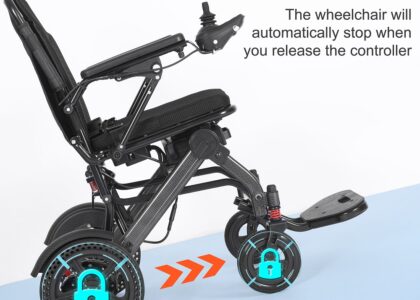
- Automatically brakes when the throttle is released
Weak braking could require expensive repairs.
6. Inspect the Controls
Every button should function correctly.
Check:
- Speed controls
- Horn
- Lights
- Indicators
- Reverse mode
- Battery display
- Ignition
- Charging port
Faulty electronics may point to controller issues that are expensive to diagnose.
7. Test the Folding Mechanism
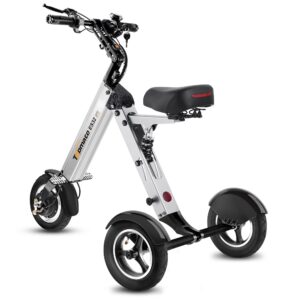
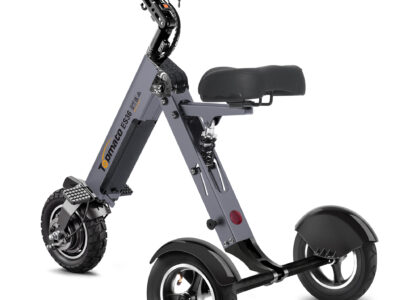
If you’re buying a foldable mobility scooter, folding should be quick and effortless.
Inspect:
- Hinges
- Locking latches
- Folding joints
- Release handles
The scooter should lock securely in both folded and unfolded positions.
8. Look Under the Scooter
Many buyers forget this step.
Inspect underneath for:
- Oil-like leaks
- Damaged wiring
- Loose cables
- Missing covers
- Rust
- Broken plastic
A flashlight makes this inspection much easier.
9. Verify the Charger
An original charger is important.
Ask whether:
- The charger is included.
- It matches the manufacturer’s specifications.
- Charging completes normally.
Using an incorrect charger can shorten battery life.
10. Ask About Maintenance History
A well-maintained scooter generally lasts longer.
Good questions include:
- When was it purchased?
- How often was it serviced?
- Has anything been repaired?
- Has it been stored indoors?
- Has it ever been involved in an accident?
Documentation increases confidence in the purchase.
11. Consider Replacement Part Availability
Some older mobility scooters are discontinued.
Before buying, confirm that replacement parts such as:
- Batteries
- Tires
- Controllers
- Chargers
- Seats
- Joysticks
- Brake components
are still available.
Otherwise, even a small repair could become difficult.
12. Understand the Warranty Situation
Many manufacturer warranties are not transferable.
This means that a used scooter may have:
- No warranty
- No technical support
- Limited replacement parts
- No return policy
Buying new usually provides better long-term protection.
Hidden Costs Many Buyers Forget
The purchase price is only one part of ownership.
Potential additional costs include:
| Expense | Estimated Cost |
|---|---|
| Battery replacement | High |
| New charger | Moderate |
| Tire replacement | Moderate |
| Brake repairs | Moderate |
| Controller replacement | High |
| Service inspection | Moderate |
A used scooter that initially appears inexpensive may ultimately cost more than purchasing a new model.
Used vs New Mobility Scooter
| Feature | Used Scooter | New Scooter |
|---|---|---|
| Purchase price | Lower | Higher |
| Warranty | Usually none | Manufacturer warranty |
| Battery life | Unknown | Brand new |
| Maintenance history | May be unclear | New condition |
| Latest safety features | May be outdated | Current technology |
| Repairs | More likely | Less likely |
| Long-term reliability | Variable | Generally higher |
Who Should Consider Buying Used?
A used mobility scooter may suit:
- Buyers with a limited budget
- People needing temporary mobility assistance
- Experienced scooter owners who can inspect equipment
- Buyers purchasing from trusted family or friends
When Buying New Makes More Sense
A new mobility scooter is often the better choice if you:
- Need dependable daily transportation
- Travel frequently
- Want longer battery life
- Prefer manufacturer support
- Value warranty protection
- Need modern safety features
- Want the latest lightweight folding designs
For many users, a new foldable mobility scooter offers greater peace of mind, predictable performance, and lower maintenance during the first several years of ownership.
Real-Life Buying Example
Imagine two buyers.
Buyer A purchases a used scooter for $700. Within six months, the battery fails, the charger stops working, and two tires need replacing. The total repair bill reaches several hundred dollars.
Buyer B invests more in a new foldable mobility scooter. It comes with a fresh battery, warranty coverage, modern safety features, and reliable performance from day one. Although the upfront cost is higher, unexpected repair expenses are far less likely during the first few years.
This comparison shows why evaluating the total cost of ownership is just as important as comparing purchase prices.
Final Thoughts
Buying a used mobility scooter can be a practical way to reduce upfront costs, but it requires careful inspection and realistic expectations. A low purchase price does not always translate into long-term savings, especially if the scooter needs a new battery, repairs, or replacement parts soon after purchase.
By checking the battery, motor, brakes, tires, frame, controls, folding mechanism, and maintenance history, you can make a more informed decision. If reliability, warranty coverage, and everyday performance are your top priorities, investing in a new mobility scooter—particularly a modern foldable model—may provide better value over the life of the scooter.
FAQ
Is buying a used mobility scooter worth it?
Yes, it can be worthwhile if the scooter has been well maintained, has a healthy battery, and passes a thorough inspection. Always factor in potential repair and replacement costs before purchasing.
How long do mobility scooter batteries typically last?
Most mobility scooter batteries last between 2 and 5 years, depending on battery type, charging habits, usage frequency, and storage conditions.
What is the most important thing to check before buying a used mobility scooter?
The battery is usually the most important component to inspect because it is one of the most expensive parts to replace. Also check the motor, brakes, tires, and overall frame condition.
Is it better to buy a new or used foldable mobility scooter?
A new foldable mobility scooter generally offers greater reliability, a full manufacturer warranty, the latest safety features, and a longer battery lifespan. A used scooter may cost less initially but can involve higher maintenance expenses over time.