A mobility scooter can cost anywhere from about $800 to $3,000+ in the first year, depending on the purchase price, battery type, usage, maintenance needs, insurance, transportation, and local taxes. After the initial purchase, routine running costs are usually much lower: electricity may cost only a few dollars to a few tens of dollars per year, while maintenance, tires, and eventual battery replacement can have a much larger effect on the annual budget. Annual mobility scooter cost
For a realistic estimate, think about mobility scooter ownership in two parts: the upfront purchase cost and the ongoing annual ownership cost.
What Does a One-Year Mobility Scooter Ownership Cost Include?
A useful annual budget should account for more than the sticker price. The main expenses are:
| Cost category | Typical first-year consideration |
|---|---|
| Scooter purchase | $700–$3,000+ |
| Electricity | Approximately $5–$40/year for many light-to-moderate users |
| Routine maintenance | About $50–$150/year when service is needed |
| Tires/tubes and small parts | $0–$150+ |
| Battery replacement | Often $100–$600+, but usually not required every year |
| Insurance | Varies by country, scooter type, and coverage |
| Registration/tax | Usually low or zero for qualifying mobility scooters, depending on location |
| Transportation/storage | $0–$500+ depending on vehicle access and storage needs |
These are planning ranges, not universal prices. A scooter that is used indoors for short trips will have a very different ownership profile from one ridden several miles every day.
Typical Mobility Scooter Purchase Prices
The purchase price is normally the largest first-year expense.
Current retail examples show that folding and travel scooters can start below $1,000, while many premium folding models cost around $1,500–$2,500 or more. For example, current listings include folding scooters around $1,795–$1,999, while some compact models are listed below $1,000.
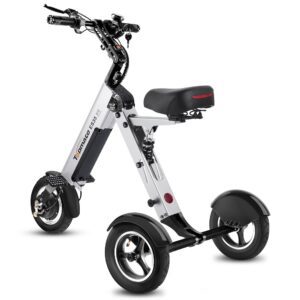
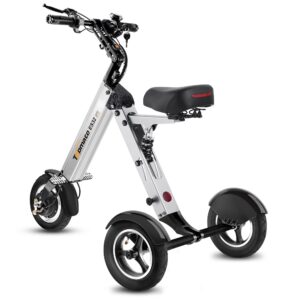
As an example from TopMate, the ES15 is currently listed at $799, with a regular listed price of $1,099. Its manufacturer specifications state a weight of approximately 56.88 lb without the battery and a 300-lb maximum load.
That means a practical first-year budget might look like:
- Budget/compact scooter: approximately $700–$1,200
- Mid-range folding or travel scooter: approximately $1,200–$2,000
- Premium or larger scooter: approximately $2,000–$3,000+
Shipping, sales tax, accessories, and local dealer charges can increase the final amount.
How Much Does It Cost to Charge a Mobility Scooter?
Electricity is usually one of the smallest mobility scooter running costs.
The basic calculation is:
Battery watt-hours = Voltage × Amp-hours
For example, a 36V 7.8Ah battery has:
36 × 7.8 = 280.8 Wh, or about 0.28 kWh.
A charger also has losses, so electricity drawn from the wall will normally be somewhat higher than the battery’s rated capacity. Using an illustrative 0.33 kWh per full recharge:
- 1 charge/week = about 17 kWh/year
- 3 charges/week = about 51 kWh/year
- 5 charges/week = about 86 kWh/year
- 7 charges/week = about 120 kWh/year
If electricity costs $0.20 per kWh, 3 full charging cycles per week would cost approximately:
51 × $0.20 = $10.20 per year
At $0.35 per kWh, the same usage would cost approximately $17.85 per year.
Actual consumption depends on battery size, charging losses, rider weight, terrain, temperature, tire pressure, and how deeply the battery is discharged.
So, despite concerns about electricity bills, charging is rarely the biggest part of annual scooter ownership cost.
How Often Does a Mobility Scooter Battery Need Replacement?
Battery replacement is a more significant expense than electricity.
Replacement timing depends on battery chemistry, charging habits, temperature, storage conditions, usage, and battery quality. Some batteries can last several years, while heavy daily use or poor storage can shorten their useful life.
Current UK mobility information gives a useful indication of the range: AGM battery replacements can cost roughly £80–£180 for a pair, while lithium battery packs can range from approximately £300–£600.
For a first-year budget, therefore, it is often better to treat battery replacement as a future reserve rather than automatically adding the full battery price to every year’s expenses.
For example, a $300 replacement battery lasting three years represents an average reserve of approximately:
$300 ÷ 3 = $100 per year
This is not the same as paying $100 every year. It simply helps with long-term budgeting.
What Maintenance Does a Mobility Scooter Need?
Routine maintenance generally involves checking:
- Tires and tire pressure
- Brakes
- Battery condition
- Charger
- Electrical connections
- Steering and controls
- Wheels and fasteners
- Lights, horn, and indicators where fitted
- Motor and moving components
UK service pricing illustrates how much this can vary. Some providers currently advertise basic services from around £40–£70, while other providers charge approximately £80–£129 for a more comprehensive annual service.
For planning purposes, setting aside $50–$150 per year for routine servicing is reasonable for many owners, although larger scooters, mobile service visits, or repairs can cost considerably more.
Tires and Other Wear Items
Tires are another variable expense.
A low-mileage user may go through a full year without replacing a tire. A frequent user traveling over rough pavement, gravel, or uneven surfaces may experience more wear.
Punctures can also add unexpected costs. One current UK repair-price guide lists tire and inner-tube replacement at roughly £40–£65 per wheel, depending on size.
Other possible expenses include:
- Inner tubes
- Brake components
- Fuses
- Chargers
- Cables
- Armrests
- Seat components
- Wheels
- Small electrical parts
A reasonable annual allowance is $50–$150, although a trouble-free year can cost much less.
Insurance and Registration: What Applies?
Insurance requirements are highly location-dependent.
In the UK, Class 2 and Class 3 mobility scooters generally do not require insurance, although insurance is recommended. Class 3 scooters do require registration with the DVLA, while vehicle tax is not payable when properly registered as a mobility scooter or powered wheelchair.
UK buyers should also check VAT eligibility. HMRC states that certain qualifying mobility scooters can be purchased VAT-free by eligible customers, subject to the applicable rules.
The USA, Canada, and Australia have different rules, so buyers should check their local government and insurer rather than assuming that UK requirements apply elsewhere.
Optional insurance can still be worthwhile if the scooter is expensive or used frequently. Coverage may include theft, accidental damage, liability, or breakdown assistance.
Storage and Transportation Can Change the Budget
Transportation is an often-overlooked ownership expense.
A large scooter may require:
- A vehicle lift
- A ramp
- A trailer
- Larger vehicle space
- Professional transportation
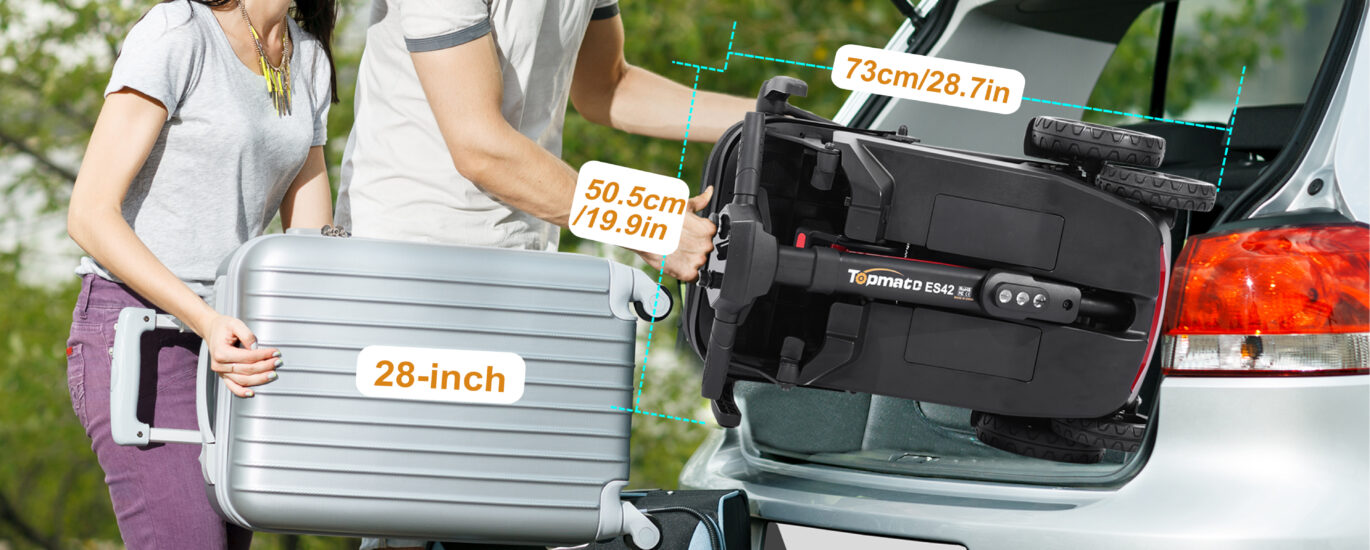
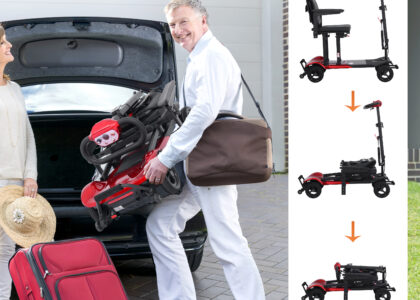
A folding scooter can reduce some of these costs because it may fit inside a vehicle without a dedicated external lift. Annual mobility scooter cost
For example, TopMate states that the ES15 folds for transportation and can fit in many car trunks and SUVs.
That does not automatically make a folding scooter cheaper overall, but it can reduce transport-related expenses for people who regularly drive to appointments, shopping centers, vacations, or other destinations.
Two Worked One-Year Ownership Examples
Example 1: Occasional User
Suppose someone purchases a $900 folding scooter and uses it once or twice per week.
Estimated first-year costs:
- Scooter: $900
- Electricity: $10
- Routine maintenance: $60
- Tires/small parts: $25
- Insurance: $0–$100 depending on coverage
- Transportation/storage: $0–$100
Estimated first-year total: approximately $995–$1,195
Because usage is light, the owner may not need a battery replacement during the first year.
Example 2: Frequent or Daily User
Now consider a daily user who purchases a $1,800 scooter.
Possible first-year budget:
- Scooter: $1,800
- Electricity: $20–$40
- Annual service: $100
- Tires and minor parts: $100
- Insurance: $50–$150
- Transportation/storage: $100–$300
Estimated first-year total: approximately $2,170–$2,490
If a battery requires replacement during that year, the total could rise substantially.
The important point is that usage affects maintenance and replacement costs more than electricity costs.
How Usage Frequency Changes Annual Cost
Consider three broad usage patterns:
Occasional: 1–2 rides per week
Charging costs remain very low, and wear is generally limited.
Regular: 3–5 rides per week
Routine servicing and tire wear become more relevant, particularly when traveling outdoors.
Daily: 5–7 days per week
Battery health, tire condition, brakes, and mechanical components deserve closer attention. A daily rider should also maintain a larger repair reserve.
Someone riding 1,000 miles per year may experience substantially different wear from someone traveling only 200 miles.
Is Buying a Mobility Scooter Cheaper Than Other Mobility Options?
The answer depends on how the scooter is used.
For a person who regularly pays for accessible taxis, rideshare trips, community transportation, or help with local errands, a scooter may reduce transportation expenses over time.
For example, if independent scooter travel replaces only two $15 transportation trips each week:
$15 × 2 × 52 = $1,560 per year
That does not mean every scooter owner will save $1,560. However, it demonstrates why the mobility value of a scooter should be considered alongside its mechanical running costs.
A scooter that costs $1,200 but replaces frequent paid transportation may have a very different financial impact from a $1,200 scooter that is rarely used.
Ways to Reduce Mobility Scooter Ownership Costs
A few habits can help keep yearly scooter expenses under control:
- Choose capacity and range based on actual use, rather than automatically buying the largest scooter.
- Keep tires correctly inflated when using pneumatic tires.
- Charge according to the manufacturer’s instructions.
- Store the scooter and battery appropriately, especially during extreme temperatures.
- Address small problems early before they become larger repairs.
- Compare service quotes before authorizing non-warranty repairs.
- Consider a folding model if transportation requires frequent vehicle loading.
- Budget for battery replacement before it becomes urgent.
- Check warranty coverage before paying for a repair.
- Include taxes, shipping, accessories, and delivery charges when comparing purchase prices.
Key Takeaways
- A realistic first-year mobility scooter cost can range from roughly $800 to $3,000+, depending mainly on the scooter purchase price.
- Electricity is usually a relatively small expense, often well below $50 per year for many users.
- Maintenance can reasonably add $50–$150 or more per year, depending on service requirements.
- Tires, tubes, repairs, and other wear parts can add another $50–$150+.
- Battery replacement is a major long-term expense, but it does not necessarily occur every year.
- Daily users generally need a larger maintenance and repair reserve than occasional users.
- Folding scooters may reduce transportation costs when they can be loaded into an existing vehicle without a dedicated lift.
- Taxes, insurance, registration, electricity rates, shipping, and service availability make ownership costs different across the USA, Canada, UK, and Australia.
- The most useful number is not simply the purchase price; it is the total cost of ownership over the period you expect to use the scooter.
FAQ
How much does it cost to own a mobility scooter for one year?
A typical first-year mobility scooter ownership cost can range from about $800 to $3,000+, including the scooter purchase and ongoing expenses such as charging, maintenance, repairs, and insurance.
How much does it cost to charge a mobility scooter?
Charging a mobility scooter often costs only a few dollars to a few tens of dollars per year, depending on battery capacity, charging frequency, electricity rates, and usage.
How often does a mobility scooter battery need to be replaced?
A mobility scooter battery does not normally need replacement every year. Lifespan varies with battery type, usage, charging habits, storage conditions, and temperature. Replacement batteries can cost $100–$600+ depending on the model and battery technology.
What are the main annual mobility scooter running costs?
The main costs include electricity, battery replacement, maintenance, tires, repairs, insurance, registration where applicable, storage, and transportation. The actual total depends heavily on usage and location.

-scaled-2-420x300.jpg)