Quick Answer
The best mobility scooter for stop and go use is one that gives you predictable low-speed control, smooth acceleration, responsive braking, easy steering, and comfortable controls. For shopping, queues, museums, restaurants, markets, and crowded sidewalks, turning radius, tiller position, visibility, width, stability, and easy mounting can matter more than maximum speed.
Key Takeaways
- Frequent stop-and-go riding requires predictable controls, not simply a fast motor.
- Smooth acceleration can make repeated starts feel easier to manage.
- Braking should feel consistent and easy to operate without abrupt reactions.
- A manageable turning radius helps when traffic changes around you.
- Tiller ergonomics, seat position, and visibility affect how comfortable repeated corrections become.
- Overall scooter width matters when moving through queues, entrances, aisles, and shared pathways.
- Stability still matters, particularly when stopping, starting, or turning around other people.
- Always check manufacturer specifications and, when possible, test the actual controls before buying.
What Actually Matters for Stop-and-Go Riding?
A mobility scooter can feel completely different when you use it continuously on an open path compared with a busy store or public venue.
On an open path, you may accelerate once and continue moving for several minutes. In a crowded environment, the pattern can be very different:
Move → slow down → stop → wait → start → turn → stop again.
That repeated cycle puts more attention on the controls and riding position.
This is why a mobility scooter for stop and go situations should be evaluated differently from a scooter chosen mainly for speed or long-distance travel.
1. Low-Speed Control
Low-speed control is one of the first things to consider.
When approaching a person, display, checkout line, doorway, or elevator, you may want to creep forward rather than travel at the scooter’s normal cruising speed.
Look for controls that allow you to make small speed adjustments without making the scooter feel difficult to manage. If the manufacturer provides information about speed settings or control characteristics, review those specifications carefully.
A practical test is simple: can you move forward slowly, stop, and restart without feeling that every input produces too much movement?
2. Smooth Acceleration
Repeated starts make acceleration more noticeable.
You may use the throttle or control repeatedly while entering a store, moving through a queue, or following family members. A scooter that responds predictably can be easier to manage than one that feels abrupt.
Do not assume that a particular acceleration characteristic simply because of the scooter’s size or motor. If possible, test the scooter yourself or watch a genuine demonstration showing how the controls respond from a standstill.
3. Braking Response
Stopping is just as important as starting.
Think about how often you will need to stop during a typical outing. In a grocery store, for example, you may stop beside a shelf, wait for another shopper, move forward, and stop again.
The important question is not simply whether a scooter has brakes. Ask how naturally you can control the scooter when you release the accelerator or use the braking control.
Manufacturer specifications can tell you what braking system is fitted, but a demonstration or hands-on test can provide a better understanding of how the controls feel.
4. Steering and Turning Radius
Stop-and-go riding often involves frequent steering corrections.
You may need to move around a shopping cart, line up with an elevator, turn toward a restaurant table, or change direction when a busy walkway becomes blocked.
A manageable turning radius can make these situations easier. However, turning radius should be considered alongside scooter width and overall dimensions.
This is slightly different from a generic indoor maneuverability question. The issue here is not only “Can it turn in a small room?” It is “Can I repeatedly steer, stop, correct my direction, and continue without constantly fighting the controls?”
5. Tiller Ergonomics
The tiller is something you may interact with throughout the entire outing.
Look at:
- Handle position
- Control layout
- Ease of reaching the controls
- Adjustability
- Grip comfort
- Visibility of the controls
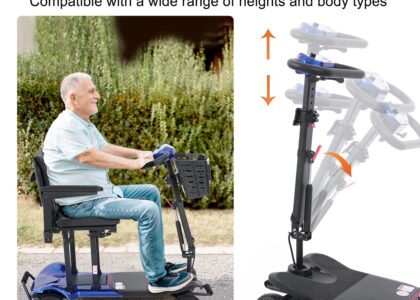
- Ease of operating forward and reverse
If you have to make dozens of small adjustments during a trip, an awkward control position can become more noticeable than it was during a five-minute test.
6. Seat Position and Getting On and Off
Stop-and-go trips can involve more than stopping the scooter.
At a restaurant, you might park and transfer to a chair. At a museum, you might stop for a longer period. At an event, you may need to get off and walk a short distance.
Consider whether the seat height, position, and surrounding space make mounting and dismounting practical for you.
Comfort also matters because repeated stopping does not necessarily mean a short outing.
7. Visibility and Scooter Width
Your ability to see what is happening around you matters in busy environments.
Consider your view over or around the tiller, the position of the controls, and whether the scooter’s dimensions allow you to judge gaps comfortably.
Width is another practical consideration. A scooter that fits comfortably through the spaces you use regularly may be easier to manage around shopping aisles, entrances, queues, restaurants, and shared walkways.
Always compare the manufacturer’s stated dimensions with the actual spaces you expect to use.
8. Stability
Stability deserves attention when a scooter repeatedly changes between stationary and moving.
You may stop on a walkway, turn, start again, or make a small correction while people move around you.
The right balance depends on where you ride. A compact design may suit portability, while a four-wheel configuration may be relevant for someone who places greater emphasis on a stable-feeling platform during travel and sightseeing.
Do not treat one configuration as automatically suitable for every rider or environment.
Feature Decision Table
| Feature | Why It Matters for Stop-and-Go Use | What to Check |
|---|---|---|
| Low-speed control | Helps with slow movement around people and objects | Speed adjustment and control response |
| Acceleration | Affects repeated starts | Smooth, predictable response |
| Braking | Determines how naturally you can stop | Brake type and real-world feel |
| Turning radius | Helps with repeated direction changes | Manufacturer specification |
| Tiller ergonomics | Controls may be used constantly | Position, reach, layout, adjustability |
| Seat position | Affects comfort and transfers | Height, space, support |
| Visibility | Helps you judge surroundings | View around tiller and controls |
| Width | Affects queues, aisles, entrances, and pathways | Overall scooter dimensions |
| Stability | Relevant when stopping, turning, and restarting | Wheel configuration and platform design |
| Forward/reverse controls | Useful for positioning after stops | Ease of switching and operating |
Real-Life Scenarios
1. Shopping in a Busy Store
Imagine entering a supermarket during a busy period.
You move forward, slow down near an aisle, stop while checking a product, restart, and stop again when another shopper crosses your path.
Here, low-speed control, predictable acceleration, steering, and scooter width may be more relevant than top speed.
Before buying, think about your usual stores. Are the aisles wide? Do you need to turn around displays? Will you frequently stop beside shelves?
2. Waiting in a Long Queue
A queue can create a different challenge.
You may remain stationary for several minutes, then move forward a short distance before stopping again.
In this situation, easy controls and a comfortable riding position become important. You should also consider whether the scooter’s width works comfortably within the available queue space.
If you frequently attend busy venues, look for real-user videos showing how a scooter behaves when making short movements rather than demonstrations that only show maximum speed.
3. Visiting a Museum or Public Attraction
Museums often involve repeated stops.
You might ride down a corridor, stop to look at an exhibit, reverse slightly, turn toward another display, and continue.
This is not simply an indoor maneuverability requirement. The repeated cycle of start, stop, observe, reposition, and restart is the important part.
A scooter with controls you can understand quickly and operate comfortably may be easier to live with during this type of outing.
4. Attending a Crowded Community Event
At a community event, movement may be unpredictable.
You could follow family members along a sidewalk, stop when the group pauses, move around people, wait near a seating area, and start again.
Here, visibility, steering, low-speed control, braking response, stability, and width can all become relevant.
User-generated videos or photos can be particularly useful because they may show a scooter in environments that manufacturer demonstrations do not cover.
TopMate Models to Consider by Use Case
The goal is not to rank the models but to understand how different designs may fit different stop-and-go situations.
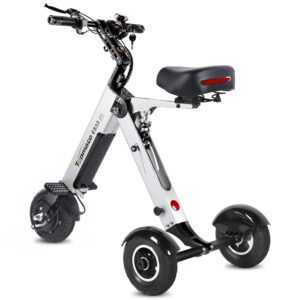
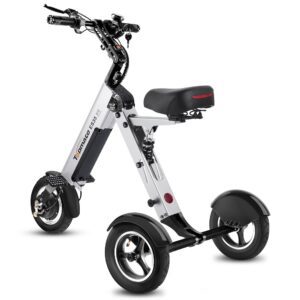
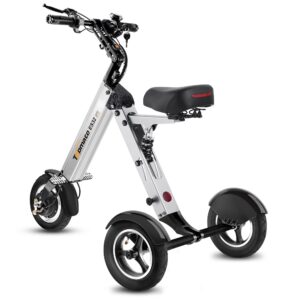
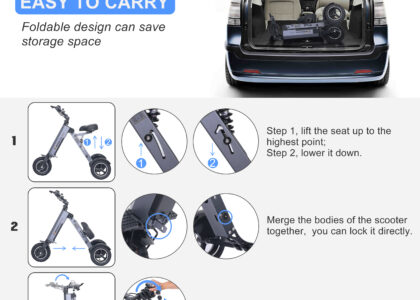
TopMate ES15: A compact, portable option to consider when your trips involve environments where carrying or transporting the scooter is also important. Think about situations such as short shopping trips, visits to public venues, or outings where portability is part of the decision.
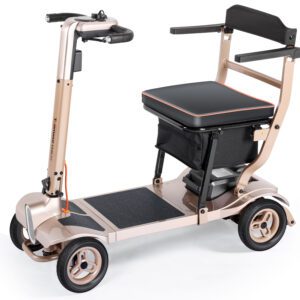
TopMate ES36: Consider this type of option when everyday indoor and community environments are central to your routine. Shopping, local errands, community facilities, and similar destinations can involve plenty of repeated starts and stops.
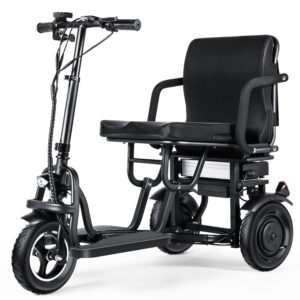
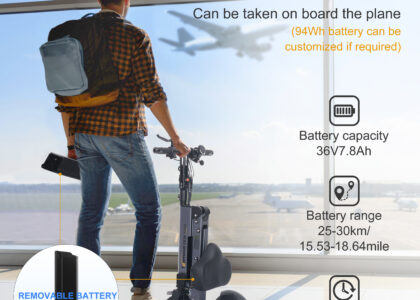
TopMate ES35: If your stop-and-go use is combined with longer everyday outings, range and overall trip practicality deserve consideration alongside control characteristics.
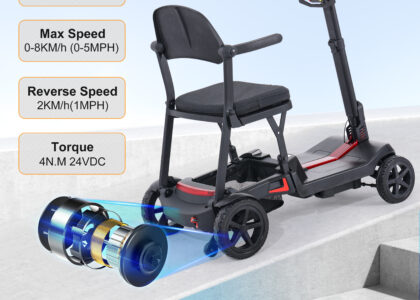
TopMate ES40: For travel and sightseeing, the four-wheel configuration may be relevant when stability is one of the factors you want to consider. Look at the complete package, including portability, controls, dimensions, and the environments you expect to visit.
Product specifications should always be checked against the manufacturer’s current information before making a purchase.
Use Videos and UGC Before Buying
Specifications are useful, but they cannot completely describe how controls feel.
Before deciding, look for:
- YouTube demonstrations showing starting and stopping
- Videos filmed from the rider’s perspective
- User-generated clips showing maneuvering in stores or public venues
- Customer photos showing the scooter in real environments
- Demonstrations of forward and reverse controls
- Videos showing how riders approach queues, entrances, or elevators
Pay attention to the rider’s hand movements. Do they make large corrections or small adjustments? Does the scooter appear easy to position precisely? Can you clearly see the controls?
These observations should complement—not replace—the manufacturer’s specifications and an in-person test when available.
How I’d Decide
If I were choosing a mobility scooter specifically for frequent stop-and-go use, I would work through the decision in this order:
First, identify where the stopping happens. A supermarket, museum, sidewalk, and community event can create very different requirements.
Second, evaluate the controls. Focus on low-speed response, acceleration, braking, and forward/reverse operation.
Third, check the physical fit. Compare width, turning radius, seat position, and tiller ergonomics with the spaces you actually use.
Fourth, consider comfort. Repeated stops can still happen during a two- or three-hour outing.
Finally, consider portability, range, and stability. These factors become more or less important depending on whether you primarily shop locally, travel longer distances, or transport the scooter regularly.
The key is to choose based on your actual pattern of movement rather than a single specification such as maximum speed.
FAQ
Is a mobility scooter for stop and go use different from an indoor mobility scooter?
Not necessarily. The difference is the use pattern. An indoor scooter may be selected primarily for navigating tight rooms and corridors. Stop-and-go use focuses on repeated acceleration, slowing, stopping, steering corrections, waiting, and restarting across places such as stores, queues, museums, and public events.
What is most important when choosing a mobility scooter for frequent stops?
Focus on predictable low-speed control, smooth acceleration, consistent braking, manageable steering, comfortable tiller controls, suitable seat positioning, visibility, width, and stability. The relative importance of each feature depends on where you ride and how often you stop.
Should I prioritize turning radius or scooter width?
Consider both. Turning radius affects how easily you can change direction, while width affects how comfortably the scooter fits through aisles, entrances, queues, and shared pathways. Compare the manufacturer’s measurements with the spaces you regularly use.
Are videos useful when comparing stop-and-go mobility scooters?
Yes. Videos can show details that specifications cannot fully communicate, such as how a rider uses the throttle, brakes, steering, and reverse controls. Look for genuine demonstrations or user-generated footage and use them alongside manufacturer specifications rather than treating videos as a substitute for testing.