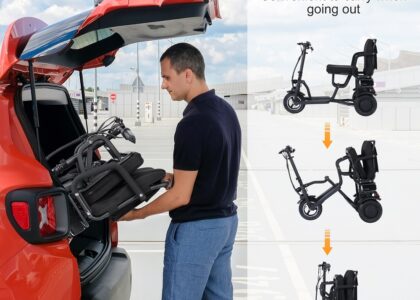
Quick Answer: The best mobility scooter for easy loading is not necessarily the lightest model. Look at the actual lift weight, whether the battery can be removed, folded dimensions, practical lifting points, and the space available in your vehicle and home. A scooter that is manageable to move repeatedly is usually more useful than one that is merely lightweight on paper.
What Makes a Mobility Scooter Easy to Load Into a Vehicle?
Loading a mobility scooter is a physical task, so the specifications that matter are different from those that matter while riding.
Start with five questions:
- How much does the scooter actually weigh when I lift it?
- Can the battery be removed first?
- How high is the vehicle’s cargo floor?
- How wide is the trunk or hatch opening?
- Can I get a secure grip on the folded scooter?
A scooter can have a compact folded shape but still be awkward to lift into an SUV.
The shape matters because you are not lifting a box. You are moving a wheeled machine with a seat, wheels, steering components, and uneven weight distribution.
Is the Advertised Scooter Weight the Same as the Weight I Have to Lift?
Not always.
Manufacturers may publish scooter weight with or without the battery. Some also list removable components separately. Therefore, the number on a product page should not automatically be treated as the exact weight you will handle.
For example, TopMate lists the ES15 at about 56.88 lb without the battery. The ES40 is listed at approximately 38.36 lb without the battery.
That distinction is important.
If a battery weighs several pounds and you cannot comfortably lift the complete scooter, removing the battery first may change the handling experience considerably.
Light Enough to Transport vs. Easy Enough to Handle
These are not the same thing.
Light enough to transport means the scooter can physically be moved by car, ramp, lift, or another person.
Easy enough to handle regularly means you can repeatedly fold, move, lift, position, unload, and store it without the process becoming a burden.
If you load your scooter three or four times a week, a small difference in handling can become significant over months.
Does a Removable Battery Make Loading Easier?
It can.
A removable battery may reduce the weight of the main scooter before lifting. It can also allow you to charge the battery separately instead of having to position the entire scooter beside an electrical outlet.
But check how the battery is removed.
A removable battery is useful only if the removal process is practical for the person who will actually use the scooter.
How Important Are Folded Dimensions?
Very important—but folded dimensions are only half of the vehicle-fit equation.
Suppose a scooter folds to a compact size. That tells you something about the space it occupies after folding.
It does not tell you whether you can get it through the vehicle opening.
Measure:
- Trunk or hatch opening width
- Cargo opening height
- Cargo-floor height
- Available cargo depth
- Available cargo width
- Available height with seats positioned normally
A small SUV may have plenty of cargo volume but still have an awkward loading opening.
This is why measuring the vehicle before buying is more reliable than assuming that an SUV automatically has enough room.
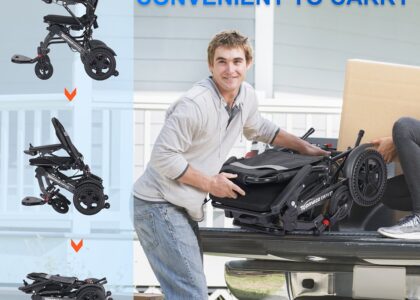
Can One Person Safely Load a Folding Mobility Scooter?
Sometimes, but folding does not automatically mean one-person loading.
The real question is whether the person can safely manage the lifting movement, not whether the scooter folds.
Before buying, simulate the process:
Fold → remove battery if possible → grip scooter → lift to cargo-floor height → position → secure.
If that sequence already feels difficult, the scooter may not be suitable for regular solo loading.
A second person, ramp, vehicle hoist, or other loading aid may be a better solution than forcing yourself to lift something too heavy.
What Should I Look for in a Small SUV or Crossover?
For a small SUV or crossover, prioritize transport dimensions over marketing descriptions.
A practical checklist is:
| Factor | What to Check |
|---|---|
| Scooter weight | Complete transport weight and battery weight |
| Carry/lift weight | Weight of the part you actually lift |
| Folded dimensions | Length × width × height |
| Removable battery | Yes/no and battery weight |
| Storage footprint | Floor space required at home |
| Vehicle loading | Cargo opening, floor height, and lifting distance |
| Everyday use | Shopping, appointments, errands, indoor use |
| Best suited user | Solo loader, caregiver, apartment resident, frequent traveler |
For example, the TopMate ES35 is listed at roughly 35.5–37.5 lb, depending on the current manufacturer specification, while the ES40 is approximately 38.36 lb without its battery. The ES15 is substantially heavier at 56.88 lb without its battery.
Those numbers illustrate why buyers should compare the actual handling requirement rather than simply looking for the word “foldable.”
How Much Storage Space Does a Scooter Need at Home?
Think about storage in three dimensions.
A scooter may fit in a closet by width but not by height. Another may fit beside an entry door but block the walking path.
Measure the location where you realistically expect to keep it:
- Entryway
- Closet
- Bedroom corner
- Garage
- Apartment storage area
- Retirement-community room
- Near a charging outlet
Also consider whether the scooter has to be moved every time you want to use that space.
A folded scooter with a relatively small footprint can be easier to live with than one that technically fits but makes the room difficult to use.
What Happens in Real Life?
Scenario 1: A Senior Loading a Scooter Into a Small SUV Alone
Imagine using the scooter for a doctor’s appointment twice a week.
The important question is not whether the scooter fits the SUV. It is whether you can repeat the loading process without assistance.
A lighter scooter with a removable battery may make more sense if solo loading is essential.
Scenario 2: A Caregiver Loading a Parent’s Scooter
A caregiver may load the scooter into a vehicle, drive to an appointment, unload it, help the parent use it, then repeat the process later.
Here, folded dimensions and lifting weight both matter.
A scooter that is awkward to grip can be inconvenient even when its total weight appears reasonable.
Scenario 3: An Apartment Resident Storing It Near the Entrance
Suppose the scooter is used almost every day and stored beside the apartment entrance.
The best configuration may not be the one with the smallest folded dimensions. It may be the one that can be folded, positioned, charged, and moved without obstructing the doorway.
Scenario 4: Weekly Grocery Shopping
For grocery trips, portability is only part of the experience.
The scooter should be easy to load into the car, but it also needs adequate rider capacity, predictable maneuverability, and useful storage for small purchases.
TopMate’s ES15, for example, combines a folding design with a removable battery and front/rear storage, but its higher transport weight means buyers should decide whether its other characteristics justify the extra lifting effort.
Scenario 5: Appointments Several Times Per Week
Frequent appointments make convenience cumulative.
If you load and unload the scooter four times a week, a process that takes significant effort each time can become more important than a specification that looks impressive on paper.
For this type of user, I’d put handling simplicity near the top of the buying checklist.
What Are the Trade-Offs Between Portability, Comfort, Stability, and Range?
There is rarely a scooter that maximizes everything.
A lighter scooter may be easier to lift but have less capacity or smaller wheels.
A heavier model may offer features that make outdoor riding more comfortable but require more help with loading.
Three-wheel designs can offer useful maneuverability in tight spaces, while four-wheel designs may appeal to riders who prefer a different stability profile.
Similarly, choosing more range can make sense for longer outings, but if most trips are short and the scooter is loaded into a car several times a week, extra range may not compensate for a difficult transport process.
The right choice depends on the actual routine.
Where Do TopMate Models Fit?
A few TopMate models illustrate the different approaches.
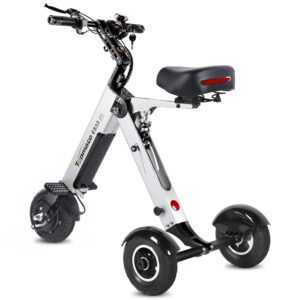
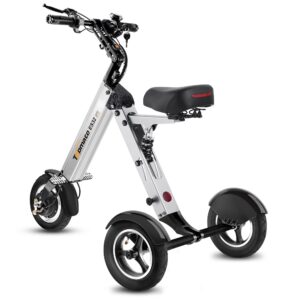
The TopMate ES35 is relevant when low transport weight is a major priority. Current manufacturer information lists it at around 35.5–37.5 lb, with a folding design and removable battery.
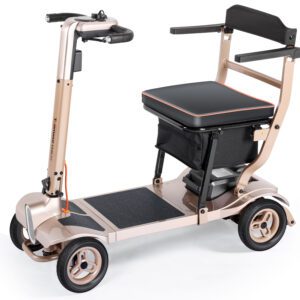
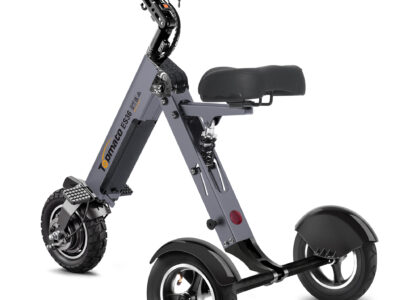
The TopMate ES40 takes a four-wheel approach while remaining relatively compact. TopMate lists it at approximately 38.36 lb without the battery and gives folded dimensions of about 40.16 × 18.1 × 16.5 inches.
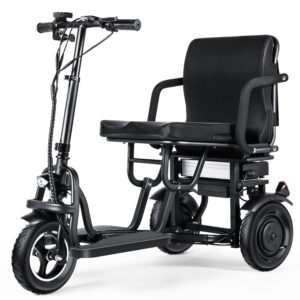
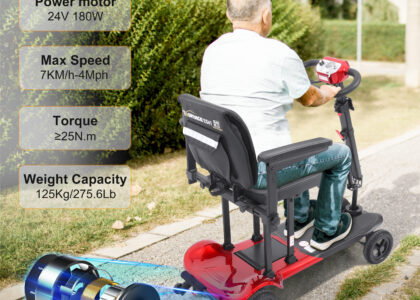
The TopMate ES15 is a different proposition. Its 56.88-lb published weight excludes the battery, but it offers a removable lithium battery, folding mechanism, larger pneumatic tires, and a higher published load capacity.
These examples show why there is no single portability specification that answers the buying question.
Common Mistakes When Choosing a Portable Scooter
Choosing by weight alone: A lighter scooter is not automatically easier to load if its shape is awkward.
Ignoring battery weight: The advertised scooter weight may exclude the battery.
Measuring only the trunk: The opening can be more restrictive than the cargo area.
Assuming folding solves everything: Folding reduces size, not necessarily lifting effort.
Forgetting home storage: A scooter can fit in a car and still be inconvenient inside an apartment.
Prioritizing maximum range: More range is not always more useful if daily trips are short.
Skipping a real handling test: If possible, physically fold, grip, and move the scooter before purchasing.
FAQ
What makes a mobility scooter easy to load into a car?
A mobility scooter is easier to load when it has a manageable carry weight, compact folded dimensions, a removable battery, and practical areas to grip. The weight you actually need to lift matters more than the scooter’s advertised total weight. For frequent car or SUV loading, these factors should be considered together.
Can one person lift a folding mobility scooter into an SUV?
Yes, some folding mobility scooters can be lifted by one person, but it depends on the scooter’s actual carry weight, the person’s strength, and the height of the vehicle. Removing the battery or other detachable components can reduce the weight being lifted. A ramp or loading aid may be safer for heavier scooters.
How much storage space does a folding mobility scooter need?
Storage needs depend on the scooter’s folded dimensions and how you plan to store it. Measure the available space near your entryway, closet, garage, or apartment before buying. Also consider doorways, elevators, charging access, and whether the folded scooter can be stored upright or needs floor space.
Is a lightweight mobility scooter suitable for everyday use?
A lightweight scooter can be convenient for everyday errands, appointments, and transportation, but low weight should not be the only consideration. Check seat comfort, stability, range, weight capacity, turning space, controls, and battery removal. The best choice is one that balances portability with the features you need for regular use.