Using a mobility scooter in crowded places can be manageable, but the experience depends heavily on maneuverability, turning space, pedestrian awareness, scooter dimensions, speed control, and planning. A busy venue is less about how fast the scooter can travel and more about how confidently and patiently you can move through changing spaces.
The Outing Started Before I Reached the Door
I imagined a typical afternoon at a busy public place: a shopping center with crowded entrances, narrow sections, stores, elevators, and people moving in different directions.
The first thing I realized was that the outing really started before entering the building.
I checked the battery, thought about how long I expected to stay, and considered which entrance would be easiest to use. If I were visiting an unfamiliar venue, I would also check its accessibility information beforehand and confirm whether mobility scooters are permitted.
That small amount of planning could make a surprisingly big difference.
A crowded entrance is not the place where I would want to discover that one door is too narrow, an elevator is difficult to reach, or an alternative entrance is located on the other side of the building.
Getting Through the Crowded Entrance
Once inside, the biggest adjustment was speed.
A mobility scooter can feel very different in an empty hallway compared with an entrance where people are walking in every direction. Someone may stop suddenly, change direction, look at their phone, or step sideways without noticing the scooter.
I would rather travel slowly and have time to react than try to maintain a normal walking pace.
This was one of the clearest lessons from the scenario:
Slowing down matters more than having a high top speed.
In a crowded public place, I would keep the speed low enough that I could stop comfortably if someone moved into my path.
The horn can also be useful when appropriate, but I would not rely on it as a substitute for awareness. A brief signal may get someone’s attention, but pedestrians cannot always hear or immediately understand where the sound is coming from.
How Much Turning Space Do I Really Need?
This became more important than I initially expected.
Straight-line travel is usually straightforward. Turning around a display, moving between people, entering a store, or repositioning near an elevator can require much more space.
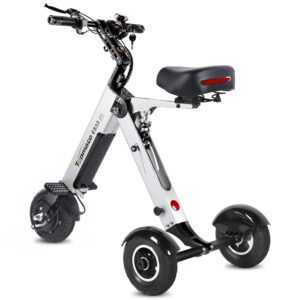
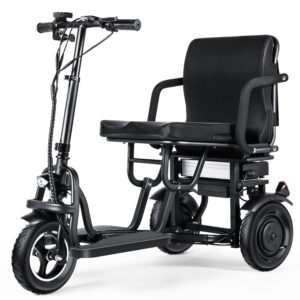
A compact scooter can be easier to handle indoors because there is less scooter body to account for when navigating tight areas. However, “compact” does not automatically mean that every space will be easy.
I would pay attention to:
- Overall scooter length and width
- Turning radius
- Handlebar or tiller movement
- Seat position
- How much room is needed to reverse
- Whether the rear of the scooter swings during a turn
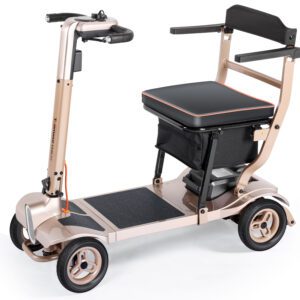
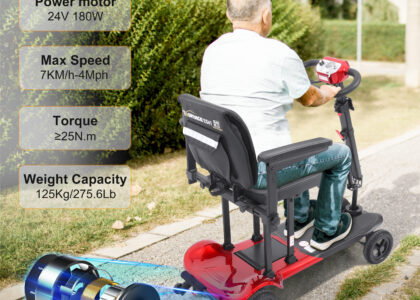
A four-wheel scooter can provide a stable platform, but in a particularly tight indoor environment, its dimensions and turning characteristics may make some maneuvers less convenient than with a smaller, more compact design. mobility scooter in crowded places
The important question is not simply, “Is it four-wheel or three-wheel?”
It is, “Can I comfortably turn it in the spaces I expect to use?”
What Happens When Someone Steps in Front of Me?
This is probably one of the most realistic challenges in a busy public place.
People do not always notice mobility scooters. A person might walk directly across the path, stop suddenly, or stand in an aisle while talking.
My response would be simple: slow down, stop when necessary, and give the person time to move.
I would not try to squeeze through a small gap simply because it looks technically possible.
Leaving extra space around pedestrians also reduces stress. The goal is not to get through a crowded area as quickly as possible. It is to move predictably and safely.
Doors and Tight Turns
Doorways are another place where dimensions matter.
Before entering a narrow doorway, I would approach slowly and make sure there is enough clearance for the scooter, my hands, and any bags or belongings.
If the scooter does not fit comfortably, I would not force it through.
That might mean finding another entrance, asking venue staff for assistance, or choosing a different route.
This is one reason checking accessibility information before an outing can be worthwhile. Accessibility can vary considerably between buildings, entrances, and venues.
Taking the Elevator
If the destination required an elevator, I would try to avoid entering at the busiest moment.
Waiting for the next elevator can be easier than trying to squeeze into one that is already crowded.
Inside the elevator, I would position the scooter so that other passengers have enough room to enter and exit. I would also avoid blocking the doors.
The same principle applies throughout a public building:
Do not occupy more space than necessary when other people need to move around you.
Finding Somewhere to Stop
Eventually, I would probably want to stop for a few minutes.
This sounds simple until you are sitting on a scooter with people walking around you.
I would look for an area away from the main flow of pedestrians rather than stopping in the middle of an aisle or directly beside an entrance.
That makes the experience easier for everyone and gives me a chance to check my belongings, look at a map, or simply rest without worrying about blocking someone.
What Actually Matters in Crowded Places
After going through this scenario, several practical factors stand out.
1. Maneuverability
A scooter needs to respond predictably when turning, stopping, and changing direction.
2. Footprint
Length and width matter when navigating stores, elevators, entrances, and narrow walkways.
3. Speed Control
Precise low-speed control can be more useful indoors than a high maximum speed.
4. Visibility and Awareness
Lights, mirrors, and a horn can be useful depending on the environment, but they work best alongside careful observation.
5. Battery Planning
Range still matters, especially if the outing includes a large venue, shopping, waiting, or traveling between multiple locations.
Five Lessons I Would Remember
1. Slowing down matters more than having a high top speed.
Crowded environments change constantly. Having enough time to react is more useful than traveling quickly.
2. Turning space can matter more than overall range indoors.
A scooter with plenty of range is not necessarily convenient if it is difficult to turn around furniture, displays, or narrow corners.
3. Planning entrances and exits reduces stress.
Knowing where accessible entrances, elevators, and alternative routes are located can make an unfamiliar venue easier to navigate.
4. A compact footprint can help.
Smaller dimensions can make indoor maneuvering easier, although the actual turning characteristics still need to suit the user.
5. Patience is part of operating a scooter in public.
People will sometimes walk into the path unexpectedly. Leaving extra space and waiting rather than forcing a maneuver makes the outing more manageable.
What I Would Do Differently Next Time
If I were preparing for another crowded outing, I would plan the route more carefully.
I would check the venue entrance, consider when the location is busiest, and identify elevators or accessible routes before arriving.
I would also practice tight turns at home or in an open area first. Knowing how much room the scooter actually needs would make me more confident when facing a crowded aisle.
If the outing were likely to last several hours, I would think about battery usage and whether bringing the charger would be practical.
I would also keep bags and personal items secure rather than allowing them to extend into walkways.
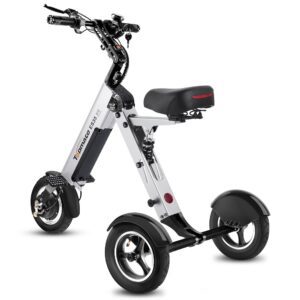
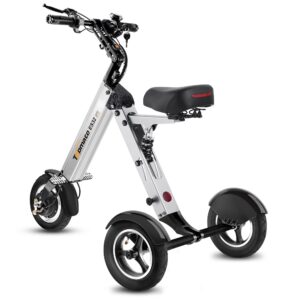
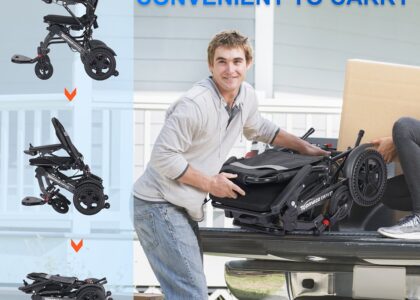
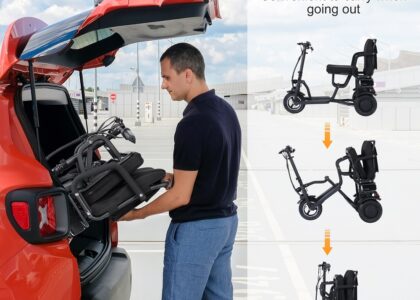
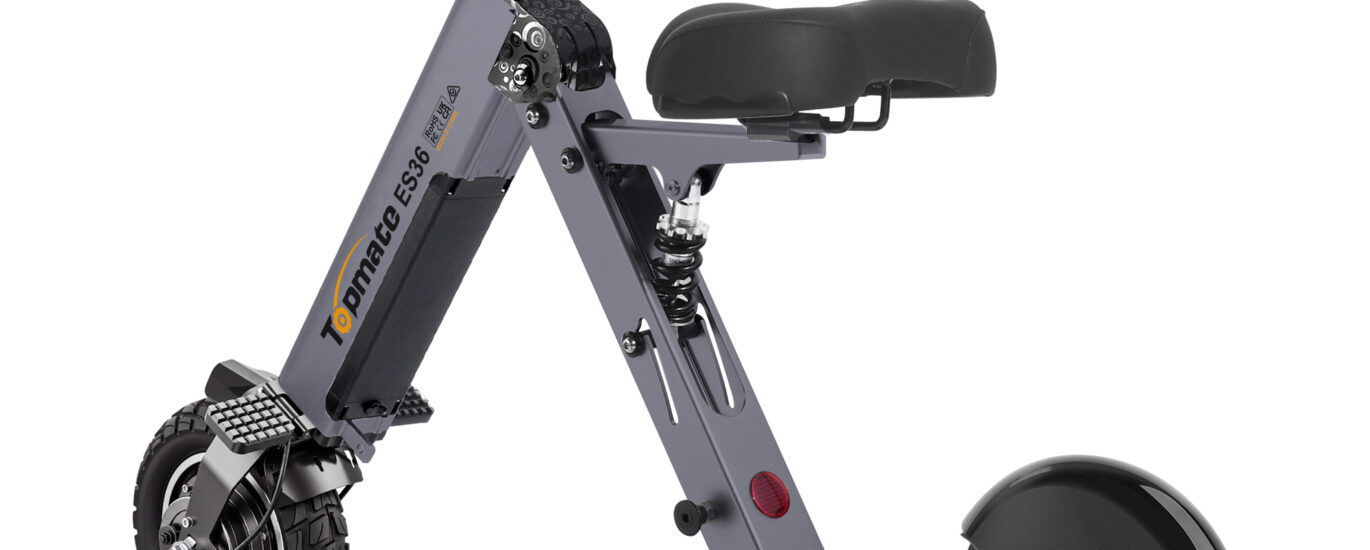
A compact or folding model, such as a TopMate scooter, could be relevant for someone whose routine includes transporting or storing the scooter between outings. But the same basic checks still apply: dimensions, turning space, weight, controls, and the user’s ability to operate it comfortably.
Common Mistakes to Avoid
- Entering a busy venue without checking accessibility first
- Traveling too quickly around pedestrians
- Assuming people will always notice the scooter
- Ignoring the scooter’s turning radius
- Stopping in the middle of an entrance or aisle
- Carrying unsecured bags that interfere with steering
- Assuming every elevator or doorway will provide the same amount of space
- Waiting until the battery is very low before planning the trip home
- Trying to force the scooter through a space where it does not fit comfortably
Before You Take a Mobility Scooter Into a Crowded Place
- Check the battery.
- Know which entrance you plan to use.
- Consider avoiding peak hours if possible.
- Check door and elevator access.
- Practice tight turns before the outing.
- Bring the charger if the expected trip makes it appropriate.
- Keep important items secure.
- Check the venue’s accessibility or mobility-device rules when appropriate.
- Think about how you will leave if the venue becomes especially crowded.
Key Takeaways
Using a mobility scooter in crowded places is not necessarily difficult, but it requires a different approach from riding in an open area. Low-speed control, maneuverability, compact dimensions, and awareness often matter more than maximum speed.
The best preparation is practical: know the route, understand the scooter’s turning space, keep a safe distance from pedestrians, avoid blocking entrances, and leave yourself enough battery for the entire outing.
Most importantly, do not assume that a space will work simply because another scooter could use it. If a doorway, aisle, elevator, or entrance does not provide comfortable clearance, look for another option.
FAQ
Is a mobility scooter difficult to use in crowded places?
A mobility scooter can be used in crowded places, but busy environments require slower speeds, careful observation, and enough space to turn and stop. Pedestrians may change direction unexpectedly, so maintaining a comfortable distance and avoiding sudden maneuvers can make the experience easier and less stressful.
How much turning space does a mobility scooter need?
The amount of turning space depends on the scooter’s design, dimensions, and turning radius. Compact scooters generally need less room than larger models, but users should check the manufacturer’s specifications and practice turning before visiting narrow stores, elevators, doorways, or crowded public areas.
What speed should I use with a mobility scooter in crowded places?
A low, controlled speed is generally more appropriate around pedestrians. The goal should be to maintain enough control to stop quickly when someone steps into the path. Maximum speed is less important than smooth acceleration, predictable steering, and the ability to slow down comfortably.
What should I do if my mobility scooter does not fit through a doorway?
Do not force the scooter through a doorway if there is not enough comfortable clearance. Look for an accessible alternative entrance or route, or ask venue staff for assistance. Because building layouts and accessibility policies vary, checking the venue before your visit can help avoid this situation.