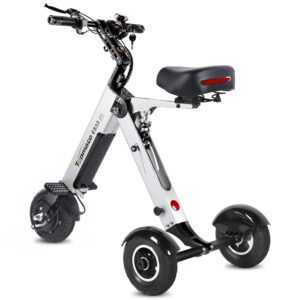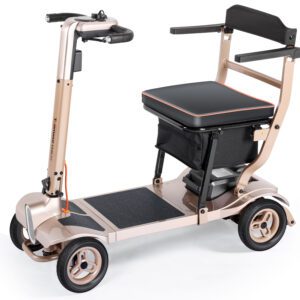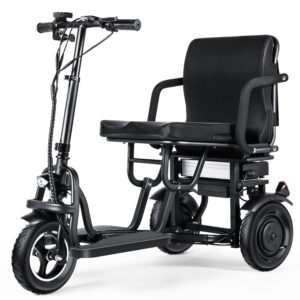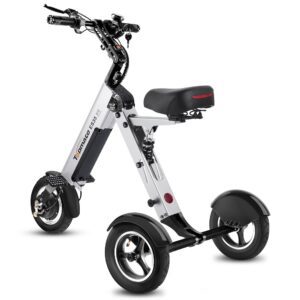
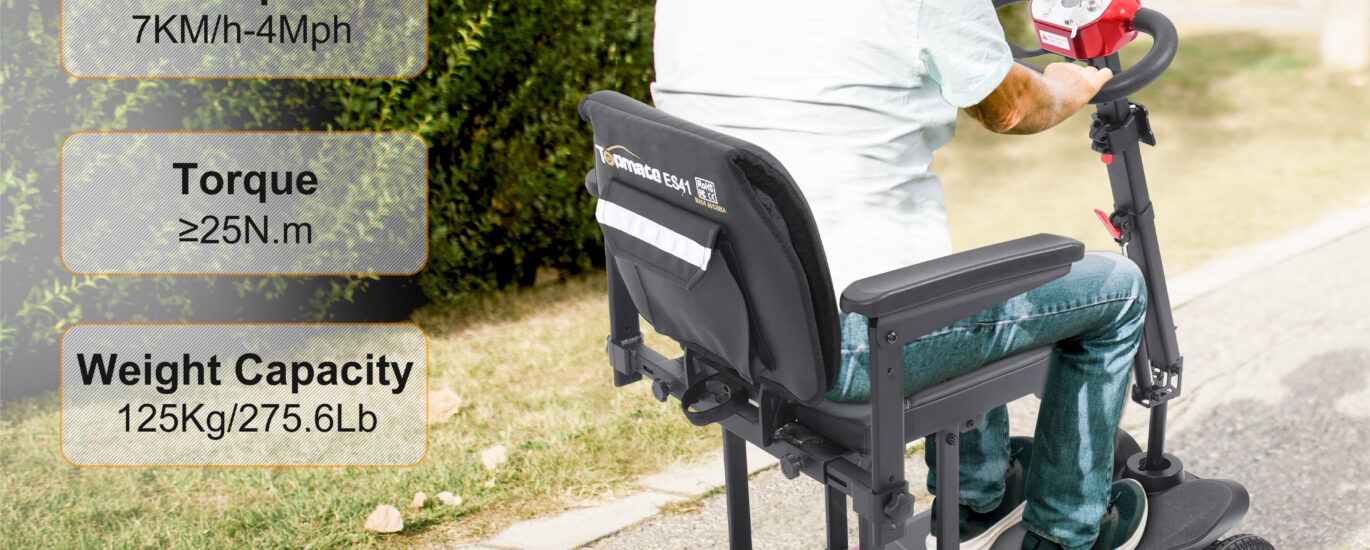
Yes, a mobility scooter in a garage can often be stored safely if the space is dry, protected from leaks and condensation, and reasonably protected from extreme temperatures. Battery requirements vary by model and battery chemistry, so always follow the scooter and battery manufacturer’s storage instructions before leaving the scooter or battery in a garage.
Key Takeaways
- A garage can be practical storage for a mobility scooter when the environment is dry and suitable.
- Extreme heat or cold can affect batteries and may make charging unsuitable.
- Dampness and condensation can cause problems for electrical connections, metal components, and charging equipment.
- Removable batteries may give you more flexibility, but they should be stored according to the manufacturer’s instructions.
- Keep the scooter on a dry, level surface away from leaks, standing water, and direct environmental exposure.
- Folded dimensions are useful when deciding whether a folding scooter will fit comfortably in a garage.
- Always check the owner’s manual for battery storage and charging requirements.
Is a Mobility Scooter Safe to Store in a Garage?
For many people, a garage is a convenient place to store a mobility scooter. It keeps the scooter out of living areas while providing easy access when you need to drive outside.
However, not every garage is suitable.
The main question is not simply whether the scooter is indoors. You also need to consider temperature, moisture, battery storage, charging conditions, and accessibility.
A dry, reasonably stable garage is generally more suitable than a garage that becomes extremely hot, extremely cold, damp, or exposed to rainwater.
How Does Garage Temperature Affect a Mobility Scooter?
Temperature matters most when considering the battery.
Extreme heat and cold can affect battery performance, charging behavior, and long-term battery condition. However, there is no single temperature range that applies to every mobility scooter because battery chemistry, battery design, chargers, and scooter electronics differ.
For that reason, avoid relying on a general internet temperature recommendation.
Instead, check the owner’s manual or the battery manufacturer’s instructions for:
- Recommended storage conditions
- Charging temperature requirements
- Whether the battery can remain installed
- Whether the battery should be removed
- Any requirements for long-term storage
This is particularly important with lithium batteries. Different lithium battery systems can have different storage and charging requirements, so one model’s instructions should not automatically be applied to another.
Can Moisture Damage a Scooter in a Garage?
Yes. A damp garage can create problems even if the scooter itself is not directly exposed to rain.
High humidity, condensation, roof leaks, and water on the garage floor can affect electrical components, connectors, metal parts, and charging equipment over time.
Try to keep the scooter away from:
- Roof or pipe leaks
- Standing water
- Areas that regularly become damp
- Open garage doors during heavy rain
- Persistent condensation
- Wet cleaning equipment or dripping vehicles
A scooter should be stored in a dry area rather than directly beside a source of moisture.
A cover may provide some protection from dust, but it should not be treated as a substitute for a dry storage environment. Avoid covering a scooter in a way that traps moisture around the electronics.
Should the Battery Stay in the Scooter?
It depends on the scooter and battery design.
Some mobility scooters have permanently installed batteries, while others use removable battery packs. If your scooter has a removable battery, check the manufacturer’s instructions before deciding where to store it.
Before putting the scooter away for an extended period, check the instructions for whether the battery should:
- Remain installed
- Be removed and stored separately
- Be charged to a particular level
- Be checked or recharged periodically
Do not assume that every lithium battery should be stored in exactly the same way.
If you are unsure, the owner’s manual is the most appropriate source for model-specific guidance.
Should You Charge a Mobility Scooter in the Garage?
You can charge a mobility scooter in a garage only when the manufacturer’s charging instructions allow it and the environment is suitable.
The charging area should be dry and free from water, leaks, and other hazards. Avoid charging where the scooter, charger, plug, or electrical connection could become wet.
Temperature is also important. A garage that becomes extremely hot or cold may not be an appropriate place to charge the battery if the manufacturer specifies charging-temperature limitations.
Before charging, check:
- The battery and charger instructions.
- Whether the garage temperature is suitable.
- That the charger and electrical connections are dry.
- That the scooter is positioned safely and cannot be knocked over.
- That the charging cable is not creating a trip hazard.
Never improvise battery-charging procedures simply because another scooter uses a similar-looking battery.
Where Should You Put a Scooter on the Garage Floor?
Choose a dry, level surface with enough clearance around the scooter.
Avoid placing it where water can collect underneath the wheels or where a vehicle, bicycle, lawn equipment, or storage boxes could knock into it.
If the garage floor is prone to condensation or occasional water, consider whether another dry storage location would be more appropriate.
The scooter should also remain accessible. A storage position that protects the scooter but makes it difficult to remove defeats much of the convenience of garage storage.
How Much Garage Space Does a Mobility Scooter Need?
The answer depends on whether you plan to store the scooter folded or unfolded.
An unfolded scooter requires enough space for its full length and width, plus room to approach it and move it out of the garage.
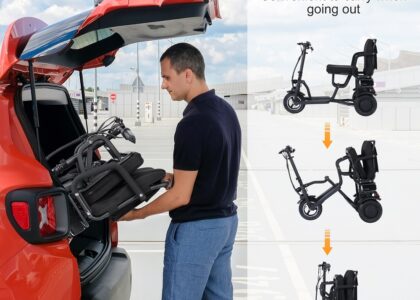
A folding mobility scooter can make storage easier because its folded dimensions can be compared with the available space before you buy or store it.
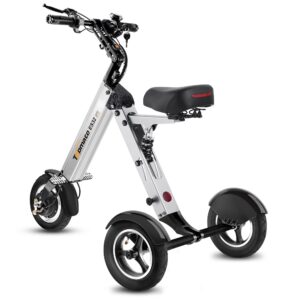
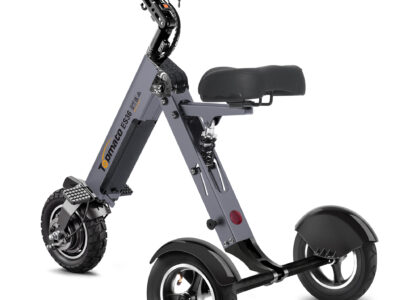
For example, a folding model such as a TopMate scooter may be considered when the main storage challenge is limited garage space. The important point is to compare the scooter’s actual folded dimensions with your available floor, shelf, closet, or entryway space rather than assuming every folding scooter takes up the same amount of room.
Also consider the space needed to lift, unfold, or maneuver the scooter. Storage dimensions are only part of the calculation.
Before Storing Your Scooter in a Garage
Use this quick checklist before leaving your scooter in the garage:
1. Check temperature conditions
Make sure the garage environment and any charging conditions meet the manufacturer’s requirements.
2. Keep the area dry
Look for leaks, condensation, standing water, and persistent humidity.
3. Follow battery storage instructions
Check whether the battery should stay installed or be removed and how it should be stored.
4. Protect the scooter from leaks
Keep it away from roof leaks, pipes, open doors during rain, and areas where water collects.
5. Keep charging equipment dry
The charger, plug, connector, and cable should be protected from moisture.
6. Leave enough room to remove the scooter
Do not pack boxes or equipment tightly around it.
7. Inspect it before use
Check the battery, tires, controls, cables, connectors, and visible components before riding after storage.
When a Garage May Not Be the Right Storage Location
A garage may not be a practical storage location if it has conditions that are difficult to control.
Examples include:
- An unheated garage exposed to severe temperature extremes
- A damp or flood-prone garage
- A garage with roof leaks
- A space with persistent condensation
- A location where the scooter would be difficult to access
- An area where charging equipment could be exposed to moisture
- A garage where vehicles or stored equipment could damage the scooter
In these situations, another dry, protected storage area may be more appropriate.
The goal is not simply to find somewhere to park the scooter. The storage location should help protect the scooter and battery while keeping the scooter practical to use.
Final Answer
A mobility scooter in a garage can be a practical storage solution when the garage is dry, reasonably protected from temperature extremes, and free from leaks and other environmental hazards. Battery storage and charging requirements vary, so the owner’s manual should always take priority over general advice.
If the garage is damp, frequently exposed to severe temperatures, or difficult to access, consider another suitable storage location.
FAQ
Can a mobility scooter be left outside overnight?
It is generally better to store a mobility scooter in a dry, protected location rather than leaving it exposed to rain, condensation, or extreme weather. Check the manufacturer’s storage instructions for specific environmental limitations.
How should I store a mobility scooter for a long period?
Start by checking the owner’s manual for long-term storage instructions. Pay particular attention to battery charge and storage requirements, temperature, moisture protection, and whether the battery should remain installed or be removed.
Can I cover my mobility scooter in a garage?
A cover can help reduce dust, but the scooter should already be stored in a dry environment. Choose a suitable cover that does not create a damp, poorly ventilated space around the scooter.
How do I prepare a folding mobility scooter for storage?
Clean and inspect the scooter, follow the manufacturer’s battery-storage instructions, fold it according to the operating instructions, and place it on a dry, level surface where it remains easy to access. Check the folded dimensions if you are planning storage in a tight area.