Choosing between a folding mobility scooter and a portable power wheelchair can be challenging, especially when both options promise convenient, powered mobility. However, they are designed for different needs. Factors such as seating support, steering controls, physical comfort, portability, and daily travel requirements can make one option more suitable than the other.
Quick Answer: A folding mobility scooter may be suitable for people who can sit upright, maintain balance, and operate handlebar-style steering. A portable power wheelchair may be more appropriate for people who need wheelchair-style seating, joystick controls, or additional positioning support. The right choice depends on individual mobility requirements rather than portability alone.
What Is the Difference Between a Folding Mobility Scooter and a Portable Power Wheelchair?
Although both devices provide powered mobility, their designs, controls, and intended applications are different.
Folding Mobility Scooter
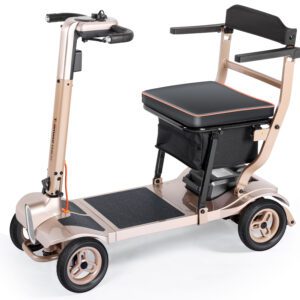
A folding mobility scooter is an electric mobility device with a seat, handlebars, and a steering tiller. The rider uses the handlebars to control direction and operates the available speed controls to move forward or backward.
Most folding mobility scooters are designed for people who can:
- Sit upright comfortably.
- Maintain sufficient balance while seated.
- Reach and operate the steering controls.
- Transfer onto and off the scooter.
These scooters are commonly used for shopping, visiting local places, outdoor activities, and covering distances that might otherwise require considerable walking.
Portable Power Wheelchair
A portable power wheelchair is an electrically powered wheelchair that generally uses a joystick for steering and movement.
Depending on the model, it may provide:
- Wheelchair-style seating.
- Different backrest and armrest configurations.
- Additional positioning and postural support options.
- Joystick or alternative electronic controls.
Some power wheelchairs fold into compact shapes, while others separate into smaller components for transportation.
Their suitability for indoor and outdoor use depends on their dimensions, turning performance, tires, and overall design.
The main distinction is that a mobility scooter does not automatically replace a wheelchair when someone requires specific seating or positioning support.
Folding Mobility Scooter vs. Power Wheelchair: What Are the Main Differences?
Before purchasing either device, compare the features that affect everyday usability.
| Comparison Factor | Folding Mobility Scooter | Portable Power Wheelchair |
|---|---|---|
| Steering | Tiller or handlebars | Usually joystick |
| Seating | Scooter-style seat | Wheelchair-style seating |
| Posture support | Depends on seat design | Depends on wheelchair configuration |
| Turning | Depends on wheelbase | Depends on wheelchair design |
| Portability | Folding frame on suitable models | Folding or detachable designs |
| Storage | Depends on folded dimensions | Depends on folded dimensions |
| Transportation | Check lifting weight and battery | Check lifting weight and battery |
| Common applications | Shopping and outdoor trips | Indoor and outdoor powered mobility |
| User controls | Hand and arm steering | Joystick or alternative controls |
Neither category is automatically lighter, more comfortable, or easier to transport. Individual models can differ considerably, so comparing actual specifications is important.
Which Device Is Better for Different Everyday Situations?
The best way to understand the difference is to consider how each device fits into everyday activities.
1. Shopping and Visiting Local Places
Shopping involves more than travelling from a parking area to a store entrance. Users may need to navigate narrow aisles, turn around shelves, approach checkout counters, and move through crowded spaces.
A folding mobility scooter can work well in stores with sufficient turning space. However, its steering arrangement and turning radius should be considered before purchasing.
A portable power wheelchair may be more suitable for someone who needs wheelchair-style seating or joystick operation. Its overall width and turning performance should still be checked when visiting smaller shops.
2. Moving Around Inside the Home
Indoor mobility requires careful attention to measurements.
Consider the following:
- Doorway widths.
- Hallway space.
- Furniture arrangements.
- Kitchen and bathroom access.
- Turning space near tables and beds.
A compact mobility scooter may work in a spacious home, but its turning requirements can make some rooms difficult to navigate.
A suitably sized power wheelchair may provide a more appropriate arrangement for someone who needs wheelchair-based mobility. However, not every power wheelchair fits through standard doorways.
Measure your available indoor space before choosing either device.
3. Outdoor Travel and Longer Outings
For outdoor activities, consider battery range, seating comfort, tires, ground conditions, and the distance between charging opportunities.
A folding mobility scooter may suit shopping trips, park visits, and local journeys when the user can comfortably operate its controls.
A power wheelchair may be more appropriate when someone needs continuous powered mobility or specific seating support throughout an outing.
Remember that advertised battery range is not always the same as real-world range. Rider weight, terrain, speed, temperature, and battery condition can affect the actual distance travelled.
4. Car Transportation and Storage
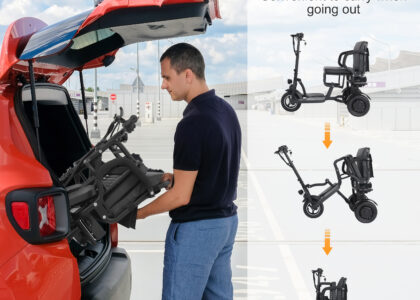
A device that folds is not necessarily easy for one person to lift.
Before purchasing, compare:
- Total device weight.
- Weight after removing the battery.
- Folded dimensions.
- Folding and unfolding effort.
- Available vehicle boot space.
- Whether another person must help with lifting.
For example, someone travelling regularly in a small car may need a different model from someone with a larger SUV and a caregiver available to assist with transportation.
5. Frequent Travel
Frequent travellers should investigate transportation arrangements before purchasing.
Check whether the device fits into your vehicle, whether its battery can be removed, and whether airlines or other transport providers accept its battery configuration.
Lithium battery restrictions vary by carrier and applicable transport regulations. A folding design or removable battery does not automatically make a mobility device airline-approved.
Always confirm the battery specifications and obtain approval from the relevant carrier before travelling.
Which One Is Easier to Control?
Control systems are among the most important differences between these mobility devices.
A folding mobility scooter uses tiller steering. The rider moves the handlebars to change direction and operates the available speed controls using their hands.
This arrangement may suit someone who is familiar with handlebar-style steering and has sufficient hand strength and arm movement.
A power wheelchair generally uses a joystick. The rider moves the joystick in the desired direction to control movement.
However, joystick operation also requires suitable hand control, coordination, and the ability to understand the device’s sensitivity.
Before choosing, consider these questions:
- Can you comfortably reach the handlebars?
- Can you grip and operate the scooter controls?
- Can you move a joystick accurately?
- Do you have difficulty with hand strength or finger movement?
- Can you turn comfortably in restricted spaces?
If you are unsure, arrange a demonstration before purchasing. An occupational therapist or qualified mobility specialist can help assess which control arrangement is appropriate.
Which Is Easier to Transport?
There is no universal winner in the folding mobility scooter vs. power wheelchair comparison when transportation is concerned.
Some mobility scooters fold into compact frames, while some power wheelchairs fold or separate into smaller components.
Consider a caregiver who regularly loads mobility equipment into a car. The caregiver should check the heaviest individual component rather than relying only on the advertised weight without the battery.
Also consider whether:
- The battery can be removed easily.
- The folding mechanism requires significant physical effort.
- The device can be lifted without awkward handling.
- The folded shape fits through the vehicle’s boot opening.
- The manufacturer provides clear transportation instructions.
A device that is easy to fold but difficult to lift may not be practical for everyday travel.
When Should You Choose a Folding Mobility Scooter?
A folding mobility scooter may be worth considering if you:
- Can sit upright comfortably.
- Can maintain adequate seated balance.
- Can operate tiller steering.
- Want powered assistance for shopping and local outings.
- Need a folding device for car transportation.
- Do not require specialized wheelchair seating or positioning support.
For example, someone who walks independently around the home but struggles with longer shopping trips may find a mobility scooter useful for covering additional distances.
The important consideration is whether the scooter’s seating and steering arrangement meets the user’s everyday mobility needs.
When Should You Choose a Portable Power Wheelchair?
A portable power wheelchair may be worth considering if you:
- Need wheelchair-style seating.
- Find tiller steering difficult.
- Prefer joystick-based or alternative electronic controls.
- Require additional positioning or postural support.
- Need powered mobility for more continuous everyday movement.
For instance, someone who cannot comfortably maintain their position on a standard scooter seat may need a wheelchair configuration with more suitable support.
People with complex mobility or postural requirements should consult an occupational therapist or qualified mobility specialist before choosing a device.
Is the TopMate ES35 Worth Considering?
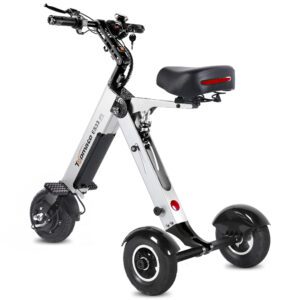
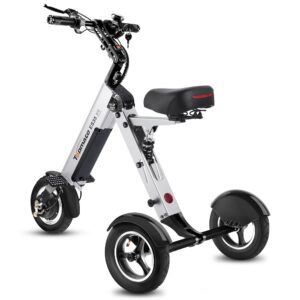
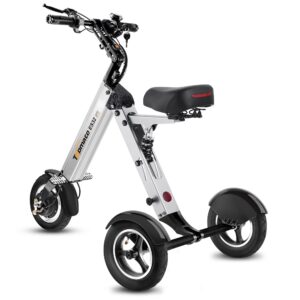
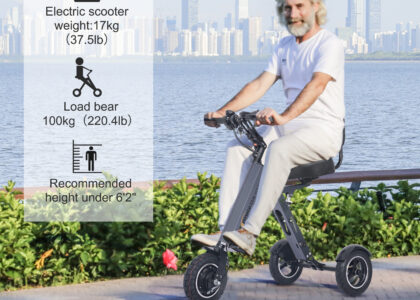
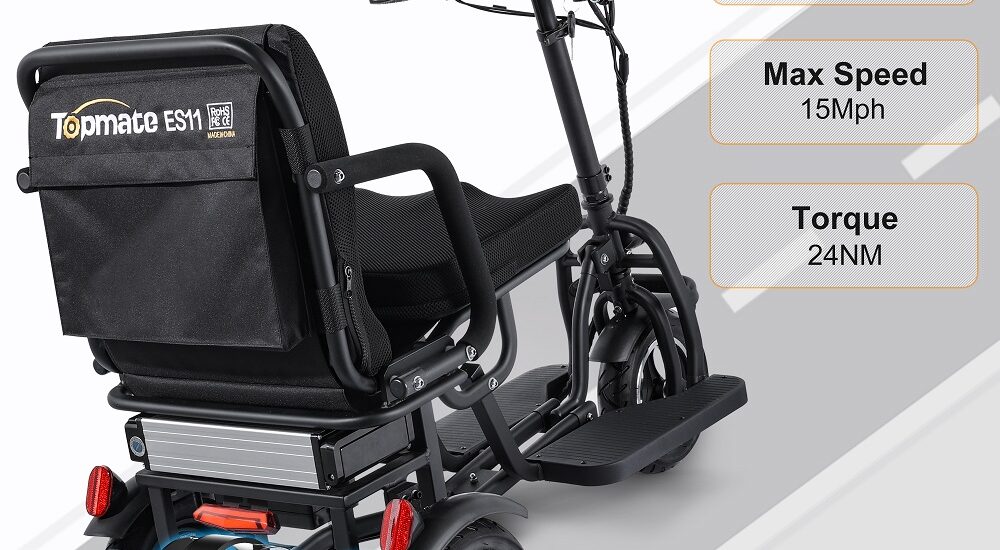
The TopMate ES35 is an example of a folding mobility scooter designed for adults who want a portable option for everyday journeys and outdoor outings.
Its listed features include:
- Three-wheel folding design.
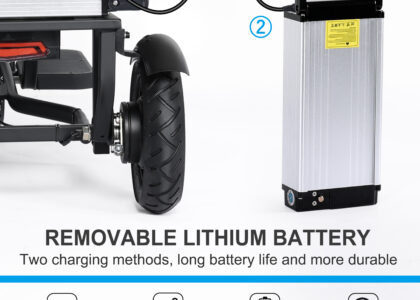
- Removable 36V 7.8Ah lithium battery.
- 250W motor.
- Three forward speed settings.
- Listed riding range of approximately 15.53–18.64 miles.
- Listed maximum load capacity of approximately 220.5 lb.
- 10-inch pneumatic tires.
- Reverse function.
These features may appeal to someone who can operate scooter-style steering and wants a folding device for shopping, commuting, or recreational trips.
However, there is an important distinction: the ES35 has a scooter-style seat and tiller controls. It is not a power wheelchair and should not be presented as a replacement for wheelchair-style seating or specialized positioning support.
You can explore the TopMate ES35 folding mobility scooter to review its specifications and features.
Always check the latest product information and confirm the exact model specifications before purchasing.
What Should You Check Before Making Your Decision?
Before choosing either device, consider the following practical checklist:
- Seating comfort: Can you sit comfortably for the duration of your usual journeys?
- Postural support: Do you need additional back, arm, or positioning support?
- Control system: Can you comfortably operate handlebars or a joystick?
- Weight capacity: Does the device support your weight within its stated limits?
- Travel distance: Does the battery range meet your typical daily requirements?
- Indoor access: Can the device navigate your doorways and available turning spaces?
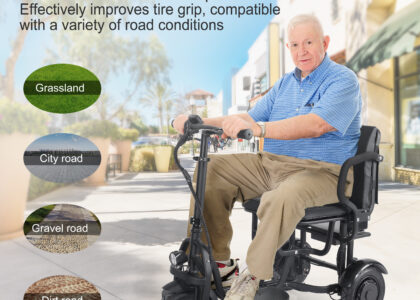
- Outdoor requirements: Are its tires and design appropriate for your usual routes?
- Transportation: Can you fold, lift, and store it without difficulty?
- Battery arrangements: Are charging and battery removal convenient?
- After-sales support: Are replacement parts, maintenance, and warranty services available?
Do not choose a device simply because it has the smallest folded dimensions. Comfort, control, and suitability for everyday mobility are equally important.
Conclusion
The folding mobility scooter vs. power wheelchair decision depends on the user’s physical abilities, seating requirements, and everyday activities.
A folding mobility scooter may suit someone who can sit upright, maintain balance, and operate tiller steering while travelling to shops, local destinations, and outdoor locations.
A portable power wheelchair may be more appropriate for someone who needs wheelchair-style seating, joystick controls, or additional positioning support.
Before making a decision, compare specific models, test the controls where possible, measure transportation space, and seek professional guidance when necessary.
The best device is the one that supports the user’s actual mobility needs rather than simply offering the most convenient folding mechanism.