Introduction
Imagine two people shopping for a mobility scooter. One regularly travels by car and needs something that fits into a small trunk. The other wants a scooter that supports a higher body weight, provides more seating space, and feels comfortable during longer journeys.
Although both need mobility assistance, their requirements are quite different.
This is where understanding lightweight vs. heavy-duty mobility scooters becomes important. A lightweight scooter generally offers easier transportation and storage. In contrast, a heavy-duty model may provide a higher weight capacity and a more substantial seating platform. However, the right choice depends on more than the scooter’s overall weight.
Quick Answer
A lightweight mobility scooter prioritizes portability, folding convenience, and easier transportation. Meanwhile, a heavy-duty mobility scooter generally focuses on higher weight capacity, wider seating, and more substantial construction. The best choice depends on your body weight, comfort requirements, daily travel distance, and transportation arrangements.
What Is the Difference Between Lightweight and Heavy-Duty Mobility Scooters?
The main difference involves the balance between portability, weight capacity, and construction.
Lightweight mobility scooters usually feature compact frames, folding mechanisms, and removable batteries. As a result, they can be suitable for people who travel frequently, have limited storage space, or need to transport their scooter in a vehicle.
On the other hand, heavy-duty mobility scooters generally accommodate higher rider weights. They may also feature wider seats, larger frames, and more substantial components. Consequently, these models can suit people who need additional seating space or have weight requirements beyond the capacity of standard portable scooters.
One important distinction is that lightweight and heavy-duty are broad product descriptions rather than standardized weight classifications. Therefore, always compare the manufacturer’s specifications instead of relying on these labels alone.
When Does a Lightweight Mobility Scooter Make More Sense?
A lightweight scooter can be a practical choice when transportation and storage matter more than having a larger vehicle.
Consider these everyday situations:
- Frequent car travel: If you regularly visit shopping centers, medical appointments, or family members, a portable scooter can make transportation more convenient.
- Limited storage: People living in apartments or smaller homes may prefer a folding model because it requires less storage space.
- Caregiver assistance: When a family member helps fold and transport the scooter, manageable component weights can make the process easier.
- Short everyday journeys: For trips around residential communities, shopping areas, or nearby locations, a compact scooter may meet everyday mobility requirements.
- Family holidays: Similarly, a folding scooter can be useful for road trips and other outings when storage space matters.
However, portability also comes with certain limitations. Some lightweight models have lower weight capacities, smaller seats, or fewer comfort features.
Before purchasing, check the maximum supported rider weight, battery configuration, seat dimensions, and manufacturer’s transportation instructions. This way, you can make sure the scooter meets your physical and practical requirements.
When Should You Consider a Heavy-Duty Mobility Scooter?
A heavy-duty mobility scooter may be more appropriate when a standard portable model cannot meet your physical or comfort requirements.
For example, a rider whose weight approaches or exceeds the maximum capacity of a lightweight scooter should consider a model with an appropriately higher weight rating.
There are several other situations where a larger scooter may be worth considering:
- Higher weight requirements: You need a scooter with a greater manufacturer-rated load capacity.
- More seating space: A wider seat and additional footroom may help provide a more comfortable riding position.
- Longer journeys: You want a configuration designed around your daily travel requirements.
- Additional comfort: A larger seat, supportive backrest, and suitable suspension may matter during extended rides.
- Regular outdoor use: You need to evaluate the tires, ground clearance, motor, and overall construction for your usual routes.
Nevertheless, a heavy-duty scooter does not automatically provide a longer battery range, higher speed, or better performance on rough surfaces. Instead, compare these specifications individually before making your decision.
Five Important Factors to Compare Before Buying
Rather than choosing a scooter based on appearance, evaluate these five important factors.
1. Weight Capacity
First, check your body weight against the manufacturer’s maximum load limit. Remember to include clothing, bags, and other belongings when estimating the total load.
Additionally, avoid choosing a scooter that only just meets your weight requirement. A suitable capacity is essential for selecting an appropriate model.
2. Total Scooter Weight
Next, check whether the published weight includes the battery.
For example, a scooter weighing 40 lb without its battery may weigh considerably more when fully assembled. Therefore, if you regularly lift it into a vehicle, ask the manufacturer for the individual component weights.
3. Transportation Requirements
Think about your vehicle and the assistance available to you.
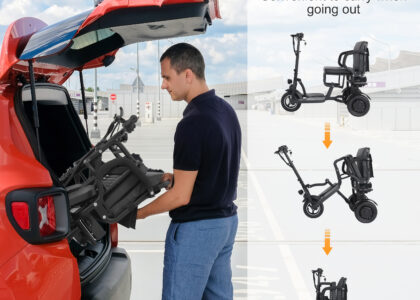
A folding scooter may fit inside an SUV but still be difficult to lift into a sedan. For this reason, consider the folded dimensions, loading height, removable battery, and the person’s lifting ability before purchasing.
4. Comfort and Seating
Comfort is another important consideration, particularly if you use your scooter regularly.
Compare seat width, back support, foot space, and riding position. Whenever possible, test the scooter before purchasing. Although a compact model may be convenient to transport, its seat or legroom might not suit your body.
5. Daily Travel Requirements
Finally, estimate your typical journey rather than relying entirely on the advertised maximum range.
Consider your route, rider weight, road conditions, inclines, battery condition, and charging opportunities. All these factors can affect the actual riding distance. Consequently, choose a battery configuration that supports your everyday routine.
Lightweight vs. Heavy-Duty Mobility Scooters: Side-by-Side Comparison
The following table highlights the typical differences between these two categories. However, individual models may not follow every characteristic.
| Buying factor | Lightweight scooter | Heavy-duty scooter |
|---|---|---|
| Overall weight | Generally lighter | Generally heavier |
| Portability | Easier to transport in many cases | Requires more planning |
| Weight capacity | Often lower, varies by model | Often higher |
| Seating | Frequently more compact | May offer wider seating |
| Storage | Often requires less space | May require more space |
| Transportation | Folding designs are common | Vehicle compatibility is important |
| Lifting | Often easier, depending on components | May require assistance |
| Intended use | Travel and everyday convenience | Higher capacity and specific comfort needs |
As the comparison shows, neither category is automatically better. Instead, your physical requirements and daily routine should determine which specifications matter most.
Which Type Is Better for Different Buyers?
Different buyers should prioritize different features depending on their lifestyle and mobility requirements.
A senior who frequently travels by car
A lightweight folding scooter may be a practical option. Look for manageable component weights, compact folded dimensions, and a battery that can be removed for charging.
A rider who needs higher weight capacity
In this situation, prioritize the manufacturer’s maximum load rating. Although a lightweight scooter may be easier to transport, you should never sacrifice the required weight capacity for portability.
Someone living in a small home
A compact folding model may be easier to store in a closet, garage, or designated indoor space. Before ordering, measure the available storage area to ensure the folded scooter will fit.
A person taking longer daily journeys
Compare the stated battery range, charging time, seat comfort, and expected route conditions. Importantly, a heavier scooter is not necessarily the better option for longer distances.
Someone whose caregiver transports the scooter
Consider the caregiver’s lifting ability and transportation arrangements. For instance, a scooter with removable components may be more manageable than a fully assembled model, even when both have similar overall weights.
Where Do Folding Mobility Scooters Fit Into This Decision?
Folding mobility scooters offer another option for buyers who want to balance portability with everyday mobility.
However, folding does not automatically mean lightweight. Some folding models still require considerable effort to lift, particularly when the battery remains attached.
Before choosing one, examine the following features:
- Folded dimensions: Will it fit inside your vehicle or storage area?
- Total weight: How much does it weigh with the battery installed?
- Component weight: Can you remove the battery or other parts before lifting?
- Weight capacity: Does the scooter support your body weight?
- Folding mechanism: Can you fold and unfold it independently?
- Battery configuration: Does the battery meet your charging and travel requirements?
TopMate Folding Mobility Scooter Examples
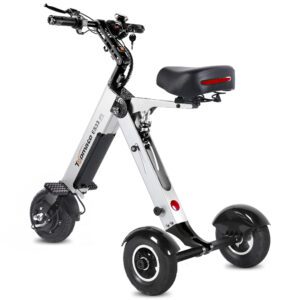
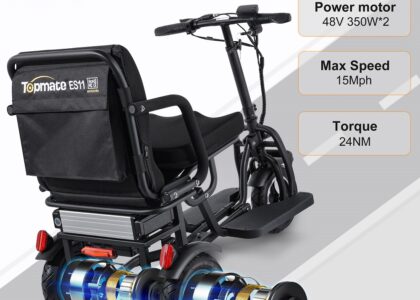
I offers several folding models that illustrate how portable scooters can have different weight capacities and configurations.
TopMate ES32
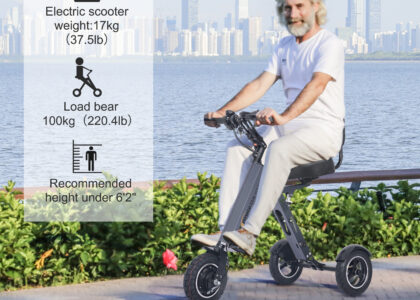
The ES32 user manual lists a net weight of approximately 35.3 lb and a maximum load of 220.4 lb. Its published folded dimensions are approximately 17.33 × 19.67 × 34.64 inches. Therefore, buyers can use these measurements to evaluate whether the scooter suits their transportation and storage requirements.
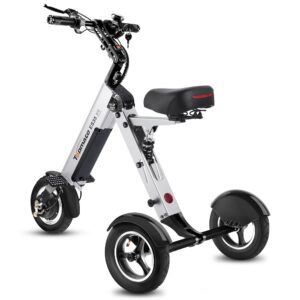
TopMate ES33
The ES33 manual lists a weight of approximately 35.4 lb and a maximum load of 220.4 lb. Its folded dimensions are approximately 15.7 × 20.8 × 33.6 inches. These specifications provide another example of a compact folding design.
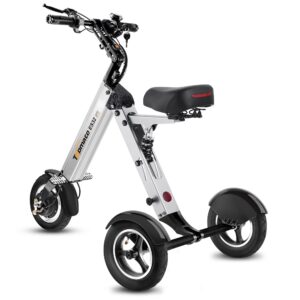
TopMate ES36
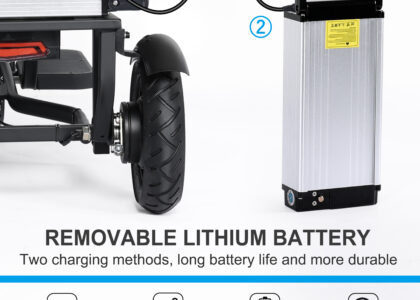
The ES36 product listing specifies a weight of 39.2 lb, a maximum load of 220.5 lb, and folded dimensions of approximately 18.1 × 22.8 × 35.2 inches. Additionally, it features a removable battery, which may help with charging and transportation arrangements.
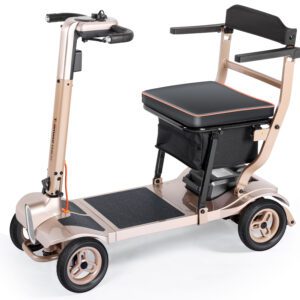
TopMate ES40
The ES40 manual lists a weight of 38.36 lb without the battery and a maximum load of 275.6 lb. Its folded dimensions are approximately 40.16 × 18.1 × 16.5 inches. Furthermore, its four-wheel configuration offers another design to consider when comparing folding scooters.
Important: These examples should not automatically be classified as heavy-duty scooters. Their published capacities range from approximately 220 to 276 lb. Always compare the latest product configuration with its corresponding manual before purchasing.
How to Make the Final Buying Decision
Start by establishing your required weight capacity. This should be your first consideration because a scooter that cannot safely accommodate its rider is not a suitable choice, regardless of how convenient it is to fold.
Next, evaluate comfort, seating dimensions, daily travel distance, and transportation arrangements.
For example, if you regularly load your scooter into a car, portability may be your priority. However, if you need additional seating space or a higher weight capacity, investigate larger models designed for those requirements.
Before placing an order, confirm the following:
- Maximum supported rider weight.
- Scooter weight with and without the battery.
- Folded and unfolded dimensions.
- Seat width and back support.
- Battery range and charging requirements.
- Warranty and manufacturer support.
Ultimately, the lightest scooter is not necessarily the best choice, and the heaviest scooter is not necessarily the most comfortable or capable. Choose the model that meets your actual physical, transportation, and everyday mobility requirements.
FAQ
What is the difference between a lightweight and heavy-duty mobility scooter?
A lightweight mobility scooter prioritizes portability, compact storage, and easier transportation. In contrast, a heavy-duty mobility scooter generally supports higher rider weights and may offer wider seating and a larger frame. However, manufacturers use different specifications, so buyers should compare actual weight limits and dimensions.
Are lightweight mobility scooters suitable for heavier adults?
Some lightweight scooters support higher rider weights than others. However, suitability depends on the manufacturer’s maximum load capacity, seat dimensions, and overall design. Therefore, check the published specifications before purchasing, and never exceed the recommended weight limit.
Do heavy-duty mobility scooters always have longer battery ranges?
No. Battery range depends on battery capacity, motor efficiency, rider weight, terrain, speed, and riding conditions. For example, a lightweight scooter with a larger battery may travel farther than a heavier model with a smaller battery. Therefore, compare battery specifications and realistic travel requirements.
What should I check before buying a lightweight folding mobility scooter?
Check its maximum weight capacity, total weight, removable battery weight, folded dimensions, seat comfort, and folding mechanism. Additionally, consider whether you can lift the scooter independently or need assistance. If you plan to travel by air, confirm battery restrictions directly with your airline.