Quick Answer
The best mobility scooter for grocery shopping without a car is one that is easy to maneuver, has enough battery range for the round trip, can carry the rider and essential items, and is practical to store at home. For short local trips, portability may matter most. For longer errands, everyday stability, outdoor capability, and storage become more important.
Grocery Shopping Without a Car Is More Than Getting From A to B
A grocery trip can look simple on paper: leave home, travel to the store, shop, and return.
In practice, there may be a sidewalk, driveway, parking lot, curb cut, uneven pavement, crowded aisles, a checkout line, and several bags of groceries to deal with before you get home.
That changes what matters when choosing a mobility scooter.
A scooter that works well inside the house may not be practical for a 3-mile round trip to a supermarket. Likewise, a larger outdoor scooter may be more capable than necessary if your local store is only a few blocks away and you need to lift the scooter into storage afterward.
The right choice depends on the entire shopping trip, not just the scooter’s maximum range or speed.
What Does a Typical Grocery Trip Look Like?
Before comparing scooters, think through your actual route.
Home → doorway → sidewalk → street crossing → store entrance → shopping aisles → checkout → loading groceries → trip home
Each part creates a different requirement.
Getting out of the house
If the scooter has to pass through a narrow doorway or be stored in a small apartment, overall size and folding design can matter more than maximum range.
You should measure the narrowest doorway, storage area, elevator entrance, and any tight turns before buying.
Traveling to the store
Look at the actual route rather than measuring distance in a straight line.
A store that appears to be one mile away might require a longer route because of road crossings or inaccessible sidewalks.
Also consider the pavement. Smooth sidewalks are very different from cracked concrete, gravel, grass, or steep sections.
Shopping inside the store
A scooter needs to be manageable around shelves, checkout areas, other shoppers, and tight corners.
Turning space matters because grocery stores can become surprisingly crowded during busy periods.
Bringing groceries home
The trip does not end when you reach the checkout.
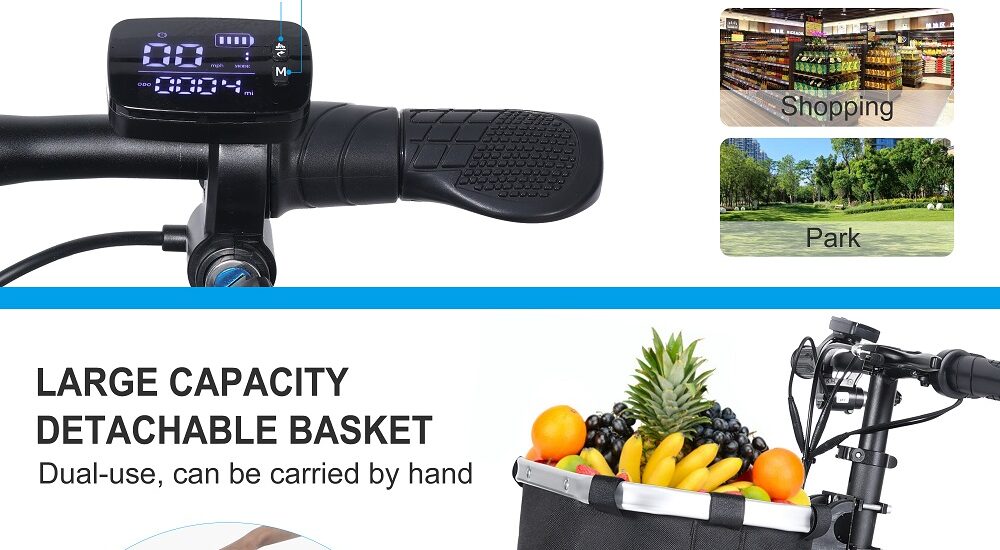
Think about where your groceries will go while you are riding. A small amount of shopping may be manageable with a basket or storage accessory, while a larger grocery trip may require a different arrangement.
Do not overload the scooter or place bags where they could interfere with steering, controls, visibility, or your feet.
7 Things That Matter Most for Grocery Shopping
1. Real-world range
Battery range should be considered as a round-trip requirement, not simply the distance from your home to the store.
For example, if the store is 1.5 miles away, you already have a 3-mile round trip before allowing for detours or additional stops.
A practical calculation is:
Home → store → other stops → home + extra margin
Weather, rider weight, terrain, speed, battery condition, and frequent stopping can affect actual range, so the manufacturer’s maximum range should not automatically be treated as your everyday range.
2. Maneuverability
A grocery store involves more turning than many outdoor trips.
You may need to:
- Turn between shelves
- Reverse from a checkout area
- Navigate around other shoppers
- Enter elevators
- Approach automatic doors
- Make tight turns at home
A scooter that is easy to maneuver can make the shopping experience less stressful.
3. Storage for groceries
Consider how much you normally buy.
If you usually purchase a few items, built-in storage or a suitable accessory may be enough.
If you regularly buy several bags of groceries, plan ahead. You may need to make smaller shopping trips, use a delivery service for heavier items, or arrange another way to transport the groceries.
Avoid hanging heavy bags from the handlebars unless the manufacturer specifically allows it.
4. Weight and portability
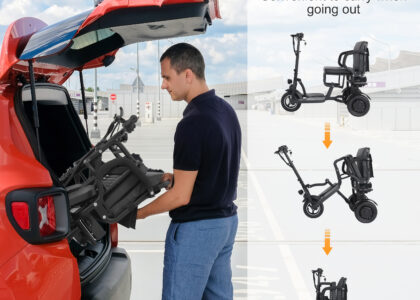
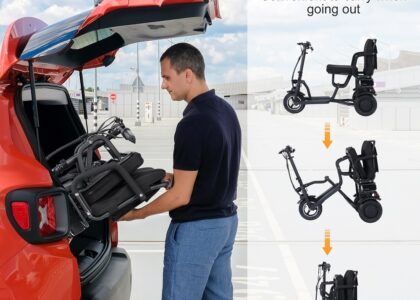
If you do not have a car, you may need to move the scooter manually at some point.
For example, you might need to:
- Move it through an apartment
- Store it inside your home
- Lift or reposition it over a small threshold
- Take it into another form of transportation
- Move it when cleaning or rearranging the room
A lighter folding scooter can be useful when frequent transportation and storage are major concerns.
5. Outdoor capability
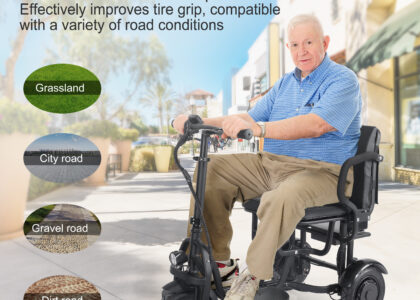
The route between home and the supermarket may include uneven sidewalks, driveway transitions, small slopes, or rough pavement.
This is where the scooter’s wheel configuration, ground clearance, tires, suspension, and overall design become relevant.
Do not assume that a scooter designed primarily for indoor use will automatically be comfortable on every outdoor surface.
6. Comfort
A grocery trip can take longer than expected.
You may spend 20 minutes traveling, another 30–45 minutes shopping, and additional time waiting at checkout.
Seat comfort, riding position, tiller adjustment, and the ability to operate the controls comfortably can therefore matter just as much as portability.
7. Ease of storage at home
Think about where the scooter goes after you return with the groceries.
Will it fit beside the kitchen?
Can it be folded in an apartment?
Does it need to remain assembled?
Can you charge the battery conveniently?
A scooter that is difficult to store or charge may become inconvenient even if it performs well during the actual trip.
Can You Use a Mobility Scooter Inside a Supermarket?
In many cases, mobility scooters are designed to be used in indoor public spaces, but the practical question is whether your particular scooter can maneuver safely in that environment.
Before your first trip, consider the width of the aisles, turning areas, checkout layout, and store policies.
Large shopping carts, promotional displays, crowded aisles, and other customers can reduce available space.
Drive slowly and leave enough room around other people. Avoid sudden turns, and take extra care when approaching doors, ramps, or crowded checkout areas.
If a store has unusually narrow aisles, ask whether there is a less crowded time to shop.
How Much Range Do You Need?
There is no single range requirement for every grocery shopper.
Your needs may look something like this:
| Shopping pattern | What to consider |
|---|---|
| Nearby supermarket | Short round trip plus reserve |
| Supermarket + pharmacy | Additional distance and waiting time |
| Farmers market | Outdoor surfaces and maneuverability |
| Multiple stores | More range and planning |
| Large shopping center | Range, comfort, and indoor maneuverability |
| Weekly large grocery trip | Storage and another way to transport heavier items |
The important point is to calculate the complete journey.
If you regularly make several stops, do not choose a scooter based only on the distance to your first destination.
Real-Life Shopping Scenarios
Scenario 1: The local supermarket
You live in an apartment and the supermarket is less than a mile away.
Your biggest priorities may be easy storage, simple maneuvering, and enough range for the round trip.
A highly portable folding scooter can make sense if you also need to move or store it frequently.
Scenario 2: Grocery store plus pharmacy
Your shopping trip includes two nearby businesses.
Now the distance between stops matters. You should calculate the entire route rather than treating each destination separately.
A little extra battery capacity can provide useful flexibility.
Scenario 3: Farmers market
A farmers market may involve outdoor pavement, uneven surfaces, crowds, and limited space.
Here, outdoor capability and maneuverability may matter more than simply having the smallest folded size.
Scenario 4: Several errands in one trip
You may visit a supermarket, pharmacy, bank, and another store before returning home.
This is where an everyday-use scooter can become more useful than a scooter chosen only for occasional short trips.
Plan the route beforehand and leave a reasonable battery reserve.
Scenario 5: Shopping from a retirement community
If your home is within a retirement community, the grocery trip may include internal roads, sidewalks, shared paths, elevators, and several buildings.
In this situation, consider the complete environment around your home rather than just the supermarket.
Where Do ES15 and ES35 Fit?
Different scooter designs can make sense for different grocery-shopping routines.
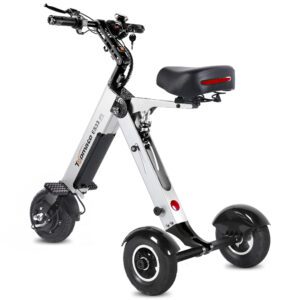
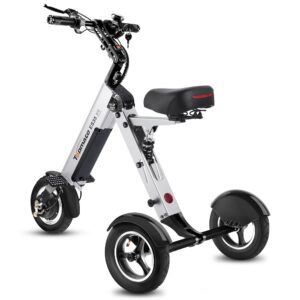
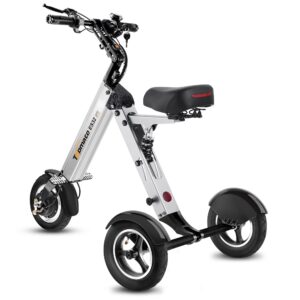
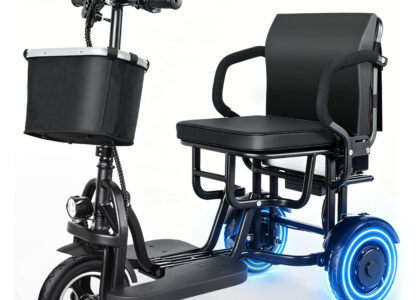
TopMate ES15 fits situations where portability is a major priority. Its lightweight, portable design can be useful for people who have limited storage space or frequently need to move and transport their scooter.
For example, an apartment resident making short local shopping trips may value a scooter that is easier to store and transport.
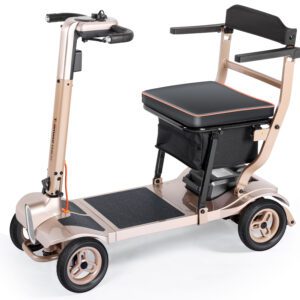
TopMate ES35 is positioned more toward everyday use while retaining portability and providing greater suitability for outdoor use. It may make more sense for someone whose grocery trip is part of a broader routine involving regular outdoor travel and multiple everyday errands.
The important distinction is not simply which model has more features. It is whether the scooter’s design matches the way you actually travel.
Before Your First Grocery Trip, Check These 8 Things
Before leaving home, ask:
- Is the battery sufficiently charged for the complete round trip?
- Have I included extra distance for detours?
- Is my planned route suitable for the scooter?
- Can I comfortably enter the store?
- Will I have enough space to turn between aisles?
- Where will my groceries go?
- Can I safely carry the groceries without affecting steering?
- What will I do if the battery becomes low before I get home?
A short test trip can reveal problems that specifications alone cannot.
Try traveling to a nearby shop first rather than making your first journey a long weekly grocery run.
Common Mistakes to Avoid
One common mistake is choosing a scooter based only on its advertised range.
Another is forgetting the return journey.
Some shoppers also underestimate how much storage they need. A scooter may be perfectly suitable for traveling to the supermarket but less practical when you are carrying several bags.
Finally, do not overlook the route itself. A short distance on poor pavement may be more demanding than a longer trip on smooth sidewalks.
FAQ
What is the best mobility scooter for grocery shopping without a car?
The right mobility scooter depends on your route, distance, storage needs, terrain, and how much you normally shop. For short local trips where portability is important, a compact folding design can be useful. For regular outdoor errands, everyday stability, comfort, and outdoor capability may matter more.
Can I use a folding mobility scooter inside a grocery store?
Yes, a folding mobility scooter can be practical inside many grocery stores if its dimensions and maneuverability suit the environment. Check the store’s policies, allow space around other shoppers, drive slowly, and make sure the scooter can turn comfortably in the aisles and checkout area.
How far should a mobility scooter travel for grocery shopping?
Calculate the complete round-trip distance rather than the one-way distance. Include additional stops, route changes, and a reasonable battery reserve. Actual range can vary with rider weight, terrain, speed, battery condition, and other factors, so maximum advertised range should not be treated as a guaranteed everyday distance.
How can I carry groceries on a mobility scooter?
Use the scooter’s intended basket or storage area, or an accessory approved for that model. Keep heavy items low and secure, and never allow grocery bags to interfere with steering, controls, visibility, or your feet. For large grocery trips, consider splitting the shopping into smaller trips or arranging another way to transport heavier items.