Quick Answer
Yes, in many places you can ride a mobility scooter on sidewalks because these devices are designed to help people with limited mobility travel safely. However, local regulations and property policies can vary. Always follow local rules, ride at a safe speed, give priority to pedestrians, and stay alert to your surroundings to ensure a safe and respectful experience.
Why Are Mobility Scooters Allowed on Sidewalks?
A mobility scooter is a personal mobility device that helps individuals with limited mobility travel independently. Unlike cars or motorcycles, mobility scooters are intended for everyday activities such as visiting stores, attending appointments, or enjoying parks and neighborhoods.
Because of their purpose and relatively low operating speeds, sidewalks are generally considered a safer environment than busy roads. Sidewalks separate scooter users from moving traffic while providing a predictable route for short-distance travel.
However, sidewalks are shared spaces. People walking, jogging, pushing strollers, or walking pets all use the same pathways. This means mobility scooter users have a responsibility to ride carefully and respectfully.
Sidewalk riding is often the preferred option when:
- Traveling through residential neighborhoods
- Visiting local shops and businesses
- Going to medical appointments
- Entering parks or community centers
- Moving between parking areas and building entrances
Although sidewalks are commonly used by mobility scooter riders, regulations differ by country, state, city, or municipality. Checking local guidance before riding in a new area is always a smart decision.
When Should You Avoid Riding on Sidewalks?
While sidewalks are generally the safest place for a mobility scooter, there are situations where extra caution—or choosing another route—may be necessary.
Crowded Sidewalks
Busy shopping districts, festivals, or tourist attractions can become difficult to navigate safely. Riding slowly or waiting until the path clears helps protect everyone.
Narrow Pathways
Some sidewalks are too narrow for comfortable passing. If pedestrians have little room to move around your scooter, reduce your speed and allow others to pass first whenever possible.
Damaged or Uneven Surfaces
Cracked pavement, potholes, loose gravel, tree roots, or broken concrete can affect stability and comfort. Approach these areas carefully or choose an alternative path if available.
Construction Zones
Temporary barriers, equipment, and uneven walkways can create unexpected hazards. Construction areas may also require detours for pedestrian traffic.
Areas with Access Restrictions
Certain public or private properties may have their own policies regarding mobility devices or access routes. Always respect posted signs and follow any instructions provided by property management.
Choosing safety over convenience helps reduce the risk of accidents and creates a better experience for everyone sharing the sidewalk.
Sidewalk Safety Tips for Mobility Scooter Users
Safe riding is about more than following rules—it also means showing courtesy to others and staying aware of changing conditions.
Here are some practical habits every mobility scooter user should follow:
- Travel at a walking pace when pedestrians are nearby.
- Always give way to people walking.
- Slow down before crossing driveways or intersections.
- Stay alert for children, pets, and cyclists.
- Watch carefully for uneven pavement and obstacles.
- Turn on lights or use reflective accessories when visibility is poor.
- Keep both hands available for steering whenever possible.
- Avoid using your phone while driving.
- Leave enough space when passing other sidewalk users.
- Regularly inspect your scooter’s brakes, tires, and battery.
Sidewalk Safety Checklist
| Situation | Recommended Action |
|---|---|
| Crowded sidewalk | Reduce speed and allow pedestrians to pass |
| Driveway crossing | Slow down and check for vehicles |
| Uneven pavement | Proceed carefully or choose another route |
| Poor visibility | Use lights and reflective accessories |
| Children or pets nearby | Reduce speed and prepare to stop |
| Approaching intersections | Stop, observe traffic, and cross carefully |
| Narrow sidewalk | Yield when necessary and avoid blocking the path |
Following these simple practices makes sidewalk travel safer and more comfortable for both riders and pedestrians.
Can You Cross Roads With a Mobility Scooter?
Yes, mobility scooter users often need to cross roads while traveling between sidewalks or reaching destinations. Safe road crossing requires patience, visibility, and awareness.
Whenever possible, use designated crosswalks rather than crossing in the middle of the street. Crosswalks are designed to improve visibility for both pedestrians and mobility scooter users.
If traffic signals are available, wait for the appropriate crossing signal before moving. Avoid trying to rush across before traffic has fully stopped.
To improve visibility:
- Wear bright or reflective clothing.
- Turn on your scooter’s lights if equipped.
- Make eye contact with drivers whenever possible.
- Cross in a straight line without sudden direction changes.
Even when you have the right to cross, never assume drivers have seen you. Staying cautious helps reduce unnecessary risks.
Where Else Can You Use a Mobility Scooter?
In addition to sidewalks, mobility scooters are commonly used in many public and private spaces. However, individual locations may have their own accessibility policies or operating guidelines.
Common places include:
- Shopping malls
- Grocery stores
- Parks and walking trails
- Airports
- Cruise terminals
- Retirement communities
- Hotels
- Museums
- Community centers
- Large event venues
Before visiting a new destination, it can be helpful to check the location’s accessibility information or contact staff if you have questions about mobility scooter access.
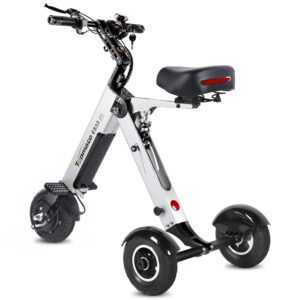
How Foldable Mobility Scooters Like TopMate Make Everyday Travel Easier
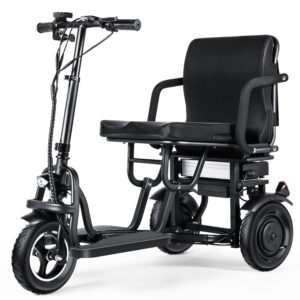
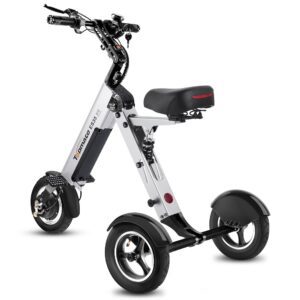
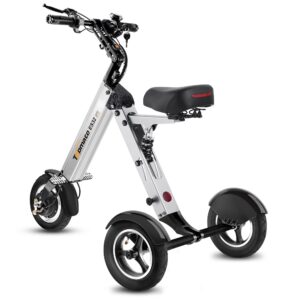
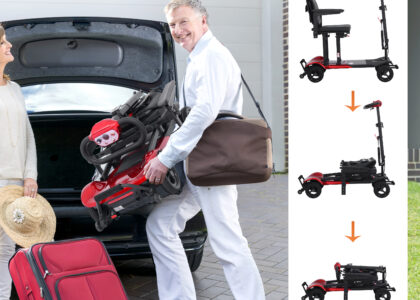
A foldable mobility scooter offers added convenience for people who travel frequently or have limited storage space.
Compared with larger traditional models, lightweight foldable scooters are generally easier to:
- Maneuver along sidewalks and pathways
- Transport in a car trunk or SUV
- Store at home or in an apartment
- Take on vacations or day trips
- Move through airports, hotels, and public facilities
For people who value portability, brands such as TopMate offer lightweight foldable mobility scooters designed to simplify everyday transportation while supporting independent mobility. Choosing the right model depends on your individual mobility needs, travel habits, and preferred storage options.
Common Mistakes to Avoid
Many first-time mobility scooter users become more confident with experience. Avoiding a few common mistakes can improve both safety and comfort.
Riding Too Fast
Higher speeds reduce reaction time, especially around pedestrians or corners. Adjust your speed to match your surroundings.
Blocking Sidewalks
Stopping in the middle of a walkway can make it difficult for others to pass. Park or pause only where there is enough room for pedestrian traffic.
Ignoring Surface Conditions
Even small bumps or uneven pavement can affect stability. Pay attention to the path ahead instead of only your destination.
Forgetting to Charge the Battery
A low battery may interrupt your trip unexpectedly. Charging regularly helps ensure reliable daily use.
Carrying Too Much Weight
Every mobility scooter has a recommended weight capacity. Carrying excessive loads may affect handling and overall performance.
Assuming Every Location Has the Same Rules
Policies regarding mobility scooter access can differ between cities, businesses, transportation providers, and public facilities. Checking ahead can prevent surprises during your trip.
FAQ
Can you ride a mobility scooter on sidewalks?
In many places, yes. Mobility scooters are commonly used on sidewalks because they are designed to assist people with limited mobility. However, local regulations and property policies may vary, so always follow local guidance and give priority to pedestrians.
What speed should you use on a sidewalk?
Ride at a slow, walking pace whenever pedestrians are nearby. Reducing your speed improves safety and gives you more time to react to people, pets, and unexpected obstacles.
Can you take a mobility scooter into stores and public buildings?
Many shopping malls, grocery stores, hotels, airports, and public buildings allow mobility scooters, but individual access policies can differ. If you’re unsure, check with the venue before your visit.
Why choose a foldable mobility scooter for everyday travel?
A foldable mobility scooter is easier to transport in a vehicle, store at home, and maneuver through sidewalks, shopping centers, and travel destinations. It can be a practical choice for users who value portability and convenience.

-scaled-2-420x300.jpg)