
Choosing the best mobility scooter for daily neighborhood use depends on how you actually travel each day. Short trips to the pharmacy, grocery store, park, or nearby appointments can require different features, so range, weight, maneuverability, storage, and comfort should all be considered.
What Makes a Mobility Scooter Good for Neighborhood Riding?
Neighborhood transportation sits between indoor mobility and extended outdoor travel. Routes can include smooth sidewalks, cracked pavement, driveway transitions, ramps, pedestrian areas, parking lots, and short inclines.
Typical Trip Distance
Start by calculating your actual daily route. If a store is 1.5 miles away, the round trip is already 3 miles. Add a pharmacy, park, or second shopping stop and the total could reach 5–7 miles.
A scooter with a claimed 15-mile range therefore provides a different margin than one rated for 8 miles. Remember that manufacturer range figures are usually maximum or controlled-condition estimates. Rider weight, speed, hills, surface conditions, temperature, and battery age can reduce real-world range.
Sidewalk Conditions
Sidewalks are usually more demanding than indoor floors. Cracks, expansion joints, uneven paving, curb cuts, and driveway transitions can affect ride quality and handling.
Wheel diameter also matters. Larger tires can roll over small surface imperfections differently from smaller wheels. Pneumatic tires may provide additional compliance, although they require pressure checks and can be punctured.
Turning Space
Neighborhood travel often ends at locations with limited maneuvering space. A scooter may need to turn around outside a shop, enter a narrow doorway, or maneuver beside a parked vehicle.
Three-wheel scooters can be useful where tighter maneuvering is important, while four-wheel designs may appeal to users who prioritize a different stability configuration.
Doorway Access
Measure the narrowest doorway you expect to use. Do not assume that a scooter described as “compact” will automatically fit every entrance.
Also consider the scooter’s mirrors, armrests, basket, and other accessories because the usable width may differ from the manufacturer’s basic body measurement.
Battery Requirements
Battery capacity and claimed range should be considered together. A 36V 7.8Ah battery provides approximately 281Wh before accounting for system losses and usable capacity.
For daily errands, a removable battery can also be practical because it allows charging without moving the entire scooter.
Speed
A high maximum speed is not necessarily an advantage on sidewalks. Neighborhood routes frequently involve pedestrians, driveways, intersections, children, pets, and other obstacles.
A scooter with selectable speed settings gives the rider more control. The appropriate speed depends on local regulations, conditions, and the user’s ability to operate the scooter safely.
Storage and Vehicle Transportation
Measure your garage, apartment storage area, and vehicle cargo space before purchasing.
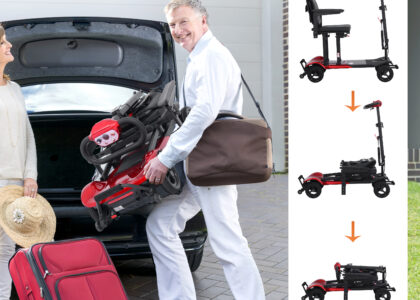
For caregivers, scooter weight can be particularly important. A 35-lb scooter and a 70-lb scooter may both be described as portable, but the difference is significant when lifting them repeatedly.
The Numbers That Matter
Maximum Speed
Look beyond the headline maximum. For example, the TopMate ES35 offers 3, 7, and 15 mph settings. The TopMate ES15 also provides 3, 7, and 15 mph settings. This allows the rider to use lower speeds around pedestrians and tighter areas.
Claimed Range
For neighborhood use, compare your expected round-trip distance with the manufacturer’s range and leave a reserve. Learn more about how far a mobility scooter can travel on one charge and what factors can affect real-world range.
The ES35 is listed at 15.53–18.64 miles, while the ES15 is listed at 16–19 miles. These figures should not be treated as guaranteed distances in every environment.
Scooter Weight
Weight directly affects transportation.
The ES35 manual lists approximately 37.5 lb, while the current product page lists 35.5 lb. The ES15 is listed at 56.88 lb without its battery. When vehicle loading is frequent, use the manufacturer’s current specification for the exact configuration you are buying.
Weight Capacity
Never choose a scooter based on rider weight alone. Include clothing, bags, groceries, and other carried items.
The ES35 supports up to 220.4–220.5 lb, while the ES15 is rated for 300 lb.
Turning Radius
A smaller turning radius helps in confined spaces. However, buyers should only compare numerical turning-radius figures when manufacturers publish them consistently. If a specification is unavailable, test the scooter rather than estimating it.
Width
Width affects doorways, sidewalks, elevators, and storage. The ES35 is approximately 22.6 inches wide, while its folded width remains approximately 22.6 inches.
Measure your narrowest access point before buying.
Ground Clearance
Ground clearance becomes more important when routes include driveway lips, ramps, uneven pavement, or small surface transitions. A scooter designed primarily for smooth surfaces should not be assumed to handle severe off-road terrain simply because it has large tires.
Battery Capacity and Charging Time
The ES35 uses a 36V 7.8Ah, 281Wh removable lithium battery and lists approximately 4 hours charging time. The ES15 uses a 36V 7.8Ah lithium-ion battery and lists approximately 3–4 hours charging time.
For daily use, overnight charging can be sufficient if the scooter is returned home after each outing.
What Should You Prioritize for Different Daily Trips?
| Your Typical Trip | What to Prioritize |
| Pharmacy or nearby store | Compact size + sufficient range |
| Grocery shopping | Weight capacity + storage space |
| Park visits | Range + comfortable ride + suitable tires |
| Uneven sidewalks | Ground clearance + appropriate tire size |
| Multiple stops | Higher range + comfortable seating |
| Frequent car transport | Lower weight + folding design |
| Apartment living | Compact dimensions + easy storage |
Where TopMate Models May Fit
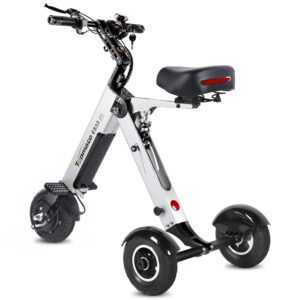
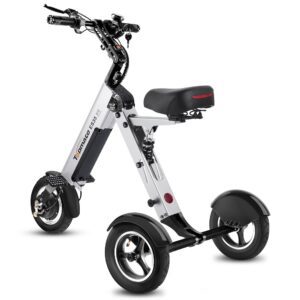
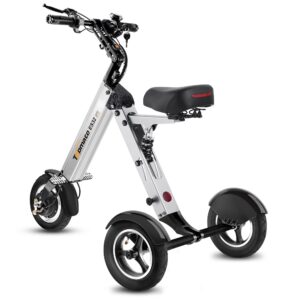
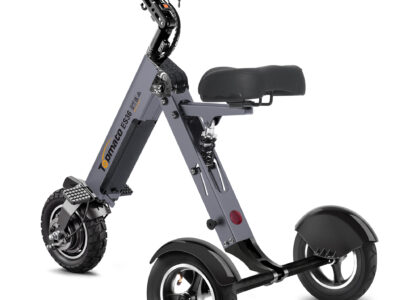
The TopMate ES35 and ES15 illustrate how different specifications can suit different neighborhood users. The ES35 may appeal to users who prioritize a lighter, compact folding design for short everyday trips and frequent vehicle transportation. The ES15 may be more suitable for users who need a higher weight capacity and additional motor power.
Rather than choosing between them based on specifications alone, consider your typical route, rider weight, storage space, and how often the scooter needs to be transported.
Final Recommendation
The best mobility scooter for daily neighborhood use is the one whose specifications match your actual routine.
For short errands, compact dimensions, manageable weight, sufficient range, and easy charging may matter most. For longer neighborhood trips, range and battery capacity become more important. If you regularly encounter uneven pavement, examine tire dimensions and ground clearance. Heavier users should prioritize weight capacity, while caregivers should pay close attention to lifting and vehicle-loading requirements.
TopMate models such as the ES35 and ES15 demonstrate why there is no single specification that defines the right neighborhood scooter. The ES35 emphasizes a lower listed weight and compact folding design, while the ES15 offers a 300-lb capacity, dual-motor system, and 16–19-mile claimed range.
Ultimately, compare the scooter’s range, speed, width, weight, capacity, battery, tires, and storage dimensions against the roads, sidewalks, stores, parks, and homes you use every week. That approach is more reliable than selecting a scooter simply because it is marketed as “powerful,” “lightweight,” or “long-range.”
How wide should a mobility scooter be for neighborhood use?
Measure the narrowest doorway, gate, elevator entrance, storage space, and vehicle opening you expect to use. A scooter around 22–23 inches wide may fit many residential access points, but measurements should always be checked before purchase.
Can I use a mobility scooter for grocery shopping?
Yes, many mobility scooters can be used for grocery shopping, provided the scooter has enough storage for your needs and can maneuver safely through the store. Consider the scooter’s width, turning ability, basket or storage options, and battery range when planning shopping trips.
Can I use a mobility scooter in a shopping mall?
This depends on the mall’s policies and the scooter’s size. A compact scooter can be easier to maneuver through entrances, aisles, and crowded areas. Check the mall’s accessibility rules before your visit and use a lower speed around pedestrians.
Can one person lift a folding mobility scooter?
It depends on the scooter’s actual weight and the person’s lifting ability. A folding scooter may be easier to transport than a full-size model, but even a relatively lightweight scooter can be difficult to lift repeatedly. Check the manufacturer’s weight specification before relying on one-person lifting.
Can I put a mobility scooter in an SUV?
Many folding mobility scooters can be transported in an SUV, but available cargo space and the scooter’s folded dimensions should be checked first. Also consider whether you can safely lift the scooter into the vehicle or whether you need a ramp or loading assistance.
How often should I charge my mobility scooter?
Charging frequency depends on how far you travel and the scooter’s battery capacity. For daily neighborhood trips, charging after returning home can help ensure the scooter is ready for the next outing. Follow the manufacturer’s charging instructions for the specific battery.

-scaled-2-420x300.jpg)