A theme park day can involve hours of walking, standing, waiting, and moving between distant attractions. For seniors who tire easily, the right mobility scooter can make the difference between leaving early and comfortably staying for dinner, shows, or evening entertainment.
The best mobility scooter for theme parks is not necessarily the fastest or most powerful model. For most visitors, the more useful combination is manageable weight, easy transportation, enough real-world battery range, comfortable seating, and good maneuverability in crowded areas.
Your choice should also match how you plan to get to the park. A scooter that works well when stored in an SUV may be less practical if you need to lift it into a smaller car or transfer between hotel transportation and the park.
Quick Answer
For theme park visits, look for a foldable mobility scooter with sufficient battery range for your planned day, comfortable seating, easy controls, and a size that works with your transportation and storage arrangements.
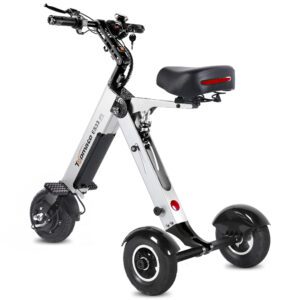
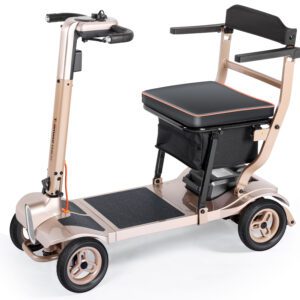
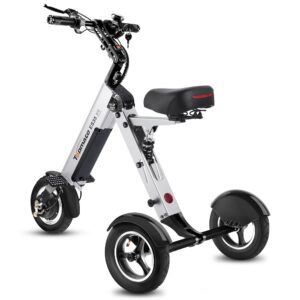
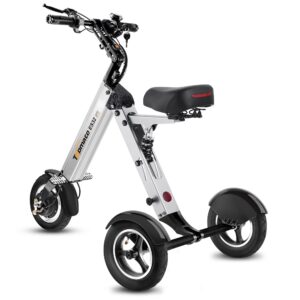
If portability is the priority, a lightweight model such as the TopMate ES35 or ES36 may make sense. If you want four-wheel stability and do not expect to cover long distances inside the park, the ES40 is another option. The ES15 is worth considering when you want portable folding design combined with more outdoor capability and a higher weight capacity. These models have different specifications, so the right choice depends on your route, transportation, and physical needs.
What Makes a Mobility Scooter Good for a Theme Park?
A theme park creates a different set of requirements from a short trip to the grocery store.
You may spend several hours moving between outdoor paths, restaurants, stores, shows, and attraction entrances. You may also need to fold or transport the scooter at the beginning or end of the day.
Here are the factors that deserve the most attention.
1. Battery Range
Range matters because a theme park visit can last most of the day.
Do not simply compare the advertised maximum range with the distance you expect to travel. Real-world range can change with rider weight, terrain, speed, temperature, tire condition, and frequent stopping and starting.
For example, if a scooter is advertised with a range of 9–11 miles, that does not mean you should plan a full day around using every available mile.
The TopMate ES40, for example, is listed with a 9–11 mile range, while the ES35 is listed at approximately 15.53–18.64 miles and the ES36 at approximately 15.5–18.6 miles. The ES15 is listed at approximately 16–19 miles.
For a large park, leave a sensible reserve rather than planning to arrive back at the hotel with almost no battery remaining.
2. Weight and Transportation
A scooter can be comfortable to ride but difficult to transport.
Think about the entire journey:
Home → car → hotel → park entrance → transportation → park → car → hotel
If you need to lift the scooter into a vehicle, its actual carry weight matters more than the marketing phrase “lightweight.”
The ES35 is listed at 35.5 lb, while the ES36 is listed at 39.2 lb on TopMate’s current product page. The ES40 is listed at 38.36 lb without the battery. The ES15 is heavier at 56.88 lb without the battery but has a higher 300-lb load capacity.
That creates an important trade-off.
A caregiver who needs to lift a scooter into a trunk may prefer a lighter model. Someone who needs a higher weight capacity may place more importance on the ES15’s 300-lb capacity.
3. Folding and Storage
Folding matters before and after the theme park—not necessarily while you’re riding.
Consider where the scooter will go when you are:
- Driving to the park
- Staying in a hotel
- Moving through a hotel room
- Taking another form of transportation
- Storing it overnight
A person staying in a small hotel room may care more about folded size than maximum range.
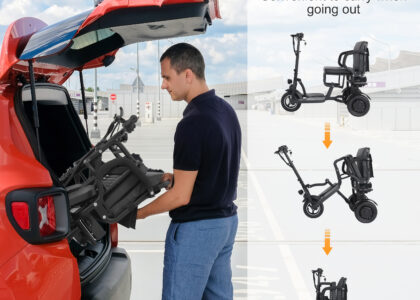
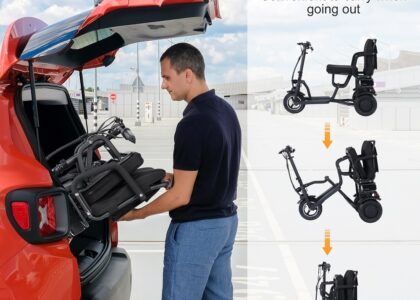
The ES35 and ES36 use folding designs intended for transportation and storage, while the ES40 uses a two-step folding design.
Before buying, measure your trunk opening rather than measuring only the available trunk volume. A scooter can technically fit inside a trunk while still being difficult to get through the opening.
4. Maneuverability in Crowded Areas
Theme parks are not empty sidewalks.
You may need to navigate:
- Restaurant entrances
- Gift shops
- Outdoor queues
- Hotel corridors
- Narrow walking areas
- Crowded pedestrian paths
- Tables and seating areas
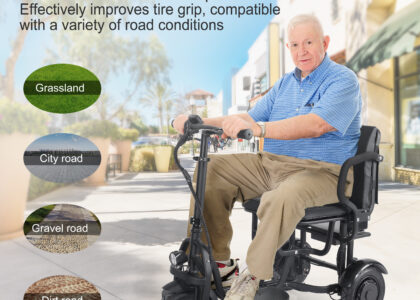
A compact three-wheel scooter can offer useful maneuverability, but three-wheel designs are not automatically better for every rider or every surface.
For someone who values a more stable four-wheel platform, the ES40 takes a different approach with four 8-inch solid tires and anti-tip wheels.
The important question is not simply “three wheels or four?”
It is:
Which layout feels manageable for you on the surfaces and spaces you expect to use?
If possible, practice turning, reversing, stopping, and approaching doorways before taking the scooter on a busy vacation.
5. Comfort for a Long Day
A theme park scooter may be used for several hours with repeated stops and starts.
A seat that feels comfortable for 20 minutes may not feel the same after several hours.
Pay attention to:
- Seat support
- Backrest design
- Foot placement
- Handlebar or control position
- Ease of getting on and off
- Ability to make small adjustments
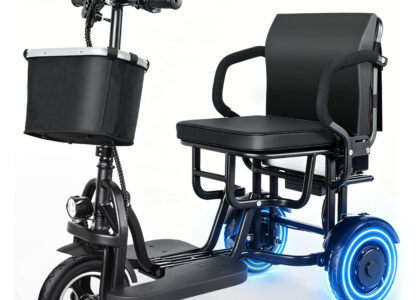
The ES35 includes a backrest seat, widened footrests, and 10-inch pneumatic tires. The ES36 also has an ergonomic seat with backrest and 10-inch pneumatic front tires. The ES40 has a removable seat and adjustable armrests.
Comfort is especially important if the scooter is being used as an energy-saving tool rather than simply as transportation from one point to another.
A Realistic Theme Park Day
Imagine a senior traveling with a spouse and adult children.
They arrive at the park in the morning, travel from the parking area to the entrance, spend several hours visiting attractions, stop for lunch, browse a few stores, and then stay for an evening show.
The scooter needs to work through all of those stages.
Morning: Getting From the Car to the Entrance
The first challenge may happen before entering the park.
A large parking area can mean a substantial distance between the vehicle and the entrance. Disney, for example, provides designated disability parking areas for guests with mobility disabilities and has transportation options for guests using mobility devices.
If you are bringing your own scooter, check the park’s current transportation rules before the trip.
Midday: Heat and Fatigue
Afternoon heat can make a long walking day much harder.
Instead of using energy simply getting from one attraction to another, a scooter allows the rider to conserve that energy for the activities they actually came to enjoy.
That does not mean riding continuously without breaks. Regular stops for water, food, shade, and rest are still sensible.
Afternoon: Crowds and Shops
This is where maneuverability becomes noticeable.
A scooter should be easy to control at low speed. Practice stopping and reversing before your vacation, and avoid trying to squeeze through spaces that are too narrow.
Do not assume that every attraction queue can accommodate a scooter.
Universal Orlando, for example, states that most attraction queues cannot accommodate ECVs, although wheelchair access and attraction-specific accommodations are available.
Evening: Shows and Fireworks
If the scooter has helped conserve energy throughout the day, staying for an evening performance may be more realistic.
However, check the park’s current accessibility information for viewing areas, transportation, and attraction access rather than assuming the same rules apply everywhere.
Which TopMate Scooter Fits Different Theme Park Trips?
Rather than naming one model as the universal “best,” consider what your trip actually requires.
| Model | Key published specifications | Theme-park consideration |
|---|---|---|
| ES15 | 56.88 lb without battery; 300-lb capacity; 16–19 mile range | Useful when higher weight capacity and outdoor capability matter more than minimum carry weight |
| ES35 | 35.5 lb; 220.5-lb capacity; 15.53–18.64 mile range | Strong fit for users prioritizing portability with everyday and outdoor use |
| ES36 | 39.2 lb; 220.5-lb capacity; 15.5–18.6 mile range | A travel-oriented option with comfort, stability-focused features, and off-road pneumatic front tires |
| ES40 | 38.36 lb; 275.6-lb capacity; 9–11 mile range | Better suited to shorter outings where four-wheel stability and compact transportation are priorities |
Specifications above are based on current TopMate product information; actual range varies with riding conditions and other factors.
When the ES15 Makes Sense
The TopMate ES15 is positioned around portability, travel, and outdoor capability, but it is not the lightest model in this group.
Its current published specifications include a 300-lb load capacity, removable 36V 7.8Ah lithium battery, 16–19 mile stated range, and 56.88-lb weight without the battery.
It may make more sense for someone who needs the additional weight capacity and expects to encounter outdoor paths rather than someone who primarily wants the easiest scooter to lift.
When the ES35 Makes Sense
The TopMate ES35 is the more straightforward option for someone who wants a lightweight scooter for everyday use, transportation, and outdoor trips.
At 35.5 lb, it is considerably easier to handle than the ES15. Its published range is approximately 15.53–18.64 miles, with a 220.5-lb maximum load capacity.
For a theme park visitor who needs to put the scooter into a car and also wants enough stated range for longer outings, these characteristics may be useful.
When the ES36 Makes Sense
The TopMate ES36 combines a relatively low carry weight with comfort and stability-oriented features.
The current product information lists a 39.2-lb weight, 220.5-lb load capacity, 15.5–18.6 mile stated range, ergonomic seat with backrest, and 10-inch pneumatic front tires.
This makes it worth considering when comfort and outdoor ride characteristics matter alongside portability.
When the ES40 Makes Sense
The TopMate ES40 takes a different approach.
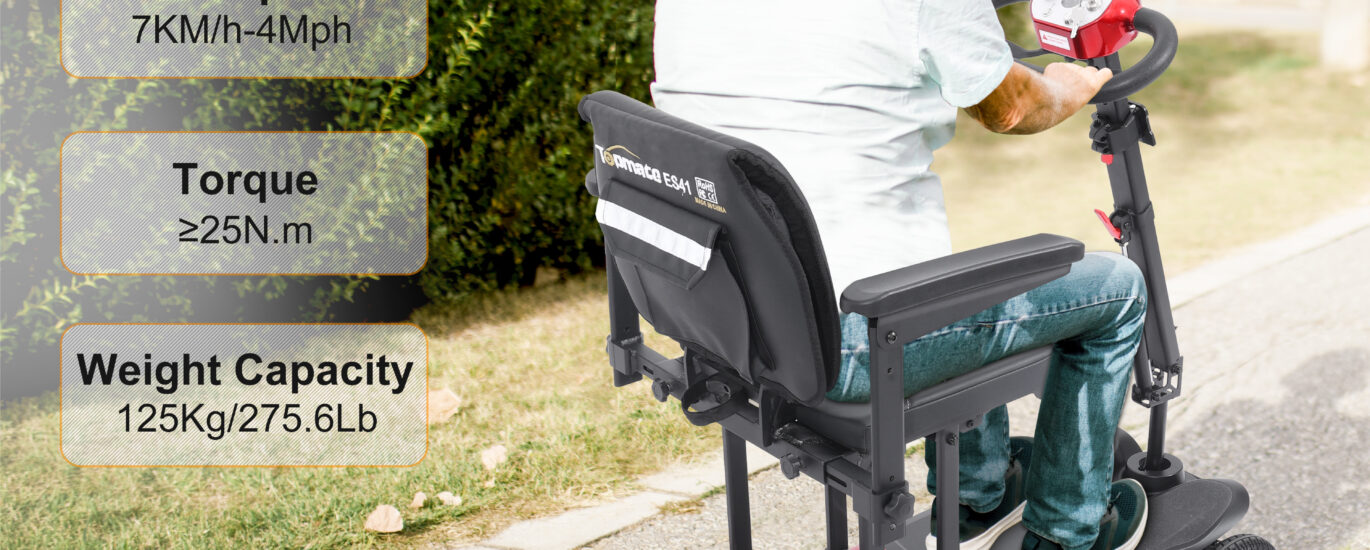
It weighs 38.36 lb without the battery, supports up to 275.6 lb, uses four 8-inch solid tires plus anti-tip wheels, and has a published range of 9–11 miles. Its maximum forward speed is 4 mph.
That combination can make sense for a visitor who values four-wheel stability and a lower-speed travel scooter, especially for shorter outings.
For a very large theme park where you expect to cover substantial distances throughout the day, however, its stated 9–11 mile range deserves careful consideration.
Check the Park’s Accessibility Rules Before You Go
Buying the scooter is only part of the preparation.
Theme parks have their own rules for:
- Attraction queues
- Ride transfers
- Transportation
- Parking
- ECV access
- Accessible viewing areas
- Mobility-device storage
- Specific attractions
Disney currently states that attraction access varies and that some attractions allow guests to remain in a wheelchair or ECV, while others require transfers.
Universal Orlando similarly provides attraction-specific accessibility information and states that mobility devices must fit lifts, ramps, and designated transportation spaces without being forced into them.
Check the official accessibility guide for the specific park you are visiting shortly before the trip. Policies and attraction availability can change.
What About Hotel Shuttles, Buses, and Other Transportation?
Do not assume that a folding scooter automatically fits every vehicle.
Before leaving home, check:
- Whether the hotel shuttle accepts mobility scooters.
- Whether the scooter must be folded.
- Whether the battery must be removed.
- Whether the scooter must be secured.
- Whether the transportation service has size or weight restrictions.
For example, Disney says its buses accommodate wheelchairs and ECVs when they fit the lift without being forced and can be securely fastened.
Universal Orlando states that its resort shuttles use wheelchair lifts, but ECV users must transfer to shuttle seating after the mobility device is secured.
The rules are therefore not interchangeable between parks.
What Should You Carry?
A simple theme park kit can prevent unnecessary trips back to the hotel.
Consider bringing:
- Water
- Sunscreen
- Phone and charger
- Required personal medications
- Lightweight rain protection
- Small personal items
- A waterproof bag for electronics
Avoid overloading the scooter’s storage area. Extra weight can affect handling and available range.
Final Takeaway
The right mobility scooter for seniors visiting theme parks should match the whole trip—not just the hours spent inside the park.
For a lightweight, travel-oriented setup, the ES35 and ES36 offer relatively low published weights and ranges in the 15.5–18.6 mile area. The ES15 offers a higher 300-lb load capacity and a similar stated range, but it weighs more. The ES40 offers four-wheel stability and a 275.6-lb capacity while having a shorter 9–11 mile stated range.
The most important step is to compare those specifications with your actual situation: how far you expect to travel, how the scooter will get to the park, who will lift it, where it will be stored, and which attractions and transportation services you plan to use.
Before your trip, review the official accessibility information for the specific theme park. Accessibility rules can differ between attractions and transportation systems, so checking in advance is just as important as choosing the scooter itself.
FAQ
Is a mobility scooter good for a full day at a theme park?
Yes, a mobility scooter can help reduce walking and conserve energy during a long theme park visit. Choose one with enough practical battery range, a comfortable seat, manageable controls, and a design that fits your transportation needs.
Can you take a mobility scooter into Disney or Universal?
Mobility devices are accommodated at major theme parks, but access varies by attraction, queue, and transportation system. Disney and Universal both publish accessibility information explaining where mobility devices can be used and when a rider may need to transfer. Always check the current rules for your specific park and attractions.
How much battery range do I need for a theme park?
There is no single range requirement because park size, route, rider weight, terrain, weather, and riding habits all affect battery use. A scooter with more stated range gives you a larger margin, but it is still better to keep a reserve rather than planning to use the full advertised range.
Should I choose a three-wheel or four-wheel mobility scooter for a theme park?
It depends on your priorities. Three-wheel models can provide useful maneuverability in tighter areas, while a four-wheel model may appeal to riders who prioritize a more stable platform. Consider your balance, typical surfaces, turning needs, and comfort before choosing between the two.