Quick Answer
The easiest mobility scooter for a caregiver to manage is not necessarily the lightest model.
Instead, look for a scooter that offers:
- Manageable overall weight
- Simple folding or disassembly
- Practical folded dimensions
- Convenient battery management
- Straightforward setup
- Appropriate rider capacity
- Enough range for typical outings
- Suitable comfort and stability
For frequent solo loading, handling weight and folding complexity may matter more than maximum range. On longer outings, however, comfort and battery range become more important.
Start With the Caregiver’s Complete Workload
A scooter creates work before and after every outing.
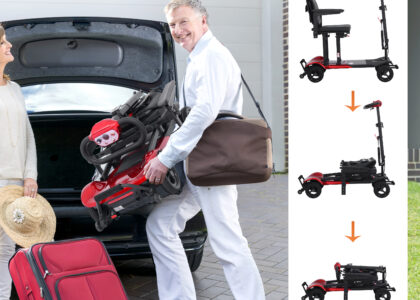
First, the caregiver may need to check the battery and prepare the scooter. Next comes folding or disassembly and vehicle loading. At the destination, the process happens in reverse.
Consequently, the best choice should reduce repetitive tasks wherever possible.
Lifting and Loading
Weight remains an important consideration, but total weight tells only part of the story.
Some scooters allow components such as batteries to come off separately. Others require the caregiver to handle most of the scooter as one unit. As a result, two scooters with similar specifications can feel very different during loading.
Caregivers should also consider their own ability to handle the equipment safely. If a scooter feels too heavy or awkward to lift, use appropriate assistance rather than attempting an unsafe lift.
Folding vs. Disassembly
Folding and disassembly offer different advantages.
A folding scooter can reduce the number of pieces the caregiver must manage. In contrast, a disassemblable scooter can divide the total weight into smaller components.
For frequent outings, setup time matters just as much as weight.
Vehicle Storage and Daily Handling
TopMate already covers how scooters fit into cars, SUVs, sedans, and other vehicles. For caregivers, however, vehicle space creates another practical question:
How easy is the scooter to manage every time it goes into and out of the vehicle?
Consider the folded length, width, and height. Also check whether the scooter leaves enough room for groceries, luggage, mobility accessories, or other passengers.
A compact storage footprint can simplify the routine. However, a smaller scooter should still meet the rider’s capacity and comfort requirements.
How Much Setup Does the Scooter Require?
Loading is only half the job.
Once the caregiver reaches the destination, they may need to unfold the frame, install the battery, adjust the tiller, position the seat, and check the controls.
Therefore, count the actual setup steps before purchasing.
Charging and Battery Management
Battery design can affect caregiver workload throughout the week.
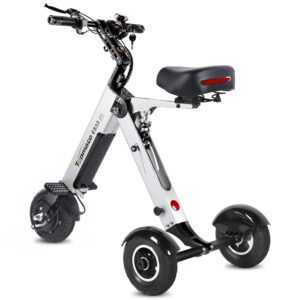
For example, the TopMate ES15 uses a removable 36V 7.8Ah lithium-ion battery. TopMate states that the battery can charge either on the scooter or separately and lists a charging time of approximately 3–4 hours.
That arrangement can give caregivers more flexibility when the scooter remains in a vehicle or another storage area.
Similarly, the ES33 uses a removable battery. Its manufacturer manual lists a 36V 7.8Ah battery and approximately four hours of charging time. TopMate ES33 manual
The important point is that battery design affects the charging routine, not simply riding range.
Comfort vs. Portability
Caregivers should avoid choosing portability at the expense of the rider’s basic requirements.
A very lightweight scooter may simplify loading. Meanwhile, a larger scooter may provide more seating space, stability, or range.
Neither approach works for every situation.
For short, frequent trips, manageable weight and quick setup may deserve greater attention. For longer outings, comfort and range may justify accepting additional transport effort.
The right balance depends on how the scooter will actually be used.
Which Characteristics Reduce Caregiver Effort?
Several characteristics can reduce repeated work:
- Manageable transport weight
- Simple folding or disassembly
- Removable battery
- Compact folded dimensions
- Straightforward setup
- Appropriate rider capacity
- Sufficient range
- Practical storage requirements
- Comfortable seating
- Suitable stability
However, no single specification determines caregiver convenience.
Instead, evaluate how these features work together during a normal outing.
Real-World Caregiver Scenarios
Doctor Appointments
Frequent appointments can make quick setup especially valuable. A caregiver may load and unload the scooter several times each week.
Grocery Shopping
Storage space matters here. The scooter needs to share vehicle space with groceries and other items, while the caregiver may also manage shopping bags.
Family Outings
Longer days place greater emphasis on range and seating comfort. A slightly heavier scooter may make sense if it reduces the need for frequent charging.
Parks
Outdoor trips introduce different surfaces and distances. In this situation, caregivers should consider stability and terrain capability alongside portability.
Shopping Centers
A caregiver may need to manage the scooter, personal belongings, and the senior simultaneously. Simple setup can make the overall experience less complicated.
Weekend Trips
For extended trips, folded dimensions, charging arrangements, range, and comfort all become part of the decision.
Common Buying Mistakes
Choosing only by weight: A lightweight model may be easier to load but may not provide the capacity, comfort, or range required.
Ignoring setup time: Folding weight matters, but every extra step also adds work.
Forgetting battery management: Consider where and how the battery will charge after each outing.
Overlooking the rider: Caregiver convenience matters, but the scooter must still suit the rider’s weight, seating needs, range requirements, and expected riding environment.
Assuming lighter always means better: The best choice balances handling effort with everyday riding requirements.
Caregiver Buying Checklist
Before purchasing, compare:
| Factor | What to Check |
|---|---|
| Weight | Total weight and heaviest component |
| Folding | Number of steps and complexity |
| Dimensions | Folded size and storage footprint |
| Battery | Removable or fixed |
| Charging | Charging method and time |
| Setup | Steps required before riding |
| Capacity | Maximum rider weight |
| Range | Distance available per charge |
| Comfort | Seat and riding position |
| Stability | Suitability for expected surfaces |
| Maintenance | Regular care and battery management |
Where TopMate Models Fit
TopMate models show why caregivers should evaluate the complete workload instead of choosing solely by weight.
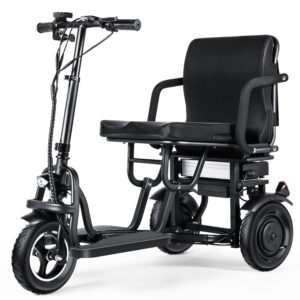
The TopMate ES15 weighs 56.88 lb without its battery, according to TopMate’s product information. It also provides a quick-fold design, removable battery, and 300-lb maximum load capacity.
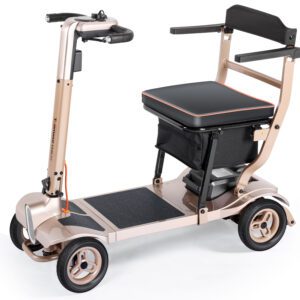
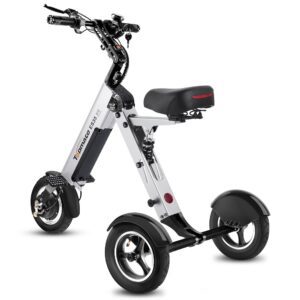
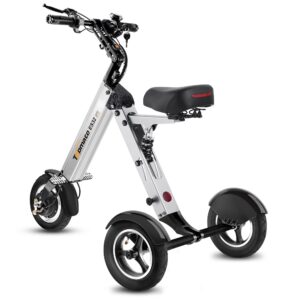
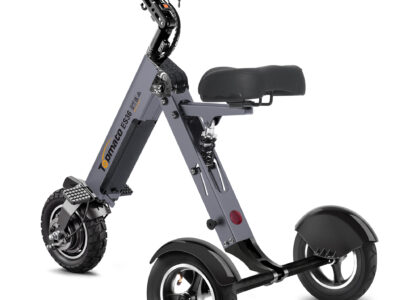
The TopMate ES33 lists a 35.4-lb net weight, a 220.4-lb maximum load, a removable battery, and a folded size of approximately 15.7 × 20.8 × 33.6 inches in its manufacturer manual.
For caregivers, these differences illustrate an important decision rule: lower transport weight can reduce handling effort, but capacity and rider requirements still come first.
Final Recommendation
The best mobility scooter for caregivers who transport seniors is the model that minimizes the caregiver’s total workload without compromising the rider’s essential requirements.
For frequent solo loading, prioritize manageable weight and simple folding. If storage space is limited, examine folded dimensions. When charging convenience matters, consider battery removal. For longer outings, give greater attention to range and seating comfort.
Ultimately, compare the entire routine—not just the scooter’s weight.
A scooter that is easy to prepare, load, unload, set up, charge, and store can make a much bigger difference to caregiver workload than one impressive specification alone.
FAQ
What is the easiest mobility scooter for a caregiver to transport?
A manageable mobility scooter with practical weight, simple folding or disassembly, compact storage dimensions, and convenient battery management can reduce caregiver workload.
What weight should caregivers look for in a mobility scooter?
There is no universal weight limit for caregivers. Compare the total scooter weight and the weight of its heaviest removable component. Choose equipment the caregiver can handle safely or arrange assistance when needed.
Is a folding scooter better than a disassemblable scooter for caregivers?
Not always. Folding can reduce the number of separate pieces, while disassembly can divide the total weight. The better option depends on how often the caregiver transports and sets up the scooter.
What should caregivers consider besides scooter weight?
Consider folding complexity, folded dimensions, battery removal, charging, setup time, rider capacity, range, comfort, stability, vehicle space, and ongoing maintenance.

-scaled-2-420x300.jpg)