
A mobility scooter’s advertised range is not necessarily the distance you will achieve during everyday riding. Manufacturers typically state range under controlled or favorable conditions, while real journeys involve hills, stops, heavier loads, different surfaces, temperature changes, and battery wear.
If your scooter is reaching fewer miles per charge than expected, that does not automatically mean the battery has failed. In many cases, the difference can be explained by normal operating conditions or a maintenance issue. If you are experiencing mobility scooter range problems, the advertised distance is not necessarily the distance you will achieve during everyday riding.
Why Is My Mobility Scooter Not Getting Its Advertised Range?
The most common explanation is that advertised range is a reference figure rather than a guarantee for every rider and route.
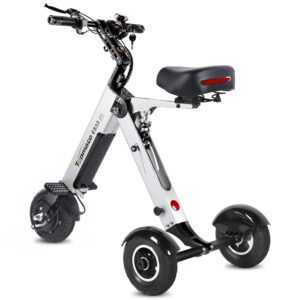
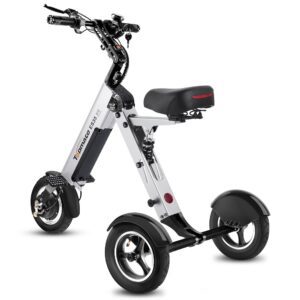
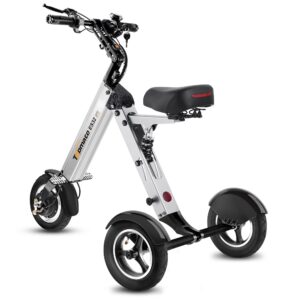
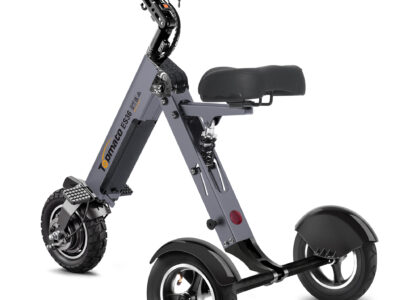
For example, the TopMate ES35 is listed with a 36V 7.8Ah lithium battery, equivalent to approximately 281Wh, and a stated range of 15.53–18.64 miles (25–30 km). It has a 250W motor, a maximum speed of up to 15 mph, 10-inch pneumatic tires, and a maximum load of 220.5 lb (100 kg). TopMate states that range depends on factors including rider weight and road conditions.
That illustrates an important point: battery capacity alone does not determine how many miles a scooter can travel. Learn more about mobility scooter battery capacity and what Ah and Wh mean to understand how battery specifications relate to real-world range.
1. Rider Weight and Additional Cargo
Yes, rider weight affects mobility scooter range.
The motor has to move the combined weight of the rider, scooter, shopping, luggage, and other items. Carrying a heavier load generally requires more energy, particularly when accelerating or climbing.
Always consider total load, rather than only body weight. A rider close to the scooter’s maximum capacity may also notice different performance from someone riding with a substantially lighter load.
For example, the ES35 has a maximum load of 220.5 lb (100 kg). Staying within that limit is important for both safety and performance.
2. Riding Speed
Does speed reduce mobility scooter range? It can.
Higher speeds generally require more energy, particularly when the scooter is accelerating or working against wind resistance. Rapid changes in speed can also increase energy consumption.
A useful everyday approach is to select a comfortable speed rather than constantly riding at maximum speed. The ES35, for example, provides three speed settings, allowing riders to select approximately 3, 7, or 15 mph.
For maximum practical range, smooth and consistent riding is preferable to repeated hard acceleration.
3. Hills and Inclines
Do hills drain a mobility scooter battery faster? Yes.
Climbing requires the motor to work against gravity. A route that appears short on a map can therefore consume considerably more energy than a similar-distance route on level pavement.
Pride Mobility’s scooter guidance specifically identifies hills as one of the conditions that can reduce distance or operating time per charge and recommends planning routes to avoid unnecessary inclines.
If your scooter performs normally on flat ground but loses range quickly on hilly routes, the terrain may be the main explanation rather than a defective battery.
4. Frequent Stopping and Starting
Stop-and-go riding can reduce practical range.
Every time the scooter starts from rest, the motor must accelerate the combined scooter and rider weight. Urban routes with traffic crossings, pedestrians, shop entrances, ramps, and frequent maneuvering can therefore be more demanding than a continuous ride.
Pride’s maintenance guidance recommends maintaining an even speed and avoiding unnecessary stop-and-go driving when trying to maximize range.
This does not mean riders should avoid necessary stops. Instead, expect a busy route to produce a different range figure from a steady test ride.
5. Tire Pressure and Rolling Resistance
Underinflated pneumatic tires can increase rolling resistance and make the motor work harder.
Check the pressure before assuming the battery is the problem. The correct pressure varies by scooter and tire, so use the manufacturer’s specification or the information printed on the tire.
For example, some Pride scooter manuals specify 30–35 psi for pneumatic tires. That is not a universal setting for every mobility scooter.
Also inspect tires for:
- Uneven wear
- Damage
- Embedded objects
- Excessive softness
- A slow leak
If one wheel is noticeably harder to rotate than the others when the scooter is safely stationary, have the scooter inspected rather than continuing to ride it.
6. Battery Age and Condition
Battery condition is one of the most important factors when range gradually decreases over months or years. Follow these tips to extend your mobility scooter battery life and maintain battery performance over time.
Lithium batteries naturally lose capacity with use and age. Lead-acid batteries can also provide less usable capacity as they deteriorate.
Before replacing a battery, check:
- Whether the charger completes its normal charging cycle.
- Whether the battery indicator reaches its usual full level.
- Whether charging time has changed noticeably.
- Whether range has declined gradually or suddenly.
- Whether connections are clean and secure.
- Whether the scooter has been stored for long periods without appropriate charging.
The ES35 documentation lists its 36V 7.8Ah battery as having more than 600 charging/discharging cycles and a stated battery life of five years, but actual service life depends on usage and storage conditions.
A sudden range reduction accompanied by unusual battery behavior deserves professional testing.
7. Temperature
Temperature can affect battery performance.
Very cold conditions can temporarily reduce available battery performance, while prolonged exposure to excessive heat can accelerate battery degradation.
This matters particularly in the USA, Canada, UK, and Australia because riders can encounter very different seasonal conditions.
If range falls during cold weather and returns closer to normal when temperatures moderate, that does not necessarily mean the battery has permanently failed.
Follow the battery manufacturer’s storage and operating-temperature guidance, and avoid leaving a scooter or removable battery in extreme temperatures unnecessarily.
8. Rough or Uneven Terrain
Pavement is not equally demanding everywhere.
Smooth, hard surfaces generally make easier riding conditions than loose gravel, grass, soft ground, broken pavement, deep cracks, or uneven paths. Larger bumps can also require more frequent acceleration and correction.
Pride specifically identifies cracked, broken, soft, and uneven surfaces as conditions that can affect distance or operating time per charge.
If your scooter’s range is good around smooth sidewalks but noticeably lower on parks, rough paths, or mixed surfaces, compare the routes before concluding that the battery is defective.
9. Frequent Use of Accessories and Lights
Lights, displays, USB charging ports, alarms, and other electrical accessories consume power when they are connected to the scooter’s electrical system.
On some scooters, the effect may be relatively small compared with the energy required to propel the rider. However, accessories can still contribute to overall electrical consumption, particularly during long rides.
Do not disconnect safety equipment or required lighting simply to save battery power. Instead, use accessories according to the manufacturer’s instructions and avoid leaving unnecessary electrical functions operating when the scooter is parked.
What Can You Check Yourself Before Replacing the Battery?
Before buying a replacement battery, record the conditions of several rides.
Write down:
- Starting battery level
- Distance traveled
- Rider and cargo weight
- Average riding speed
- Number of stops
- Amount of hill climbing
- Surface type
- Outdoor temperature
- Tire pressure
- Charging time
- Battery age
This creates a useful comparison.
For example, if a scooter previously traveled well on a flat route but now reaches substantially less distance under similar load, temperature, tire pressure, and riding conditions, battery condition becomes a stronger possibility.
If the reduction only occurs on steep or rough routes, investigate terrain and mechanical factors first.
How Can I Increase My Mobility Scooter Range?
You can often improve practical range by:
- Fully charging the battery according to the manufacturer’s instructions.
- Keeping pneumatic tires at the specified pressure.
- Removing unnecessary cargo.
- Using a steady, moderate speed.
- Avoiding unnecessary stop-and-go riding.
- Choosing smoother, flatter routes when practical.
- Avoiding prolonged exposure to extreme temperatures.
- Maintaining clean electrical connections.
- Following the correct charging and storage procedure.
These steps cannot turn a scooter’s published range into a guaranteed real-world distance, but they can help the scooter operate closer to its intended performance.
When Might Battery Replacement Be Needed?
Consider professional battery testing when the range has declined substantially under similar riding conditions and basic checks do not identify another cause.
Battery replacement becomes more plausible when you notice a combination of:
- Gradually declining range
- Battery that no longer reaches its normal charge state
- Unusually short operating time
- Significant voltage drop under load
- Battery age consistent with expected service life
- Abnormal charging behavior
Do not open or modify a lithium battery yourself. Mobility Scooter Range Problems If the battery becomes swollen, unusually hot, damaged, or develops another abnormal condition, stop using it and contact the manufacturer or a qualified technician.
FAQ
Why does my mobility scooter have less range than advertised?
Advertised range is usually measured under specific test conditions. Real-world mobility scooter range can be lower because of rider weight, speed, hills, tire pressure, temperature, terrain, frequent stops, and battery condition.
Does rider weight affect mobility scooter range?
Yes. A heavier combined load requires more energy from the motor, particularly when accelerating or climbing hills. Always stay within your scooter’s specified maximum weight capacity.
How can I improve my mobility scooter range?
Fully charge the battery, maintain the recommended tire pressure, reduce unnecessary cargo, ride at a steady speed, avoid unnecessary acceleration, and choose smoother or flatter routes when practical.
When should I replace my mobility scooter battery?
Consider battery testing when range has gradually declined despite similar riding conditions and proper charging. A sudden range reduction, unusual charging behavior, or significant battery performance loss may also indicate that professional inspection is needed.

-scaled-2-420x300.jpg)