
-1370x550.jpg)
Charging time is one of the most practical things to understand when owning a mobility scooter. A fully charged battery can make the difference between completing a shopping trip comfortably and having to plan an early return.
So, how long does a mobility scooter take to charge? There is no single answer. Charging time depends on the battery’s capacity, voltage, charger output, battery chemistry, remaining charge, battery condition, and the scooter’s charging system. Manufacturer instructions should always take priority over general estimates.
Typical Mobility Scooter Charging Time
Many mobility scooters require several hours to recharge, but charging times vary considerably between models. A small portable scooter may use a relatively small battery and charger, while a larger outdoor scooter may have substantially greater battery capacity.
The safest way to determine your scooter’s expected charging time is to check its owner’s manual or manufacturer’s specifications.
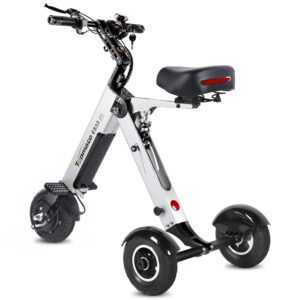
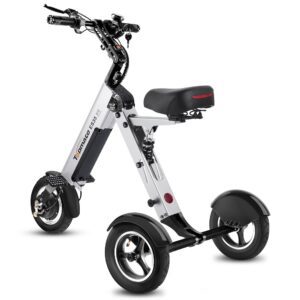
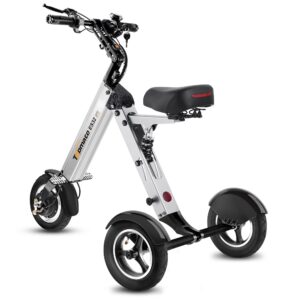
For example, the TopMate ES35 uses a 36V 7.8Ah lithium battery. Its battery capacity is approximately 281Wh, calculated by multiplying voltage by amp-hours:
36V × 7.8Ah = 280.8Wh
TopMate lists the ES35 with a 3A charger and states a charging time of approximately 3–5 hours. Its stated driving range is 15.53–18.64 miles (25–30 km). These are manufacturer specifications for that particular scooter and should not be treated as a universal charging time for all mobility scooters.
What Determines Mobility Scooter Charging Time?
Charging time is mainly influenced by four factors:
Battery capacity + charger output + battery condition + state of charge
A battery with greater capacity generally contains more energy and can require longer to recharge. However, capacity alone does not determine the final charging time because the charger and battery management system also control how charging occurs.
Battery Capacity
Battery capacity is commonly shown in amp-hours (Ah) or watt-hours (Wh).
Ah tells you how much electrical charge a battery can store at a particular voltage. Wh provides a better indication of the total energy stored.
You can estimate energy capacity with:
Wh = V × Ah
For example, a 24V 12Ah battery has approximately:
24 × 12 = 288Wh
A 36V 7.8Ah battery has approximately:
36 × 7.8 = 280.8Wh
These batteries have similar energy capacity in Wh even though their voltage and Ah ratings are different.
That is why comparing Ah figures alone can sometimes be misleading.
Does a Bigger Battery Take Longer to Charge?
Generally, yes, if the larger battery is paired with a charger of similar output.
For example, imagine two batteries:
- Battery A: 24V 10Ah = 240Wh
- Battery B: 24V 20Ah = 480Wh
Battery B stores approximately twice as much energy. If both are charged using chargers with comparable effective output, the larger battery will generally require more time.
However, manufacturers may pair different batteries with different chargers. Therefore, you cannot determine charging time simply by looking at Ah.
The charger’s output, charging efficiency, battery management system, and charging profile all matter.
Does Charger Output Affect Charging Speed?
Yes. Charger output is an important factor.
A higher-output charger can potentially replenish a battery faster, but you should never use a charger simply because it has a higher amperage rating.
The charger must be compatible with the scooter’s battery voltage, chemistry, connector, and charging requirements.
For example, the TopMate ES35 specification lists a 36V 3A charger for its 36V 7.8Ah lithium battery. The manufacturer’s stated charging time is approximately 3–5 hours.
Using an incompatible charger can cause charging problems or create a safety risk. Always use the charger specified or approved by the scooter manufacturer.
Does Battery Age Change Charging Time?
It can.
A healthy battery should generally follow a predictable charging pattern. As batteries age, their usable capacity and charging behavior can change.
A scooter that previously completed its normal charging cycle may eventually take longer to charge, provide less usable range, or show other changes in battery performance. Learn more about mobility scooter battery life and the factors that affect how far you can travel on a charge.
However, longer charging does not automatically prove that the battery needs replacement.
Check:
- Whether the charger indicator changes normally
- Whether the battery reaches its normal full-charge indication
- Whether the scooter’s range has decreased
- Whether charging time has changed suddenly
- Whether the battery has been stored for an extended period
- Whether the charger or cable shows visible damage
If charging behavior changes significantly, consult the manufacturer or a qualified technician.
Partial vs Full Charging
Does a partially charged battery need a full charge every time? Not necessarily.
The correct charging routine depends on the battery chemistry and manufacturer’s instructions.
Many modern mobility scooters use lithium-ion batteries, while some larger scooters use lead-acid battery systems. Their charging and storage requirements can differ.
For lithium batteries, users should follow the manufacturer’s recommended charging procedure rather than deliberately running the battery completely flat before recharging.
If you have used only a small amount of battery during a short trip, you can generally follow the manufacturer’s guidance for recharging rather than assuming the battery must first be completely discharged.
What Happens When Charging Is Interrupted?
If charging is interrupted because the scooter is unplugged or power is temporarily lost, the battery does not normally need to start the entire charging process from zero.
However, the correct response depends on the battery and charger system.
After an interruption, reconnect the approved charger and follow the manufacturer’s normal charging procedure. Do not repeatedly unplug and reconnect the charger simply to manipulate charging time.
For long trips, it is better to complete the recommended charging cycle before leaving whenever practical.
Charging Examples
Consider three hypothetical scooters:
| Battery | Energy Capacity | Charger | General Expectation |
|---|---|---|---|
| 24V 10Ah | 240Wh | 2A | Smaller battery, potentially shorter charge |
| 24V 20Ah | 480Wh | 2A | Larger capacity, potentially longer charge |
| 36V 7.8Ah | 281Wh | 3A | Moderate capacity with higher charger output |
These examples illustrate the principle rather than promising exact charging times.
Actual charging duration can differ because chargers do not deliver their maximum rated output continuously throughout the entire cycle. Charging typically slows as the battery approaches full charge.
This is one reason a simple capacity-divided-by-charger-output calculation should only be treated as a rough theoretical estimate, not a guaranteed charging time.
Why Is My Mobility Scooter Taking Longer to Charge?
A longer-than-usual charging period can have several explanations.
The battery may have been more deeply discharged than usual. The battery may also be aging, or the charger may not be functioning correctly. Temperature can affect battery performance, while a damaged connector or cable can also interfere with charging.
If charging suddenly takes much longer than the manufacturer’s stated range, check the charger indicator, connections, battery condition, and owner’s manual.
Do not continue using a battery that is swollen, leaking, unusually hot, physically damaged, or showing other abnormal behavior. Contact the manufacturer or a qualified service professional.
Common Charging Mistakes to Avoid
Avoid these common mistakes:
Using an incompatible charger: Voltage, battery chemistry, connector type, and charging specifications must match.
Waiting until the battery is completely empty: Follow the manufacturer’s recommended charging routine rather than deliberately deep-discharging the battery.
Ignoring unusual charging behavior: A sudden change in charging time should be investigated.
Blocking ventilation around the charger: Keep charging equipment in a suitable environment according to the manufacturer’s instructions.
Using damaged cables: Replace damaged charging equipment rather than attempting makeshift repairs.
Leaving charging to chance before important travel: Allow enough time for the manufacturer’s recommended charging cycle before a long journey.
A Practical Charging Routine
For everyday use, establish a predictable routine.
After riding, check the battery level and inspect the charging equipment. Connect the approved charger according to the manufacturer’s instructions and allow the scooter to complete its normal charging cycle.
Before a long trip, charge the battery sufficiently in advance rather than waiting until the last minute. If you’re planning longer trips, learn how long you can typically use a mobility scooter before recharging.
Also remember that charging time and driving range are different measurements. A scooter may require several hours to charge but still have a range affected by rider weight, speed, hills, terrain, temperature, and battery condition.
FAQ
How long does a mobility scooter take to charge?
A mobility scooter can take several hours to charge, but the exact time varies by battery capacity, charger output, battery type, remaining charge, and battery condition. Always check the manufacturer’s stated charging time for your specific scooter.
Can you charge a mobility scooter overnight?
Some mobility scooters and their approved chargers are designed to remain connected until charging is complete. However, users should follow the manufacturer’s charging instructions rather than assuming every scooter is suitable for overnight charging.
Does a bigger battery take longer to charge?
Generally, yes. A larger battery stores more energy and can take longer to recharge when using a similar charger. However, charger output and the battery’s charging system also affect total charging time.
Why is my mobility scooter taking longer to charge?
Longer charging can result from a deeper discharge, battery aging, temperature conditions, charger problems, or connection issues. If charging time suddenly becomes much longer than the manufacturer’s stated time, the battery and charger should be checked.


-scaled-2-420x300.jpg)