Quick Answer
A mobility scooter battery typically lasts 12 to 24 months with regular use, although a well-maintained battery can sometimes last 2 to 3 years or longer. The battery’s lifespan depends on its type, charging habits, usage frequency, storage conditions, terrain, weight load, and maintenance.
If your mobility scooter suddenly travels a shorter distance, takes longer to charge, or loses power faster than usual, the battery may be reaching the end of its useful life.
What Determines How Long a Mobility Scooter Battery Lasts?
There are two different ways to understand battery life:
- Battery lifespan: How many months or years the battery remains usable.
- Battery range: How far the scooter can travel on one full charge.
These are related but not the same. A battery can still work after two years but provide significantly less range than when it was new.
Several factors affect both.
1. Battery Type
Most mobility scooters use rechargeable batteries such as sealed lead-acid batteries, AGM batteries, gel batteries, or lithium-ion batteries.
Lead-acid batteries are generally less expensive but may have a shorter useful lifespan when compared with properly maintained lithium-ion batteries.
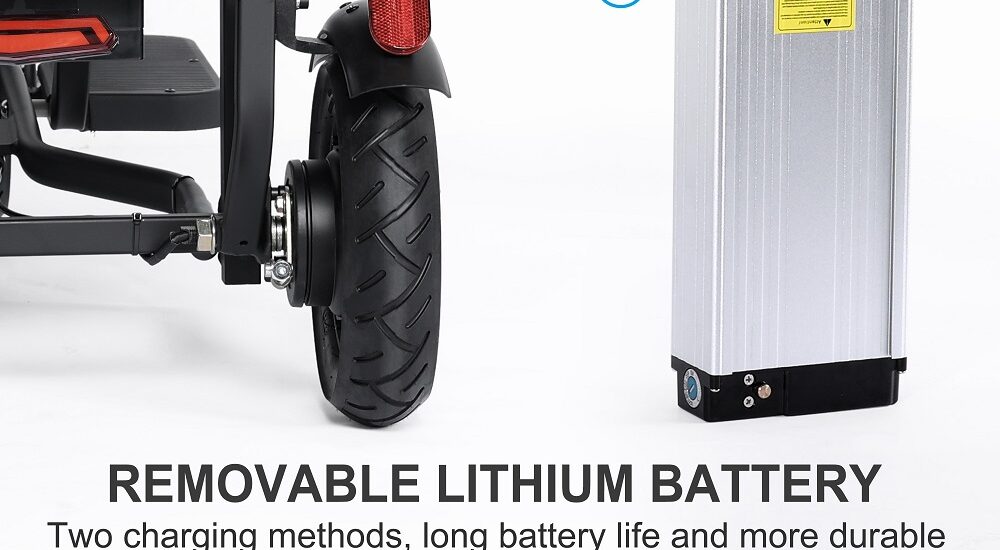
Lithium-ion batteries are usually lighter and can provide a longer service life, depending on the battery design, charging system, usage, and manufacturer specifications.
Always check the scooter manufacturer’s recommended battery type before replacing a battery.
2. How Often You Use the Scooter
Frequent use naturally puts more charge and discharge cycles on a battery.
Someone who uses a mobility scooter several times every day may need to replace the battery sooner than someone who uses the scooter only occasionally.
However, infrequent use does not automatically make a battery last longer. Leaving a scooter unused for long periods without maintaining the battery can also reduce battery performance.
3. Charging Habits
Charging habits have a major impact on battery longevity.
For most modern mobility scooters, it is better to follow the manufacturer’s recommended charging routine rather than deliberately running the battery completely empty.
Good charging practices include:
- Use the correct charger for your scooter.
- Follow the manufacturer’s charging instructions.
- Avoid using damaged chargers or cables.
- Allow the battery to complete its recommended charging cycle.
- Avoid repeatedly allowing the battery to become deeply discharged.
- Disconnect and store the charger according to the manufacturer’s instructions.
The exact charging procedure can vary depending on the battery chemistry and scooter model, so the owner’s manual should always take priority.
4. Terrain and Driving Conditions
A scooter used mainly on smooth, flat surfaces may place less demand on its battery than one regularly used on hills, rough paths, grass, or uneven surfaces.
Frequent climbing, stop-and-go driving, and difficult terrain can increase energy consumption and reduce the distance available from each charge.
This does not necessarily mean the battery is damaged. It may simply be working harder.
5. Rider Weight and Cargo
The total load carried by the scooter affects battery consumption.
A heavier rider or additional cargo can require more energy from the motor, particularly when travelling uphill or over uneven surfaces.
If you regularly carry bags or other items, stay within the scooter’s specified maximum weight capacity.
6. Temperature and Storage
Extreme temperatures can affect battery performance.
Very cold conditions can temporarily reduce available range, while excessive heat can negatively affect battery health over time.
If you will not use your mobility scooter for an extended period, follow the manufacturer’s instructions for battery storage. Keeping the scooter and battery in an appropriate, dry environment can help protect battery performance.
How Long Does a Mobility Scooter Battery Last on One Charge?
The distance a mobility scooter travels on one charge varies significantly between models.
Depending on the scooter, battery capacity, rider weight, terrain, temperature, speed, and other conditions, a scooter may travel anywhere from roughly 8 to 30+ miles on a full charge.
However, the manufacturer’s advertised range should be treated as a testing or ideal-condition figure rather than a guaranteed real-world distance.
For example, a scooter rated for a particular maximum range may travel less in everyday use if it is carrying a heavier load, travelling uphill, operating in cold weather, or frequently stopping and starting.
This is why battery capacity and real-world range are more useful than looking at battery age alone.
How Do You Know When a Mobility Scooter Battery Needs Replacing?
A mobility scooter battery may need replacement when you notice a consistent decline in performance.
Common warning signs include:
Reduced Travel Range
If your scooter used to travel comfortably throughout the day but now requires charging after much shorter trips, the battery may have lost capacity.
Faster Battery Drain
A battery that drops from a full charge to a low level much faster than it previously did may be approaching the end of its service life.
Longer Charging Time
If charging consistently takes significantly longer than normal, this can indicate battery degradation or a problem with the charger or charging system.
Unexpected Power Loss
Sudden drops in power, especially when climbing hills or accelerating, may indicate that the battery can no longer deliver sufficient power.
Battery Does Not Hold a Charge
If the battery appears fully charged but loses power quickly while the scooter is not being heavily used, it may be time to have the battery and scooter inspected.
Keep in mind that these symptoms can also be caused by other problems, including a faulty charger, electrical connection, motor issue, tire pressure, or excessive load. A professional inspection can help identify the actual cause.
How Can You Make a Mobility Scooter Battery Last Longer?
Proper care can help you get more useful life from your battery.
Charge the Battery Correctly
Use the manufacturer’s recommended charger and charging procedure. Avoid experimenting with chargers that are not designed for your scooter.
Avoid Repeated Deep Discharges
Regularly running a battery until the scooter completely loses power can shorten its useful life, depending on the battery chemistry.
Store the Scooter Properly
When storing the scooter for an extended period, follow the manufacturer’s recommendations for battery charge level, charging frequency, temperature, and storage conditions.
Check Tire Pressure
Underinflated tires can increase rolling resistance, which may make the motor work harder and consume more energy.
Avoid Excessive Loads
Stay within the scooter’s recommended weight capacity. Carrying unnecessary weight can increase battery consumption.
Keep Track of Your Real-World Range
Instead of relying only on the battery indicator, pay attention to how far the scooter actually travels under your normal conditions.
A noticeable and consistent decline in range can help you identify battery deterioration early.
Should You Replace Both Mobility Scooter Batteries at the Same Time?
If your mobility scooter uses two batteries, it is generally advisable to replace them as a matched pair when one battery has reached the end of its useful life.
Using batteries with significantly different ages, capacities, or conditions can affect charging and overall performance.
However, the correct replacement approach depends on the scooter and battery system. Check the manufacturer’s specifications or ask a qualified mobility scooter technician before replacing batteries.
Can You Improve the Range of an Older Mobility Scooter Battery?
You may be able to improve real-world range by reducing unnecessary energy consumption, but you cannot restore a heavily degraded battery to its original capacity through driving or charging techniques.
To maximize available range:
- Fully charge the battery according to the manufacturer’s instructions.
- Maintain appropriate tire pressure.
- Reduce unnecessary cargo.
- Avoid repeated steep climbs when possible.
- Drive at a moderate speed.
- Avoid prolonged operation in extreme temperatures.
- Keep the scooter properly maintained.
If the battery’s capacity has significantly declined, replacement may provide a much bigger improvement than changing driving habits.
How Much Does a Mobility Scooter Battery Replacement Cost?
The cost of replacing a mobility scooter battery varies depending on the battery chemistry, voltage, capacity, scooter model, and brand.
Smaller mobility scooters may use relatively compact battery packs, while larger or longer-range scooters can require higher-capacity batteries.
Before purchasing a replacement, check:
- Battery voltage
- Battery capacity
- Physical dimensions
- Terminal type
- Battery chemistry
- Charger compatibility
- Scooter manufacturer’s specifications
Choosing a battery simply because it physically fits the scooter can be unsafe or result in poor performance. Always use a compatible replacement.
Final Takeaway
A mobility scooter battery typically lasts about 12 to 24 months, but its actual lifespan depends on how it is used, charged, stored, and maintained. Battery type, terrain, rider weight, temperature, and charging habits can all affect performance.
The most important sign of battery health is not simply its age. A consistent reduction in real-world range, faster discharge, longer charging times, or unexpected power loss can indicate that replacement is needed.
By using the correct charger, following the manufacturer’s charging instructions, maintaining the scooter, and storing the battery properly, you can help maximize its useful life and keep your mobility scooter reliable for everyday travel.