
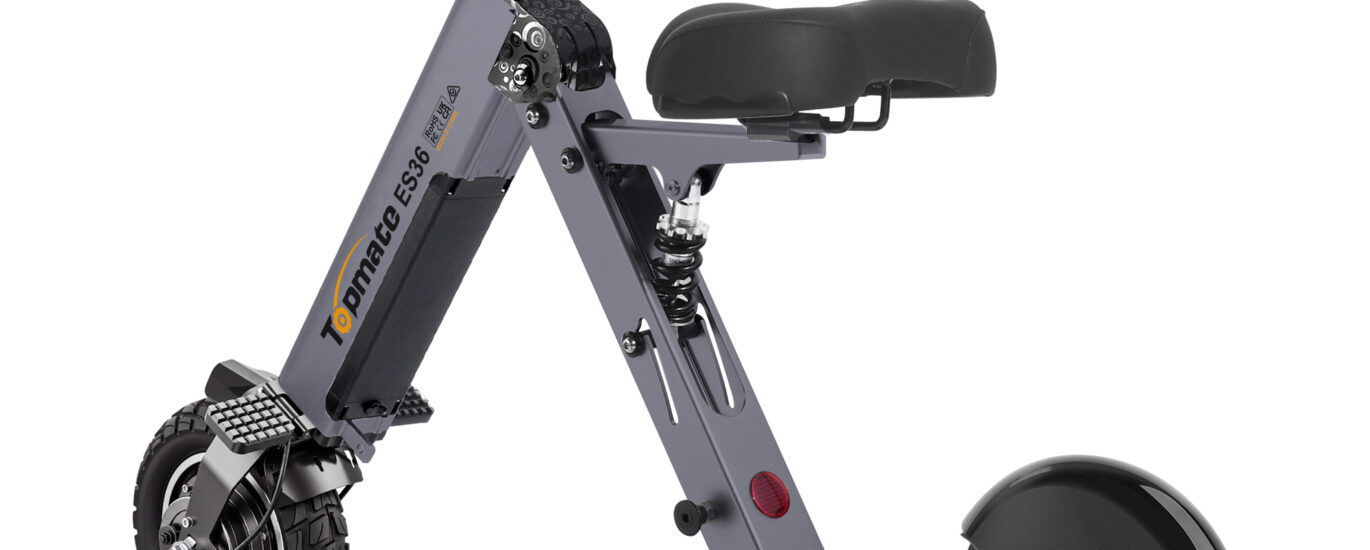
A mobility scooter can often cross a speed bump safely, but it depends on the scooter’s ground clearance, wheel size and placement, suspension, the bump’s height and shape, and the surface around it. Riders should slow down, approach as straight as practical, and follow the manufacturer’s instructions rather than assuming every speed bump is suitable.
Can a Mobility Scooter Go Over a Speed Bump?
Yes, many mobility scooters can cross ordinary speed bumps when approached carefully. However, there is no universal speed-bump height that every mobility scooter can safely handle.
A scooter that easily crosses one low, rounded bump may struggle with a taller, sharper bump. The important question is not simply whether the scooter has enough power. The rider also needs to consider:
- Ground clearance underneath the scooter
- Front and rear wheel size
- Wheel placement and wheelbase
- Suspension design
- Bump height, width, and shape
- Approach angle
- Surface condition
- Riding speed
- Traffic, pedestrians, and other hazards nearby
Always give priority to the scooter manufacturer’s operating instructions and specifications. If the manufacturer does not indicate that a particular obstacle is suitable, do not deliberately test the scooter’s limits.
Why Speed Bumps Can Be Difficult for Mobility Scooters
A speed bump changes the angle between the scooter and the ground. As the front wheels climb, the scooter’s underside may become closer to the surface. As the rear wheels descend, the scooter can experience another change in angle.
This can create several problems.
A low-clearance scooter may scrape underneath. A short-wheelbase scooter may move differently from a larger scooter. A sharp-edged bump can produce a more abrupt movement than a broad, rounded one.
There is also a stability issue. Crossing too quickly can cause the scooter to bounce, jolt, or feel less controlled.
For that reason, treating a speed bump like a normal section of pavement is a mistake.
Ground Clearance: Why It Matters
Ground clearance is the distance between the lowest part of the scooter and the ground.
It matters because the scooter needs enough clearance to pass over the highest part of an obstacle without the underside contacting the surface.
However, a specification alone does not tell the entire story. A scooter’s clearance can change in practical situations depending on rider weight, tire condition, load, and the shape of the obstacle.
Before regularly crossing speed bumps on a route, check the manufacturer’s specifications and consider whether the lowest parts of the scooter have adequate clearance.
A bump that looks small from a distance can still have a steep approach or a raised center that changes the clearance required.
Wheel Size and Wheel Placement
Wheel size affects how a scooter responds when its wheels meet an uneven surface.
Larger wheels can generally roll over surface irregularities differently from smaller wheels, while wheel placement influences how the scooter moves as the front and rear wheels encounter the bump at different times.
The number of wheels matters too. Three-wheel and four-wheel scooters have different layouts and handling characteristics.
This does not mean that one configuration is automatically safe or unsafe over speed bumps. Instead, riders should consider the complete design of the scooter and follow its operating guidance.
Does Suspension Help?
Suspension can help reduce the amount of shock transferred to the scooter and rider when traveling over uneven surfaces.
However, suspension does not make a scooter automatically suitable for every speed bump.
Suspension has limits. A tall, sharply angled, damaged, or poorly positioned bump can still create a difficult obstacle even when a scooter has suspension.
Think of suspension as one part of the scooter’s design rather than a guarantee of safe obstacle clearance.
How Fast Should You Approach a Speed Bump?
There is no single universal speed that is appropriate for every mobility scooter and every speed bump.
The safest general principle is to reduce speed substantially before reaching the bump and maintain enough control to cross smoothly.
The exact appropriate speed depends on the scooter, surface, bump, surroundings, and manufacturer’s guidance.
Avoid approaching at normal travel speed simply because the bump looks low. You should have enough time to identify pedestrians, vehicles, potholes, drainage channels, or other hazards around the obstacle.
If you cannot clearly judge the bump, slow down further and reassess.
The Safest Way to Approach a Speed Bump
Use this simple sequence:
Before the bump → slow down → check surroundings → approach straight → cross carefully → confirm the scooter remains stable.
1. Before the bump
Look ahead and identify the bump early. Check whether there is damage, debris, water, or another obstacle nearby.
2. Slow down
Reduce your speed before the front wheels reach the bump rather than braking abruptly while already climbing it.
3. Check surroundings
Look for pedestrians, bicycles, vehicles, parked cars, and other mobility users. Make sure you have enough space to maintain a controlled path.
4. Approach straight
Where the layout allows, approach the bump as straight as practical. Avoid unnecessary diagonal approaches that can change how the wheels meet the obstacle.
5. Cross carefully
Keep both hands on the controls and maintain a controlled speed. Avoid sudden acceleration or steering movements.
6. Confirm stability
After crossing, make sure the scooter remains stable and responsive before returning to normal travel speed.
What About Steep or High Speed Bumps?
Extra caution is needed with speed bumps that are unusually high, steep, narrow, sharply edged, damaged, or poorly marked.
Do not assume that because a scooter crossed a low rounded bump successfully, it can handle a taller obstacle.
If the bump appears too steep or high for your scooter, look for an alternative route where possible. If there is no safe way around it, stop at a safe location and assess the situation rather than attempting to force the scooter over it.
Never deliberately approach a large obstacle at speed to see whether the scooter can make it across.
What If the Speed Bump Is Wet or Slippery?
Wet surfaces can reduce traction and make controlled movement more difficult.
Painted surfaces, metal covers, leaves, mud, loose gravel, and standing water can also affect how the tires interact with the ground.
Reduce speed and avoid sudden steering or acceleration. If the surface appears particularly slippery, consider whether waiting or taking another route would be safer.
Remember that the bump itself may not be the only hazard. The surface immediately before and after it can also affect stability.
What Can Happen if You Approach Too Quickly?
Approaching a speed bump too quickly can cause a sudden jolt or bouncing motion. Depending on the scooter and obstacle, the rider may experience:
- Reduced steering control
- Unexpected movement of the scooter
- Loss of traction
- Contact between the scooter’s underside and the bump
- Greater discomfort
- Instability when descending from the bump
The risk is not limited to the bump itself. A rider may also encounter a pedestrian, vehicle, curb, pothole, or another obstacle immediately afterward.
That is why controlling speed before reaching the bump is more important than trying to maintain momentum.
What Should You Do if You Are Unsure About a Speed Bump?
Stop or slow down in a safe location and assess it.
Ask yourself:
- Can I clearly see the entire bump?
- Does my scooter have sufficient ground clearance according to the manufacturer’s specifications?
- Is the approach reasonably level?
- Is the surface dry and stable?
- Can I cross without conflicting with traffic or pedestrians?
- Does the manufacturer provide guidance about obstacles or uneven terrain?
If you cannot confidently answer these questions, avoid treating the obstacle as a test of the scooter’s capability.
How to Evaluate Your Regular Route
A speed bump that appears once may not be a major concern. A route containing several bumps requires more planning.
Residential street
Check whether the bumps are rounded or sharply raised and whether vehicles or pedestrians could limit your approach.
Shopping-center parking lot
Watch for speed bumps near entrances, pedestrian crossings, and parked vehicles. Traffic can make a controlled approach more difficult.
Apartment complex
Repeated bumps may occur throughout the property. Check the route from the building entrance to the road rather than evaluating only one obstacle.
Hospital or medical facility
Look for bumps near entrances and drop-off areas. Pedestrian traffic may require additional caution.
Hotel or public venue
Parking areas and access roads can contain different bump designs. If you are unfamiliar with the property, slow down and inspect each obstacle rather than assuming they are identical.
Mobility Scooter Speed Bump Checklist
Before regularly crossing a speed bump, consider:
| Factor | What to check |
|---|---|
| Height/shape | Is the bump low, rounded, steep, or sharply edged? |
| Approach angle | Can you approach it straight and with good visibility? |
| Ground clearance | Is there adequate clearance according to the scooter specifications? |
| Wheel size | Are the wheels appropriate for the surfaces you regularly encounter? |
| Suspension | Does the scooter have suspension, and what does the manufacturer say about uneven surfaces? |
| Surface condition | Is it wet, slippery, broken, gravel-covered, or obstructed? |
| Rider speed | Can you approach slowly enough to maintain control? |
| Surrounding traffic | Are pedestrians, cars, bicycles, or other hazards nearby? |
Common Mistakes Riders Should Avoid
Approaching at normal speed: A bump that looks small can still produce a significant jolt.
Braking suddenly on the bump: Slow before reaching it instead of waiting until the front wheels are already climbing.
Crossing diagonally without a reason: A straight approach is generally easier to control when the route permits it.
Assuming suspension solves everything: Suspension can improve comfort and handling over some uneven surfaces, but it does not eliminate clearance or stability limitations.
Judging by appearance alone: Two bumps of similar appearance can have different heights, angles, and surface conditions.
Ignoring the manufacturer’s specifications: The manufacturer’s instructions should take priority over general advice.
Testing the scooter’s limits: A public road, parking lot, or hospital entrance is not an appropriate place to experiment with obstacle capability.
Safety Takeaway
A mobility scooter can often cross an appropriate speed bump, but safe crossing depends on the specific scooter, the obstacle, and the conditions at the time. Slow down before reaching the bump, approach as straight as practical, maintain control, and consider ground clearance, wheels, suspension, surface condition, and surrounding traffic. When in doubt, follow the manufacturer’s instructions and choose a safer route rather than testing the scooter’s limits.
FAQ
Can a mobility scooter go over speed bumps?
Many mobility scooters can cross suitable speed bumps when operated carefully. However, suitability depends on the scooter’s ground clearance, wheel configuration, suspension, speed, and the bump’s height and shape. Riders should slow down, approach as straight as practical, and follow the manufacturer’s instructions.
Should you cross a speed bump at an angle on a mobility scooter?
A straight approach is generally easier to control when the route allows it. Deliberately taking a sharp angle can change how the wheels contact the bump and may make the scooter less predictable. Follow the manufacturer’s guidance and avoid unnecessary steering movements while crossing.
Can suspension make a mobility scooter safer over speed bumps?
Suspension can help absorb some movement from uneven surfaces, but it does not guarantee that a scooter can safely cross every speed bump. Ground clearance, wheel design, obstacle shape, speed, surface condition, and overall scooter design still matter.
What should I do if a speed bump looks too high for my mobility scooter?
Do not deliberately test the scooter’s limits. Slow down or stop in a safe location and assess the obstacle. Check the manufacturer’s specifications and, where possible, use an alternative route if the bump appears unsuitable for the scooter.

-scaled-2-420x300.jpg)