Quick Answer
To choose a mobility scooter for uneven sidewalks, assess the surfaces you use most often, including cracked pavement, paving stones, driveway entrances, and sloped paths. Compare tire type, wheel size, ground clearance, suspension, stability, and weight capacity. Test the scooter on representative surfaces whenever possible, and prioritize safe handling over portability alone.
Key Takeaways
- Assess your actual daily route before comparing scooter models.
- Larger wheels and suitable tires may help a scooter roll over minor surface irregularities, but they do not guarantee safe handling on rough ground.
- Ground clearance, suspension, wheelbase, stability, and rider weight all affect outdoor performance.
- A lightweight folding scooter may be convenient to transport but may not suit every uneven path.
- Avoid steep, slippery, severely damaged, or otherwise unsafe routes unless the scooter is specifically rated and suitable for those conditions.
1. Start With Your Everyday Route, Not the Scooter
When choosing a mobility scooter, the most useful question is not simply whether it can handle uneven pavement. Ask which surfaces you encounter during a normal outing and how frequently you need to cross them.
A trip to a nearby shop may involve smooth pavement for most of the journey, followed by cracked sidewalks, a sloping driveway entrance, and an uneven curb cut. Each section creates a different handling challenge.
Walk or travel along your intended route before buying, if it is safe to do so. Look for narrow sections, raised edges, potholes, loose paving stones, steep driveways, and places where rainwater collects.
Consider three questions:
- How often will the scooter encounter these obstacles?
- Can you choose a smoother alternative route?
- Will you need to cross the same difficult section independently every day?
A scooter that performs adequately on occasional minor cracks may not be the right choice for a route with repeated bumps or steep transitions.
2. Understand the Different Pavement Conditions
Not all uneven surfaces create the same demands.
Smooth pavement
Well-maintained sidewalks and paved paths generally provide the easiest outdoor riding conditions. Here, comfort, braking, turning, range, and maneuverability may matter more than specialized terrain features.
Cracked or patched sidewalks
Small cracks and shallow surface changes can cause noticeable jolts, particularly on scooters with limited cushioning or smaller wheels. Check whether the wheels can pass over the irregularities without excessive vibration or abrupt changes in direction.
Deep cracks, broken edges, and potholes require greater caution. Do not assume a scooter can safely cross them because it handles minor cracks.
Uneven paving stones
Older pedestrian areas and decorative paved paths may contain joints, raised stones, or gaps between blocks. Repeated irregularities can make a ride uncomfortable and challenge wheel contact and stability.
Look for an alternative paved route if the surface is badly displaced or contains gaps that could trap a wheel.
Driveway entrances and curb transitions
Driveways can create sudden changes in height or angle. The important factors include approach angle, ground clearance, wheel size, and the scooter manufacturer’s guidance on slopes and obstacles.
Never assume a scooter can climb a standard curb. Use suitable dropped kerbs or curb ramps where available.
Slopes and rough paved paths
A paved path can still be challenging if it is steep, cambered, slippery, or badly maintained. Check the manufacturer’s maximum gradient and operating guidance,
3. Which Scooter Specifications Matter Most?
Tire type and wheel size
Tire construction affects cushioning, grip, and the way a scooter responds to surface changes. Pneumatic tires contain air and can help absorb some vibration, although their pressure and condition matter. Solid tires avoid punctures but may transmit more impact through the frame.
Larger wheels may roll over small irregularities more readily than smaller wheels of otherwise similar design. However, tire type, wheel geometry, load, and clearance also influence the result.
Check whether the manufacturer specifies the front and rear wheel sizes and tire construction. Do not rely on phrases such as “all-terrain” without confirming the intended surfaces and limitations.
Ground clearance
Ground clearance is the space between the scooter’s lowest relevant components and the ground. Limited clearance can allow the underside or frame to contact raised pavement, especially when approaching a change in height at an angle.
Ask the manufacturer for the actual clearance measurement if it is not published. Do not estimate it from product photographs.
Suspension and comfort
Suspension can reduce some impacts from uneven surfaces, depending on its design and travel. However, a scooter without published suspension information should not be assumed to have it.
Seat cushioning, riding posture, tire construction, and speed also affect comfort. If possible, test the scooter over the types of minor irregularities you expect to encounter.
Wheelbase and stability
Wheelbase describes the distance between the front and rear wheel axles. It influences how a scooter responds to changes in ground level,
A longer wheelbase is not automatically better, Compare the complete design, turning behavior, stability guidance, and intended use.
Weight capacity
Check the maximum permitted load, including the rider and any carried items as specified by the manufacturer. A scooter must accommodate the rider comfortably without exceeding its rating.
Rider weight, luggage, and surface conditions can influence performance. Do not assume that a scooter will handle uneven ground safely simply because it has a powerful motor.
4. Match the Specifications to Your Route
| Surface or route condition | Specifications to prioritize | What to check |
|---|---|---|
| Smooth sidewalks | Maneuverability, braking, range | Turning space and everyday comfort |
| Minor cracks and patches | Wheel size, tire type, cushioning | Whether small bumps cause excessive jolts |
| Uneven paving stones | Tire construction, stability, clearance | Repeated vibration and wheel contact |
| Driveway transitions | Ground clearance, wheel geometry, gradient rating | Safe approach and departure angles |
| Sloping paved paths | Rated gradient, braking, stability | Manufacturer’s slope and operating limits |
| Frequently damaged pavement | Intended use, clearance, tire design, stability | Whether another route or scooter type is safer |
Use this table as a starting point, not a substitute for a manufacturer’s specifications or an actual suitability assessment.
5. Real-Life Scenarios: How to Make the Decision
Scenario 1: A daily trip to the local shop
Most of the journey uses smooth pavement, with a few shallow cracks along the way. A compact folding scooter may be practical if it provides suitable wheel design, adequate clearance, comfortable handling, and sufficient capacity.
Before buying, pay particular attention to the shop entrance and the condition of the pavement near the destination.
Scenario 2: Crossing several driveway entrances
The route includes repeated sloping entrances and raised pavement edges. Check the scooter’s ground clearance, wheel arrangement, and manufacturer-rated gradient. Look for safe, gradual transitions rather than approaching abrupt edges at speed.
If the transitions exceed the scooter’s stated limits, find another route.
Scenario 3: Visiting a paved park
The park has long, paved paths with occasional joints and uneven sections. Comfort, tire design, braking, and battery range become important.
Check the park’s route conditions before visiting. A path described as paved may still contain steep sections, tree-root damage, or slippery surfaces after rain.
Scenario 4: Living on a street with cracked sidewalks
Cracks and broken patches appear throughout the route, leaving few smooth sections. A scooter designed mainly for easy folding and transport may not provide the comfort or handling this journey requires.
Compare alternatives intended for more demanding outdoor use, and ask a mobility specialist to assess the route if the surface is significantly damaged.
6. Is a Lightweight Folding Scooter Always the Best Choice?
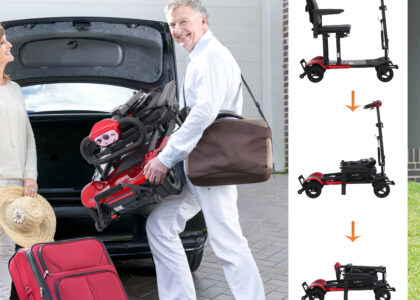
No. Lightweight folding scooters can simplify storage, car transport, and travel, but portability does not establish suitability for uneven pavement.
A compact design may involve compromises in wheel size, suspension, ground clearance, or overall stability. These compromises vary by model, so check the actual specifications instead of judging by weight or folded dimensions alone.
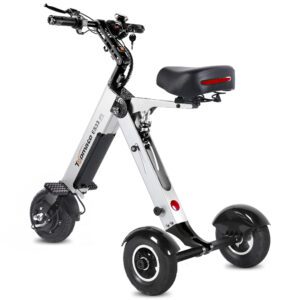
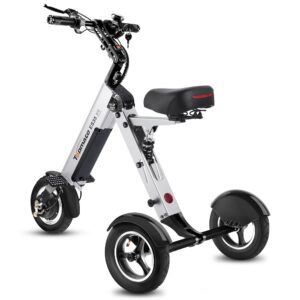
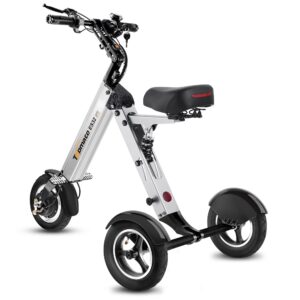
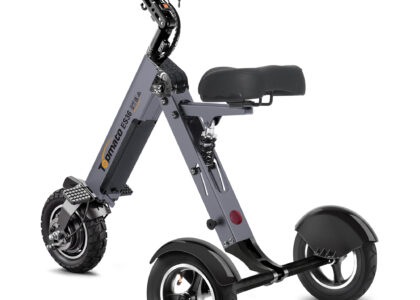
For example, TopMate’s published specifications list the ES33 with 8-inch front and rear wheels and the ES35 with 10-inch front and rear wheels. Both are folding designs, but wheel size alone does not prove that either model is suitable for a particular damaged sidewalk. choosing a mobility scooter for outdoor use
The ES36 is another model worth investigating if its published tire configuration matches your needs. ES36 features front-wheel off-road tires.
If your route regularly includes significant bumps, steep transitions, or badly broken paving, compare purpose-suited alternatives rather than assuming a travel scooter will handle them.
7. Pre-Purchase Route Assessment Checklist
Before choosing a mobility scooter, use this checklist:
-
Map the route to your most frequent destinations.
-
Identify cracks, potholes, raised paving stones, and broken edges.
-
Check driveway entrances, curb ramps, slopes, and cross-slopes.
-
Note narrow passages, tight turns, and areas where you cannot avoid obstacles.
-
Check the manufacturer’s tire type and front and rear wheel sizes.
-
Confirm published ground clearance and suspension details, if available.
-
Review the rated gradient, braking guidance, stability information, and intended use.
-
Confirm the weight capacity covers the rider and relevant belongings.
-
Consider whether the scooter’s weight and folding mechanism suit your transport needs.
-
Arrange a supervised trial on representative surfaces, where possible.
-
Ask the supplier about limitations, servicing, and replacement tire availability.
If you cannot test the scooter, ask the supplier specific questions about the obstacles on your route. Request written clarification when an important specification is missing.
8. When Should You Avoid a Route?
Do not attempt a route simply because the scooter can move across a similar surface. Avoid steep or slippery slopes, deep potholes, loose stones, severely broken pavement, and abrupt edges that exceed the manufacturer’s limits.
Wet leaves, mud, ice, and standing water can reduce grip or hide hazards. Slow down on permitted minor irregularities, maintain a safe distance from pedestrians, and follow the manufacturer’s guidance for braking and turning.
Never try to overcome an obstacle by accelerating aggressively or making a sudden turn. If a section appears unsafe, stop in a safe place and use an alternative route.
If you regularly encounter inaccessible sidewalks, contact the relevant local authority about repairs or accessible alternatives. A mobility scooter cannot make every route safe.
Conclusion
Choosing a mobility scooter for uneven sidewalks starts with understanding your own journey. Identify the surfaces you encounter, compare wheel and tire design, ground clearance, suspension, stability, gradient ratings, and weight capacity, and consider how easily you can transport the scooter.
Most importantly, do not choose based on folding convenience or a single specification alone. Match the complete scooter design to your route, test it where possible, and choose a safer alternative when the surface exceeds its capabilities.
FAQ
What is the most important feature for a mobility scooter on uneven sidewalks?
There is no single feature that guarantees suitable performance. Wheel size, tire construction, ground clearance, suspension, stability, and the scooter’s intended use all matter. Start by identifying the actual obstacles on your route, then compare manufacturer specifications and arrange a trial if possible.
Are pneumatic tires better than solid tires for uneven pavement?
Pneumatic tires can absorb some vibration because they contain air, while solid tires avoid punctures and generally need less tire-related maintenance. Neither type guarantees safe handling. Compare the complete wheel design, recommended tire pressure where applicable, and the surfaces approved by the manufacturer.
Can a folding mobility scooter handle cracked sidewalks?
Some folding scooters may handle minor cracks and small surface changes, but their suitability depends on wheel size, tires, clearance, stability, rider load, and the severity of the damage. Check the model’s specifications and test it on representative surfaces. Avoid deep cracks, potholes, and abrupt edges that exceed its limits.
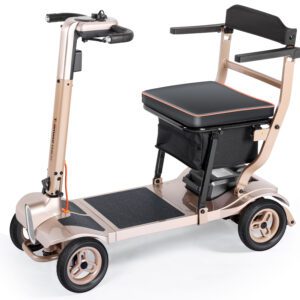
Should I choose a four-wheel scooter for uneven sidewalks?
A four-wheel design may appeal to riders who prioritize a stable platform, but wheel count alone does not determine outdoor suitability. Compare tire construction, ground clearance, wheel geometry, stability guidance, turning needs, and rated gradients. Ask a mobility specialist for advice if your route includes challenging slopes or damaged pavement.