Quick Answer
The best comfortable portable mobility scooter is not necessarily the lightest or most cushioned model. Start with how you will actually use it: how long you ride, how often you lift it, how much space you have, and what surfaces you travel on. Then balance seat support, legroom, stability, wheel size, suspension, folded size, battery weight, and carrying effort.
Key Takeaways
- Lighter does not automatically mean better. A very light scooter can be easier to lift but may offer fewer comfort features.
- Comfort matters more as trip time increases. A scooter that works well for a 30-minute errand may feel different during a full-day outing.
- Check the complete lifting weight. The scooter’s listed weight may not include the battery or removable accessories.
- Folded dimensions matter as much as weight when using a car trunk, SUV, closet, or apartment.
- Seat position and legroom are personal. Always consider how your body fits the scooter rather than judging comfort from photos alone.
- Three-wheel and four-wheel designs involve different priorities. Three wheels can provide tighter maneuvering, while four wheels can provide a more confidence-inspiring platform.
- Your transportation routine should influence the choice. Frequent loading calls for a different balance than occasional road trips.
What Actually Matters When Comfort and Portability Both Matter
Shopping for a comfortable portable mobility scooter can become confusing because manufacturers often highlight either portability or comfort.
In reality, these qualities can compete with each other.
A scooter may become easier to lift when its frame, seat, wheels, and battery are kept smaller and lighter. However, additional seat support, larger wheels, wider footrests, suspension, or a more substantial frame can add weight and bulk.
The goal is therefore not to find the scooter with the highest comfort rating or lowest weight. The goal is to find the best compromise for your normal day.
1. Scooter Weight Is Only One Part of Portability
Start with a simple question:
Can I realistically move this scooter without help?
Look at:
- Total scooter weight
- Weight without the battery
- Battery weight
- Whether the battery can be removed
- Where you need to lift it from
- How far you need to carry it
- Whether another person usually helps
A scooter that weighs less on paper may still be difficult to load if it is awkward to grip.
Conversely, a slightly heavier scooter may be manageable if its battery can be removed first.
This distinction becomes especially important for people who regularly load a scooter into a car.
2. Folded Size Can Matter More Than Weight
Imagine two scooters that weigh approximately the same.
One folds into a compact package that fits easily into your trunk. The other remains longer or taller when folded.
The second scooter may technically be lightweight, but it could be less convenient every time you travel.
Before buying, measure:
- Your vehicle’s trunk opening.
- The usable trunk depth and height.
- Your storage space at home.
- The space available around other luggage.
- The distance you will carry the folded scooter.
Do not measure only the trunk itself. The opening is often the real limitation.
3. Seat Comfort Becomes More Important With Longer Trips
For a short shopping trip, you may tolerate a simpler seat.
For a two- or three-hour outing, however, seat width, padding, back support, seat height, and riding position become much more important.
Pay attention to:
- Seat width
- Seat depth
- Backrest support
- Cushioning
- Seat height
- Armrest position, if equipped
- Your ability to keep your feet comfortably positioned
A seat can look comfortable in a product photograph but still be a poor fit for your body.
That is why authentic user photos and videos can be useful. A good article should ideally show real seating positions rather than only polished product photography.
4. Seat Height and Legroom Are Easy to Overlook
Portability often gets measured from the outside, while comfort depends heavily on how your body fits inside the scooter.
If your knees feel cramped or your feet cannot rest naturally, even a well-cushioned seat may not feel comfortable.
Consider:
- Your leg length
- Knee position
- Footrest size
- Seat-to-tiller relationship
- Whether you can comfortably reach the controls
- Whether you can get on and off without awkward movement
For longer rides, a natural seating position can matter more than a few pounds of weight savings.
5. Suspension and Wheel Size Affect the Riding Experience
A comfortable scooter does not necessarily need elaborate suspension.
Instead, think about where you ride.
Smooth indoor floors and paved shopping-center paths place different demands on a scooter than cracked sidewalks, rough pavement, gravel paths, or uneven outdoor surfaces.
Larger pneumatic or air-filled tires can provide additional cushioning over some surfaces, while smaller solid wheels can support a compact design with less maintenance.
Suspension, tire construction, wheel diameter, and ground clearance should therefore be considered together.
6. Stability and Turning Are Both Important
A three-wheel scooter can be attractive when you frequently navigate narrow aisles, tight corners, or indoor spaces.
A four-wheel design can appeal to someone who prioritizes a broader-feeling platform and stability during everyday travel.
Neither configuration is automatically right for everyone.
Think about your most common environment:
- Small apartment: maneuverability may matter more.
- Shopping center: turning radius and control feel matter.
- Outdoor sightseeing: stability and wheel performance become more important.
- Long sidewalks: riding position and surface handling deserve more attention.
7. Tiller Ergonomics Should Not Be an Afterthought
A scooter can have a comfortable seat but still feel tiring if the controls require an awkward wrist or shoulder position.
When possible, test whether you can:
- Reach the controls naturally
- See the display without excessive head movement
- Maintain a relaxed shoulder position
- Operate forward and reverse controls comfortably
- Turn the tiller without straining your wrists
For people spending several hours on a scooter, these small details can have a surprisingly large effect on the overall experience.
Choose Based on How You Actually Use the Scooter
| Real-life situation | What to prioritize | Portability vs. comfort |
|---|---|---|
| 30-minute shopping trip | Easy folding, turning, simple controls | Portability can take priority |
| 2–3 hour outing | Seat support, legroom, tires, riding position | Balanced approach |
| Full-day sightseeing | Comfort, stability, battery capacity, surface handling | Comfort becomes more important |
| Frequent car transportation | Lift weight, removable battery, folded dimensions | Portability takes priority |
| Occasional travel | Folded size, storage, battery removal, convenience | Balanced travel-focused choice |
The key is to avoid buying for an imaginary “average day.”
Buy for your actual routine.
Product Examples: Where Different Priorities Lead
TopMate’s range illustrates why there is no single perfect balance.
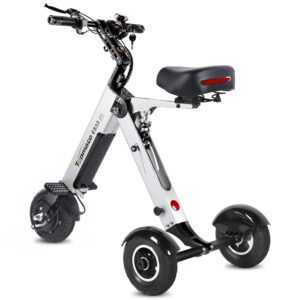
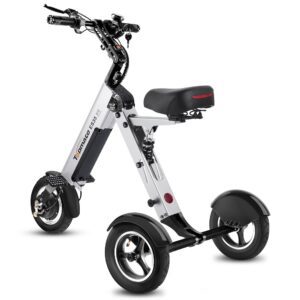
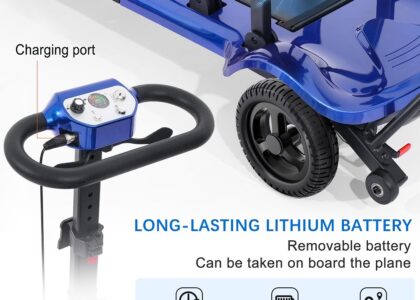
The TopMate ES15 makes sense as an example for buyers who put considerable emphasis on folding, transportation, and carrying flexibility. Its removable battery can also make moving and charging the scooter more manageable.
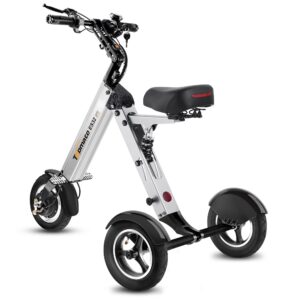
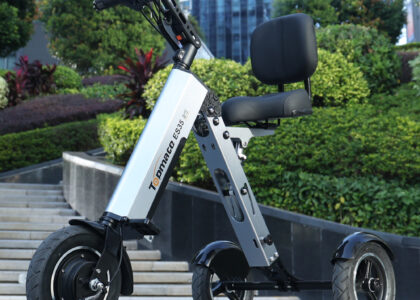
The TopMate ES35 is a useful example for someone looking for a balance between portability and everyday usability. Its foldable three-wheel design, removable battery, wider footrests, and 10-inch pneumatic tires are relevant when considering both transportation and everyday riding.
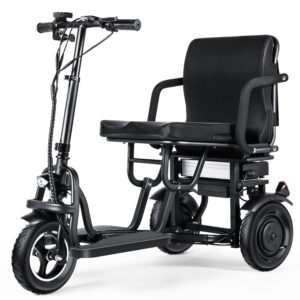
The TopMate ES36 is another practical folding option for everyday use. Its published specifications emphasize a lightweight folding design, cushioned seat, wide footrests, extended rear anti-tip axle, and pneumatic front tires.
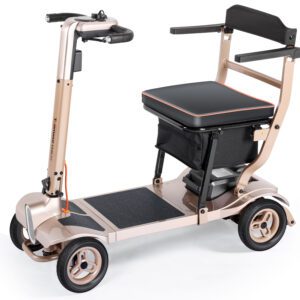
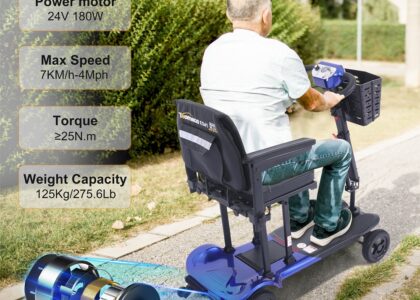
For someone who specifically wants a four-wheel travel-oriented design, the TopMate ES40 is worth considering. Its specifications include four 8-inch solid tires, anti-tip wheels, a removable lithium battery, folding dimensions, and a listed net weight of 38.36 lb without the battery.
These should be treated as examples of different priorities, not as a universal ranking.
Real-Life Scenarios: Which Trade-Off Makes Sense?
Scenario 1: The Weekly Grocery Shopper
If you mainly use the scooter for grocery stores, pharmacies, medical appointments, and short shopping trips, you may benefit more from easy loading and maneuverability than from maximum cushioning.
Here, portability can reasonably win.
Scenario 2: The Social Outing
Suppose you regularly spend two or three hours at a shopping center, museum, outdoor market, or community event.
Now the equation changes.
Seat comfort, legroom, tire performance, and riding position deserve more weight. Saving a few pounds may not be worthwhile if the scooter becomes uncomfortable halfway through the outing.
Scenario 3: The Full-Day Sightseer
For a full day at a tourist attraction, park, historic area, or large venue, comfort and stability become major considerations.
You should also consider battery range, charging opportunities, storage, and the surfaces you expect to encounter.
Scenario 4: The Frequent Car Traveler
If the scooter goes into your trunk several times every week, lifting effort becomes a daily issue.
A removable battery can reduce the weight you handle at one time, while compact folded dimensions can make loading easier.
In this situation, portability deserves a higher priority than it would for someone who rarely transports the scooter.
Scenario 5: The Occasional Traveler
If you only transport the scooter for vacations or occasional family trips, you may not need to optimize every pound.
Instead, look for a practical combination of folded size, battery convenience, seating position, stability, and storage.
How I’d Choose
I would use a simple five-step process:
1. Start with trip duration.
If most rides are under 30 minutes, portability can dominate. If rides routinely last several hours, comfort moves up the list.
2. Decide who will lift the scooter.
If you will load it yourself, weight and removable-battery design become critical.
3. Measure the vehicle.
Confirm the folded dimensions fit through the actual trunk opening.
4. Match the scooter to the terrain.
Indoor floors and smooth sidewalks do not require the same wheel and suspension characteristics as rough outdoor routes.
5. Test the seating position.
Make sure your knees, feet, back, and hands are comfortable before deciding.
Common Mistakes to Avoid
Choosing the lightest scooter automatically
Light weight is valuable, but it should not override seating position, stability, or riding comfort.
Ignoring battery weight
A “lightweight” scooter may be substantially heavier when the battery is installed. Check both figures.
Buying based only on folded dimensions
A compact folded size is useful only if you can actually lift and position the scooter.
Assuming more padding always means more comfort
Comfort depends on seat dimensions, posture, legroom, controls, and riding surface—not just cushion thickness.
Ignoring how long you ride
A scooter that feels fine for 20–30 minutes may not be the right choice for a six-hour sightseeing day.
Relying only on manufacturer photos
Look for authentic videos, customer-submitted photos, and demonstrations showing how the scooter is loaded, folded, and ridden.
Use Real-World Content Before You Buy
This type of purchase benefits from visual evidence.
A useful buying guide should include authentic YouTube reviews showing how a scooter folds, how a rider sits, and how easily it can be loaded into a vehicle.
User-generated photos can also show details that studio photography cannot: actual legroom, seating posture, folded size beside a car, and how the scooter looks in everyday environments.
Where customer experiences are included, they should be presented as individual experiences rather than universal proof. Avoid copying reviews or turning one person’s experience into an unsupported comfort claim.
FAQ
What makes a mobility scooter comfortable and portable?
A comfortable portable mobility scooter balances manageable weight and folded size with an appropriate seat, legroom, wheel design, stability, and ergonomic controls. The right balance depends mainly on trip duration and how often the scooter must be lifted or transported.
Is a lighter mobility scooter always more comfortable?
No. Lower weight can make transportation easier, but comfort also depends on seat dimensions, back support, legroom, tires, suspension, stability, and riding position. A slightly heavier scooter may be a better choice for someone who regularly takes longer trips.
Should I remove the battery when transporting a mobility scooter?
If the scooter has a removable battery, removing it can reduce the weight you need to lift at one time. It can also make indoor charging easier. Always follow the manufacturer’s instructions and applicable airline or transportation rules.
Is a three-wheel or four-wheel scooter more comfortable?
Neither configuration is automatically more comfortable. Three-wheel scooters can offer maneuverability in tighter spaces, while four-wheel designs can provide a broader-feeling platform. Your usual environment, turning needs, stability preferences, and trip length should guide the decision.