Quick Answer
The best mobility scooter for busy public places is one that is compact enough for crowded pathways, easy to control during stop-and-go movement, stable when turning, comfortable during long waits, and practical to store when you reach a destination. Look beyond top speed. In busy venues, turning ability, footprint, visibility, portability, battery range, and easy mounting can matter much more.
Key Takeaways
- A compact footprint makes it easier to move through crowds and queues.
- Tight turning ability helps when people suddenly stop or change direction.
- Stability matters when navigating uneven outdoor surfaces or busy entrances.
- Comfortable seating becomes important when you spend time waiting.
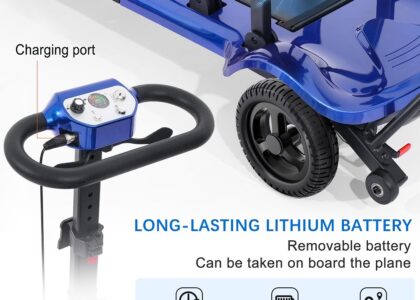
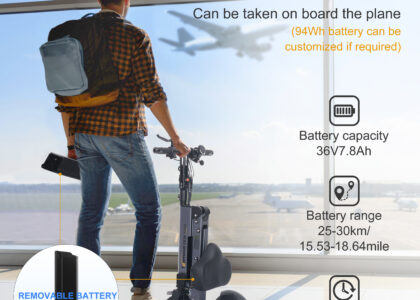
- A removable battery can make charging and transport easier.
- Lighting and visibility features are useful when moving between indoor and outdoor areas.
- Easy folding can help when the scooter must be stored temporarily.
- The right scooter depends on how crowded, long, and varied your typical outings are.
What Actually Matters in a Busy Public Venue?
A scooter that works well in an empty hallway can feel very different when there are people everywhere.
Crowded public venues create a unique combination of challenges. You may need to stop suddenly, wait behind a group, make several tight turns, pass through a narrow entrance, use an elevator, and then continue moving without much open space.
That means the question is not simply, “Is this scooter good indoors?”
A better question is:
“How easy is this scooter to control when the environment around me keeps changing?”
1. Maneuvering Through People
Crowds rarely move predictably. Someone may step sideways, a child may cross your path, or a queue may suddenly compress.
A scooter for busy public places should have predictable steering and controls that are easy to operate without excessive hand movement. A smaller overall footprint can also make passing through congested areas less stressful.
2. Tight Turns and Stop-and-Go Movement
Busy venues often involve repeated short movements rather than continuous driving.
You might move forward a few feet, stop, turn slightly, wait, and move again.
A scooter with good low-speed control and a manageable turning circle can be more useful here than one designed primarily for traveling quickly in open spaces.
3. Entrances, Elevators, and Narrow Transitions
Doorways and entrances can become difficult when several people are entering or leaving at the same time.
Before buying, consider the scooter’s overall width and how confidently you can position it. Elevator use also rewards a compact footprint because you may need enough room for other passengers.
Do not judge size only from a folded dimension. The unfolded width and turning space are what matter while riding.
4. Waiting in Queues
Standing in a queue can be one of the least obvious challenges.
A long line means you may spend considerable time sitting still. In that situation, seat comfort, back support, arm positioning, and your ability to easily get on and off become important.
If you frequently stop at ticket counters, exhibits, food stalls, or registration points, comfort should be considered alongside portability.
5. Parking and Folding
Not every venue has a convenient place to leave a scooter.
You may need to fold it temporarily, move it beside a chair, place it in a storage area, or position it without blocking other people.
This is where folding speed, folded dimensions, and actual carry weight become practical considerations rather than marketing features.
Five Real-Life Scenarios
1. Busy Shopping Center
A crowded shopping center can involve narrow aisles, checkout queues, elevators, entrances, and frequent stops.
Prioritize: compactness, turning ability, easy controls, and comfort.
A scooter that is slightly smaller but difficult to turn may not be the best choice. The goal is predictable movement around displays, shoppers, and checkout lines.
2. Museum or Tourist Attraction
Museums can combine crowded galleries with long distances between exhibits. You may also encounter elevators, narrow exhibition spaces, benches, and areas where scooters need to be positioned without obstructing visitors.
Prioritize: maneuverability, compactness, comfort, and battery planning.
If the visit lasts several hours, a comfortable seat can matter just as much as a small footprint.
3. Farmers Market
A farmers market creates a different type of crowd. Stalls, shoppers, bags, uneven ground, and people stopping to browse can create constantly changing pathways.
Prioritize: turning ability, stability, visibility, and manageable size.
Four-wheel stability can be useful when the route includes outdoor surfaces, but the scooter should still be easy to position around closely spaced stalls.
4. Outdoor Festival or Community Event
At a festival, you may encounter grass, pavement, temporary barriers, crowds, long queues, and changing lighting.
Prioritize: stability, battery/range, lighting, comfort, and ground suitability.
Think beyond the distance from the parking area to the entrance. The scooter may need to support several hours of movement, waiting, and repositioning.
5. Large Public Venue With Long Walking Distances
A large public venue can make walking between different areas tiring even when individual spaces are accessible.
Prioritize: battery/range, comfort, stability, and portability.
For a full-day outing, calculate the whole journey rather than one leg. Include detours, waiting areas, rest breaks, and unexpected extra travel.
Practical Decision Matrix
| If your main problem is… | Prioritize… | Why it matters |
|---|---|---|
| Crowded pathways | Compactness | Easier positioning around people |
| Constant short turns | Turning ability | Reduces awkward multi-point turns |
| Uneven outdoor areas | Stability | Helps provide a more confidence-inspiring ride |
| Long queues | Comfort | You may remain seated for extended periods |
| Carrying or transporting the scooter | Portability | Reduces the physical burden |
| Full-day outings | Battery/range | Gives more flexibility for longer trips |
| Evening or dim areas | Lighting | Improves visibility to you and others |
| Limited storage at the venue | Easy folding | Makes temporary storage more practical |
The important point is that there is no single winner for every crowded venue.
A person who spends most of the day inside a busy community center may prioritize compactness and turning ability. Someone visiting outdoor attractions may place greater importance on stability and battery range.
Product Examples: Match the Scooter to the Situation
TopMate models can illustrate how different priorities lead to different choices.
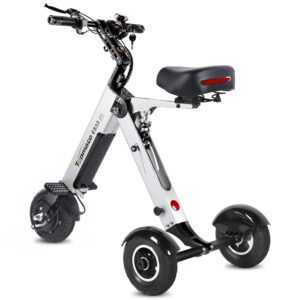
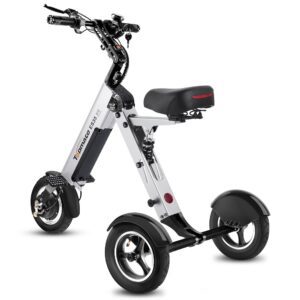
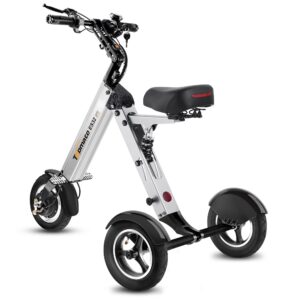
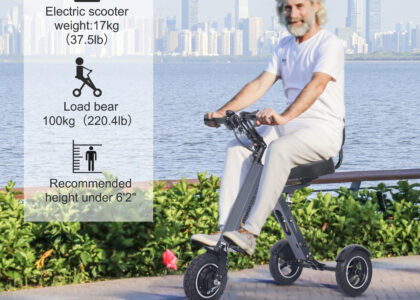
TopMate ES15 makes sense when compactness and portability are the main concerns. It can be considered by someone who regularly encounters crowded spaces and also needs a scooter that is practical to transport.
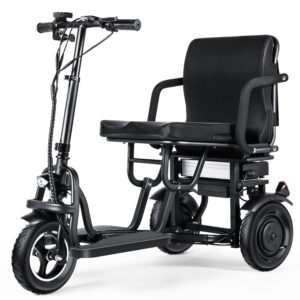
TopMate ES36 is better considered for everyday indoor and community use, particularly when the buyer wants a balance between maneuverability and regular-use practicality.
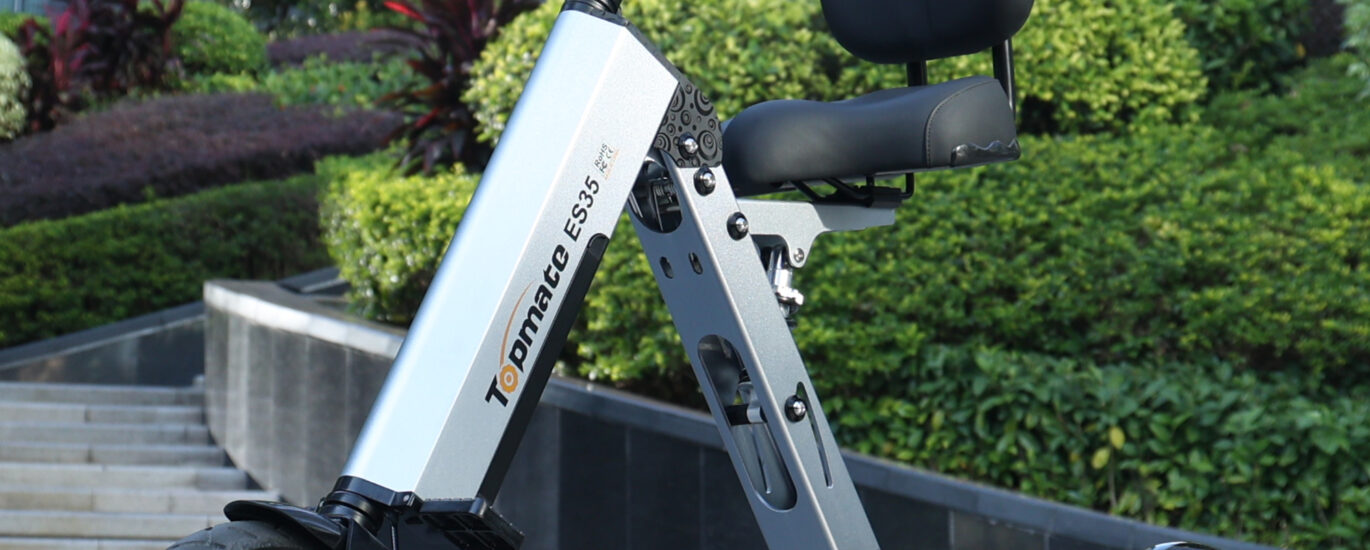
TopMate ES35 can be a better fit when outings are longer and the scooter needs to support more everyday travel rather than only short visits.
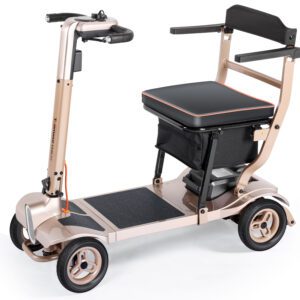
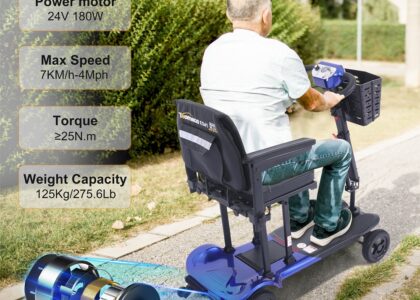
TopMate ES40 is worth considering for sightseeing and outdoor travel when a four-wheel platform and added stability are more important. It may suit outings where the environment changes between paved areas and outdoor attractions.
These should not be treated as a simple first-to-fourth ranking. The best choice depends on the environment you actually visit and the compromises you are willing to make.
How to Make a Better Decision Before Buying
Before choosing a mobility scooter for busy public places, picture a typical difficult day.
Ask yourself:
- How narrow are the spaces I normally use?
- Will I spend more time moving or waiting?
- Can I comfortably operate the controls at slow speed?
- Do I need to lift or fold the scooter?
- Where will I put it when I enter a crowded venue?
- Will I use elevators frequently?
- How long will a typical outing last?
- Will I encounter grass, pavement, ramps, or uneven surfaces?
- Can I easily get on and off without assistance?
If possible, test the scooter in a realistic environment rather than only driving it across an empty showroom.
Common Mistakes to Avoid
Choosing based mainly on top speed: Busy venues rarely reward speed. Controlled movement is more useful.
Ignoring the turning circle: A scooter can be compact yet still awkward in crowded spaces if it requires too much room to turn.
Forgetting queue time: Long outings include waiting. Seat comfort matters when movement stops.
Checking only folded size: Folded dimensions help with storage, but the riding footprint determines how easily you navigate crowds.
Underestimating battery needs: A long public-venue visit can involve much more travel than expected.
Ignoring visibility: A scooter that is easy for other people to notice can be useful in crowded surroundings, particularly outdoors or in lower light.
Use Real-World Evidence Before Buying
Manufacturers’ specifications are useful, but they do not show everything about using a scooter in a crowded environment.
Look for authentic user-generated content showing scooters being used around real people and real obstacles. YouTube demonstrations can help you judge turning behavior, folding, getting on and off, and how much space the scooter occupies.
User photos are also valuable. Images from museums, community venues, markets, sightseeing locations, or public gathering spaces can show the scooter’s real-world footprint better than a studio product photograph.
For brands and retailers, authentic UGC should demonstrate actual use rather than look like a staged advertisement. A short video showing someone navigating a crowded entrance or waiting in a queue can answer questions that a specification table cannot.
Final Buying Advice
The best mobility scooter for busy public places is not necessarily the smallest, lightest, longest-range, or most powerful model.
It is the one whose strengths match the specific problems you encounter when people, obstacles, queues, and changing environments compete for the same space.
If crowds and narrow pathways are your biggest concern, start with compactness and turning ability. If your outings last several hours, add comfort and battery planning. If outdoor surfaces are common, give stability greater weight. If transportation and storage are frequent concerns, portability and folding deserve more attention.
Think about the hardest part of your typical outing—not the easiest part. That is where the right scooter can make the biggest practical difference.
FAQ
What is the most important feature of a mobility scooter for busy public places?
For many users, maneuverability is one of the most important factors. A compact footprint, predictable steering, and good low-speed control make it easier to handle crowds, queues, narrow pathways, entrances, and frequent stops. However, comfort, stability, battery range, and portability can become more important depending on the outing.
Are four-wheel mobility scooters good for crowded public venues?
They can be. Four-wheel designs can provide a stable platform, which may be useful during outdoor or mixed-surface outings. However, buyers should also consider the scooter’s width and turning ability. A stable scooter that requires too much space to maneuver may be less convenient in a particularly crowded environment.
How much battery range do I need for a full day at a public venue?
Estimate the distance of your normal route and add extra capacity for detours, moving between buildings, finding entrances, and unexpected travel. Manufacturer range figures are typically measured under specific conditions, so real-world use can vary. If possible, start the day with a full charge and follow the battery guidance provided for your scooter.
Should I choose a folding mobility scooter for crowded public places?
A folding scooter can be useful when storage, transportation, or temporary parking is part of your routine. However, folding ability should not be the only deciding factor. Compare the scooter’s unfolded footprint, turning behavior, comfort, carrying weight, battery needs, and stability to make sure it also works while you are actually riding.