Quick Answer
The best mobility scooter for long days out should balance practical battery range, seat comfort, easy transfers, maneuverability, storage, and portability. When one outing includes several stops, choose a scooter that remains comfortable and manageable after hours of repeated riding, parking, shopping, loading, and getting on and off.
Key Takeaways
- Plan battery range around the whole day, not just the distance between two locations.
- Seat comfort becomes more important when you ride for several hours.
- Easy transfers matter when you repeatedly get on and off at different stops.
- Compact maneuverability helps in pharmacies, grocery aisles, restaurants, offices, and stores.
- Shopping storage can make a multi-stop day much easier.
- Consider folded weight and dimensions if the scooter may need to go into a car.
- Most importantly, choose based on your typical day, not simply the longest specification on the product page.
What Makes a Mobility Scooter Good for Long Days Out?
A multi-stop day is different from a simple trip to one destination.
For example, imagine leaving home in the morning, stopping at the pharmacy, visiting the grocery store, having lunch, attending an appointment, doing some shopping, and finally returning home.
Throughout that routine, the scooter may be used repeatedly. You could park it outside one business, move through another location, carry shopping, navigate tight spaces, and get back on several times.
Therefore, the right mobility scooter for long days out is not necessarily the fastest or lightest model. Instead, look for one that remains comfortable, useful, and manageable throughout the entire routine.
1. Start With Battery Planning
For a multi-stop day, don’t calculate battery needs based only on the miles you expect to ride.
Instead, map out the complete route:
Home → pharmacy → grocery store → lunch → appointment → shopping → home
Next, add the distance between every stop and allow some reserve. Detours, accessible entrances, large shopping centers, and unexpected changes can all increase actual battery use.
It’s also worth considering where you could recharge. If your day involves several hours away from home, a battery that comfortably covers the planned route can reduce unnecessary stress.
Most importantly, don’t choose a scooter simply because its advertised range looks impressive. Compare the published figure with your actual routine and keep a sensible reserve for the return journey.
2. Prioritize Seat Comfort for Several Hours
A seat that feels comfortable for 20 minutes may not feel as comfortable after three or four hours.
When choosing a mobility scooter for long days out, consider:
- Seat padding and support
- Seating position
- Back support
- Legroom
- Tiller position
- Stability while turning
- Ease of adjusting your position
Rather than focusing only on travel distance, think about the total amount of time you will spend riding.
Even six short trips can become tiring because you repeatedly sit, stand, ride, stop, and transfer. Consequently, someone who spends most of the day moving between locations may benefit from accepting a little additional weight or size in exchange for better comfort.
3. Make Repeated Transfers Easy
One overlooked issue with multi-stop outings is the number of times you get on and off the scooter.
At the pharmacy, for instance, you may park and walk inside. Later, you could transfer again before entering a restaurant. At an appointment, the scooter may remain nearby while you move into another room. Afterward, the same process happens again at the grocery store.
For that reason, look for a scooter that is easy to approach, mount, and dismount without awkward movements.
This becomes especially important when you expect to use the scooter throughout the day. A model that works well for one continuous ride may not be equally convenient when you need to transfer several times.
4. Look for Maneuverability, Not Just Stability
Large shopping centers and stores can have surprisingly tight spaces.
During a typical outing, you may need to:
- Turn between shelves
- Navigate around displays
- Enter elevators
- Approach checkout counters
- Move around restaurant tables
- Reverse from parking areas
- Position the scooter near an appointment desk
A compact scooter can make these situations easier. However, don’t assume the smallest scooter is automatically the best choice.
Instead, balance turning ability, stability, seat comfort, wheel design, and the environments you actually use. That combination matters more than any single specification.
5. Don’t Forget Shopping Storage
A multi-stop day often creates a simple problem: where do you put everything?
For example, a pharmacy bag, groceries, personal belongings, or small shopping purchases can quickly become inconvenient if there is nowhere suitable to carry them.
Before buying, check the scooter’s available basket, bag, or storage area. Then consider how much you realistically carry during a normal outing.
In addition, avoid hanging heavy bags from the handlebars or tiller unless the manufacturer specifically allows it. Unevenly distributed weight can affect handling and make the scooter harder to control.
6. Consider Indoor and Outdoor Transitions
A full day may take you across several different environments.
You could start on a sidewalk, enter a pharmacy, move through a grocery store, eat at a restaurant, visit an office, and finish at an outdoor shopping area.
As a result, the scooter needs to suit more than one type of environment.
Before choosing, think about:
- Doorway access
- Indoor turning space
- Elevator use
- Sidewalk conditions
- Small ramps
- Uneven pavement
- Parking areas
- Weather exposure
The more varied your day becomes, the more important it is to choose a scooter based on the whole journey rather than one destination.
5 Real-Life Multi-Stop Days
1. Shopping + Pharmacy + Lunch
This is a classic multi-stop routine.
You might ride from the car to the pharmacy, continue to a grocery store, and then meet a friend for lunch.
For this type of day, prioritize maneuverability, storage, comfort, and easy vehicle transport. If the scooter must be loaded into the car between locations, its weight becomes especially important.
2. Medical Appointment + Grocery Shopping
An appointment day may involve waiting, sitting, and several transfers before you even reach the grocery store.
In this situation, comfort and battery reserve can matter more than maximum speed.
A practical setup should allow you to complete the appointment without using so much battery that the grocery trip becomes stressful. Furthermore, easy transfers can make the transition between the medical facility and the store less tiring.
3. Family Visit + Restaurant + Shopping
A family day can involve longer periods away from home.
Perhaps you ride around a neighborhood, visit relatives, stop for a meal, and then visit a store before returning home.
For this type of outing, consider a balance of comfort, range, storage, and portability. Rather than optimizing for one feature, look for a scooter that can handle the different parts of the day reasonably well.
4. Tourist or Sightseeing Day
Sightseeing often means repeated starts and stops, longer periods outdoors, uneven surfaces, and unfamiliar locations.
You may also need to put the scooter into a vehicle or store it at a hotel between activities.
Therefore, a travel-oriented scooter can make sense when portability is more important than having the largest possible platform. Check the expected terrain and daily distance before deciding.
5. Community Event + Errands
Imagine attending a local community event in the morning and then stopping for groceries and lunch afterward.
Parking may be farther away than expected. Meanwhile, crowds can make maneuvering harder, and the scooter may remain in use for several hours.
For these days, prioritize battery reserve, comfort, maneuverability, and dependable transportability. If the event involves a large venue, also consider how easily the scooter can move through entrances, walkways, and crowded areas.
How I’d Decide
I would rank the decision in this order:
1. How many hours will I actually use it?
If you will ride for several hours, comfort deserves more weight.
2. How far will the complete day take me?
Calculate the whole route and keep a battery reserve.
3. Will I load it into a vehicle?
If so, compare the actual lift weight and folded dimensions.
4. How many indoor stops are involved?
Frequent stores, offices, restaurants, and elevators make maneuverability more important.
5. What will I carry?
If shopping is part of the routine, storage matters.
6. How often will I use it?
Daily use can justify prioritizing comfort and ride quality over minimum weight.
TopMate Models as Examples
TopMate’s models illustrate how different priorities can change the decision.
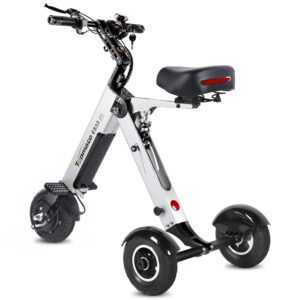
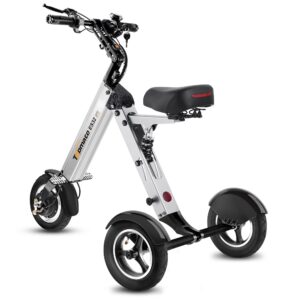
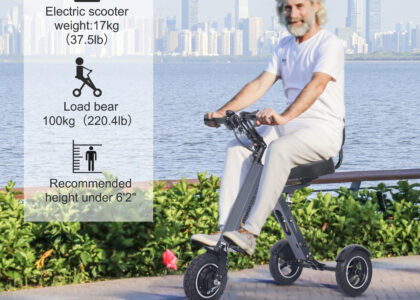
ES15: A strong example for someone who puts compact portability and transport first. It is particularly relevant when the scooter will frequently be loaded into a car or stored between stops.
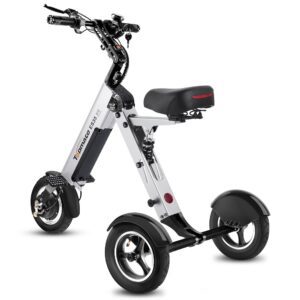
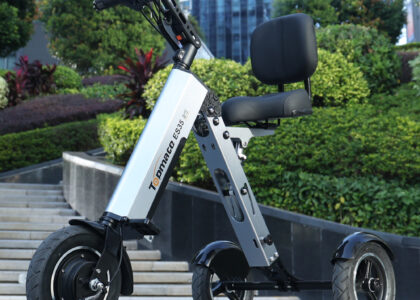
ES35: A practical middle-ground example for buyers who expect regular multi-stop use and want a balance of portability, comfort, and everyday riding capability.
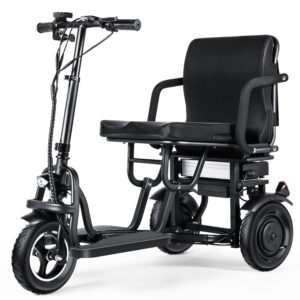
ES36: More relevant when the day involves longer riding periods and frequent everyday use, making comfort and stability bigger priorities than minimizing carrying weight.
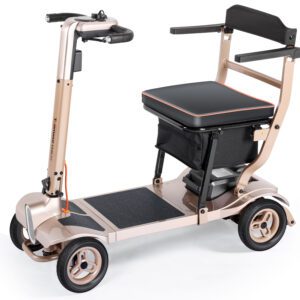
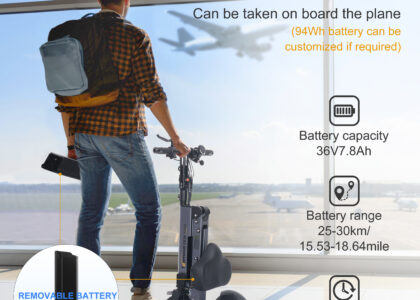
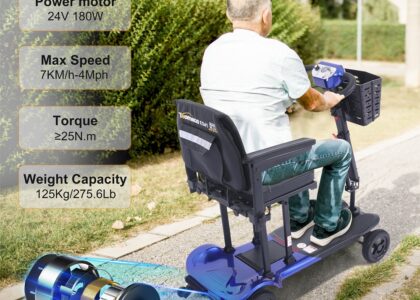
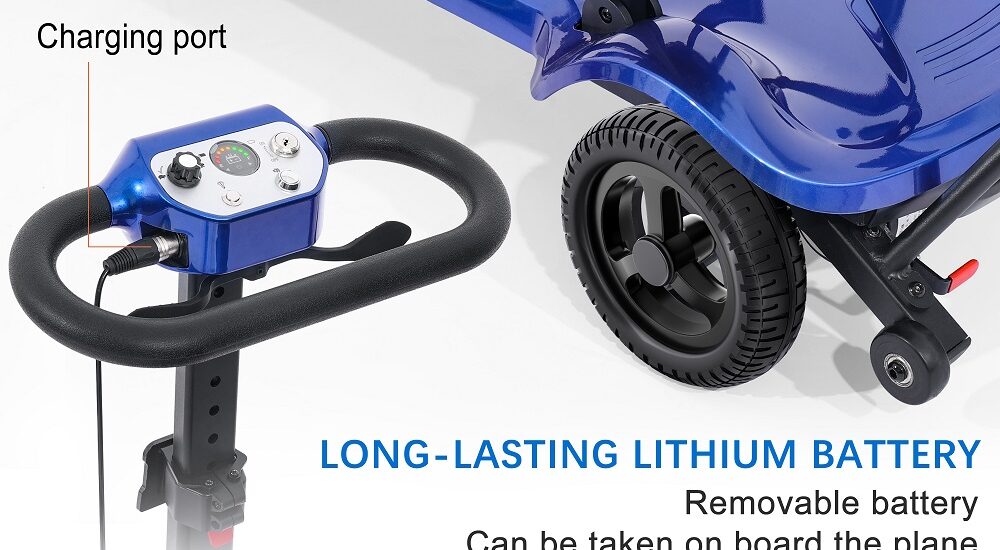
ES40: A useful example for buyers whose multi-stop days overlap with travel and sightseeing, particularly when a folding four-wheel design and removable battery are valuable. Its published specifications should be checked before purchase because battery configuration affects weight and range.
When comparing these models or other scooters, authentic YouTube reviews, user-generated photos, and real-world demonstrations can provide useful context. In particular, look for videos or photos showing how people actually fold the scooter, load it into a vehicle, store shopping, navigate stores, and use it during a full outing.
Common Mistakes to Avoid
Choosing by maximum range alone: Your actual route, terrain, rider weight, and usage pattern all matter. Therefore, use the advertised range as a planning reference rather than the only deciding factor.
Choosing the lightest scooter automatically: Lower weight helps transportation, but comfort and stability may matter more during long days. Consider how often you will carry the scooter compared with how long you will ride it.
Ignoring repeated transfers: Getting on and off six times is very different from doing it once. For multi-stop days, ease of transfer deserves attention during the buying process.
Forgetting storage: Shopping becomes inconvenient when there is nowhere suitable for small purchases. Check the available storage before assuming you can carry everything comfortably.
Only testing it outdoors: A scooter can feel fine on a driveway but become difficult to turn inside a crowded store. Whenever possible, test tight turns, entrances, and indoor maneuvering as well.
Not planning the return trip: Always consider how much battery you need to get home, not just how much you need to reach the final stop. A reserve can also help when plans change unexpectedly.
Final Thoughts
The best mobility scooter for long days out is the one that fits the rhythm of your entire day.
If your routine involves several stops, don’t ask only, “How far can it go?” Instead, ask whether you can comfortably ride it for hours, repeatedly get on and off, maneuver through stores, carry your purchases, park it between activities, and transport it when necessary.
For some buyers, that will mean choosing the lightest portable model. For others, additional comfort and everyday ride quality will be worth the extra weight.
Ultimately, the right decision comes from matching the scooter to your real multi-stop routine, rather than simply choosing the model with the longest list of features.
FAQ
What is the best mobility scooter for long days out?
The best mobility scooter for long days out should offer a practical balance of battery range, comfortable seating, easy maneuverability, storage, and portability. If you expect several stops, consider how often you will ride, transfer, shop, and transport the scooter rather than choosing based on maximum range or speed alone.
How much battery range do I need for a full day of errands?
Calculate the distance for your entire outing, including every stop and the return journey. Then allow a reasonable battery reserve for detours, uneven surfaces, indoor movement, and unexpected changes. Published range can vary with rider weight, terrain, speed, and conditions, so avoid planning a full day around the maximum advertised range.
Is a lightweight mobility scooter better for multi-stop days?
A lightweight mobility scooter can be easier to lift, fold, store, and transport in a vehicle. However, the lightest option is not automatically the best choice. If you spend several hours riding, seat comfort, stability, and ride quality may be more important. Consider whether your day involves more carrying or more riding before deciding.
What should I look for in a mobility scooter for several stops?
Look for practical battery range, comfortable seating, easy transfers, good maneuverability, useful storage, and manageable weight. Also consider whether the scooter fits through your usual doorways and elevators and whether you can transport and charge it conveniently. Authentic user reviews and videos can help you see how a scooter performs during real outings.