Direct Answer
Choosing a mobility scooter for different trips starts with identifying where you actually go, how long you stay out, and how you transport the scooter. Shopping, appointments, outdoor trips, travel, and full-day outings can require different features, so prioritize the specifications that support your most demanding regular trip without making everyday use unnecessarily difficult.
Why One Scooter May Need to Handle Different Trips
Many people do not use a mobility scooter for just one purpose.
You might use it to visit the grocery store on Tuesday, attend a medical appointment on Wednesday, visit family on the weekend, and take a road trip the following month.
That creates a practical buying challenge:
How do you choose one scooter that works across different situations?
The answer is not necessarily to find the scooter with the highest range, largest weight capacity, or smallest folded size.
Instead, think about the compromises between your most common trips.
A scooter for everyday errands may need excellent maneuverability and convenient storage. A scooter used for road trips may need to fold compactly and be manageable to load into a vehicle. A full-day outing may put greater demands on comfort and battery range.
The goal is to find a combination of features that covers your routine without prioritizing specifications you rarely use.
Match the Scooter to Your Most Demanding Trip
Start by listing your five most common types of trips.
For example:
- Grocery shopping
- Doctor appointments
- Visiting family
- Local outdoor trips
- Occasional road travel
What Features Matter for Different Types of Trips?
Grocery Shopping and Everyday Errands
Grocery stores, pharmacies, and small shops often involve tight aisles, frequent turns, checkout areas, and short stops.
For these trips, prioritize:
- Maneuverability
- Turning radius
- Easy controls
- Storage or basket capacity
- Comfortable seating
- Practical dimensions
A compact, maneuverable scooter can be useful when navigating around displays, shelves, and other shoppers.
Storage also becomes important because you may need space for personal belongings or small purchases.
Doctor Appointments and Medical Visits
Medical visits can involve parking areas, long hallways, waiting rooms, elevators, and extended periods away from home.
Consider:
- Comfortable seating
- Portability
- Battery range
- Maneuverability
- Easy controls
- Transportability
If the scooter will be transported to appointments in a car, folded dimensions and carrying weight become especially relevant.
Shopping Malls and Large Stores
Large stores can involve considerably more walking distance than a neighborhood shop.
Here, battery range, maneuverability, comfort, and storage may all matter.
You should also consider whether the scooter can comfortably navigate elevators, entrances, aisles, and crowded areas.
Visiting Family and Friends
Visiting family may involve different environments each time.
One home may have smooth floors and plenty of space. Another may have narrow entrances, steps, uneven paths, or limited storage.
For this type of trip, a balance of portability, maneuverability, comfort, and outdoor capability may be more useful than optimizing for one specification.
Parks and Outdoor Destinations
Outdoor destinations introduce surfaces that you may not encounter indoors.
Depending on where you travel, consider:
- Ground clearance
- Wheel configuration
- Tire design
- Stability
- Range
- Seat comfort
A scooter intended primarily for smooth indoor environments may not be the right fit for every outdoor path.
Outdoor Events and Markets
Farmers markets, fairs, community events, and outdoor gatherings can involve crowds, uneven surfaces, long distances, and limited seating.
Maneuverability and stability both matter.
You may also appreciate storage space for personal belongings, while sufficient range becomes useful if parking is far from the event.
Airport and Travel Days
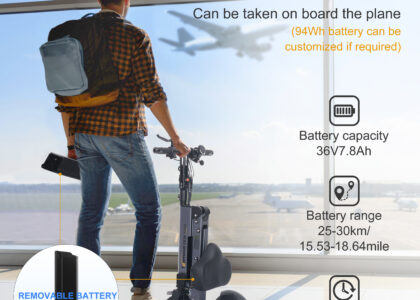
Airports can be particularly demanding because a travel day may involve long terminal distances, security procedures, waiting, transfers, and multiple stages of transportation.
A travel-oriented scooter should be evaluated for:
- Weight
- Folding or disassembly process
- Battery type and removability
- Folded dimensions
- Transportability
Always check the current airline, airport, and destination requirements before traveling with a mobility scooter, particularly for batteries.
Road Trips and Car Travel
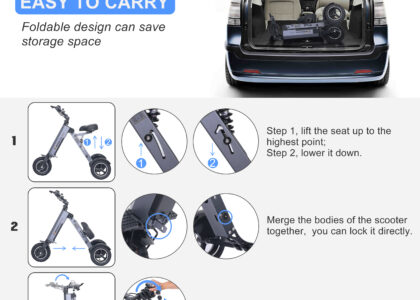
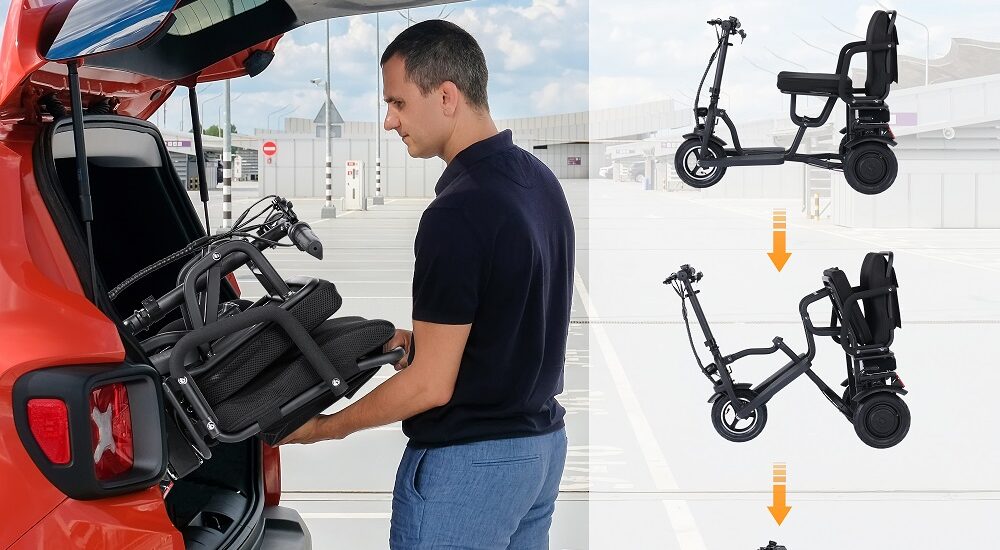
Road trips place more emphasis on how easily the scooter fits into your vehicle.
Before buying, measure your available cargo space.
Then compare it with the scooter’s folded dimensions.
Also consider:
- Actual lifting weight
- Carrying points
- Removable battery
- Folding simplicity
- Available storage space
The question is not simply whether the scooter folds. It is whether you can realistically load, transport, unload, and use it throughout the trip.
RV or Cruise Trips
RV and cruise travel can combine indoor and outdoor environments.
For RV users, storage dimensions, transportability, charging, and maneuverability may be important.
Cruise travel can involve cabins, elevators, corridors, ports, and excursions. Before traveling, confirm the operator’s current accessibility and scooter requirements.
Short Neighborhood Trips
For short trips to a nearby store, community center, or friend’s home, you may not need maximum range.
Instead, convenience can become more important.
A scooter that is easy to store, charge, maneuver, and transport may better fit this type of routine.
Full-Day Outings With Multiple Stops
This is where several features come together.
Imagine:
Home → doctor → lunch → shopping → family visit → home
Range matters because you may spend most of the day away from a charger.
Seat comfort matters because you will be riding for longer.
Storage matters because you may carry personal belongings or purchases.
Charging convenience becomes relevant if you need to recharge during the day.
For full-day trips, think about the complete journey rather than one destination.
Feature Comparison by Trip Type
| Trip Type | Features to Prioritize | What to Consider |
|---|---|---|
| Grocery shopping | Maneuverability, storage, turning radius | Tight aisles and checkout areas |
| Doctor visits | Comfort, portability, range | Parking distance and waiting time |
| Outdoor trips | Ground clearance, stability, tires | Uneven surfaces |
| Airport travel | Weight, folding, battery | Airline and airport requirements |
| Road trips | Folded size, carrying weight | Vehicle storage space |
| Full-day outings | Comfort, range, charging | Multiple destinations |
| Neighborhood trips | Portability, maneuverability | Short distances and storage |
| RV/cruise trips | Folding, transportability, charging | Space and operator requirements |
Real-Life Scenarios
Scenario 1: One Scooter for Errands and Appointments
A senior visits the grocery store, pharmacy, and doctor several times each month.
A practical choice would balance maneuverability, comfort, range, and portability rather than maximizing one category.
If the scooter goes into a car for medical appointments, its folded dimensions and handling weight become more important.
Scenario 2: Everyday Use Plus Travel
Another user wants a scooter for neighborhood errands but also takes occasional road trips.
Here, portability becomes a major consideration.
A folding design, manageable weight, removable battery where available, and compact storage dimensions can make occasional travel more practical without ignoring everyday use.
Scenario 3: A Caregiver Choosing for a Parent
A caregiver may need to perform tasks that the rider does not.
They may fold the scooter, charge the battery, load it into a vehicle, or store it between trips.
The caregiver should therefore evaluate the complete ownership process, while also making sure the intended rider can comfortably operate the controls.
Scenario 4: Indoor and Outdoor Use
Someone may use the scooter inside an apartment, then travel outdoors to a nearby park.
This creates a trade-off.
Compact dimensions and maneuverability are useful indoors, while outdoor use may increase the importance of ground clearance, tires, stability, and range.
The buyer should identify which environment is used more often and which one is more demanding.
Scenario 5: A Full-Day Outing
Consider someone attending a medical appointment, eating lunch, shopping, and visiting relatives on the same day.
This user should think beyond portability.
Comfort, battery range, storage, charging options, and ease of use may all become important because the scooter is supporting several activities rather than one short trip.
One Scooter vs. Multiple Scooters
For some users, one versatile scooter can simplify ownership.
You only have one battery system to charge, one scooter to maintain, and one set of controls to learn.
However, versatility can involve compromises.
A highly portable scooter may not provide the same outdoor capability as a larger design. A scooter designed for longer outings may be harder to lift into a vehicle. A compact model may maneuver well indoors but have limitations on rough outdoor surfaces.
Different users may therefore have different priorities.
The important question is:
Which compromises are acceptable for your normal routine?
If most trips are short but you occasionally travel, you may prioritize portability. If most trips are outdoors and lengthy, outdoor capability and comfort may deserve greater weight.
How to Choose a Versatile Mobility Scooter
Use this five-step process:
Step 1: List Your Five Most Common Trips
Write down where you actually expect to use the scooter.
Step 2: Identify the Most Demanding Trip
Look for the trip requiring the greatest combination of range, comfort, portability, or outdoor capability.
Step 3: Identify the Required Features
Determine which specifications are genuinely necessary for that trip.
Step 4: Check Everyday Compatibility
Make sure those priorities do not make your normal grocery trips, indoor use, or storage unnecessarily difficult.
Step 5: Consider Transportation and Storage
Think about where the scooter will live and how you will move it.
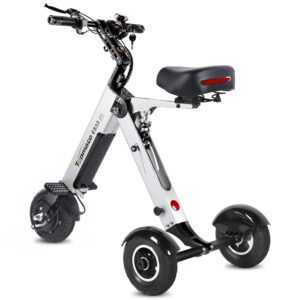
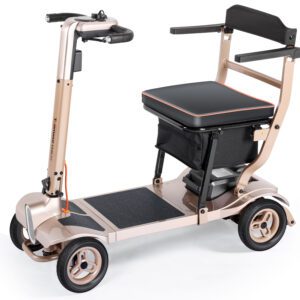
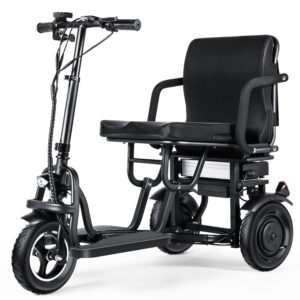
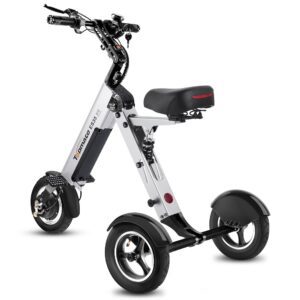
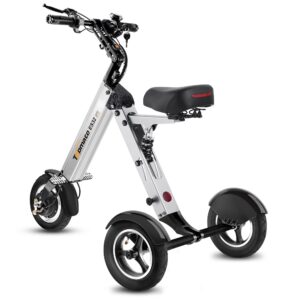
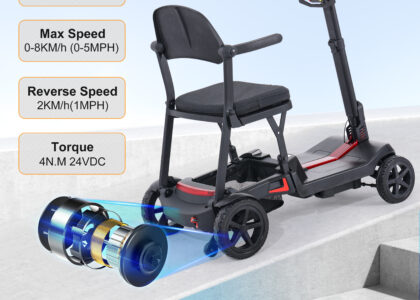
Models such as the TopMate ES15, ES35, ES36, and ES40 can be considered as examples when comparing portable or folding scooter designs. However, evaluate the specifications of each model against your actual trips rather than assuming that a particular model is suitable for every situation.
Conclusion
Choosing a mobility scooter for different trips is less about finding one scooter with the highest specifications and more about finding the right balance.
Start with where you actually go. Identify your most demanding regular trip, determine which features it requires, and then make sure the scooter remains practical for your everyday errands.
FAQ
Can one mobility scooter be used for different types of trips?
Yes. A versatile mobility scooter can potentially handle errands, appointments, shopping, family visits, and some travel. The key is making sure its range, portability, comfort, maneuverability, and outdoor capability match your most demanding regular trips.
What features matter most in a mobility scooter for travel and everyday use?
Look for a practical balance of folding convenience, manageable weight, battery range, seat comfort, maneuverability, storage, and transportability. The right combination depends on whether you mainly use the scooter locally, travel by car, or take longer trips.
Should I prioritize portability or range?
It depends on how you use the scooter. If you frequently load it into a car or travel by plane, portability may be more important. For longer outings or full-day trips, range and comfort may take priority. Consider which requirement affects your routine most often.
How do I choose a mobility scooter for full-day outings?
Consider the total distance, expected riding time, charging opportunities, seat comfort, storage, and number of destinations. A full-day outing may require more range and comfort than a scooter used only for short local errands.