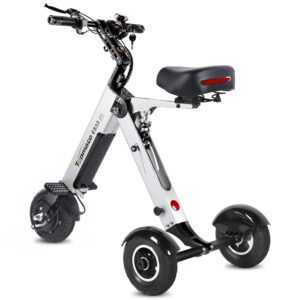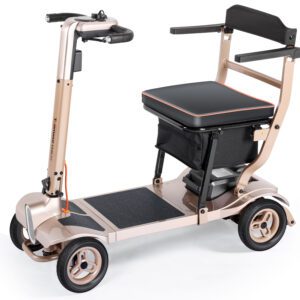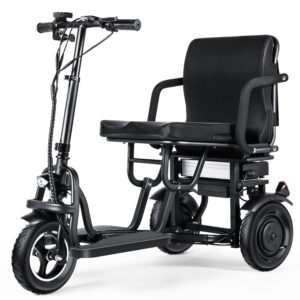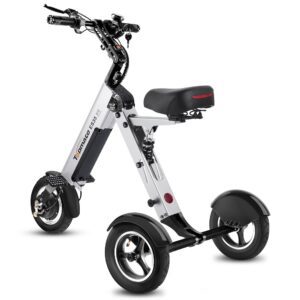

Direct answer: Before buying a mobility scooter, measure the scooter’s width, length, turning needs, and folded size against your actual home. Check doors, hallways, corners, elevators, bedside and kitchen clearance, storage, charging space, thresholds, and ramps. A scooter that technically fits through a doorway may still be difficult to maneuver comfortably.
Buying a mobility scooter is partly a measurement exercise. A specification sheet can tell you that a scooter is 25 inches wide, but that number only becomes useful when you compare it with the spaces you use every day. mobility scooter home measurements
Take a tape measure and walk through your normal route at home. Start outside the front door, then move through the rooms where you expect to use, store, or charge the scooter.
The goal is not simply to find out whether the scooter fits. You want to know whether you can move it through your home without repeatedly scraping walls, furniture, door frames, or other objects.
Start by Measuring the Scooter, Not Just Your Home
Before taking measurements, collect the scooter’s actual specifications.
Pay attention to five different measurements:
| Scooter measurement | What it tells you |
|---|---|
| Scooter width | How much doorway and hallway width the scooter needs |
| Scooter length | How much straight-line floor space it occupies |
| Turning radius | How much space it needs to change direction |
| Folded dimensions | How large it becomes when folded for storage or transport |
| Storage footprint | The floor area required when parked |
These measurements are not interchangeable.
For example, imagine a scooter is 25 inches wide and your doorway is 30 inches wide. On paper, you have 5 inches of total difference, or about 2.5 inches on each side if the scooter is perfectly centered.
That may be enough to pass straight through. However, entering at an angle or turning immediately after the doorway reduces your practical maneuvering space.
This is why nominal clearance is not the same as comfortable clearance.
Also check whether the published width includes mirrors, armrests, controls, or other components. Measure the scooter in the configuration in which you will actually use it.
Step 1: Measure the Front Door
Measure the usable opening, not simply the door slab.
Open the door fully and measure from the narrowest point between the frame or other permanent obstructions.
Suppose the usable opening is 32 inches and the scooter is 25 inches wide. That leaves 7 inches of total width.
Now look at what happens immediately outside and inside the doorway.
Is there a narrow porch? A wall close to the frame? A step? A sharp turn into the hallway?
Those details can matter as much as the doorway itself.
Step 2: Measure Interior Doorways
Repeat the process for every interior doorway on your normal route.
Don’t assume all doors are the same width. Older homes, bathrooms, bedrooms, kitchens, and remodeled areas can have different openings.
If a bedroom doorway measures 29 inches and the scooter is 25 inches wide, there is only 4 inches of total clearance.
That may be physically possible, but it leaves little room for correcting your approach.
If you expect to enter while turning, measure the area before and after the doorway too.
Step 3: Measure Hallways
Stand at the narrowest point of each hallway and measure wall-to-wall.
Then check for objects that reduce the usable width, such as:
- Furniture
- Shoe cabinets
- Plants
- Wall decorations
- Radiators
- Open doors
- Storage boxes
A hallway measuring 36 inches on paper may provide considerably less usable space once furniture is included.
Also consider whether you need to reverse direction. A hallway can be wide enough for straight travel but unsuitable for turning around.
Step 4: Check Tight Corners
Now walk the route as though you were actually driving the scooter.
Look for 90-degree turns, L-shaped hallways, narrow passages beside furniture, and corners near doorways.
This is where turning radius becomes important.
A scooter’s width tells you how much space it occupies. Its turning radius helps indicate how much space it needs to change direction.
For example, a 25-inch-wide scooter may pass through a 30-inch doorway but still struggle if the hallway immediately behind that doorway requires a sharp turn.
Don’t calculate this from width alone. Use the manufacturer’s stated turning radius where available and compare it with your actual floor layout.
Step 5: Measure Turning Space
Identify places where you expect to turn around:
- Living rooms
- Bedroom entrances
- Kitchens
- Bathrooms
- Hallway intersections
- Garage entrances
Measure the open floor area rather than simply measuring one wall.
A circular open area of 60 inches across is very different from a 60-inch-wide corridor.
Furniture placement matters too. A room may look spacious until a sofa, dining table, or bed blocks the path. mobility scooter home measurements
Step 6: Measure the Elevator
If you live in an apartment or regularly use an elevator, measure both:
- Elevator door opening
- Interior elevator dimensions
For example, an elevator door might be 32 inches wide, while the cabin itself provides considerably more room.
Don’t stop after confirming that the scooter can enter. Ask whether you can turn, position yourself, and exit without hitting the opposite wall.
Also measure the elevator threshold. A small lip at the entrance can affect how easily the scooter crosses it.
Step 7: Measure Beside the Bed
Measure the clear space beside the bed where you expect to park or approach it.
For example, if there is only 28 inches between the bed and wall, a scooter that is 25 inches wide leaves very little room for positioning.
You may need additional space to approach from an angle or transfer from the scooter to the bed.
Think about the movement around the scooter, not just the scooter’s dimensions.
Step 8: Check Kitchen and Table Clearance
Measure the routes you use between counters, cabinets, tables, and appliances.
Pull chairs out from a dining table before measuring. A 36-inch gap between furniture may become much narrower when a chair is occupied or partially pulled out.
Don’t Measure Just the Doorway
One of the most common mistakes is measuring a doorway and stopping there.
Imagine your scooter is 25 inches wide and the door is 30 inches wide. It fits.
But immediately inside the door, there is a wall on the left and a hallway turning right.
You have technically confirmed the doorway works, but you haven’t confirmed the route works.
Measure at least a few feet before and after important doorways when possible. Look at:
Approach → Doorway → Exit → Turn
This four-part check is often more useful than the doorway measurement alone.
Step 9: Measure the Garage or Storage Area
If the scooter will be stored in a garage, closet, entryway, or utility area, measure the storage footprint available.
For a folded scooter, record:
- Folded width
- Folded length
- Folded height
- Available floor space
- Clearance needed to remove or unfold it
For example, a scooter that folds to approximately 16 × 40 inches needs about 640 square inches of floor footprint before allowing additional handling space.
Don’t push the scooter tightly against a wall if doing so makes unfolding or moving it difficult.
Step 10: Choose the Charging Location
Measure the space where the scooter will actually be charged.
Check:
- Distance from the scooter to the outlet
- Space around the charging area
- Whether the scooter can remain safely positioned there
- Whether folding or removing the battery changes the arrangement
A removable battery can allow the battery to be taken to another suitable charging location rather than requiring the entire scooter to be positioned beside an outlet.
A folding design can similarly change where the scooter is stored between uses. However, the folded size still needs to fit the selected storage area.
Always follow the scooter and battery manufacturer’s charging instructions.
Step 11: Check Thresholds and Floor Changes
Measure small changes in floor height at:
- Front doors
- Balcony doors
- Garage entrances
- Room transitions
- Elevator entrances
- Bathroom entrances
A threshold only a fraction of an inch high may behave differently from a larger raised edge.
Don’t judge a threshold by height alone. Its shape, angle, wheel size, and the scooter’s ground clearance can all affect how it is crossed.
If a threshold presents a problem, check the manufacturer’s guidance rather than assuming that any scooter can safely cross it.
Step 12: Measure Ramps and Entryways
If you use a ramp, measure its usable width, not just the total width of the ramp structure.
Also note:
- Ramp length
- Side edges or rails
- Turns
- Landing areas
- Transition points
- Available space at the top and bottom
For example, a 30-inch-wide ramp may technically accommodate a 25-inch scooter, but the remaining 5 inches provide limited side-to-side room. mobility scooter home measurements
The ramp’s slope and the scooter’s capabilities also need to be checked separately. Width alone does not determine whether a ramp is suitable.
Common Measuring Mistakes
Measuring only the widest part of a hallway: The narrowest point is what matters.
Using advertised door size: Check the actual usable opening.
Ignoring door swing: An open door can occupy valuable maneuvering space.
Comparing folded dimensions with doorway dimensions: Folded size matters for storage and transport, not necessarily for normal driving.
Forgetting furniture: Measure the route as it exists in everyday use.
Ignoring the approach: A scooter may fit straight through a doorway but struggle to line up with it.
Checking width but not turning: Width and turning radius answer different questions.
Measuring storage without handling space: A scooter can fit into a closet yet be awkward to remove.
FAQ
What measurements should I take before buying a mobility scooter?
Measure your front door, interior doorways, narrowest hallways, tight corners, turning areas, elevator door and cabin, bedside space, kitchen and dining areas, storage location, charging area, thresholds, and any ramps. Compare each measurement with the scooter’s width, length, turning radius, folded dimensions, and storage footprint.
Is a 25-inch mobility scooter wide enough to fit through a 30-inch doorway?
A 25-inch-wide scooter has 5 inches of total nominal clearance in a 30-inch doorway. However, that does not guarantee comfortable maneuvering. The approach angle, door frame, door swing, and available space immediately before and after the doorway should also be checked.
How much space does a mobility scooter need to turn indoors?
The required turning space depends on the scooter’s turning radius and the layout of the area. A scooter may travel through a narrow hallway but still struggle at a 90-degree corner or in a small room. Compare the manufacturer’s turning-radius specification with your home’s actual open floor space.
Do I need to measure storage space for a folding mobility scooter?
Yes. Measure the available storage area’s width, length, and height, then compare them with the scooter’s folded dimensions. Also leave enough room to remove and unfold the scooter. If the battery is removable, consider whether the battery will be stored or charged separately.
“`html
“`