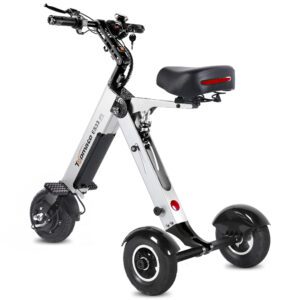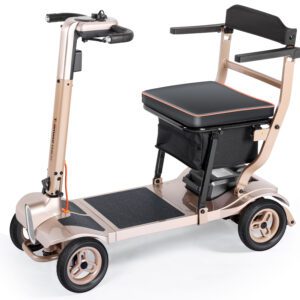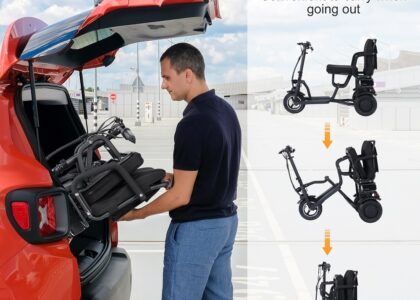
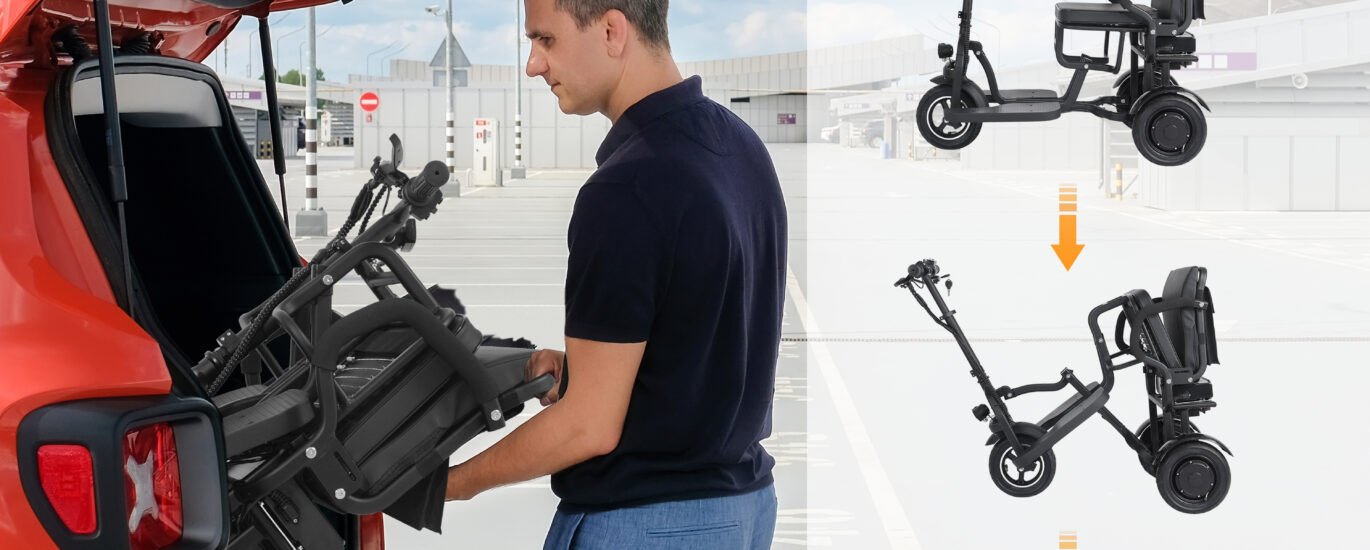
Choosing a mobility scooter for caregiver transport means considering two people: the rider who needs comfort, stability, and reliable mobility, and the caregiver who may need to fold, lift, load, and secure the scooter. Before buying, check the actual lifting weight, folded dimensions, loading method, vehicle cargo space, and the caregiver’s ability to handle the scooter safely.
Why Caregiver Transport Should Influence Your Choice
A mobility scooter can work well on shopping trips, medical visits, and family outings but still prove difficult to transport. A model that fits inside a car may be too heavy to lift, awkward to grip, or uncomfortable to position in the cargo area.
That is why choosing a scooter involves more than comparing battery range, speed, or seat design. The rider and caregiver should assess the complete process, from folding the scooter at home to unloading it at the destination.
Consider how often you will transport it, who will handle it, and whether the same person can manage the process safely as their needs change.
1. Check the Actual Weight You Need to Lift
The advertised scooter weight does not always tell you how difficult loading will be. Some manufacturers list the complete scooter weight, while others specify weight without the battery or certain accessories.
Before purchasing, confirm:
- The total assembled weight.
- The weight of the main section after removing detachable components.
- The battery weight, if the battery is removable.
- Whether the folded scooter has a practical grip or lifting point.
- Whether one person can handle the remaining load safely.
Removing a battery reduces the weight you lift only by the battery’s actual weight. It does not automatically make the scooter easy to carry.
For example, a scooter with a removable battery may be easier to load after removal, but the main frame could still be too heavy for one caregiver. You must also account for handling the battery separately.
Ask the seller for the weight of the exact configuration you will lift. If the manufacturer does not publish component weights, request confirmation rather than estimating them.
2. Measure Folded Dimensions and the Vehicle Opening
A scooter may fit inside a car but still be difficult to load through its opening. Measure both the cargo area and the narrowest part of the opening.
Check the following:
- Cargo length: Available space from the rear opening to the back of the seats.
- Cargo width: The narrowest usable width between interior panels or wheel arches.
- Cargo height: Vertical clearance beneath the roof or parcel shelf.
- Opening dimensions: The width and height through which the folded scooter must pass.
- Loading height: The distance from the ground to the cargo floor.
Compare these measurements with the scooter’s published folded length, width, and height. Leave enough room to position the scooter without scraping the vehicle or trapping your hands.
Also consider charging equipment, bags, groceries, and other items that may share the cargo space.
3. Consider the Caregiver’s Strength and Comfort
Lifting a scooter once is different from lifting it several times each week. Repeated handling can become uncomfortable when the load is heavy, difficult to grip, or positioned too far from the body.
A caregiver may need to bend into a boot, reach across a cargo area, rotate the scooter, or lift it over a raised bumper. These movements can make an otherwise manageable weight difficult to handle.
Look for a design that allows the caregiver to:
- Fold the scooter without excessive force.
- Reach the intended lifting points comfortably.
- Keep the load close to the body during handling.
- Avoid twisting while carrying or positioning the scooter.
- Place the scooter down in a controlled manner.
Do not assume that a younger or stronger family member can safely lift every model. If loading causes pain, excessive strain, or loss of control, choose another transport method.
4. Understand Folding and Disassembly
Folding and disassembly solve different problems.
A folding scooter reduces its overall size, which may make storage and loading more convenient. However, the folded scooter remains a single unit unless the manufacturer specifies otherwise.
A disassemblable scooter separates into components that can be handled individually. This can reduce the weight of each piece, although it may require more steps and storage space.
Check the actual procedure before choosing either design. Find out how many steps are involved, whether tools are needed, which parts detach, and how long reassembly takes.
Also, do not assume every folding scooter folds automatically or every scooter has a removable battery. Confirm the features on the exact model and version you intend to buy.
5. Match the Scooter to Your Vehicle
Different vehicles create different loading challenges.
| Vehicle type | What to consider |
|---|---|
| Hatchback | Check the opening height, cargo-floor height, and available length with the rear seats in the required position. |
| Sedan | Measure the boot opening carefully. A scooter may fit inside but be difficult to angle through the smaller opening. |
| SUV | Cargo space may be generous, but a high loading floor can make lifting harder. |
| Van or vehicle with adapted access | Consider whether a ramp, restraint system, or powered lift can make transport safer. |
Remember that vehicle compatibility is not the same as loading convenience. A large cargo area does not remove the need to lift a heavy scooter over the sill.
6. Decide Whether You Need a Ramp or Vehicle Lift
If manual lifting is difficult, suitable loading equipment may be a better solution than choosing a scooter that compromises the rider’s comfort.
Depending on the vehicle and scooter, options may include a portable ramp, a professionally installed vehicle lift, or an adapted vehicle access system.
Before purchasing equipment, confirm:
- The ramp or lift suits the vehicle and scooter.
- Its rated capacity covers the scooter and any other load specified by its manufacturer.
- The ramp length, angle, width, and surface are suitable for the application.
- The scooter manufacturer permits the proposed loading method.
- The scooter can be secured safely during transport.
Do not ride a scooter up a ramp into a vehicle unless the equipment and manufacturers explicitly permit that method. Follow the ramp or lift instructions, use suitable restraints, and keep people clear of moving equipment.
If a powered lift or adaptation is needed, consult a qualified mobility equipment supplier or vehicle adaptation specialist.
7. Think About How Often You Will Transport It
Transport frequency affects which trade-offs make sense.
Daily transport: Prioritize a manageable lifting weight, straightforward folding or disassembly, secure grip points, and a repeatable loading process. Even small inconveniences can become frustrating when repeated every day.
Several trips per week: Balance portability with the rider’s comfort and travel needs. Test the full process, including removing the battery if applicable and placing the scooter in the vehicle.
Occasional trips: You may be able to consider a different scooter design if it better meets the rider’s needs. However, do not overlook loading difficulty simply because it happens less often.
If you expect the caregiver’s role to change, consider whether the transport arrangement will remain practical in the future.
Four Real-Life Buying Scenarios
Scenario 1: An adult child helps a parent attend medical appointments
The adult child drives their parent to regular appointments and loads the scooter into the car.
The priority is a repeatable process that does not cause excessive bending or lifting. Check the scooter’s weight without any removable components, the weight of each component, the boot opening, and how easily the folded unit can be gripped.
If loading remains difficult during an in-person test, compare a lighter-handling design or suitable loading equipment before buying.
Scenario 2: A spouse transports the scooter several times a week
A couple uses the scooter for shopping and social visits. Because loading happens regularly, speed and convenience matter, but not at the expense of the rider’s comfort.
Look for a folding mechanism that both people can operate, adequate cargo space, and a secure transport arrangement. Check whether removing the battery makes a meaningful difference to the weight handled and whether the scooter remains comfortable on the routes they use.
Scenario 3: A caregiver has an SUV but struggles with the loading height
The SUV has plenty of space, yet lifting the scooter over the cargo sill is uncomfortable.
In this case, buying a smaller scooter is not necessarily the only answer. Measure the loading height and assess the lift required to move the scooter into position. A compatible ramp or vehicle lift may address the problem more effectively.
Test the proposed setup before committing to either the scooter or loading equipment.
Scenario 4: A family plans occasional holidays and day trips
The family wants a scooter that can travel in the car but still provides suitable support for the rider.
Compare transport weight, folded dimensions, battery arrangements, seating comfort, stability, range, and weight capacity. A very compact design may simplify transport, but it must still suit the rider’s physical needs and intended routes.
Test both the folded scooter in the vehicle and the unfolded scooter in a realistic riding environment.
TopMate Models: What Should You Compare?
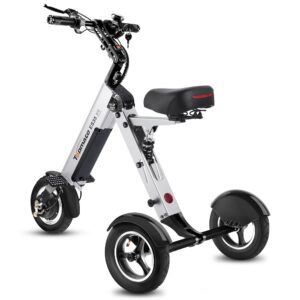
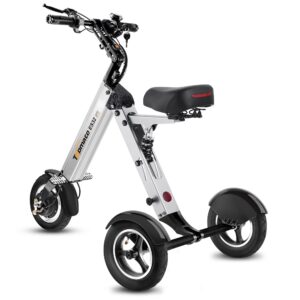
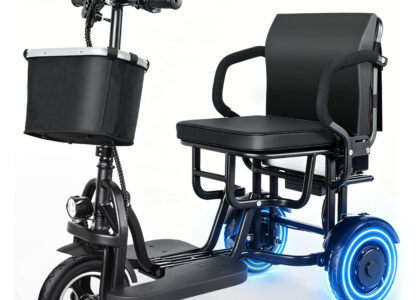
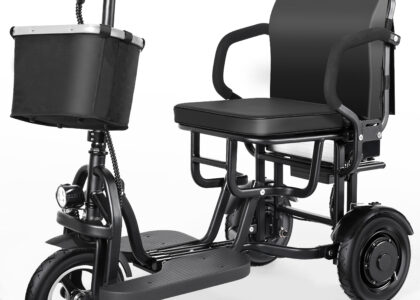
TopMate offers foldable scooter models, including the ES15, ES35, and ES33.
These product pages can help you compare folding designs, battery arrangements, and rider-related specifications. However, do not select a model based on the word “foldable” or a headline weight alone. Confirm the current specifications for the exact version, including the complete weight, component weights, folded dimensions, and lifting instructions.
Then compare those details with the caregiver’s physical abilities and the vehicle you actually use. A scooter that suits one family may not be manageable for another.
Pre-Purchase Checklist
Before placing an order, work through these checks with the rider and caregiver:
-
Measure the vehicle’s cargo area, opening, and loading height.
-
Confirm the scooter’s weight in the exact configuration that will be lifted.
-
Verify the weight of any removable battery or detachable component.
-
Check the manufacturer’s instructions for folding, disassembly, and lifting points.
-
Decide whether one person can handle each step safely.
-
Confirm compatibility and capacity if using a ramp or vehicle lift.
-
Check the rider’s comfort, stability, range, and weight capacity requirements.
-
Test folding, loading, unloading, and securing the scooter in person if possible.
-
Confirm that the scooter remains protected against movement during travel.
If any step feels unsafe, do not force it. Seek suitable assistance, investigate a compatible loading aid, or choose a different scooter design.
Final Thoughts
The right mobility scooter for caregiver-assisted transport must work for both the person riding it and the person helping move it. Actual lifting weight, folding method, vehicle access, and transport frequency can matter just as much as range or comfort.
Before buying, test the entire process rather than judging the scooter by its folded size alone. A practical choice is one that supports the rider’s mobility needs while allowing the caregiver to transport it safely and consistently.
FAQ
How heavy is a mobility scooter for a caregiver to lift?
There is no single suitable weight for every caregiver. The important figure is the weight of the actual component being lifted, including any battery or detachable parts that remain attached. Check the manufacturer’s specifications and test the handling process safely before buying.
Is a folding mobility scooter always easier to transport?
No. Folding reduces the scooter’s size, but it does not necessarily reduce the weight that must be lifted. A folded scooter can still be awkward to grip or too heavy for one person. Compare its folded dimensions, handling method, and actual lifting weight.
Can one person safely load a mobility scooter into an SUV?
Sometimes, but it depends on the scooter’s weight, grip points, loading height, vehicle access, and the person’s physical ability. If the load is awkward or difficult to control, consider a compatible ramp, vehicle lift, or suitable assistance instead of attempting an unsafe lift.
Should I choose a mobility scooter based on the caregiver's strength?
Caregiver handling ability should be one of the main buying considerations, alongside the rider’s comfort, stability, range, and weight capacity. Choose a scooter and transport method that both people can manage safely. If manual lifting is unsuitable, consider appropriate loading equipment.