
Introduction
Imagine charging your mobility scooter overnight before heading out for grocery shopping. The battery indicator shows full in the morning, but the scooter moves more slowly than usual. It may hesitate when starting, struggle on a slight incline, or suddenly stop during the journey.
This situation can be confusing, especially when you have followed the recommended charging routine.
However, a full battery indicator does not necessarily mean the battery can deliver enough power to operate the scooter properly. Battery condition, electrical connections, motor performance, brakes, tires, and riding conditions can all affect how a scooter performs.
Understanding these possible causes can help you identify what needs attention and when you should contact a qualified technician.
Why Can a Mobility Scooter Lose Power Even With a Full Battery?
A mobility scooter can lose power despite showing a full battery because the charge indicator does not always reflect the battery’s actual condition under load. Aging batteries, loose connections, motor faults, controller problems, brake resistance, low tire pressure, and steep slopes can all reduce performance. Identifying the symptoms helps narrow down the possible cause.
7 Common Reasons a Mobility Scooter Loses Power
1. An Aging Battery That No Longer Holds Its Charge Properly
A battery can reach its charging limit without retaining enough usable energy for normal riding.
As batteries age, their ability to store and deliver energy gradually decreases. This means the indicator may show a full charge while the voltage drops significantly when the motor demands more power.
For example, your scooter may work normally on a flat driveway but slow down after you start climbing a hill. The additional demand exposes a battery that no longer performs as it once did.
If the scooter’s range has gradually decreased or its power drops quickly during acceleration, ask a technician to assess the battery’s condition.
2. Loose or Corroded Battery Connections
A battery needs secure electrical connections to deliver power consistently.
Over time, vibration, moisture, or general wear can affect connectors and terminals. A loose or corroded connection may interrupt the electrical supply, even when the battery itself remains charged.
You might notice:
- Power cutting in and out during a ride.
- Unexpected shutdowns.
- Intermittent dashboard operation.
- Performance changing after the scooter moves over uneven surfaces.
Switch off the scooter before checking visible external connections, and follow the manufacturer’s instructions. Do not touch exposed wiring or attempt electrical repairs without proper knowledge.
3. A Motor or Motor Connection Problem
The motor converts electrical energy into movement. If the motor or its connections develop a fault, the scooter may struggle to accelerate or maintain normal speed.
Possible warning signs include unusual motor sounds, hesitation when starting, reduced movement, or inconsistent performance.
If the scooter makes unfamiliar noises or struggles even on flat ground, arrange a professional inspection. Continuing to operate a scooter with a suspected motor fault may cause further damage.
4. A Faulty Speed Controller or Electrical System
The speed controller regulates how electrical power reaches the motor in response to the rider’s controls.
When the controller or another electrical component develops a problem, the scooter may respond unpredictably.
For example, the speed may fluctuate even when you maintain the same control position. In other cases, the scooter may start normally but suddenly stop responding.
Check the dashboard for warning lights or error codes. Record any displayed code and share it with the manufacturer’s support team. Avoid opening the controller housing or replacing electrical components yourself.
5. Brake Drag or a Mechanical Restriction
Sometimes, a scooter feels underpowered because something physically prevents its wheels from moving freely.
A brake that does not release properly can create additional resistance. The motor then has to work harder to move the scooter.
You may notice:
- Difficulty moving the scooter.
- Unusual resistance during operation.
- Excessive heat around a wheel or brake area.
- Reduced speed despite a charged battery.
Never bypass the braking system to restore movement. If you suspect brake drag, stop using the scooter and arrange a professional inspection.
6. Tire Pressure and Excessive Rolling Resistance
Tires also affect how efficiently a mobility scooter moves.
On scooters with pneumatic tires, low pressure increases rolling resistance. This makes the motor work harder and can reduce overall performance.
Damaged tires or mechanical friction can create similar problems.
Check the tire condition and use the pressure recommended in the manufacturer’s manual. Remember that solid tires do not require inflation, although they still need regular condition checks.
7. Steep Slopes, Excessive Load, or Difficult Riding Conditions
Not every reduction in speed indicates a mechanical fault.
A scooter needs more power when carrying a heavier load, climbing an incline, crossing rough surfaces, or accelerating frequently.
Consider someone who normally rides on smooth pavements but takes a longer route with several hills. The scooter may slow down because the motor faces greater resistance.
Check the scooter’s rated weight capacity and recommended operating conditions. If performance returns to normal on level ground, the riding conditions may explain the difference.
How to Check Your Mobility Scooter Before Assuming the Battery Is Faulty
Before arranging battery replacement, observe how the scooter behaves. A few basic checks can help you explain the problem to a service technician.
- Watch the battery indicator: Does the charge level drop noticeably when you accelerate?
- Inspect visible connections: With the scooter switched off, look for obvious damage or loose external connectors.
- Check the tires: Look for visible damage and check pneumatic tire pressure according to the manual.
- Confirm brake release: Make sure the normal operating brake controls are in their correct position.
- Look for error codes: Note any dashboard warnings or unusual indicator patterns.
- Compare riding conditions: Does the scooter behave differently on flat ground and uphill routes?
Always consult the manufacturer’s manual before performing additional checks. Do not open electrical housings, test live wiring, or dismantle the battery.
What Do Different Power-Loss Symptoms Tell You?
The following table connects common symptoms with possible explanations.
| Observed symptom | Possible explanation |
|---|---|
| Full battery indicator but scooter slows quickly | Battery deterioration or voltage drop |
| Scooter starts and stops unexpectedly | Loose connection or electrical fault |
| Scooter struggles mainly uphill | Load, gradient, battery condition, or motor issue |
| Scooter feels difficult to move | Brake drag or mechanical resistance |
| Power cuts out during acceleration | Battery, connection, or controller issue |
| Unusual motor noise with reduced movement | Motor or drivetrain problem |
These symptoms are clues, not confirmed diagnoses. A technician may need to inspect the scooter and test its electrical and mechanical components.
When Should You Stop Using the Scooter and Get Professional Help?
Some power problems require immediate attention rather than further troubleshooting.
Stop using the scooter if you notice:
- A burning smell or smoke.
- A swollen, leaking, or visibly damaged battery.
- Unusual heat around the battery or electrical components.
- Repeated electrical shutdowns.
- Damaged wiring or connectors.
- Persistent dashboard error codes.
- Unusual motor or brake noises.
Do not continue riding to see whether the problem disappears. Move away from the scooter if the battery shows signs of overheating or damage, and follow the manufacturer’s emergency guidance. Contact qualified service support.
How Can You Reduce the Risk of Future Power Problems?
Regular maintenance can help identify developing problems before they interrupt your daily routine.
Follow these habits:
- Charge the battery according to the manufacturer’s instructions.
- Inspect visible connectors periodically for damage.
- Keep pneumatic tires at the recommended pressure.
- Avoid exceeding the scooter’s rated weight capacity.
- Store and charge the battery under recommended conditions.
- Arrange periodic servicing when recommended.
- Pay attention to changes in speed, range, or acceleration.
A noticeable change in performance deserves attention, even if the battery indicator still shows full.
What Should Buyers Check Before Choosing a Mobility Scooter?
Power reliability should be part of your buying decision, not something you consider only after a problem occurs.
Before choosing a model, check the following:
Battery information: Understand the battery type, capacity, replacement availability, and charging instructions.
Motor and controller: Look for clearly documented specifications and suitable performance for your regular routes.
Replacement components: Confirm whether batteries, chargers, tires, and other essential components are available.
Warranty and support: Understand the warranty coverage for the battery, motor, and other electrical components.
Maintenance documentation: Check whether the manufacturer provides user manuals, troubleshooting instructions, and error-code information.
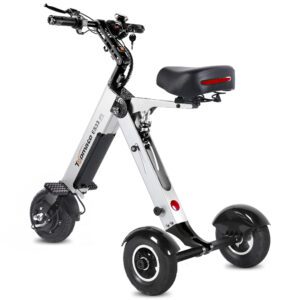
TopMate provides a product-help page with downloadable manuals for several models, including the ES35, ES40, and ES33. Reviewing the manual for the exact model you are considering can help you understand its operating and maintenance requirements.
Ultimately, choosing a mobility scooter involves more than comparing battery capacity or advertised range. Reliable documentation, accessible replacement parts, and responsive after-sales support also matter.
FAQ
Why does my mobility scooter slow down even when fully charged?
A scooter may slow down because its battery has deteriorated, electrical connections have become loose, or the motor is experiencing a problem. Low tire pressure, brake resistance, and steep slopes can also affect speed. A full indicator alone cannot confirm that every component is working correctly.
Can a mobility scooter battery show full charge but still be faulty?
Yes. An aging battery may show full charge but struggle to deliver sufficient power when the motor operates. Its voltage can drop under load, causing reduced speed, shorter riding range, or unexpected shutdowns. A qualified technician can assess battery health and determine whether replacement is necessary.
Why does my mobility scooter lose power when going uphill?
Climbing a hill requires more power than travelling on flat ground. Rider weight, slope steepness, surface conditions, and battery condition all influence performance. Some reduction in speed may be normal, but repeated power loss or sudden shutdowns should be checked by a service technician.
What should I do if my mobility scooter suddenly loses power?
Move to a safe location and switch off the scooter if it is safe to do so. Check for warning lights or error codes without dismantling anything. If you notice smoke, burning smells, battery damage, or repeated shutdowns, stop using the scooter and contact qualified service support.