A mobility scooter battery drains faster than expected for several reasons, including frequent stops, extra weight, steep hills, low pneumatic tire pressure, extreme temperatures, battery aging, and charging problems. Identifying the cause can help improve battery efficiency, maintain a more reliable riding range, and determine whether the battery needs professional inspection or replacement.
7 Common Reasons Your Mobility Scooter Battery Drains Quickly
1. Frequent Starts, Stops, and High-Speed Riding
The way you ride can affect how quickly your mobility scooter battery loses power. Repeated acceleration requires energy from the battery, while frequent speed changes can increase overall consumption.
Consider someone visiting several shops in a shopping centre or nearby town. They may accelerate to move between locations, stop at entrances, slow down around pedestrians, and start again several times. This type of journey can use more energy than travelling at a steady speed along a clear, level path.
Riding continuously at a higher speed can also reduce the distance available from a single charge.
What can help?
-
Accelerate gradually rather than applying sudden power.
-
Maintain a steady, suitable speed.
-
Avoid unnecessary stopping and restarting where practical.
-
Slow down appropriately around pedestrians and obstacles.
2. Carrying More Weight Than Usual
A mobility scooter uses more energy when its motor has to move a heavier load. The combined weight of the rider, shopping bags, personal belongings, and accessories can influence battery consumption.
For example, a scooter may cover a familiar route comfortably when carrying only its rider. However, after a grocery shopping trip with several bags, the same journey may consume more battery power.
Always remain within the manufacturer’s specified maximum weight capacity. Exceeding it can affect performance, handling, and safety.
What can help?
Remove unnecessary cargo and distribute permitted loads appropriately. If your regular journeys involve carrying shopping or other belongings, consider this additional weight when choosing a scooter.
3. Hills and Difficult Riding Surfaces
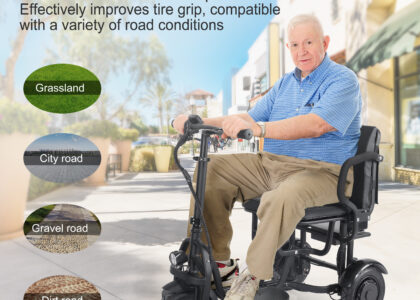
Your mobility scooter battery range may decrease when travelling over hills, rough paths, grass, gravel, or uneven pavement.
Climbing a slope requires the motor to work harder against gravity. Similarly, rough surfaces can create additional rolling resistance and make movement less efficient.
Imagine using your scooter on a familiar neighbourhood route. A journey along smooth pavements may consume less power than an alternative route with steep inclines and rough sections, even if both routes cover a similar distance.
What can help?
Choose smoother, more level routes when practical. Avoid unnecessarily steep slopes and follow the manufacturer’s guidance regarding maximum climbing ability and suitable surfaces.
4. Low Tire Pressure or Tire Problems
If your mobility scooter uses pneumatic (air-filled) tires, insufficient tire pressure can increase rolling resistance.
Underinflated tires deform more against the ground, requiring additional effort from the motor. This can contribute to faster battery consumption.
Tire condition also matters. Worn or damaged tires may affect handling and riding efficiency.
What can help?
-
Check pneumatic tire pressure regularly.
-
Follow the manufacturer’s recommended pressure.
-
Inspect tires for visible damage and excessive wear.
-
Arrange professional attention if a tire repeatedly loses pressure.
If your scooter has solid tires, you do not need to check air pressure. Instead, inspect them for wear or damage.
5. Cold and Hot Weather Conditions
Temperature can influence lithium-ion battery performance and the amount of usable energy available during a journey.
Cold weather can temporarily reduce battery performance. For example, someone using a mobility scooter outdoors during winter may notice less available range than during milder weather.
Excessive heat can also affect battery condition. Leaving a scooter or its removable battery in direct sunlight, a hot vehicle, or another excessively warm environment may accelerate battery deterioration.
What can help?
Store and charge your scooter within the temperature range specified by its manufacturer. Avoid exposing the battery to extreme temperatures, and allow it to return to an appropriate temperature before charging if the manufacturer’s instructions recommend doing so.
6. An Aging or Worn-Out Battery
Batteries gradually lose their ability to store energy as they age and go through repeated charging and discharging cycles.
As a result, a mobility scooter that previously completed several journeys on one charge may eventually need charging more frequently.
Common warning signs include:
-
Noticeably shorter journeys between charges.
-
Battery indicators dropping faster than usual.
-
Reduced performance even after a full charge.
-
Inconsistent battery behaviour between journeys.
Battery deterioration is a normal part of ownership, but a sudden reduction in range may indicate a fault rather than ordinary aging.
If performance continues to decline, arrange a battery inspection.
7. Charging Problems and Electrical Issues
Sometimes the problem is not how you use the scooter but how its battery charges.
A mobility scooter may appear to charge normally while still failing to reach or maintain its expected capacity. Possible reasons include loose charging connections, a damaged cable, an unsuitable charger, incomplete charging, or an electrical system fault.
A faulty charger may also prevent the battery from receiving the correct charging process.
What can help?
Check the charger and accessible connections for visible damage. Confirm that you are using the charger recommended by the manufacturer and follow the specified charging procedure.
Never open the battery pack or attempt to bypass electrical components. If the scooter still loses power unexpectedly, contact the manufacturer or a qualified mobility scooter technician.
How to Check Why Your Mobility Scooter Battery Is Draining Quickly
If your scooter no longer travels as far as it used to, avoid assuming that the battery needs replacing immediately. A few basic checks can help narrow down the cause.
Follow this troubleshooting sequence:
-
Check the initial charge: Confirm that the battery was fully charged according to the manufacturer’s instructions before your journey.
-
Compare the travel distance: Note how far the scooter travels before its battery indicator drops significantly. Compare this with its previous performance.
-
Review your route: Consider whether you travelled over hills, rough ground, or routes with frequent stops.
-
Inspect the tires: Check pneumatic tire pressure against the recommended specification. For solid tires, inspect their condition instead.
-
Examine charging connections: Look for visible damage, loose connections, or worn charging cables. Do not touch exposed wiring.
-
Consider battery age: Think about whether the battery has gradually lost range or whether the change happened suddenly.
-
Arrange professional inspection: If the battery continues losing power unexpectedly, contact the manufacturer or a qualified technician.
Keeping a simple record of charging dates, journey distances, and unusual battery behaviour can also help a technician identify the problem.
Practical Ways to Reduce Mobility Scooter Battery Drain
You cannot control every factor affecting battery performance, but a few everyday habits can help make the available range more predictable.
-
Follow the correct charging routine: Use the recommended charger and charging procedure for your scooter.
-
Accelerate smoothly: Avoid unnecessary rapid acceleration and sudden speed changes.
-
Choose an appropriate speed: Adjust your speed to the surroundings rather than travelling at maximum speed unnecessarily.
-
Plan practical routes: Choose smoother routes with fewer steep inclines when possible.
-
Carry only necessary items: Avoid adding unnecessary weight to the scooter.
-
Maintain pneumatic tires: Keep air-filled tires at the manufacturer’s recommended pressure.
-
Protect the battery from extreme temperatures: Follow the manufacturer’s storage and charging temperature recommendations.
-
Arrange regular inspections: Have the battery and electrical system checked if the range changes unexpectedly.
These habits can help improve efficiency and support battery maintenance. However, they cannot restore lost capacity in an aging or damaged battery.
When Should You Replace a Mobility Scooter Battery?
A gradual reduction in range may indicate normal battery aging. However, a significant or sudden change deserves attention.
Look for these warning signs:
-
Your scooter travels substantially less distance after a full charge.
-
The battery indicator drops unusually quickly.
-
Charging takes noticeably longer or behaves inconsistently.
-
The scooter loses power unexpectedly during a journey.
-
The battery no longer maintains its charge between uses.
A swollen, leaking, physically damaged, or unusually hot battery requires particular attention. Stop using it and seek professional assistance. Do not attempt to repair or dismantle it yourself.
There is no universal replacement timeline for every mobility scooter battery. Its lifespan depends on battery chemistry, charging habits, usage frequency, storage conditions, and maintenance.
A technician can test the battery and charging system to determine whether replacement is necessary or whether another component is causing the problem.
Choosing a Mobility Scooter With the Right Battery Capacity
Battery capacity is worth considering when buying a folding mobility scooter, particularly if you regularly travel longer distances or prefer fewer charging interruptions.
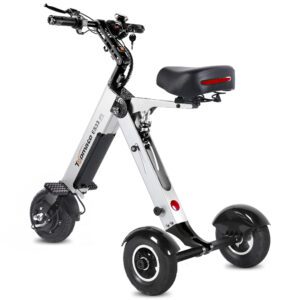
For example, TopMate offers two models with different battery capacities:
-
TopMate ES15: Uses a 36V 7.8Ah battery, with a stated range of approximately 16–19 miles.
-
TopMate ES15P: Uses a 36V 15.6Ah battery, with a stated range of approximately 25–28 miles.
The ES15P has twice the amp-hour capacity of the ES15, giving it greater stored energy and a longer stated riding range.
However, these are manufacturer-stated ranges, not guaranteed distances. Rider weight, speed, terrain, temperature, tire condition, and battery age can all influence actual performance.
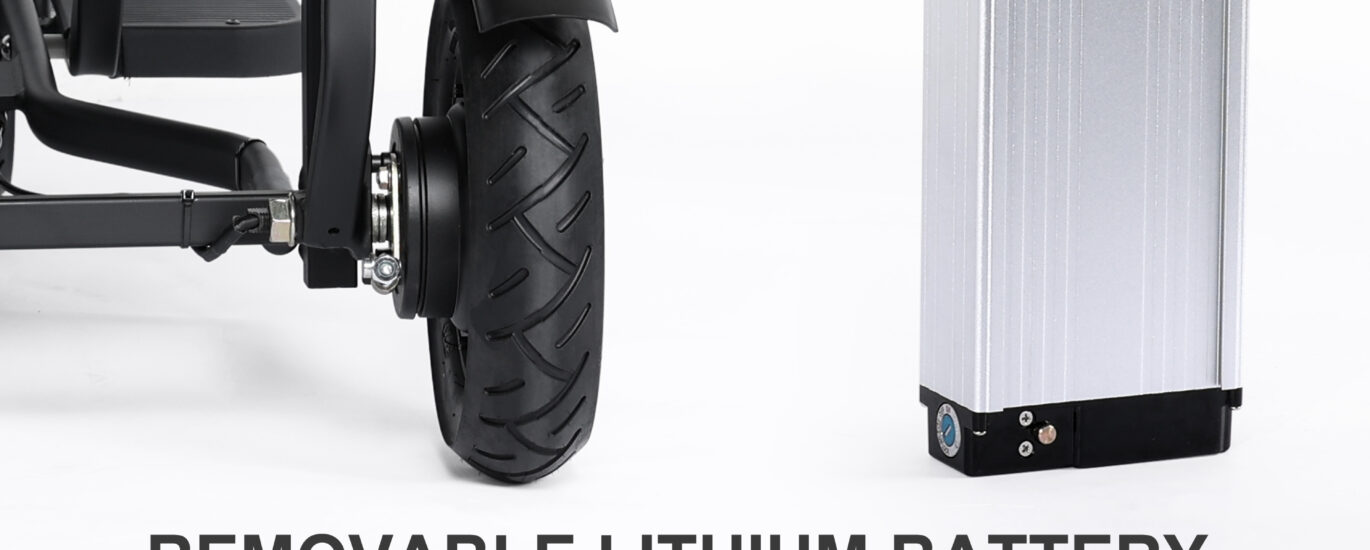
When comparing scooters, consider your typical journey distance, battery capacity, charging arrangements, and whether the battery is removable. Choosing a suitable battery capacity can make everyday travel planning easier, but good charging habits and regular maintenance remain important
FAQ
Why does my mobility scooter battery die so quickly?
A mobility scooter battery may die quickly because of frequent acceleration, heavy loads, hills, cold weather, or an aging battery. Charging problems and electrical faults can also reduce available power. If the shorter range continues despite normal riding conditions and correct charging, arrange a professional battery inspection.
Does cold weather make a mobility scooter battery drain faster?
Yes. Cold temperatures can temporarily reduce the usable capacity of lithium-ion batteries, meaning your scooter may travel a shorter distance than usual. Store the battery within the manufacturer’s recommended temperature range and avoid charging it when it is outside the permitted temperature limits.
How can I tell if my mobility scooter battery needs replacing?
Common signs include noticeably shorter journeys, unusually rapid battery indicator drops, inconsistent charging, and unexpected power loss. However, these symptoms can also indicate charger or electrical problems. A qualified technician should test the battery and charging system before you decide to replace the battery.
Should I charge my mobility scooter after every use?
Charging after each use is recommended for many mobility scooters, but the correct routine depends on the battery type and manufacturer’s instructions. For lithium-ion models, regular charging without allowing the battery to remain deeply discharged can help maintain performance. Always use the recommended charger.