Introduction
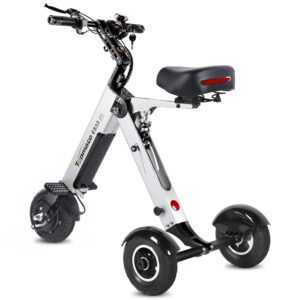
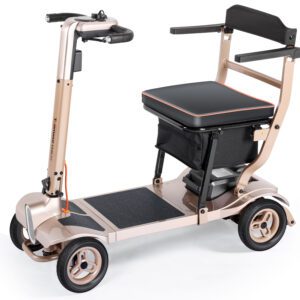
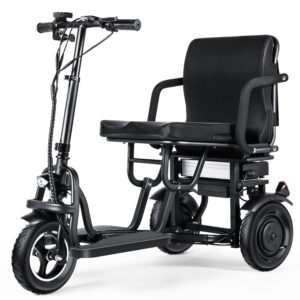
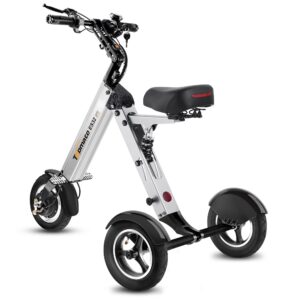
If you’re planning to buy one in 2026, understanding the maximum range electric tricycle models can deliver is essential. Many brands advertise high numbers, but real-world distance depends on battery size, terrain, rider weight, and riding habits.
Knowing the actual range helps you avoid unexpected battery drain and choose the right tricycle for daily commuting, errands, or long rides.
Quick Answer
Most adult electric tricycles offer a real-world range of 25 to 60 km (15 to 37 miles) per charge. High-capacity lithium battery models can reach up to 80 km (50 miles) under ideal conditions, but everyday usage typically delivers slightly lower distances.
What Determines the Range of an Electric Tricycle?
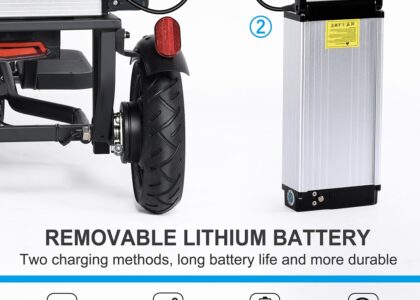
Battery Capacity (The Biggest Factor)
Battery size directly impacts how far your tricycle can go.
Typical Battery Range Estimates
- 36V 10Ah → ~20–30 km
- 48V 12Ah → ~30–45 km
- 48V 20Ah → ~50–80 km
Expert Tip
Focus on watt-hours (Wh), not just voltage.
Motor Power and Efficiency
Electric tricycles typically use 250W to 750W motors.
Efficiency Breakdown
- 250W–350W → best for range
- 500W–750W → more power, slightly less efficiency
Rider Weight and Cargo Load
Weight significantly affects performance.
Impact Example
- Light rider → full range
- Heavy rider + cargo → 20–30% reduction
Terrain and Road Conditions
Different surfaces change energy consumption.
Terrain Impact
- Flat roads → maximum range
- Hills → reduced range
- Rough roads → higher battery usage
Pedal Assist vs Throttle Usage
Modes Explained
- Pedal Assist (PAS) → extends range
- Throttle Mode → drains battery faster
Range Impact
Pedal assist can increase range by up to 50%.
Weather Conditions
Environmental Effects
- Cold weather → lower battery efficiency
- Wind resistance → higher energy use
- Heat → impacts battery lifespan
Real-World Range Examples
Daily Commuter (Urban Use)
Typical Usage
- Distance: 5–15 km/day
- Ideal range: 30–40 km
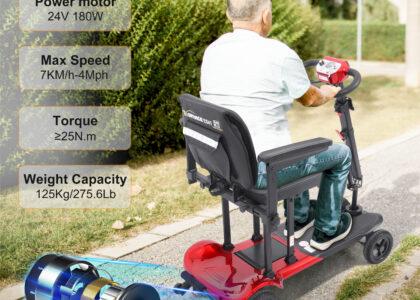
Senior Mobility Use
Typical Needs
- Distance: 3–10 km/day
- Focus: comfort and safety
Delivery and Cargo Use
Heavy-Duty Usage
- Distance: 20–40 km/day
- Requires high-capacity battery
Electric Tricycle Range Comparison Table (2026)
| Feature | Basic Model | Mid-Range Model | High-End Model |
|---|---|---|---|
| Battery Type | Lead-acid | Lithium-ion | Lithium-ion |
| Capacity | 36V 10Ah | 48V 12–15Ah | 48V 20Ah+ |
| Range | 20–30 km | 30–50 km | 50–80 km |
| Charging Time | 6–8 hrs | 4–6 hrs | 4–5 hrs |
| Weight Capacity | 100–120 kg | 120–150 kg | 150–200 kg |
| Maintenance | High | Medium | Low |
| Cost | Low | Medium | High |
How to Increase Your Electric Tricycle Range
Use Pedal Assist More Often
Why It Helps
Reduces motor load and extends battery life.
Maintain Proper Tire Pressure
Impact
Improves rolling efficiency and reduces drag.
Avoid Overloading
Best Practice
Stay within manufacturer weight limits.
Optimize Charging Habits
Charging Tips
- Avoid 0% battery
- Charge before 20%
Ride Smoothly
Efficiency Tip
Maintain steady speed and avoid sudden acceleration.
Conclusion
The maximum range of an adult electric tricycle in 2026 typically falls between 25 km and 80 km, depending on battery capacity, riding conditions, and usage style. For most users, a mid-range model offers the best balance of cost and performance. However, if you rely on your tricycle for longer commutes or heavy-duty tasks, investing in a higher-capacity battery is worth it. Electric tricycle battery lifespan and charging cycles guide
FAQ
What is the maximum range of an electric tricycle?
The maximum range electric tricycle models offer typically falls between 25 km and 80 km per charge, depending on battery capacity, rider weight, terrain, and riding mode.
How can I increase the range of my electric tricycle?
You can increase range by using pedal assist, maintaining proper tire pressure, avoiding overloading, and charging the battery before it drops below 20%.
Does battery type affect electric tricycle range?
Yes, lithium-ion batteries provide a longer range, better efficiency, and longer lifespan compared to traditional lead-acid batteries.
Is the advertised range of electric tricycles accurate?
Not always. Advertised range is measured under ideal conditions, while real-world usage usually results in 10–25% lower range.