
Quick Answer
For seniors with balance concerns, a mobility scooter should provide a stable, predictable ride, comfortable seating, easy-to-use controls, and enough support for the places where it will actually be used. A four-wheel mobility scooter is often worth considering when stability is a higher priority than tight maneuverability. A three-wheel model may suit someone who needs easier turning and frequent transportation.
The right choice depends on the rider’s balance, strength, daily route, home environment, and transportation needs. A scooter that works well on open sidewalks may not be equally convenient inside a small apartment or crowded store.
What Matters Most for Seniors With Balance Problems?
Balance concerns change the way a person should evaluate a mobility scooter.
Someone who spends most of the day inside a retirement community may prioritize stability and seating comfort. In contrast, a person who lives in a small apartment and regularly loads a scooter into a car may place greater importance on maneuverability, folding, and transportation weight.
For balance-sensitive riders, pay close attention to:
- Wheel configuration
- Overall stability
- Seat support
- Riding position
- Steering and controls
- Weight capacity
- Wheel and tire design
- Ground clearance
- Suspension, where available
- Turning space
- Storage and transportation requirements
These factors work together. A scooter can feel stable outdoors but become awkward in a narrow hallway. Likewise, a compact folding model may travel easily but require the rider to feel comfortable with its particular wheel configuration.
Are 4-Wheel Mobility Scooters More Stable?
Generally, four-wheel scooters provide a broader wheelbase and often suit riders who place a high priority on stability. Three-wheel scooters usually offer a tighter turning radius, which can make them easier to maneuver in confined spaces.
Wheel count alone does not determine stability, though. The scooter’s wheel placement, dimensions, weight distribution, tires, speed, surface, and handling characteristics also influence how it feels.
For someone with balance concerns, a more useful question is:
How stable and manageable does this particular scooter feel in the places I actually use it?
Consider an apartment resident who needs to turn inside a small elevator. That rider may value maneuverability alongside stability. Someone who spends most of the day on outdoor pathways may have more room to prioritize a stable, planted ride.
3-Wheel vs. 4-Wheel Mobility Scooters
| Consideration | 3-Wheel Scooter | 4-Wheel Scooter |
|---|---|---|
| Maneuverability | Usually easier in tight spaces | Generally needs more turning room |
| Stability priority | Suitable for riders comfortable with the layout | Often considered when stability is a major priority |
| Small apartments | Can work well where turning space is limited | Requires more attention to available space |
| Shopping aisles | Often convenient | Works well when aisle space allows |
| Outdoor paths | Depends on the model and surface | Often provides a more planted feel |
| Portability | Many folding options exist | Folding models are also available |
| Balance concerns | Requires assessment of rider confidence | Often worth considering when stability comes first |
A rider should not choose a scooter based only on the number of wheels. The person’s physical abilities and normal environment matter just as much.
Seat Comfort Can Affect Confidence
A scooter that feels comfortable for 15 minutes may become tiring during a two-hour outing.
Pay attention to the seat, backrest, armrests, foot position, and distance to the controls. The rider should be able to sit comfortably without constantly shifting position or stretching to operate the scooter.
Useful features may include:
- Supportive backrest
- Adequate seat width and depth
- Comfortable cushioning
- Suitable seat height
- Proper armrest position
- Enough legroom
- Convenient access to the controls
Long outings can become more difficult when the rider gets tired. A comfortable seating position can therefore contribute to a more manageable riding experience.
Easy Controls Matter
A scooter does not need dozens of features to work well for a senior. Simple, accessible controls may matter more.
Before buying, check whether the rider can comfortably:
- Turn the scooter on and off
- Adjust the speed
- Steer accurately
- Reach the controls
- Stop smoothly
- Reverse when necessary
- Read the battery indicator
- Maintain control while wearing gloves
Someone with reduced hand strength may also need to pay particular attention to the throttle, steering controls, and braking behavior.
Whenever possible, a short test ride can reveal whether the controls feel natural. Specifications alone cannot tell you how comfortable a particular rider will feel behind the tiller.
Weight Capacity Should Leave Room
Every mobility scooter has a manufacturer-specified maximum weight capacity.
The rider should remain within that limit, including normal items such as groceries or a small bag. Choosing a scooter with some practical capacity margin can also prevent the rider from operating right at the stated maximum.
Weight affects more than carrying ability. Rider weight, terrain, battery condition, tire pressure, and speed can all influence scooter performance and range.
Wheels, Suspension and Ground Clearance
The scooter’s wheels determine how it interacts with the surfaces underneath it.
A normal route might include:
- Sidewalk joints
- Cracked pavement
- Parking lots
- Small thresholds
- Paved paths
- Grass
- Ramps
- Uneven transitions
Suspension can make some uneven surfaces more comfortable, but it cannot make every obstacle safe. Ground clearance, wheel size, wheel placement, and obstacle shape also matter.
For example, a speed bump may look small but still create a difficult transition for a scooter with limited clearance. Riders should slow down and follow the manufacturer’s instructions instead of testing the scooter’s limits.
Think About the Rider’s Actual Route
A practical way to compare scooters is to mentally follow the rider through a normal day.
Small Apartment
A person living in a small apartment may care less about maximum battery range and more about whether the scooter can pass through the front door, fit inside the elevator, turn in the hallway, and remain safely stored.
Width, length, turning space, and folded dimensions become important here. A scooter that looks compact on a product page still needs to fit the actual space available at home. Mobility Scooter for Seniors
Grocery Shopping
Grocery trips require more than sufficient battery range.
The rider may need to leave home, cross a sidewalk, enter the store, turn into aisles, stop near checkout, and return to the vehicle. A scooter that feels comfortable on an open sidewalk may become less convenient when the rider needs to make frequent tight turns.
Think about the entire trip rather than one part of it.
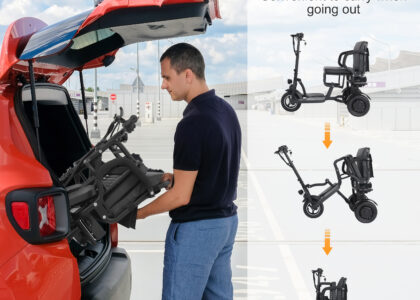
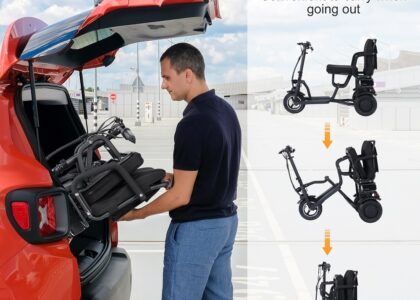
Loading Into a Small Car or SUV
Transportation can completely change the buying decision.
A folding scooter may occupy less space, but the rider or caregiver still needs to handle its actual weight. A compact scooter does not automatically become easy to lift.
Before buying, measure:
- Trunk or hatch opening
- Cargo-floor length
- Cargo-floor width
- Available cargo height
- Folded scooter dimensions
- Scooter weight
- Battery weight if the battery comes out separately
Airport or Cruise Travel
Frequent travelers may place greater emphasis on folding size, transportation weight, battery arrangements, and storage.
Battery rules deserve special attention during air travel. In the United States, the FAA provides specific requirements for mobility devices that use lithium-ion batteries. The applicable requirements depend on factors such as battery capacity and whether the battery remains installed or travels separately. Airlines may also apply additional procedures.
Check the current requirements with the airline and scooter manufacturer before traveling. Do not assume that a scooter described as travel-friendly will receive identical handling from every airline.
Retirement Community Use
A person who rides every day around a retirement community may value comfortable seating, predictable handling, battery planning, and outdoor capability more than the smallest possible folded size.
That rider may benefit from a scooter designed around regular use rather than occasional travel.
Which TopMate Models Fit Different Needs?
TopMate models have different strengths, so they should not all receive the same recommendation for a rider with balance concerns.
TopMate ES40: Four-Wheel Stability and Travel
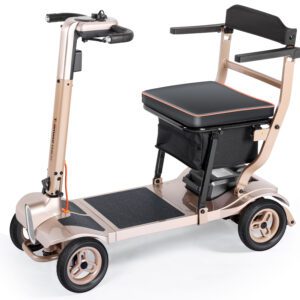
The TopMate ES40 is the most directly relevant TopMate model when a reader wants a four-wheel configuration combined with a travel-oriented folding design.
TopMate lists the ES40 at approximately 38.36 lb without the battery, with a 275.6 lb maximum load capacity. It uses four wheels and has a published turning radius of no more than 1,200 mm. The standard battery configuration lists a range of approximately 9 miles, while a 20.8Ah option lists up to 18 miles under specified test conditions.
Its folded dimensions measure approximately 40.16 × 18.1 × 16.5 inches. Buyers should still measure their vehicle and storage area rather than relying on folded dimensions alone.
For this article’s audience, the ES40 is relevant because it combines a four-wheel platform with a more portable design.
TopMate ES15: Portable Three-Wheel Design
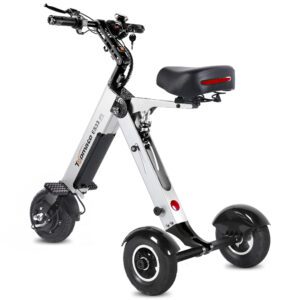
The TopMate ES15 uses a three-wheel configuration, so it should not be presented as equivalent to a four-wheel scooter for someone whose main concern is stability.
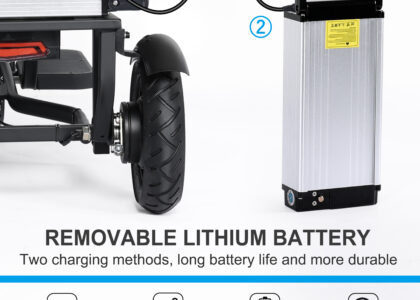
TopMate lists the ES15 at 56.88 lb without the battery, with a 300 lb load capacity, 10-inch pneumatic tires, a removable 36V 7.8Ah lithium battery, and a published range of approximately 16–19 miles.
Its main strengths relate to folding, transportation, travel, and outdoor portability. A senior with balance concerns should consider whether they feel comfortable controlling a three-wheel scooter before choosing this type of design.
TopMate ES35: Everyday Use With Portability
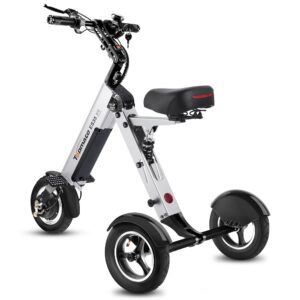
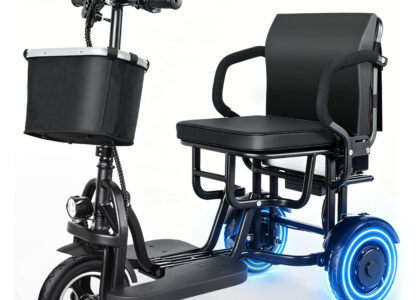
The TopMate ES35 is another three-wheel model. Its positioning fits someone looking for a balance between everyday use, portability, and outdoor capability.
TopMate lists a 250W motor, 10-inch wheels, a removable 36V 7.8Ah lithium battery, a 220.4 lb maximum load, and a published range of approximately 15.53–18.64 miles.
For a senior who needs a portable scooter for regular errands and outdoor use, those characteristics may be more relevant than maximum speed or maximum battery range. Mobility Scooter for Seniors
TopMate ES36: Comfort and Stability in a Three-Wheel Design
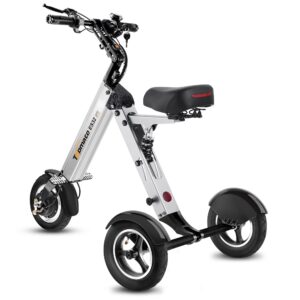
The TopMate ES36 also uses three wheels, but its design puts greater emphasis on comfort and stability within that layout.
TopMate lists a 41.4 lb weight, 220.5 lb load capacity, 10-inch off-road pneumatic front tires, a cushioned seat with backrest, and a removable 36V 7.8Ah battery.
That combination may interest someone who prefers a three-wheel scooter but wants additional attention to seating comfort and outdoor riding.
However, a rider with significant balance concerns should still compare the ES36 with a four-wheel model. Features intended to improve comfort or handling do not make a three-wheel scooter identical to a four-wheel platform.
Final Takeaway
The best mobility scooter for a senior with balance concerns is not necessarily the lightest, fastest, or longest-range model. The better choice depends on how confidently the rider can control it and whether the scooter suits the person’s normal environment.
A four-wheel scooter such as the TopMate ES40 may be worth considering when a stable platform and travel-friendly design are both important. A three-wheel model such as the ES15, ES35, or ES36 can make more sense when portability, maneuverability, everyday use, or comfort takes priority and the rider feels confident using that configuration.
Before buying, look beyond the specification sheet. Consider the route from the front door to the sidewalk, the space inside the home, the way the scooter will enter the car, and how long the rider expects to stay on the seat.
That practical assessment usually provides a much clearer starting point than choosing a scooter simply because it has the highest number on the specification sheet.
FAQ
Is a 4-wheel mobility scooter better for seniors with balance problems?
A four-wheel mobility scooter is often considered when stability is a major priority because the wheel configuration provides a broader base. However, the scooter’s dimensions, controls, seating, surface, and the rider’s ability to operate it safely also matter.
Are 3-wheel mobility scooters safe for seniors with balance concerns?
A three-wheel scooter can suit some seniors, especially when maneuverability and portability are important. Someone with significant balance concerns should compare the three-wheel layout with a four-wheel alternative and choose a design they can control confidently.
What matters more: stability or portability?
Neither feature is universally more important. A person who rarely transports a scooter may prioritize stability and comfort, while someone who regularly loads it into a car may need a folding and portable design.
Should seniors with balance problems test a mobility scooter before buying?
When possible, a test ride can help. The rider can check whether they can steer, stop, reverse, reach the controls, transfer onto the seat, and maintain a comfortable position. Product specifications cannot show how every scooter will feel to a particular person.