A mobility scooter can typically travel about 8 to 30+ miles on one charge, but the actual distance depends on the scooter, battery, rider weight, terrain, speed, weather, tires, and battery condition. A published 20-mile range, for example, does not necessarily mean every rider can travel 20 miles in everyday conditions.
The more useful question is: How much range do you actually need for your normal day?
If your longest routine is an 8-mile round trip, you do not necessarily need a scooter with an enormous battery. But choosing a model with exactly 8 miles of advertised range leaves little room for hills, extra errands, detours, or battery performance changes.
Quick Answer: How Many Miles Can a Mobility Scooter Travel?
Most mobility scooters provide somewhere around 8 to 30+ miles of published range per charge, although the exact figure varies considerably by model.
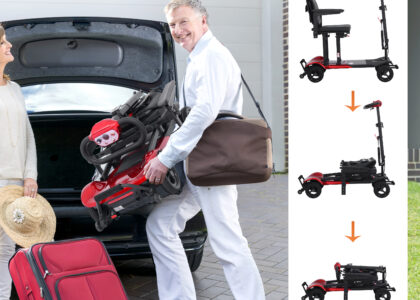
Compact folding and travel scooters generally prioritize portability and may have shorter ranges. Larger scooters can carry larger batteries and may provide more range, but they can also be heavier and more difficult to transport.
For everyday planning, look for a scooter whose published range comfortably exceeds your normal round-trip distance rather than choosing one that only matches it.
That extra capacity gives you some flexibility if the route is hillier than expected, you make another stop, carry additional weight, or encounter conditions that reduce battery performance.
Why Does Mobility Scooter Range Vary So Much?
Two scooters with similar battery specifications can produce different range figures. Likewise, the same scooter may travel different distances on different days.
The main factors are:
Battery capacity
Battery capacity is one of the first specifications worth checking.
You may see capacity listed in amp-hours (Ah) or watt-hours (Wh). Watt-hours provide a useful way to compare the amount of stored energy:
Voltage × Ah = Wh
For example:
36V × 10Ah = 360Wh
A larger Wh figure generally means the battery stores more energy. However, it does not translate directly into a guaranteed number of miles.
Motor efficiency, scooter weight, rider weight, terrain, speed, tire condition, and other factors affect how quickly that stored energy is used.
So when comparing scooters, do not look at Ah alone. Consider the battery specification together with the manufacturer’s published range.
Rider weight and cargo
The motor is moving the combined load of the rider, scooter, and anything being carried.
A heavier total load can increase energy consumption, particularly when accelerating or climbing. Shopping bags, luggage, and other cargo count too.
Always stay within the manufacturer’s stated weight capacity.
Hills and terrain
An 8-mile flat paved journey is not necessarily equivalent to an 8-mile journey containing repeated hills, grass, gravel, or rough pavement.
If your regular route includes inclines, calculate your range needs using the route you actually ride rather than assuming a flat test environment.
Surface type also matters. Rough or loose surfaces can increase rolling resistance and may require slower, more controlled riding.
Speed and stop-start riding
Higher speeds can use more energy than moderate, steady riding. Repeated acceleration can also increase consumption.
This can matter during grocery shopping, busy pedestrian areas, parking lots, and other situations where you are constantly slowing down and starting again.
A smoother riding style can make battery consumption more predictable, although it cannot turn a short-range scooter into a long-range model.
Tire condition and pressure
Tire condition affects rolling resistance.
If your scooter uses pneumatic tires, maintain the pressure recommended by the manufacturer. Underinflated tires can increase rolling resistance and may affect handling as well as energy use.
Before a longer trip, check the tires rather than assuming they are ready simply because the scooter was recently charged.
Temperature and weather
Temperature can affect battery performance, particularly in colder conditions. Wind can also make the motor work harder.
Weather changes the riding surface as well. Wet pavement, grass, gravel, and other difficult surfaces may require slower riding and can increase energy consumption.
For that reason, the range you achieve on a mild, calm day should not automatically be treated as the distance you will get in every season.
Battery age and condition
A scooter that once completed a familiar journey comfortably may gradually provide less usable range as the battery ages.
However, declining range does not automatically mean the battery needs replacing.
Check the tires, charging behavior, route, rider load, and other maintenance factors first. If the range drops suddenly or significantly, follow the manufacturer’s troubleshooting and battery-service guidance.
Is the Manufacturer’s Range the Distance You Will Actually Get?
Not necessarily.
A manufacturer’s published range is best treated as a reference figure under specified conditions, not a guaranteed everyday distance.
Testing may involve a particular rider weight, speed, temperature, surface, battery condition, or riding pattern. Your normal journey may include hills, stops, additional cargo, wind, colder temperatures, or frequent acceleration.
For example, suppose a scooter is advertised with a 20-mile range.
That does not mean you should plan a 20-mile round trip and expect to arrive home with exactly the same battery reserve every time.
If your destination is 10 miles away, the return journey alone brings the total to about 20 miles. Add a detour, shopping-center riding, a hill, or changing weather, and the actual requirement can be higher.
Treat the published number as a planning reference, not a target to reach on every trip.
How Much Mobility Scooter Range Do You Really Need?
Start with your routine.
Write down:
- Your longest normal one-way trip.
- Your typical round-trip distance.
- Any extra riding you normally do once you reach the destination.
- How much additional distance you might need if plans change.
Then compare that total with the manufacturer’s published range.
Example: An ordinary errands day
Imagine a person rides:
- 2 miles from home to a shopping area
- 1 mile between two nearby destinations
- 2 miles to another appointment
- 3 miles back home
That is an 8-mile day.
It would be easy to look only at the 3-mile longest leg and assume a 6-mile scooter is sufficient. But the battery needs to cover the entire day’s riding, not just the longest individual journey.
There can also be additional movement inside a large shopping center, medical facility, hotel, tourist attraction, or outdoor venue.
This is why a small amount of extra range can be useful even when your normal trips seem short.
What Range Makes Sense for Different Types of Use?
| Typical use | What to consider |
|---|---|
| Short trips around the neighborhood | A compact scooter may provide enough range |
| Grocery shopping | Include riding around the shopping area, not just the trip there |
| Several errands | Add the distances for the entire day |
| Parks and outdoor outings | Consider terrain, surface and weather |
| Full-day outings | Look at both range and charging access |
| Car-based travel | Balance range against lifting weight and folded size |
| Air or cruise travel | Range matters, but battery rules, portability and charging may matter just as much |
There is no useful universal rule such as “everyone needs 20 miles.”
Someone making two short local trips each day may gain more from a portable scooter that is easy to transport than from a substantially larger battery.
Someone spending several hours outdoors may reasonably place more emphasis on range and charging flexibility.
Does a Longer-Range Scooter Always Make More Sense?
No.
A larger battery can provide additional range, but it may come with trade-offs.
A scooter designed for longer-distance use may be larger or heavier. That can matter if you regularly:
- Lift the scooter into a car
- Store it inside an apartment
- Put it into an SUV
- Travel by train or bus
- Take it on vacation
- Need another person to help with transportation
Consider two people with very different routines.
Person A makes short local trips and puts the scooter into a car several times a week. Portability may be more important than having the maximum possible range.
Person B spends several hours outdoors and rarely transports the scooter by car. Additional range and riding comfort may be more important.
The useful comparison is therefore not simply “Which scooter goes farther?” It is “Which combination of range and practicality fits the way I use it?”
How Do TopMate Scooters Fit Into the Range Question?
Range is only one part of TopMate’s model positioning.
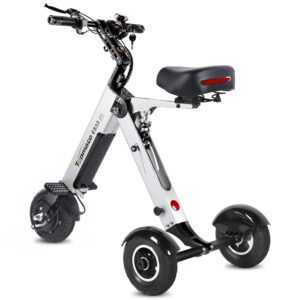
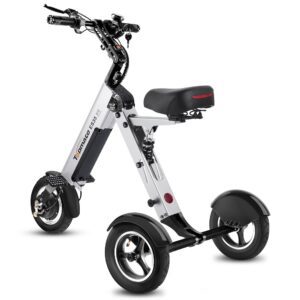
The TopMate ES15 is positioned around lightweight portability, compact storage, frequent transportation, and travel-oriented use.
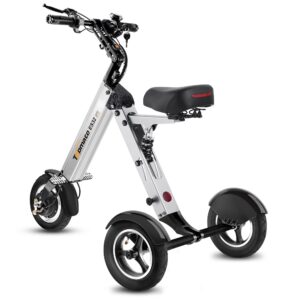
The ES35 is more focused on everyday use while retaining portability. TopMate currently lists a removable 36V 7.8Ah lithium battery and a published range of approximately 15.53–18.64 miles, with actual range depending on use, load, and road conditions.
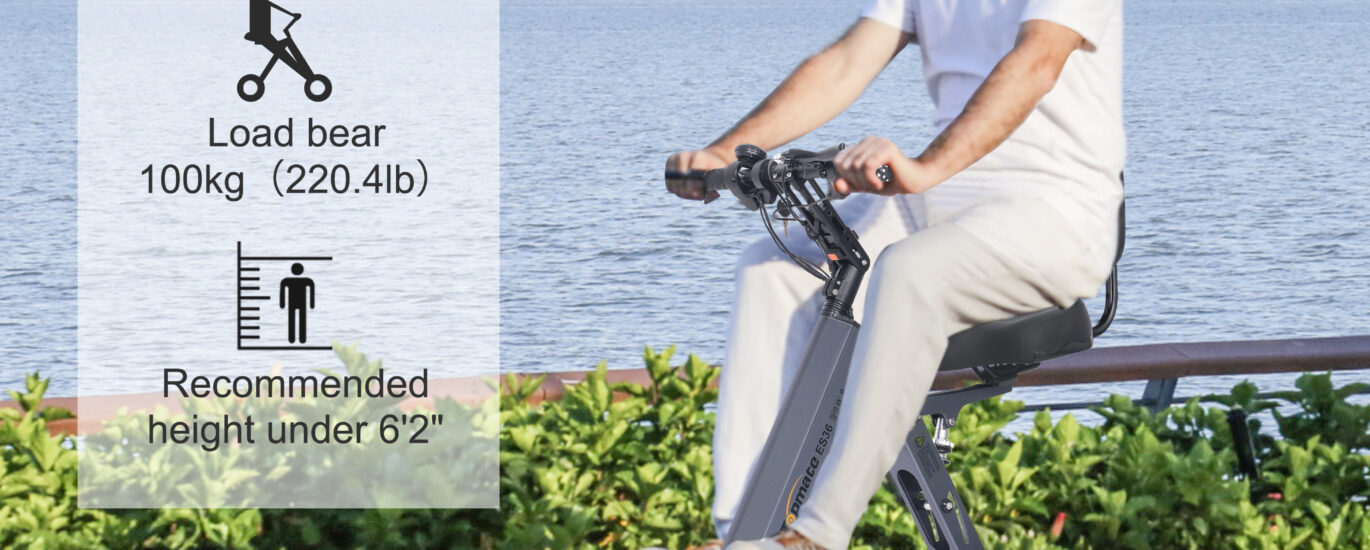
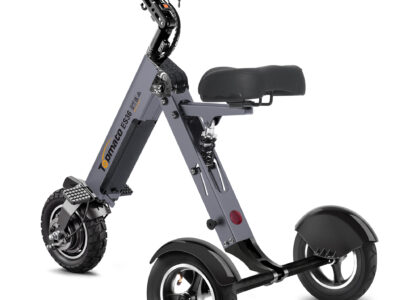
The ES36 uses a stated 36V 7.8Ah, 281Wh removable lithium battery and has a published range of approximately 15.5–18.6 miles. Its positioning places more emphasis on everyday riding, comfort, stability, and its larger off-road-style pneumatic front tires.
The ES40 is more travel-focused. Its manual lists a 24V 10.4Ah lithium battery, a weight of 38.36 lb without the battery, and a standard driving range of approximately 9 miles with the 10.4Ah battery under specified test conditions. The current product page gives approximately 9–11 miles, depending on rider weight and road conditions.
These examples show why range should not be viewed in isolation.
For someone who needs to put a scooter into a car frequently, a shorter-range travel-oriented model may still fit the routine better than a heavier scooter with a larger battery.
What If You Need to Travel Farther During the Day?
There are several practical ways to make a longer outing easier to manage.
Leave a battery reserve
Avoid making your normal journey depend on reaching the scooter’s maximum advertised range.
A reserve gives you some flexibility for:
- An unexpected detour
- A missed turn
- A hill
- Additional shopping
- Frequent stops
- Changes in weather
Check whether the battery is removable
A removable battery can make charging easier when the scooter itself cannot be taken close to an electrical outlet.
This can be particularly useful during travel, although you should always follow the manufacturer’s charging instructions and check whether the destination permits scooter-battery charging.
Plan charging before leaving
If you are spending the day at a hotel, workplace, shopping center, cruise ship, event venue, or other destination, confirm charging arrangements beforehand.
Do not assume a public location will allow you to plug in a mobility scooter.
Take the correct charger
For a longer outing, the charger becomes part of your travel plan.
Before leaving, check:
- Charger
- Power cable
- Connector
- Charging indicator
- Battery connection
Use the charger specified or authorized by the scooter manufacturer.
Can Riding Habits Improve Your Usable Range?
They can help you use the available battery more efficiently, but there is a limit.
Useful habits include:
- Maintain pneumatic tires at the manufacturer’s recommended pressure.
- Avoid unnecessary cargo.
- Use a steady speed when conditions allow.
- Avoid repeated hard acceleration.
- Choose smoother suitable routes where practical.
- Keep the battery maintained according to the manufacturer’s instructions.
- Charge the battery correctly.
- Inspect the scooter before a longer journey.
A short test ride before a major outing can also be useful. It may reveal a tire problem, unusual battery behavior, brake issue, loose control, or folding problem before you are several miles from home.
What Should You Check Before a Long Mobility Scooter Trip?
Range is not the only concern when planning a longer journey.
Check:
Battery: Fully charged and showing normal behavior.
Tires: Correct condition and pressure where applicable.
Brakes: Working normally.
Controls: Throttle, steering and reverse function operating correctly.
Route: Suitable surfaces, crossings, slopes and access points.
Weather: Temperature, rain and wind conditions.
Destination: Charging and storage arrangements if required.
Return journey: Enough usable range for getting home.
If your route involves public roads or pedestrian areas, also check the rules that apply where you live. Mobility scooter regulations vary by jurisdiction. For example, current UK guidance distinguishes Class 2 and Class 3 scooters and sets different rules for pavement and road use.
Final Takeaway
A mobility scooter can travel roughly 8 to 30+ miles on one charge, depending on the model and conditions. Battery capacity, rider and cargo weight, terrain, speed, tire condition, temperature, and battery age can all change the distance you actually get.
Instead of choosing a scooter solely by its maximum range, calculate your real daily mileage, including the return journey and extra riding at your destination. Then compare that requirement with the manufacturer’s published range while also considering weight, folding size, storage, charging, and the terrain you normally use.
FAQ
How far can a mobility scooter go on one charge?
A mobility scooter can typically travel around 8 to 30+ miles on one charge, although the actual distance varies by model and riding conditions. Battery capacity, rider weight, terrain, speed, tire condition, temperature, and battery age can all affect range. The manufacturer’s published figure should be treated as a reference rather than a guaranteed everyday distance.
Can a mobility scooter really travel 20 miles on one charge?
Some mobility scooters have a published range of 20 miles or more, but a 20-mile real-world journey may require additional range. Hills, rider weight, cargo, speed, temperature, surface conditions, and battery condition can reduce usable range. If your planned trip is close to the maximum published distance, leave a reserve rather than relying on every advertised mile.
Does rider weight affect mobility scooter range?
Yes. The scooter must move the combined weight of the rider, scooter, and cargo. A heavier total load can increase energy consumption, particularly when accelerating or climbing hills. Always stay within the manufacturer’s weight capacity and consider your normal cargo when estimating how much range you need.
How do I calculate how much mobility scooter range I need?
Start with your longest normal round trip, then add the extra distance you may travel during the day. Include riding around shopping centers, parks, appointments, hotels, or other large destinations. Compare that total with the manufacturer’s published range and leave some reserve for hills, detours, weather, and other real-world conditions.

-scaled-2-420x300.jpg)