
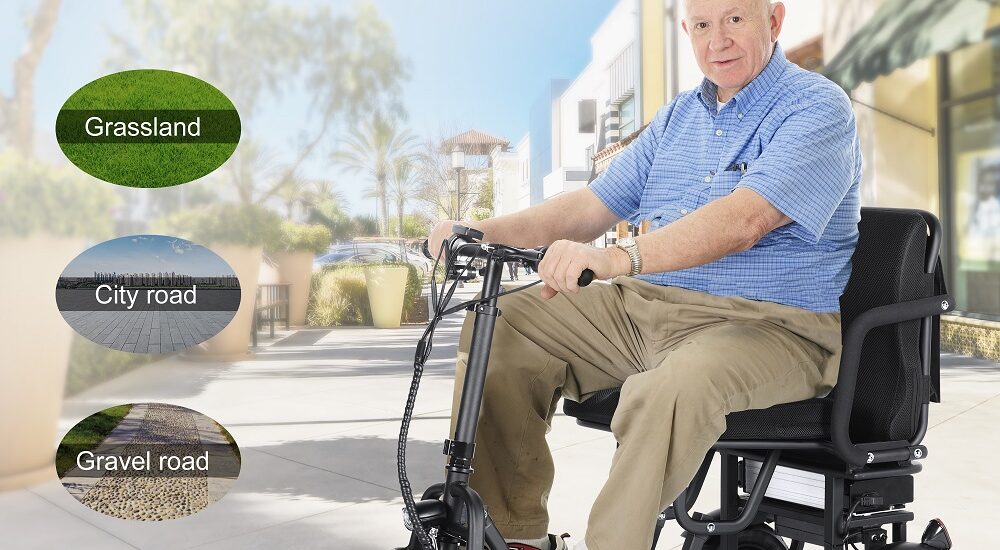
Imagine riding your mobility scooter up a steep driveway and noticing the scooter slow down. This is where mobility scooter hill climbing becomes important. Motor power, hill grade, rider weight, battery charge, tire traction, and surface conditions can all affect how well a scooter handles an incline.
So, how steep a hill can a mobility scooter climb?
The answer depends on several factors. Motor power matters, but rider weight, battery charge, slope, tire traction, ground conditions, and scooter design also influence climbing ability.
How Steep a Hill Can a Mobility Scooter Climb?
A mobility scooter’s maximum incline tells you the steepest slope that the manufacturer recommends the scooter can climb under specified conditions. Manufacturers usually express this limit in degrees, although some specifications use percentage grade.
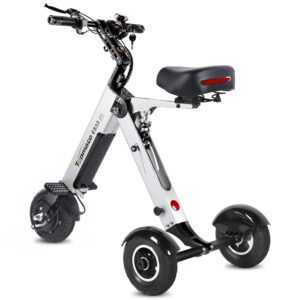
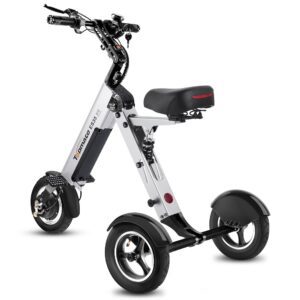
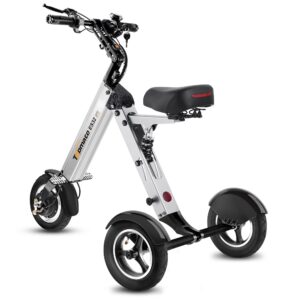
For example, the TopMate ES33 manual lists an 8° maximum climbing capability. The same manual lists a 250W brushless hub motor, 13 N·m maximum output torque, 8-inch front and rear wheels, and a 220.4 lb maximum load.
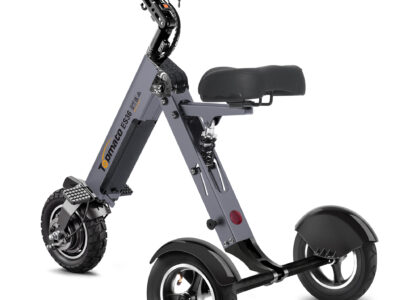
The TopMate ES15 product specifications list a 10° maximum slope, two 250W motors, 29 N·m of torque, and a 300 lb maximum load.
These figures provide useful comparison points. However, riders should not assume that the maximum number guarantees comfortable or safe climbing in every situation.
What Does Hill Grade Mean?
Hill grade describes the steepness of a slope by comparing vertical rise with horizontal distance.
For example, a 10% grade rises 10 units for every 100 horizontal units. Degrees describe the angle of the slope instead.
These two measurements use different systems, so an 8% grade does not equal an 8° incline.
| Slope Angle | Approximate Grade |
|---|---|
| 5° | 8.7% |
| 8° | 14.1% |
| 10° | 17.6% |
| 15° | 26.8% |
Therefore, an 8° incline equals approximately a 14.1% grade.
When comparing a hill with a scooter specification, first identify the measurement system. Then compare the actual slope with the manufacturer’s stated limit.
Does Motor Wattage Determine Hill-Climbing Ability?
Motor power plays an important role, but wattage alone does not determine how well a mobility scooter climbs.
A higher-wattage motor can deliver more electrical power to the drivetrain. However, torque, motor configuration, battery output, controller settings, tire traction, and total load also affect hill performance.
The TopMate ES33, for instance, uses a 250W brushless hub motor and produces up to 13 N·m of torque. Its manufacturer lists an 8° climbing capability.
The TopMate ES15 uses two 250W motors, giving it a combined nominal motor rating of 500W. Its manufacturer lists 29 N·m of torque and a 10° maximum slope.
These examples show why buyers should look beyond the wattage figure. Two scooters with similar motor ratings can produce different climbing results because their motor layouts, torque, gearing, tires, weight, and electrical systems differ.
Does Rider Weight Affect Hill Performance?
Yes. Total load directly affects the amount of work the scooter must perform while climbing.
The total load includes more than the rider. You should also count:
- Shopping bags
- Personal belongings
- Accessories
- Equipment carried on the scooter
As the load increases, the motor must move more mass uphill. Consequently, the scooter may climb more slowly and consume more battery energy.
The ES33 lists a 220.4 lb maximum load, while the ES15 lists a 300 lb maximum load.
Always keep the total load within the manufacturer’s stated capacity. Even within that limit, a heavier load can change climbing speed and battery consumption.
Does Battery Charge Affect Hill Climbing?
Battery charge can influence hill-climbing performance, especially when the scooter already faces a demanding incline.
Climbing requires more energy than traveling across level ground. As the battery charge falls, the scooter may have less available performance depending on its electrical system.
For that reason, riders should avoid beginning a long route with a nearly depleted battery.
A full battery does not allow a scooter to exceed its rated slope. Instead, sufficient charge helps the drive system operate closer to its intended performance range.
How Does the Surface Affect Hill Climbing?
The surface beneath the scooter can change climbing performance significantly.
A dry, paved slope offers different traction from:
- Wet pavement
- Loose gravel
- Grass
- Mud
- Sand
- Snow or ice
- Uneven ground
Tire traction becomes especially important on an incline. If the tires lose grip, extra motor power cannot automatically restore traction.
The TopMate ES15 uses three 10-inch pneumatic tires, and its manufacturer lists a maximum slope of 10°. The manufacturer also describes the model for use on sidewalks, gravel paths, grass, and uneven outdoor surfaces.
Even so, riders should follow the manufacturer’s operating instructions and avoid assuming that every surface provides the same traction.
What Does Ground Clearance Have to Do With Hills?
Ground clearance and climbing ability describe different characteristics.
Ground clearance tells you how much space exists between the ground and the scooter’s lowest components. That space helps the scooter cross thresholds and uneven sections without contacting the ground.
However, ground clearance does not tell you how steep a hill the motor can climb.
For example, a scooter may clear a driveway transition without touching the ground but still struggle to climb the driveway because the slope places a heavy demand on the motor.
Therefore, check ground clearance and maximum incline separately.
Why Should You Not Treat Maximum Incline as an Everyday Recommendation?
A manufacturer’s maximum incline represents a performance limit under particular conditions. It does not automatically represent the slope a rider should use every day.
Real-world conditions can differ considerably from test conditions. Rider weight, battery charge, tire condition, temperature, surface quality, and slope length can all affect performance.
Consider two hills with the same angle. One may have dry, smooth pavement and a short distance. The other may have wet pavement, loose gravel, and a much longer climb. The scooter can experience very different demands even though both hills have the same measured incline.
For that reason, riders should follow the manufacturer’s operating instructions and stay within the stated limits. They should also choose a route that provides adequate traction and control.
Can a Mobility Scooter Climb a Driveway?
A mobility scooter can climb a driveway when the driveway’s slope falls within the manufacturer’s specified capability and the surface provides adequate traction. mobility scooter hill climbing
First, determine the driveway’s actual slope. Next, compare that measurement with the scooter’s published maximum incline. Then consider the rider’s total weight, battery charge, tire condition, and surface.
A gentle, dry, paved driveway may present little difficulty for a scooter designed for inclines. In contrast, a steep driveway near the scooter’s maximum rating requires greater caution.
If the driveway exceeds the manufacturer’s limit or has poor traction, choose another route instead.
Is a Higher Maximum Incline Always Better?
Not necessarily.
A higher maximum incline indicates that the manufacturer gives the scooter a greater stated climbing capability. However, that number does not tell the entire story.
A scooter with a higher incline rating can still lose traction on wet gravel. Similarly, a rider near the maximum load may experience slower climbing than a lighter rider.
Therefore, compare maximum incline alongside motor power, torque, weight capacity, battery specifications, tire design, ground clearance, and intended terrain.
Climbing and Descending Require Different Considerations
Climbing and descending place different demands on a mobility scooter.
During a climb, the drive system must overcome gravity and move the combined scooter-and-rider weight uphill. During a descent, gravity increases the scooter’s forward movement, so braking and steering become more important.
The ES33 manual lists an electric drum brake on the front wheel and a stated braking distance of 5 m.
When descending a slope, maintain a controlled speed and follow the manufacturer’s instructions. Avoid sudden steering movements, abrupt braking, and surfaces that reduce tire traction.
What Determines Hill-Climbing Ability?
| Factor | How It Affects Hill Climbing |
| Motor power | Gives the scooter electrical power to move uphill |
| Rider weight | Adds mass that the motor must move against gravity |
| Battery charge | A low charge can reduce available performance |
| Slope/grade | A steeper slope increases the climbing load |
| Surface | Poor traction can cause wheel slip |
| Ground clearance | Helps the scooter clear obstacles but does not determine motor power |
No single specification tells the whole story. Instead, these factors work together.
For example, a scooter may have adequate motor power for a particular hill but struggle when the rider adds a heavy load and encounters wet pavement. Similarly, a scooter may handle a dry paved slope but lose traction on loose gravel.
Conclusion
A mobility scooter’s hill-climbing ability depends on motor power, torque, rider weight, battery charge, slope, and surface conditions. Always compare the manufacturer’s maximum incline with the hills you expect to encounter. Remember that the maximum rating is not a guarantee of safe performance in every situation. Stay within the manufacturer’s limits and use extra caution on wet, loose, or uneven surfaces.
FAQ
How steep a hill can a mobility scooter climb?
A mobility scooter can climb different slopes depending on its motor, torque, weight capacity, battery condition, tires, and manufacturer-rated maximum incline. Always follow the manufacturer’s stated slope limit and operating instructions.
Does motor wattage determine mobility scooter hill climbing?
Motor wattage affects climbing ability, but it does not determine it by itself. Torque, rider weight, battery charge, tire traction, slope, and surface conditions also influence mobility scooter hill climbing.
Can a mobility scooter climb a driveway?
Yes, some mobility scooters can climb driveways when the slope falls within the manufacturer’s rated incline. However, steep, wet, loose, or uneven driveways can reduce traction and climbing performance, so riders should stay within the manufacturer’s limits.
Is a higher maximum incline always better?
Not necessarily. A higher maximum incline indicates greater stated climbing capability, but it does not guarantee safe performance on every surface. Rider weight, battery charge, tire condition, traction, and terrain can all affect actual hill performance.

-scaled-2-420x300.jpg)