Quick Answer
How do you prevent a mobility scooter from being stolen? The strongest approach is layered security. Park in visible locations, use a suitable physical lock, consider an alarm or tracking device, record the scooter’s serial number and purchase information, secure it properly at home, and avoid leaving it unattended for longer than necessary. No single security device can guarantee theft prevention.
Key Takeaways
- Park your mobility scooter in visible, well-lit locations.
- Use a suitable physical lock where the scooter manufacturer permits it.
- Consider an alarm as an additional deterrent.
- GPS and Bluetooth trackers can assist with recovery but do not prevent theft.
- Record the serial number, model, photos, receipt, and warranty information.
- Secure the scooter indoors whenever practical.
- Check whether your insurance covers mobility scooter theft.
Why Are Mobility Scooters Vulnerable to Theft?
Mobility scooters can be left unattended in many everyday locations, including stores, restaurants, medical facilities, apartment buildings, retirement communities, hotels, and public transportation areas.
The level of risk depends on where the scooter is parked, how long it is unattended, and whether security measures are being used.
A scooter left outside a store for a few minutes presents a different security situation from one stored outdoors overnight. The goal is not to create unnecessary fear but to make theft more difficult and improve the chances of recovery if the scooter disappears.
How to Prevent a Mobility Scooter From Being Stolen
1. Choose a Secure Parking Location
Start with the location.
Whenever possible, choose a well-lit, visible area with regular foot traffic. Designated mobility parking or storage areas may be preferable when available.
Security cameras can provide an additional layer of protection, although their presence does not guarantee that a theft will not occur.
Avoid secluded locations where the scooter can be hidden from pedestrians, staff, or security personnel.
2. Use a Physical Mobility Scooter Lock
A suitable physical lock can make unauthorized removal more difficult.
Depending on the scooter’s design, owners may consider a cable lock, heavy-duty lock, or security chain connected to an appropriate fixed part of the scooter and a suitable fixed object.
However, not every scooter component is designed to withstand a locking device. Do not attach a lock to steering components, brake cables, controls, folding mechanisms, batteries, or removable parts unless the manufacturer specifically permits it.
Check the owner’s manual before choosing an attachment point.
3. Consider an Alarm
An alarm can provide another layer of mobility scooter security.
Motion- or vibration-sensitive alarms may produce an audible warning if someone moves or disturbs the scooter. This can act as a deterrent and alert people nearby.
An alarm should complement a physical lock rather than replace it.
4. Consider GPS or Bluetooth Tracking
A mobility scooter GPS tracker can potentially help locate a scooter after theft, depending on cellular coverage, battery life, subscription requirements, and the tracker’s design.
Bluetooth-based trackers work differently and may rely on nearby compatible devices rather than continuous cellular connectivity.
Tracking devices do not physically prevent theft. They are best viewed as part of a broader theft-recovery strategy.
5. Record Identification Information
Keep a record of:
- Serial number
- Model
- Purchase date
- Receipt
- Warranty information
- Clear photographs
- Distinguishing marks
This information can help establish ownership and identify the scooter if it is lost or stolen.
Where Should You Lock a Mobility Scooter?
The safest attachment point depends on the individual scooter.
Use a manufacturer-approved attachment point where one is provided. Otherwise, only use a strong structural component that the manufacturer indicates is suitable.
Avoid removable accessories, steering mechanisms, brake/control cables, folding joints, and components that could be damaged by pressure from a lock.
Never modify the scooter simply to create a locking point.
How to Secure a Mobility Scooter at Home
Indoor storage is generally preferable when practical.
A garage, secure storage room, apartment storage area, or other controlled-access location can reduce exposure compared with leaving the scooter outside.
At home, consider:
- Locking storage doors
- Keeping the scooter out of public view
- Using an appropriate fixed anchor where permitted
- Motion-activated lighting
- Security cameras where appropriate
- Removing or securing valuable accessories
For apartment buildings and retirement communities, ask management about secure storage, CCTV, building access, charging areas, and overnight parking policies.
How to Secure a Mobility Scooter While Shopping
Before leaving your scooter outside a store:
- Choose a visible location.
- Use a physical lock when appropriate.
- Take removable valuables and accessories with you.
- Avoid leaving the scooter unattended longer than necessary.
- Consider using an alarm or tracker as an additional layer.
If the store provides designated mobility-scooter parking or secure storage, ask staff about the available options.
Should You Insure a Mobility Scooter Against Theft?
Insurance availability and coverage vary by country, insurer, policy, and scooter type.
Depending on the policy, theft protection may be available through home insurance or specialized mobility-equipment coverage.
Before purchasing coverage, check:
- Whether theft is included
- Deductible or excess
- Documentation requirements
- Serial-number requirements
- Receipt requirements
- Whether accessories are covered
- Any storage or security conditions
Do not assume that your existing home or contents policy automatically covers a mobility scooter.
What Should You Do If Your Mobility Scooter Is Stolen?
If your scooter disappears:
- Confirm that it has actually been taken.
- Contact store, building, hotel, or facility security if applicable.
- Report the theft to the appropriate local authorities.
- Provide the serial number and photographs.
- Check your GPS or Bluetooth tracker if one is installed.
- Contact your insurer if theft coverage applies.
- Keep receipts, photographs, and other ownership records available.
- Do not confront anyone you suspect of taking the scooter.
Personal safety should always come before attempting to recover the scooter yourself.
Common Mobility Scooter Security Mistakes
Avoid relying on only one security measure. Common mistakes include leaving the scooter unlocked, parking it in secluded areas, relying entirely on a tracker, failing to record the serial number, leaving expensive accessories attached, assuming CCTV prevents theft, and forgetting to maintain a tracker’s battery.
Using a lock incorrectly can also damage the scooter or interfere with its controls. Always follow manufacturer guidance.
Final Takeaway
The best way to prevent a mobility scooter from being stolen is to use layered security: secure parking + physical security + an alarm or tracker + identification records + appropriate insurance.
No lock, alarm, or tracking device makes a mobility scooter theft-proof. Combining several practical measures can make unattended storage more secure and improve the chances of identifying or recovering the scooter if it is stolen.
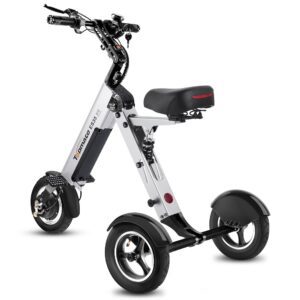
For TopMate owners, follow the specific owner’s manual when selecting locking points, storing the scooter, or securing removable components. Security practices should protect the scooter without interfering with its steering, brakes, controls, folding mechanism, battery, or other safety systems.
FAQ
Can you lock a mobility scooter to prevent theft?
Yes. A suitable physical lock can make a mobility scooter more difficult to steal. Use a manufacturer-approved or suitable structural attachment point and avoid locking controls, brake cables, folding mechanisms, or other components that could be damaged.
Can you put a GPS tracker on a mobility scooter?
Yes. A GPS tracker can help locate a mobility scooter if it is stolen, although performance depends on connectivity, battery life, and the tracker’s service. It should be used alongside physical security rather than as a replacement.
Do mobility scooters have serial numbers?
Many mobility scooters have a serial number or other identifying information. Record the serial number, model, photographs, purchase receipt, and warranty details. These records can help establish ownership and assist with theft reporting.
What should I do if my mobility scooter is stolen?
Report the theft to the appropriate local authorities and provide the scooter’s serial number, photographs, receipt, and other identifying information. Contact your insurer if applicable and check your tracker if one is installed. Do not confront suspected thieves yourself.

-scaled-2-420x300.jpg)