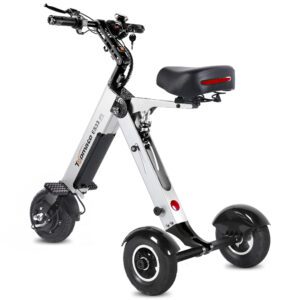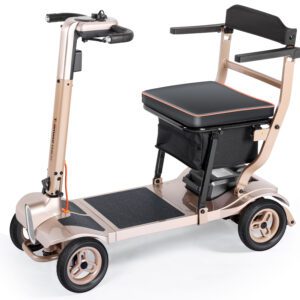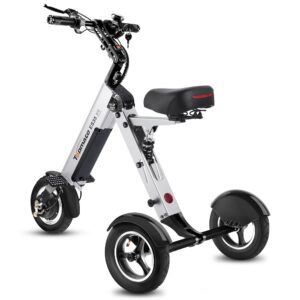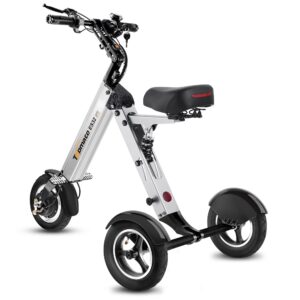
A mobility scooter for full-day use should be comfortable enough for several hours, have enough battery capacity for your actual routine, and be easy to maneuver, store, and transport. The right choice depends less on maximum speed and more on how the scooter fits into the entire day—from leaving home to getting back.
Someone spending the day at a shopping center has different needs from someone taking a scooter on a cruise or loading it into a small car.
Quick Answer
The best mobility scooter for full-day use is one that matches your daily distance, sitting time, terrain, transport needs, and storage situation. Look closely at seat support, legroom, controls, battery range, maneuverability, ride quality, and charging. If you regularly transport the scooter, its folded size and carrying weight become just as important as comfort.
A scooter that feels fine for a 20-minute trip may not be the right choice after several hours of errands or sightseeing.
What Makes a Mobility Scooter Suitable for a Full Day?
“Full-day use” does not necessarily mean riding continuously for eight or twelve hours. More often, it means using the scooter throughout a long day with stops for shopping, meals, appointments, sightseeing, or visiting friends.
That changes what you should look for.
1. A Seat You Can Stay Comfortable In
Seat comfort becomes much easier to judge after several hours than during a short test ride.
Look at:
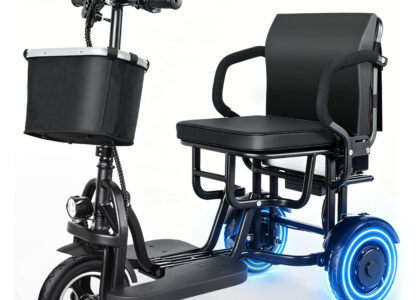
- Seat width and depth
- Backrest support
- Cushioning
- Armrest position
- Available legroom
- Whether your posture feels natural
- How easily you can get on and off
A person who spends most of the day moving between different locations may notice poor seat support long before they notice a difference in top speed.
The best seat is not necessarily the largest one. It needs to provide enough support without making the scooter difficult to maneuver or transport.
2. Enough Battery for Your Actual Day
Battery range should be based on your routine rather than the largest number in an advertisement.
For example, someone might travel from home to a store, move around a shopping center, visit a café, and return home. Another person may spend most of the day at a theme park or tourist attraction, where the scooter covers considerably more ground.
Real-world range can vary with:
- Rider weight
- Hills and slopes
- Speed
- Stop-and-go driving
- Terrain
- Temperature
- Battery condition
A useful approach is to estimate your normal daily distance and leave a sensible margin rather than planning to use almost the entire advertised range.
If you regularly spend a full day away from home, also consider where the scooter can be charged. A charger may be useful during longer outings, but only when the location permits charging and the scooter’s battery and charger are designed for that setup.
3. Maneuverability Matters More Than It Seems
A scooter can have plenty of range and still become frustrating in crowded places.
Think about where you actually drive:
- Apartment corridors
- Elevators
- Store aisles
- Restaurant entrances
- Medical offices
- Museum spaces
- Sidewalks
- Parking areas
A scooter that turns easily can reduce the amount of steering correction required throughout the day.
Before buying, check the scooter’s turning characteristics and compare them with the spaces you use most often. If you live in an apartment, measure the elevator and doorway rather than assuming a compact-looking scooter will fit.
Think About the Entire Day, Not Just the Ride
A useful way to compare scooters is to follow the day from beginning to end.
Leaving Home
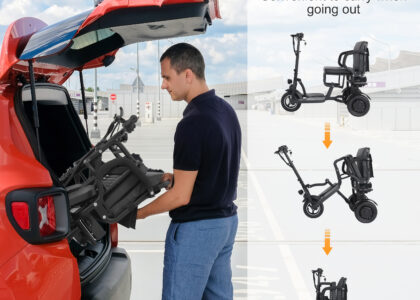
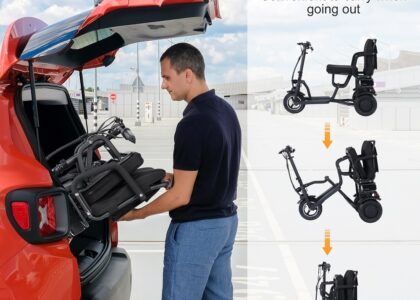
If the scooter needs to be taken out of a garage, apartment, or storage room every morning, weight and folding design matter.
Someone with a small apartment may care more about whether the folded scooter fits into a storage corner than about having the longest possible battery range.
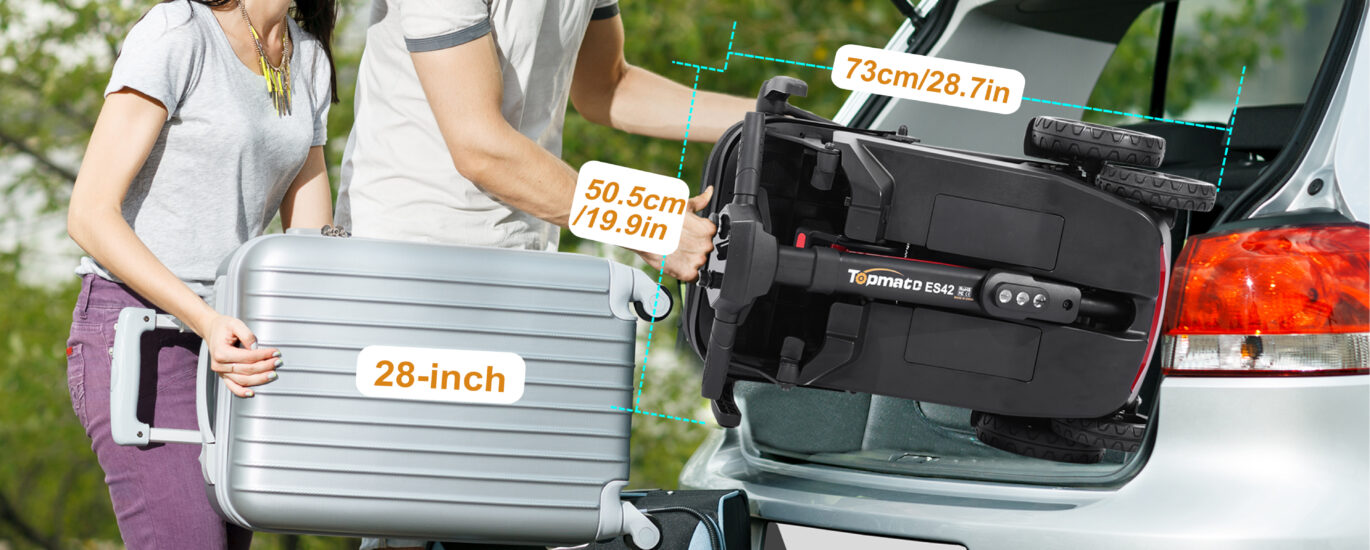
If it goes into a vehicle, check the folded dimensions and the amount of weight that actually needs to be lifted. A scooter may be described as portable but still be difficult for one person to load.
Grocery Shopping
Shopping introduces a different set of requirements.
You may need:
- Easy steering at low speed
- A practical basket or storage area
- Stable handling
- A manageable turning radius
- Controls that are easy to operate repeatedly
Storage is especially useful when the scooter is part of the shopping trip rather than simply the transportation to and from the store.
Spending Several Hours Outdoors
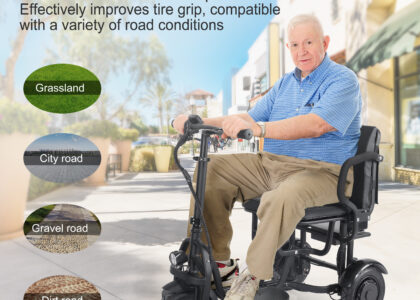
Parks, tourist attractions, museums, and similar destinations can involve a mixture of smooth pavement, sidewalk joints, uneven sections, and gentle slopes.
This is where ride quality becomes noticeable.
Suspension can help reduce vibration, but it should not be considered in isolation. Tire design, wheel size, ground clearance, scooter weight, and the type of surface all affect how a scooter feels.
A scooter intended mainly for smooth indoor surfaces does not automatically become suitable for rough outdoor paths simply because it has suspension.
Taking a Break for Lunch
Long outings also involve getting on and off the scooter.
Check whether the seat, armrests, and controls make those transitions comfortable for you. Someone with limited leg strength or hand strength may place more importance on easy access and simple controls than another buyer would.
Getting Home
By the end of the day, battery confidence becomes particularly important.
You do not want your return journey to depend on using the last part of the battery’s theoretical range. Plan around the distance you actually expect to cover and the conditions you normally encounter.
What About Transport and Storage?
Full-day use often starts before you even begin riding.
A scooter that needs to travel in a car should be evaluated for:
Folded size: Will it fit in your trunk or SUV without blocking other essential luggage?
Carrying weight: Can you or another person safely lift the parts that need to be moved?
Folding process: Can you fold and unfold it without excessive effort?
Battery arrangement: If the battery is removable, does removing it make transportation easier? Do not assume every scooter has a removable battery.
Home storage: Will the scooter fit through your doorway and into its storage location?
This is one reason a highly portable scooter can make sense for some full-day users. If the scooter is difficult to transport, you may use it less often regardless of how comfortable it is once you’re riding.
Which Type of Full-Day User Are You?
There is no single configuration that works equally well for everyone.
| Your typical day | Priorities to examine |
|---|---|
| Daily errands and shopping | Comfort, maneuverability, storage, battery |
| Long sightseeing days | Seat support, battery, ride quality, easy controls |
| Frequent car transportation | Folding size, carrying weight, battery arrangement |
| Apartment or retirement-community living | Compact storage, doorway fit, turning ability |
| Outdoor use on varied pavement | Wheels, ground clearance, ride quality, stability |
| Cruises and vacations | Portability, folding, transport, battery and travel rules |
| Mostly indoor use | Compact dimensions, turning ability, simple controls |
The important point is that “full-day” describes how long and how often you use the scooter, not necessarily what type of scooter you need.
Where TopMate Models May Fit
TopMate’s different models are positioned for different priorities, so they should not all be treated as interchangeable.
ES15: Its lightweight and portable design makes it relevant for users who frequently transport a scooter, have limited storage space, or need a travel-oriented option.
ES35: This model is better suited to everyday use where the user wants a balance between portability and outdoor capability.
ES36: Users who place more emphasis on everyday comfort and stability may want to look at this type of configuration.
ES40: Its travel-focused, compact-folding approach makes it relevant for vacations, cruises, and situations where easy transportation is a major consideration.
These are examples of how to match a scooter to a routine—not a claim that one model is universally best for full-day use.
Common Mistakes to Avoid
A full-day scooter purchase can go wrong even when the basic specifications look impressive.
Avoid:
- Choosing maximum range without considering your real daily distance
- Focusing on top speed instead of comfortable control
- Testing the seat for only a few minutes
- Forgetting to measure doorways, elevators, or vehicle storage space
- Assuming suspension makes every surface comfortable
- Ignoring the scooter’s carrying weight
- Forgetting where the scooter will be charged
- Assuming airline or cruise policies are the same everywhere
- Buying a scooter that is difficult to transport and then rarely taking it out
For air travel, cruises, public transportation, and similar trips, check the current requirements of the specific carrier or operator before traveling. Battery rules and transport policies can change and may differ between providers.
How to Decide Before You Buy
Instead of asking only, “Which mobility scooter is best for full-day use?”, write down what your longest normal day actually looks like.
For example:
Home → car → shopping center → several hours of walking/rolling → lunch → outdoor attraction → car → home
Then ask:
- How far will I realistically travel?
- How long will I sit on the scooter?
- What surfaces will I encounter?
- Where will I store it?
- Will someone need to lift it into a car?
- Can I charge it where I normally spend the day?
- Do I need a compact folding design?
- Which matters more for my routine: portability, comfort, stability, or outdoor capability?
That list usually produces a more useful answer than comparing scooters by top speed or advertised range alone.
Final Takeaway
The best mobility scooter for full-day use is the one that remains practical throughout your entire routine. Comfortable seating and reliable battery capacity matter, but so do maneuverability, carrying weight, storage, charging, and the surfaces you encounter.
For one person, portability may be the deciding factor. For another, a more comfortable and stable setup may matter more. Start with the longest and most demanding day you realistically expect to have, then choose the scooter features around that routine.
FAQ
Which mobility scooter is best for full-day use?
A suitable full-day mobility scooter should provide comfortable seating, enough real-world battery range for your routine, easy controls, practical maneuverability, and appropriate ride quality for the surfaces you use. If you transport it regularly, folded size and carrying weight also become important.
How much battery range do I need for a full day?
Estimate the distance you normally travel in a day and choose a scooter with a reasonable margin above that figure. Advertised range can change with rider weight, terrain, speed, temperature, and battery condition, so it should not be treated as an exact real-world distance.
Is a folding mobility scooter suitable for full-day use?
It can be, particularly when the scooter needs to be transported in a car, stored in a small home, or taken on trips. However, folding convenience should be considered alongside seat comfort, battery capacity, stability, carrying weight, and the surfaces where you will ride.
Should I prioritize comfort or portability for full-day use?
It depends on your routine. Someone who regularly loads a scooter into a car may need portability to be a major priority, while someone who spends several hours riding outdoors may place more emphasis on seating, stability, and ride quality. The best balance is the one that matches how you actually use the scooter.