
Quick Answer
Yes, you can often fly with a mobility scooter, but airline approval depends on the scooter’s battery type, battery capacity (measured in Watt-hours or Wh), whether the battery can be removed, and the airline’s own policies. Since requirements vary between airlines, travelers should always contact their airline before departure to confirm battery guidelines, documentation requirements, and any advance notification procedures.
Why Do Airlines Have Battery Rules for Mobility Scooters?
Airlines have battery rules to help ensure passenger and aircraft safety. While mobility scooters are essential medical mobility devices, their batteries require special handling during air travel, particularly if they use lithium-ion technology.
Lithium batteries store a large amount of energy in a compact size. If damaged, improperly packed, or exposed to extreme conditions, they can present safety risks. For this reason, airlines follow international aviation safety standards that specify how batteries should be transported.
Unlike recreational electric scooters, mobility scooters are designed to assist individuals with limited mobility. Many airlines have procedures for transporting these devices safely while accommodating passengers who depend on them for independence.
Battery rules also help airline staff determine how to load, secure, and protect mobility equipment throughout the journey. Understanding these requirements before your trip can help reduce delays and avoid last-minute surprises at the airport.
Battery Types Used in Mobility Scooters
Most travel mobility scooters use one of two battery types: lithium-ion or sealed lead acid (SLA). Each offers different benefits and travel considerations.
| Battery Type | Common Uses | Air Travel Suitability | Advantages | Things to Know |
|---|---|---|---|---|
| Lithium-Ion | Lightweight travel mobility scooters | Often suitable depending on battery specifications and airline policy | Lightweight, longer lifespan, faster charging | Airlines may review Watt-hour rating and removable battery design |
| Sealed Lead Acid (SLA) | Traditional mobility scooters | Often accepted when properly installed and protected according to airline procedures | Reliable, widely available, lower purchase cost | Heavier than lithium batteries and may increase scooter weight |
Regardless of battery type, airline acceptance depends on the battery’s specifications, condition, and the airline’s individual policies.
What Airlines Usually Check Before Accepting a Mobility Scooter
Before approving a mobility scooter for travel, airlines commonly review several important factors.
Battery Type
Airlines usually ask whether the scooter uses a lithium-ion battery or a sealed lead acid battery because each requires different handling procedures.
Battery Watt-Hour Rating
For lithium batteries, the Watt-hour (Wh) rating helps airlines understand battery capacity. Travelers should know this information before arriving at the airport.
Removable Battery
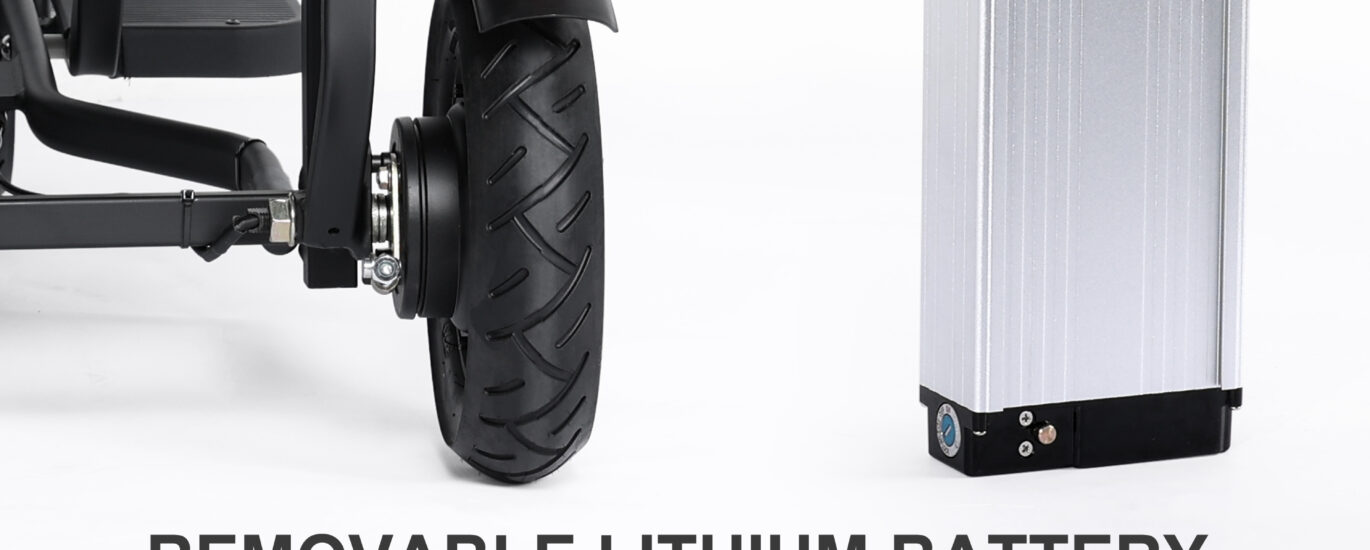
Many travel scooters feature removable batteries, making transportation and inspection easier. Some airlines may have specific procedures for removable battery handling.
Battery Protection
The battery should be securely attached or properly protected during transport. Exposed battery terminals may require additional protection depending on airline instructions.
Scooter Dimensions
Folded dimensions may determine whether the scooter fits within cargo handling requirements or storage limitations.
Scooter Weight
Lightweight mobility scooters are generally easier for airport staff to handle and reduce the likelihood of lifting difficulties during loading.
Advance Notification
Many airlines recommend or require advance notice when traveling with mobility equipment. Informing the airline early gives staff time to prepare appropriate assistance.
Tips for Flying With a Mobility Scooter
Preparing ahead of time can make your travel experience smoother.
- Contact your airline before booking your flight.
- Confirm your scooter’s battery type and Watt-hour rating.
- Carry the owner’s manual or battery specifications.
- Clearly label removable batteries if applicable.
- Fully charge the battery before traveling.
- Arrive at the airport earlier than usual.
- Remove loose accessories before checking the scooter.
- Protect delicate controls during baggage handling.
- Pack charging cables and adapters separately in an accessible bag.
- Keep copies of any airline correspondence regarding your mobility device.
Taking these simple steps can reduce delays and help airport staff handle your scooter correctly.
Choosing a Travel-Friendly Mobility Scooter
Not every mobility scooter is equally suited for frequent air travel. If you plan to fly regularly, choosing a travel-friendly model can simplify every stage of your journey.
Look for features such as:
- Lightweight construction for easier lifting and transport
- Foldable frame for compact storage
- Removable battery where available
- Compact folded dimensions
- Durable frame designed for repeated transportation
- Airline-friendly battery specifications
- Easy loading into cars, taxis, and airport shuttles
A compact scooter can also be easier to store in hotel rooms, cruise cabins, rental vehicles, and airport transportation services.
How TopMate Foldable Mobility Scooters Support Air Travel
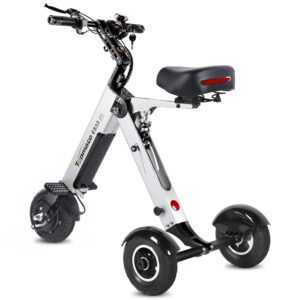
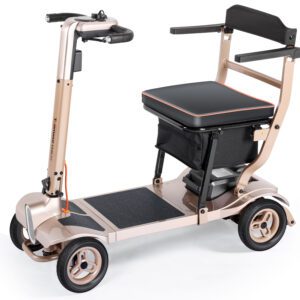
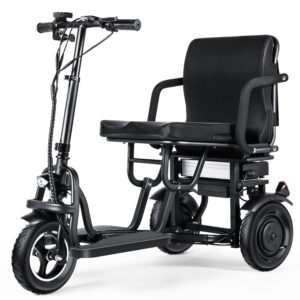
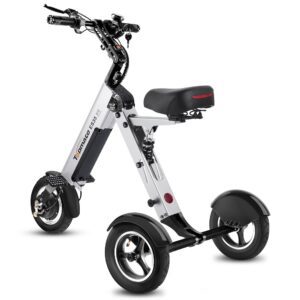
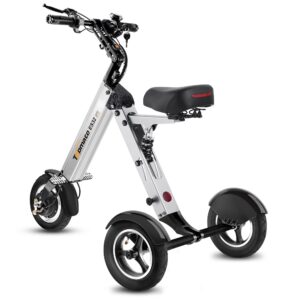
Travelers often appreciate mobility scooters that are lightweight and easy to transport. TopMate designs foldable mobility scooters with portability in mind, making them convenient for airport terminals, vehicle loading, and everyday travel.
Several TopMate models feature compact folding designs that can simplify storage during road trips and vacations. However, travelers should remember that airline approval is based on each scooter’s battery specifications and the airline’s current policies. Always verify your specific model with the airline before traveling.
Common Mistakes Travelers Make
Even experienced travelers can overlook important details before flying with a mobility scooter.
Common mistakes include:
- Assuming every airline follows identical battery rules
- Forgetting to check battery specifications
- Not notifying the airline before departure
- Arriving too close to boarding time
- Packing battery chargers incorrectly
- Ignoring battery labels or missing documentation
- Forgetting to remove personal accessories from the scooter
- Skipping a final inspection before check-in
Avoiding these mistakes can help your trip begin with fewer complications.
Conclusion
Flying with a mobility scooter is possible for many travelers when they prepare in advance and understand airline battery requirements. Because policies can differ between airlines and may change over time, it is always best to verify the latest mobility device and battery guidelines before every trip. Choosing a lightweight, foldable travel mobility scooter with appropriate battery specifications can make airport transportation, vehicle loading, and vacation travel significantly more convenient while helping you travel with greater confidence.
FAQ
Can you fly with a mobility scooter?
Yes. Many airlines allow mobility scooters, but approval depends on the battery type, battery specifications, and the airline’s individual policies. Always contact your airline before your trip.
Are lithium batteries allowed on airplanes for mobility scooters?
Many airlines permit lithium-ion batteries used in mobility scooters, provided they meet the airline’s battery requirements and are transported according to current safety guidelines.
Should I notify the airline before traveling with a mobility scooter?
Yes. Informing the airline in advance allows them to prepare for your mobility device and explain any battery, size, or handling requirements before your flight.
What makes a mobility scooter more travel-friendly?
A lightweight, foldable design, compact size, and removable battery (where applicable) can make a mobility scooter easier to transport, store, and prepare for air travel.


-scaled-2-420x300.jpg)