Imagine buying a mobility scooter that fits easily into your car, only to discover a different problem when you get home: the scooter passes through the front door, but turning into the hallway is difficult. The bathroom entrance is narrower, the kitchen has limited maneuvering space, and a raised threshold makes the transition uncomfortable.
This is why mobility scooter width is only one part of home accessibility. Before buying a scooter, you need to consider the usable doorway opening, turning space, hallway width, thresholds, and the scooter’s dimensions when unfolded.
How Wide Does a Doorway Need to Be for a Mobility Scooter?
There is no single doorway width that works for every mobility scooter. The scooter must be narrower than the actual clear opening, not simply the nominal width of the door.
As a useful accessibility reference in the United States, the ADA Standards specify a minimum 32-inch (815 mm) clear doorway opening for accessible routes, measured with a swinging door open 90 degrees. The standards also recognize that maneuvering clearance around the door is important.
That 32-inch figure should not be interpreted as meaning every mobility scooter will comfortably use every 32-inch doorway. A scooter needs some clearance on either side, and the rider also needs enough space to approach and steer through the opening.
For home planning, measure the usable opening with the door in its normal fully open position rather than relying on the door slab or frame measurement. Mobility Scooter Doorway Width
Door Opening vs. Door-Frame Width
This distinction is easy to overlook.
Suppose a door is advertised as 32 inches wide. The usable opening may be smaller because of:
- Door stops
- Hinges
- The thickness of the door
- Trim
- Hardware
- The direction in which the door opens
The ADA measurement illustrates the principle: clear width is measured between the face of the open door and the opposite stop, rather than simply measuring the frame from edge to edge.
For a scooter, measure the space where the tires and body of the scooter actually need to pass.
Why Turning Radius Matters
A scooter can fit through a doorway and still be unsuitable for a particular room.
The reason is turning space.
Imagine entering a bedroom from a hallway. You may have enough width to drive straight through the doorway, but then discover that the scooter cannot turn toward the bed without hitting a wall or furniture.
Turning ability depends on the scooter’s turning radius or turning circle, as well as its overall length and width. Mobility Scooter Doorway Width
The ADA’s accessibility standards use a 60-inch (1,525 mm) diameter turning space as one reference for wheelchair turning areas. This is an accessibility design benchmark, not a universal requirement for private homes or a claim that every mobility scooter requires a 60-inch circle.
Your scooter may require less or more practical space depending on its steering geometry.
How Hallway Width Affects Maneuverability
A hallway is not just a passageway. It becomes part of the scooter’s turning environment.
A narrow hallway may be adequate for straight travel but difficult when you need to:
- Turn into another room
- Reverse
- Approach a doorway at an angle
- Avoid furniture
- Correct your position after entering
- Turn around at a dead end
The ADA standards identify 36 inches (915 mm) as a continuous minimum clear width for a single wheelchair passage, with 32 inches allowed at a point for a limited length under those standards.
For a mobility scooter inside a home, however, actual usability depends on the scooter’s dimensions and maneuverability. A hallway that technically accommodates the scooter may still feel restrictive.
Can Mobility Scooters Be Used Inside a House?
Yes, many mobility scooters can be used indoors, but suitability depends heavily on the layout.
A compact scooter can be easier to operate in:
- Apartments
- Bedrooms
- Corridors
- Shopping areas
- Assisted-living environments
- Medical facilities
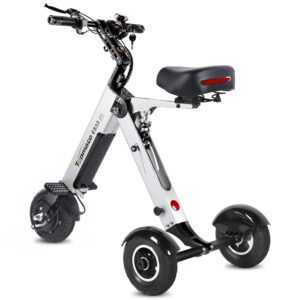
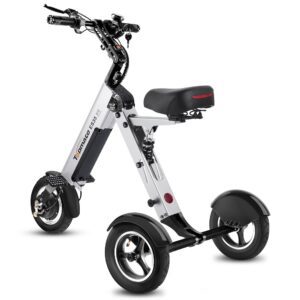
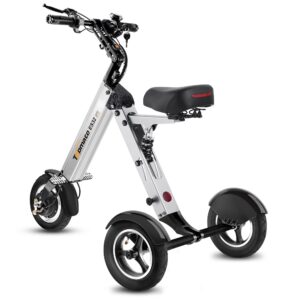
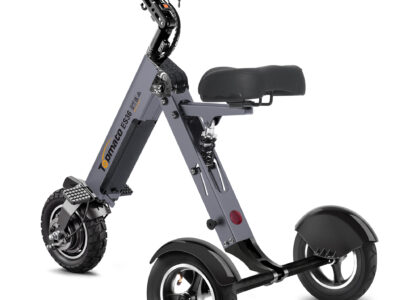
For example, TopMate describes its ES15 as a compact, lightweight travel scooter with a focus on maneuverability and indoor use. Its published specifications should still be checked against your own home’s measurements before purchase.
A larger outdoor-oriented scooter may provide greater seating space or stability but require more room to turn.
Elevator Access
Elevators create another measurement problem.
Do not measure only the elevator door. Check the entire sequence:
Hallway → elevator entrance → elevator interior → turning area → exit
Measure:
- Elevator door clear opening
- Interior width
- Interior depth
- Door-to-wall distance
- Turning space inside
- Any raised threshold
A scooter that enters the elevator but cannot turn or align with the exit may still be difficult to use.
If you live in an apartment or condominium, it is worth testing the actual elevator with the scooter before committing to a purchase when possible.
Bathroom and Kitchen Access
Bathrooms are often more difficult than bedrooms because fixtures reduce usable floor space.
Check the distance between:
- Doorway and toilet
- Toilet and vanity
- Vanity and opposite wall
- Shower or tub and turning area
A bathroom door may be wide enough for the scooter, yet the scooter may not have enough room to turn once inside.
Kitchens present a similar issue. Cabinets, islands, tables, and appliances can create narrow routes even when the entrance itself is wide enough.
For these rooms, draw the scooter’s approximate footprint on the floor using masking tape or cardboard. This can reveal clearance problems before you buy.
Thresholds and Floor Transitions
Doorway width is not the only potential obstacle.
Look for:
- Raised thresholds
- Sliding-door tracks
- Carpet transitions
- Floor-level differences
- Thick rugs
- Uneven tiles
- Loose mats
Ground clearance matters because a scooter with limited clearance may have more difficulty crossing an obstruction.
Never assume that a scooter’s ability to cross a threshold is determined only by its ground clearance. Wheel size, approach angle, suspension, weight distribution, and the manufacturer’s specifications also matter.
Folded vs. Unfolded Dimensions
This is one of the most important distinctions for buyers.
Unfolded dimensions determine whether you can drive the scooter through a doorway and maneuver around the house.
Folded dimensions determine whether you can store or transport it.
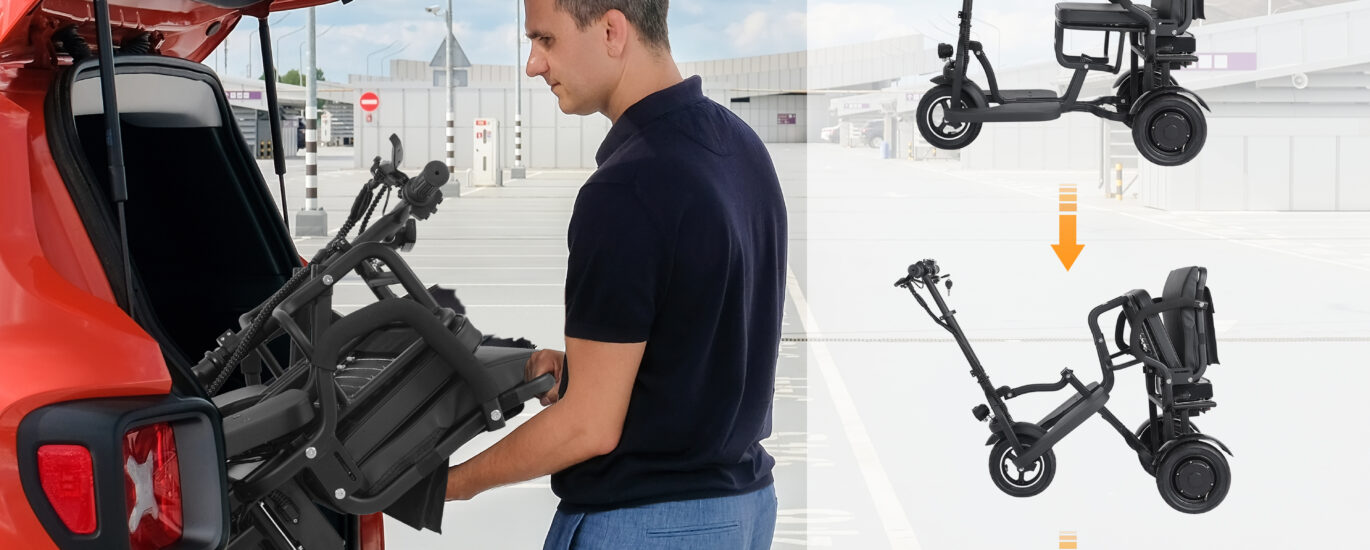
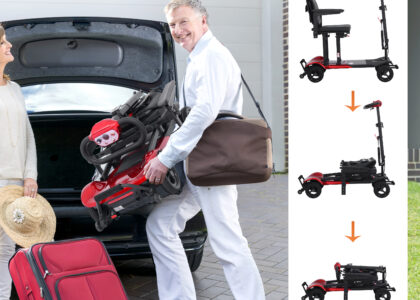
A scooter can therefore be extremely compact when folded but still require substantially more space when ready to ride.
The TopMate ES15, for example, is marketed as a lightweight folding scooter intended for transportation and compact storage. However, buyers concerned about home access should use its riding dimensions, not its folded footprint, when evaluating doorways and hallways.
Measure Your Home Before Buying
Take measurements before choosing a scooter rather than trying to make the scooter fit afterward.
Start at the entrance and follow the route you expect to use most often.
Step 1: Measure the front door
Open the door fully and measure the actual clear opening.
Step 2: Measure important interior doors
Include bedroom, bathroom, kitchen, balcony, garage, and storage-room doors if you expect to use them.
Step 3: Measure hallways
Measure the narrowest point, including areas where furniture, radiators, shelves, or cabinets reduce the usable width.
Step 4: Identify turning locations
Measure areas where you need to make 90-degree or 180-degree turns.
Step 5: Measure thresholds
Record the height and shape of every threshold or floor transition.
Step 6: Measure elevators
If you live in an apartment, measure both the elevator entrance and interior.
Step 7: Compare with the scooter
Compare your measurements with the scooter’s overall width, overall length, turning circle or radius, ground clearance, and folded dimensions.
Do not rely on width alone.
What If the Scooter Is Slightly Too Wide?
If a scooter is only slightly wider than a doorway, do not assume it will squeeze through safely.
Possible solutions include:
- Removing an interior door temporarily
- Repositioning furniture
- Using a different entrance
- Choosing a narrower scooter
- Installing a wider doorway where appropriate
- Using a folding scooter and storing it in another accessible location
Never force a scooter through an opening. Repeated contact with door frames can damage the scooter, walls, or door hardware and may create a safety risk.
FAQ
How wide does a doorway need to be for a mobility scooter?
The required doorway width depends on the scooter’s overall width and maneuverability. Measure the actual clear doorway opening and compare it with the scooter’s unfolded width. A small amount of additional clearance can make steering through the doorway easier.
Can a mobility scooter fit through a standard door?
Many compact mobility scooters can fit through standard residential doorways, but this should never be assumed. Check the doorway’s clear opening, scooter width, and the space available to approach and exit the doorway.
How much turning space does a mobility scooter need?
There is no universal turning-space requirement for every mobility scooter. The required space depends on the scooter’s turning radius, length, width, and steering design. A scooter can fit through a doorway but still struggle to turn inside a narrow hallway or bathroom.
What should I measure before buying a mobility scooter?
Measure the clear width of important doorways, hallway width, turning areas, thresholds, elevator openings, and storage spaces. Compare these measurements with the scooter’s unfolded width, length, turning radius, ground clearance, and folded dimensions.

-scaled-2-420x300.jpg)