
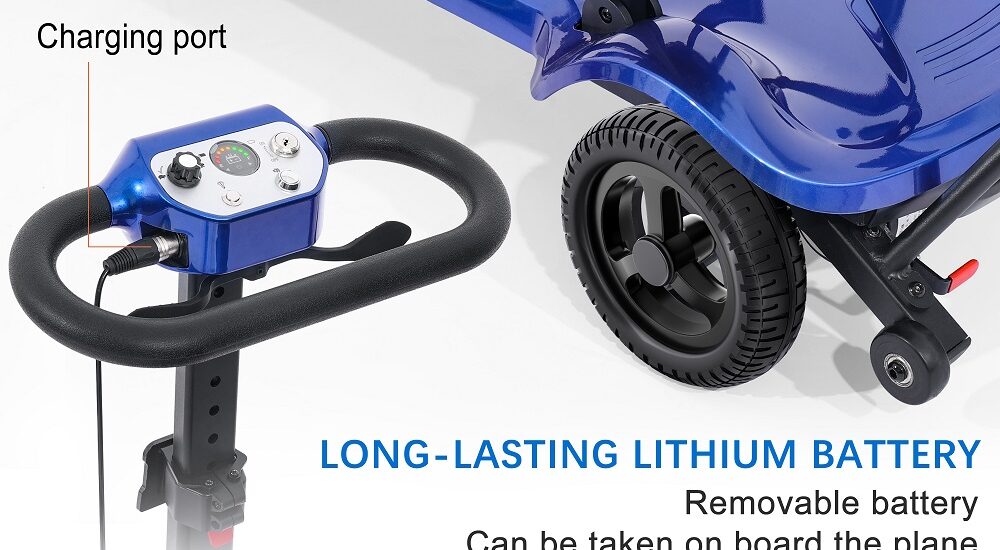
A mobility scooter may start showing small changes after years of use. Perhaps it no longer travels as far on one charge, the battery indicator drops faster than before, or the scooter struggles on a hill that it previously handled easily. These symptoms can be frustrating, but they do not always mean the motor or entire scooter needs replacing.
In many cases, the battery has simply lost some of its usable capacity. Understanding the difference between normal battery aging, charging problems, and mechanical faults can help you decide what to check before paying for a replacement.
What Changes as a Mobility Scooter Battery Gets Old?
Mobility scooter batteries gradually lose usable capacity through normal aging and repeated use. The exact lifespan varies according to battery chemistry, charging habits, storage conditions, temperature, frequency of use, and how deeply the battery is discharged.
A battery can therefore become less capable of storing and delivering energy even though it still appears to charge normally.
For example, a lithium-ion battery may reach its normal full-voltage level while holding less usable energy than when it was new. The scooter can show a full charge, yet the rider may travel a shorter distance before the battery becomes depleted.
This is one reason a full battery indicator does not necessarily mean a new battery has its original capacity.
Common Warning Signs of an Aging Battery
The most noticeable symptom is usually reduced range. A scooter that previously completed a familiar journey comfortably may begin requiring a recharge sooner.
Other warning signs include:
- The battery level falls unusually quickly.
- The scooter loses speed when climbing.
- Power drops noticeably under load.
- Charging takes longer than it previously did.
- The battery appears full but provides less riding time.
- The scooter shuts down sooner than expected.
- Performance becomes inconsistent between rides.
One symptom alone does not prove that the battery is bad. Tire pressure, overloaded cargo, hills, cold weather, electrical connections, brakes, and other mechanical problems can also affect performance.
Why Does a Mobility Scooter Battery Lose Range?
Battery capacity gradually declines as the battery experiences charging and discharging cycles and ages chemically.
The effect is particularly noticeable when a scooter is used frequently or when the battery has experienced unfavorable storage or temperature conditions.
Riding conditions also matter. A weak battery may appear acceptable on flat pavement but struggle on hills because climbing requires more electrical power.
For example, if the scooter reaches its normal speed on level ground but loses speed dramatically on an incline, battery condition should be considered alongside motor and controller performance.
The key diagnostic question is whether the range has changed under similar conditions.
If you previously traveled the same route with the same rider, load, tires, temperature, and riding style but now need to recharge much earlier, battery degradation becomes a more likely explanation.
Why Can a Battery Charge Normally but Still Be Weak?
This is one of the most confusing battery problems.
A charger determines whether the battery has reached its charging endpoint; it does not necessarily determine how much usable energy the battery can store.
An aging battery can therefore reach a normal charging voltage while its usable capacity has fallen.
Think of it like a container that still reaches the same “full” mark but no longer holds as much usable material as it once did.
For this reason, a full indicator should not be used by itself to determine battery health.
Charging Problems: What Should You Check?
If charging takes substantially longer than usual, do not immediately assume the battery is worn out.
First check:
- Is the correct charger being used?
- Does the charger indicator behave normally?
- Are the charging connectors clean and secure?
- Is the cable damaged?
- Was the battery deeply discharged?
- Has the scooter been stored for an extended period?
- Has charging behavior changed gradually or suddenly?
A sudden change can point toward a charger, connection, battery, or electrical-system issue.
If the battery becomes unusually hot, swollen, damaged, or otherwise abnormal, stop using it and seek professional assistance.
Why Does an Old Battery Lose Power on Hills?
Hills are particularly useful for identifying a battery that is becoming weak.
When a scooter climbs an incline, its motor must provide additional power to move the combined weight of the scooter and rider against gravity.
A battery with reduced capacity or increased internal resistance may struggle to maintain the required voltage under this heavier load.
The rider may notice:
- Reduced acceleration
- Lower speed
- Faster battery depletion
- Sudden power reduction
- Difficulty maintaining speed uphill
However, hill performance can also be affected by rider weight, tire pressure, terrain, motor condition, and the scooter’s specified climbing ability. A hill-related problem should therefore be investigated rather than automatically blamed on the battery.
Battery Diagnosis: Symptom, Cause and Solution
| Symptom | Possible Cause | What to Check |
|---|---|---|
| Reduced range | Battery capacity has declined, or riding conditions have changed | Compare similar routes, loads, temperatures, and speeds |
| Longer charging time | Battery aging, deeper discharge, charger issue, or connection problem | Check charger, connections, charging history, and battery condition |
| Sudden power loss | Battery voltage drop, loose connection, controller issue, or protection system activation | Stop safely and have the electrical system inspected |
| Poor hill performance | Reduced battery capacity, overload, low tire pressure, or motor issue | Check load, tires, battery condition, and motor performance |
| Battery drains quickly | Reduced capacity, extreme conditions, or unusually demanding riding | Compare current range with previous performance under similar conditions |
How Do I Check a Mobility Scooter Battery Before Replacing It?
Start with simple observations rather than immediately purchasing a new battery.
Record the scooter’s range over several comparable rides. Note the battery level before and after each journey, distance traveled, rider and cargo weight, temperature, terrain, and speed.
Then inspect the tires and charging equipment. Underinflated tires can increase rolling resistance, while a damaged charger or poor connection can create charging problems that resemble battery failure.
If the scooter has a removable battery, inspect the battery and connector according to the manufacturer’s instructions. Do not open a lithium-ion battery pack yourself.
A technician can perform electrical and battery tests that provide more useful information than the dashboard indicator alone.
When Should You Replace a Mobility Scooter Battery?
Replacement becomes more reasonable when the battery consistently provides substantially less usable range despite similar riding conditions and proper charging.
Other reasons to seek professional battery assessment include:
- Persistent loss of range
- Repeated voltage drop under load
- Abnormal charging behavior
- Battery damage or swelling
- Battery age combined with declining performance
- Failure to complete expected journeys despite correct maintenance
There is no universal number of years that every mobility scooter battery will last. Battery chemistry, usage, storage, temperature, charging habits, and depth of discharge all influence service life.
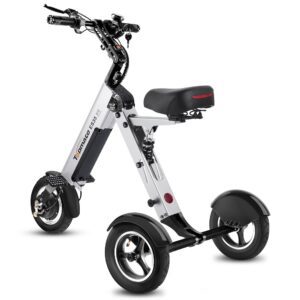
For example, TopMate’s ES35 uses a 36V 7.8Ah lithium battery and has a manufacturer-stated range of approximately 15.53–18.64 miles (25–30 km), depending on use, load, and road conditions. Its manual lists a 4-hour charging time. These figures describe that specific model and should not be interpreted as a universal battery lifespan or range expectation.
How Can You Extend Battery Life?
Good battery care starts with following the manufacturer’s instructions.
Depending on the battery type, useful practices may include:
- Use the correct approved charger.
- Avoid deliberately deep-discharging the battery unless the manufacturer instructs you to do so.
- Recharge according to the manufacturer’s recommended routine.
- Store the battery under the specified temperature conditions.
- Avoid prolonged exposure to extreme heat or cold.
- Keep charging connections clean and secure.
- Follow the manufacturer’s storage procedure when the scooter will not be used for an extended period.
Lithium-ion and lead-acid batteries have different charging and maintenance requirements, so do not apply instructions intended for one chemistry to another.
Replacement Considerations
When replacement is necessary, match the replacement battery to the scooter rather than selecting one based solely on physical size or Ah capacity.
Check:
- Battery chemistry
- Voltage
- Capacity in Ah or Wh
- Physical dimensions
- Connector
- Charger compatibility
- Manufacturer approval
- Weight
- Installation requirements
For example, the TopMate ES35’s 36V 7.8Ah specification represents approximately 281Wh of stored energy using the basic voltage × amp-hour calculation. A replacement should match the scooter’s required electrical specifications rather than simply providing a larger Ah number.
If you are unsure, use the original battery label, owner’s manual, or manufacturer guidance.
FAQ
How do I know if my mobility scooter battery is bad?
Common signs include reduced range, faster battery drain, weaker performance on hills, sudden power loss under load, or changes in normal charging behavior. These symptoms can also have other causes, so check the charger, tires, load, and connections before replacing the battery.
How long should a mobility scooter battery last?
There is no universal lifespan for every mobility scooter battery. Service life depends on battery chemistry, charging habits, frequency of use, storage conditions, temperature, and depth of discharge. Always follow the manufacturer’s battery-care recommendations.
Why is my mobility scooter battery losing range?
An aging battery can gradually lose usable capacity, resulting in shorter range. However, low tire pressure, heavier loads, hills, rough terrain, cold temperatures, higher speeds, and mechanical problems can also reduce range.
When should I replace a mobility scooter battery?
Consider professional testing or replacement when the scooter consistently provides significantly less range despite proper charging and similar riding conditions. Physical damage, abnormal charging behavior, or repeated power loss are additional reasons to have the battery inspected.


-scaled-2-420x300.jpg)