Before comparing mobility scooter brands, understand the specifications that determine whether a model actually fits your needs. Terms such as “lightweight,” “powerful,” and “long-range” are useful only when supported by measurable numbers.
A good buying decision starts with your body weight, daily travel distance, home dimensions, terrain, storage space, and transportation needs. Then compare each scooter using the same specifications.
mobility scooter buying checklist
1. How Much Does a Mobility Scooter Weigh?
What to check: Actual scooter weight in pounds or kilograms, plus the weight of the heaviest removable component.
Why it matters: Scooter weight determines how easily you can move, lift, store, or load it into a vehicle.
Who should prioritize it: Frequent travelers, caregivers, and users who load the scooter into a car.
A scooter weighing 35 lb is substantially different to transport from one weighing 70 lb, even if both are described as portable.
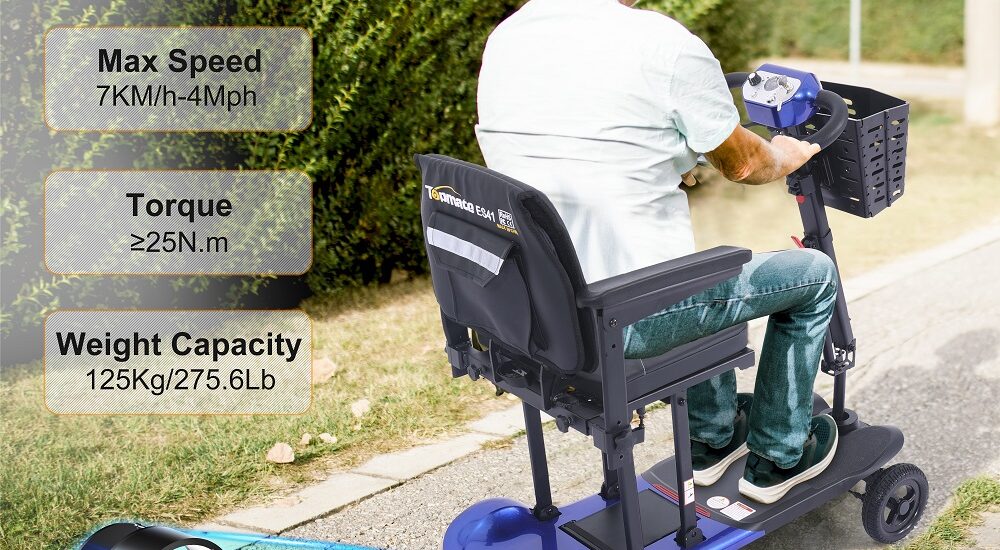
2. What Is the Weight Capacity?
What to check: Maximum manufacturer-rated load.
Why it matters: Include your body weight, clothing, bags, groceries, and accessories when evaluating capacity. Operating near the limit can affect performance and range.
Who should prioritize it: Heavier riders and users who regularly carry cargo.
For example, a 220-lb capacity may be sufficient for one user but unsuitable for another. Always leave an appropriate margin.
3. What Is the Maximum Speed?
What to check: Maximum speed in mph or km/h and whether multiple speed settings are available.
Why it matters: Speed affects how quickly you can travel, but a higher maximum is not automatically better. Sidewalks, shopping areas, pedestrians, and shared paths often require slower speeds.
Who should prioritize it: Outdoor users and people traveling longer distances.
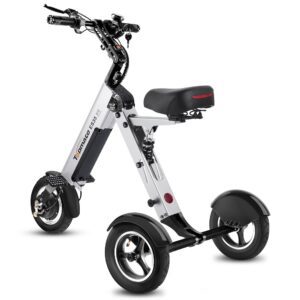
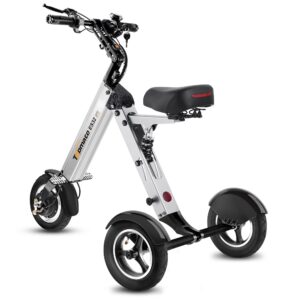
For example, the TopMate ES35 provides speed settings of approximately 3, 7, and 15 mph, giving users different speed levels for different environments.
4. How Much Range Do You Need?
What to check: Manufacturer’s claimed range in miles or kilometers.
Why it matters: Compare the claimed range with your longest normal round trip and leave a reserve. Real-world range can be affected by rider weight, hills, speed, temperature, surface conditions, tire pressure, and battery age.
Who should prioritize it: Users making regular outdoor trips.
If your normal journey is 6 miles round trip, selecting a scooter with exactly 6 miles of claimed range provides little margin for unexpected stops or reduced battery performance.
5. What Battery Voltage Should You Compare?
What to check: Battery voltage, such as 24V, 36V, or 48V.
Why it matters: Voltage identifies part of the scooter’s electrical system and is important when comparing batteries and chargers.
Who should prioritize it: Buyers researching battery replacement or comparing different electrical systems.
Voltage should not be used alone to determine range or performance.
6. What Battery Capacity Should You Look For?
What to check: Amp-hours (Ah) and, preferably, watt-hours (Wh).
Why it matters: Battery capacity indicates stored electrical energy. You can estimate watt-hours using:
Voltage × Amp-hours = Watt-hours
For example, a 36V 7.8Ah battery provides approximately 281Wh.
Who should prioritize it: Users who make frequent or longer trips.
Comparing Ah alone can be misleading when two scooters use different voltages, so Wh can provide a more useful comparison.
7. How Long Does the Battery Take to Charge?
What to check: Manufacturer’s charging time in hours.
Why it matters: Charging time determines how easily the scooter fits into your daily routine.
Who should prioritize it: People who use their scooter every day or make multiple trips.
A scooter that requires approximately four hours to charge may work well with an overnight or scheduled charging routine.
8. How Wide Is the Mobility Scooter?
What to check: Overall width in inches or centimeters.
Why it matters: Width determines whether the scooter can pass through doorways, gates, hallways, elevators, and other narrow spaces.
Who should prioritize it: Apartment residents and users who operate their scooter indoors.
Measure the narrowest opening you need to pass through rather than relying on descriptions such as “compact.”
9. What Is the Overall Length?
What to check: Front-to-back length.
Why it matters: Length affects storage, maneuvering, elevator access, and vehicle loading.
Who should prioritize it: Users with limited storage or smaller vehicles.
A scooter that fits through a doorway may still require too much turning space inside a room or hallway.
10. What Are the Folded Dimensions?
What to check: Folded length, width, and height.
Why it matters: Folded dimensions determine whether a scooter will fit inside your trunk, closet, garage, or other storage location.
Who should prioritize it: Travelers and users who frequently transport the scooter.
Always compare actual measurements rather than relying on the word “foldable.”
11. What Is the Turning Radius?
What to check: Manufacturer’s turning-radius measurement.
Why it matters: Turning radius determines how much space the scooter requires to change direction.
Who should prioritize it: Indoor users, shoppers, apartment residents, and anyone navigating narrow pathways.
A smaller turning radius can be useful in confined areas, but make sure specifications are measured consistently before comparing different brands.
12. How Much Ground Clearance Does It Have?
What to check: Ground clearance in inches or centimeters.
Why it matters: Ground clearance affects how the scooter handles driveway transitions, ramps, uneven pavement, and small surface changes.
Who should prioritize it: Outdoor users and people traveling over uneven sidewalks.
Ground clearance alone does not make a mobility scooter suitable for severe off-road terrain.
13. What Wheel and Tire Size Should You Compare?
What to check: Tire diameter, width, and type.
Common types include pneumatic, solid, and foam-filled tires.
Why it matters: Tire design affects surface handling, maintenance requirements, and puncture risk.
Who should prioritize it: Outdoor users and anyone regularly traveling over imperfect pavement.
For example, larger pneumatic tires may behave differently over small pavement imperfections than smaller solid tires.
14. How Much Motor Power Does It Need?
What to check: Motor output in watts and published gradeability.
Why it matters: Motor output can affect acceleration and hill performance. However, wattage should not be considered alone because rider weight, gearing, battery condition, slope, and surface also influence performance.
Who should prioritize it: Users who regularly travel on hills or carry heavier loads.
The TopMate ES35, for example, uses a 250W brushless motor. That number should be evaluated alongside its battery, weight capacity, and terrain requirements.
15. What Seat Dimensions Should You Compare?
What to check: Seat width, depth, and seat height.
Why it matters: Correct seat dimensions can affect posture, mounting, dismounting, and comfort during longer trips.
Who should prioritize it: Seniors, frequent users, and people with specific seating requirements.
Do not assume that a larger seat is automatically better. The seat should provide suitable support without making the scooter unnecessarily difficult to maneuver.
15-Point Mobility Scooter Comparison Table
| Feature | What to Check | Why It Matters | Who Should Prioritize It? |
|---|---|---|---|
| Scooter weight | lb/kg | Lifting and transport | Travelers, caregivers |
| Weight capacity | Maximum load | Safe operation | Heavier users |
| Maximum speed | mph/km/h | Travel and control | Outdoor users |
| Claimed range | Miles/km | Trip planning | Long-distance users |
| Battery voltage | V | Electrical system | All buyers |
| Battery capacity | Ah/Wh | Energy storage | Frequent users |
| Charging time | Hours | Daily routine | Daily users |
| Width | Inches/cm | Access | Indoor users |
| Length | Inches/cm | Storage | Small-space users |
| Folded dimensions | L × W × H | Vehicle/storage fit | Travelers |
| Turning radius | Inches/cm | Maneuverability | Tight-space users |
| Ground clearance | Inches/cm | Uneven surfaces | Outdoor users |
| Wheel/tire size | Diameter/type | Surface handling | Outdoor users |
| Motor power | Watts | Hills and acceleration | Hilly routes |
| Seat dimensions | Width/depth/height | Fit and access | Most users |
Don’t Compare These Numbers in Isolation
Mobility scooter specifications work together.
Range should not be considered without battery capacity. A range claim becomes more meaningful when you know the battery’s voltage and Wh rating.
Speed should not be considered without braking and environment. A 15-mph scooter may not be appropriate for a crowded sidewalk.
Weight should not be considered without weight capacity. A lighter scooter may have a lower maximum load.
Dimensions should be considered with turning radius. Width tells you whether the scooter can pass through an opening, while turning radius affects maneuverability after entering.
Using TopMate Models as Examples
TopMate models demonstrate why buyers should compare specifications rather than marketing descriptions.
The TopMate ES15 is listed with a 300-lb weight capacity, 16–19-mile claimed range, and 500W dual-motor output.
The TopMate ES35 is listed with a 220.5-lb capacity, 15.53–18.64-mile claimed range, and 250W brushless motor.
These differences do not make one model universally better. They show how the same 15-point checklist can produce different choices depending on rider weight, range requirements, terrain, and transportation needs. mobility scooter buying checklist
Final Recommendation
There is no single most important mobility scooter specification for every buyer. The correct choice depends on how and where you will use the scooter.
A frequent car traveler may prioritize a 35-lb scooter over a 60-lb model. A heavier rider may care more about 300-lb capacity than maximum speed. Someone traveling several miles each day may focus on battery capacity and range, while an apartment resident may prioritize width and turning radius.
The safest approach is to write down your actual requirements first, then compare verified specifications across several models. Look at the complete picture rather than choosing based on one impressive number.
FAQ
What should I check before buying a mobility scooter?
Compare scooter weight, weight capacity, maximum speed, claimed range, battery voltage and capacity, charging time, dimensions, turning radius, ground clearance, tires, motor power, and seat dimensions.
What is the most important mobility scooter specification?
There is no single specification that matters most for every buyer. Weight capacity, range, scooter weight, and dimensions are especially important because they directly affect safety, usability, and transportation.
How much should a mobility scooter weigh?
The appropriate weight depends on how you plan to use and transport the scooter. If you need to load it into a vehicle, compare the total scooter weight and the weight of its heaviest removable component with what you can safely handle.
How much mobility scooter range do I need?
Calculate your longest normal round trip and add a reasonable reserve. Actual range can be lower than the manufacturer’s claim because of rider weight, terrain, hills, speed, temperature, tire pressure, and battery condition.


-scaled-2-420x300.jpg)