Imagine choosing a compact mobility scooter because it fits easily into your car. Then you sit down and discover that your knees are almost touching the tiller, your feet have nowhere comfortable to rest, and you cannot sit back against the seat without feeling cramped.
That is the difference between a scooter being compact and being the right physical fit.
A mobility scooter may be too small if your knees, hips, feet, arms, or back cannot settle into a natural riding position. The solution is not automatically to buy the largest scooter available. Instead, compare your body measurements with the scooter’s seating, legroom, reach, and weight-capacity specifications.
1. The First Signs of a Poor Fit
You can often identify a sizing problem within minutes of sitting on a scooter.
Your knees are too close to the tiller. When seated normally, your legs should have enough room to maintain a relaxed position while you steer. If your knees repeatedly touch or nearly touch the tiller, the cockpit may be too compact for your leg length.
Your feet feel cramped. Both feet should have a stable, natural position on the foot platform or footrests. If your heels hang off the edge or your feet are forced into an awkward position, check the available foot space.
The seat feels narrow. A seat should provide support without pressing tightly against your hips. Remember that published seat width does not automatically equal usable sitting space because cushions, armrests, side supports, or seat contours can reduce the practical space available.
The seat depth feels inadequate. If the seat ends well before your thighs are supported, you may feel pressure behind your knees or find yourself sliding forward.
Other warning signs include reaching too far for the controls, rounding your back to reach the tiller, difficulty sitting upright, or struggling to step onto and off the scooter.
A scooter that looks small is not necessarily unsuitable. However, persistent physical contact or awkward posture is a strong reason to reconsider the dimensions.
2. Measure Yourself Before Looking at Scooter Specifications
Before comparing scooters, spend a few minutes measuring yourself while seated on a firm chair.
Hip width
Sit normally and measure the widest part of your hips or thighs. This gives you a starting point for evaluating seat width.
Do not choose a seat based solely on a number that is exactly equal to your body measurement. You need some personal space for comfortable movement and clothing.
Thigh length
Measure from the back of your hips to the point where your thigh meets the back of your knee. This helps you evaluate whether the seat depth provides adequate thigh support.
Lower-leg length
Measure from the back of your knee to the floor while sitting with your knees at a comfortable angle. This can help you understand how seat height and foot-platform position may affect your leg position.
Sitting height
Measure from the floor to the top of your head while sitting naturally. This is useful when assessing the relationship between your body, seat height, tiller, and surrounding structure.
Arm and reach position
Sit upright with your shoulders relaxed and extend your hands toward where the scooter’s controls would be. You should be able to reach the controls without leaning forward or locking your elbows.
These measurements are not universal ergonomic pass/fail numbers. They are personal reference points that make manufacturer specifications much more useful.
3. Now Read the Scooter’s Dimensions Differently
A specification sheet tells you how large a scooter is. Your measurements tell you whether that size actually works for you.
| Scooter measurement | What it means for physical fit |
|---|---|
| Seat width | Determines how much lateral space you have around your hips and thighs. |
| Seat depth | Affects thigh support and whether your knees remain comfortably positioned. |
| Seat height | Changes your knee angle, foot position, and ease of getting on and off. |
| Overall width | Matters for both body clearance and navigating doors, hallways, and other spaces. |
| Overall length | Influences legroom, turning space, and storage requirements. |
| Footwell/footplate | Determines whether your feet can rest naturally without feeling confined. |
| Tiller adjustment | Affects steering reach and whether you can maintain an upright posture. |
| Weight capacity | Confirms whether the scooter is rated for your body weight and any applicable load requirements. |
For example, a scooter can have a generous overall width but still feel cramped if the seat depth or foot area does not suit your proportions.
Weight capacity deserves particular attention. It is a load-rating specification, not a comfort measurement. A scooter rated for a particular maximum load does not necessarily provide the seating width or legroom that every rider within that weight range needs.
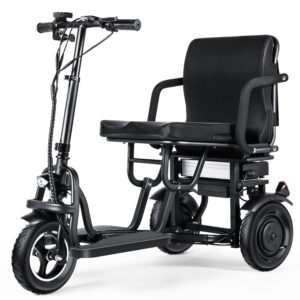
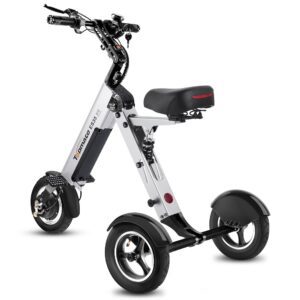
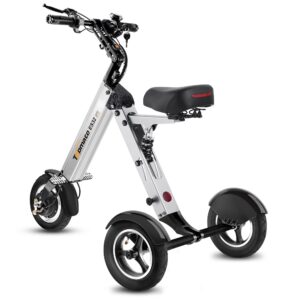
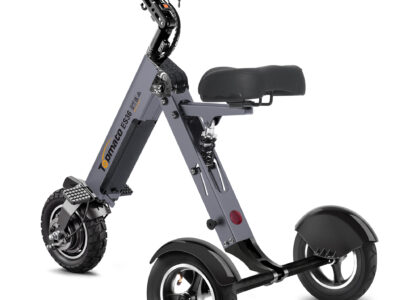
TopMate product specifications illustrate why looking beyond one number matters. For example, the current TopMate ES15 listing specifies a 300-lb maximum load capacity and describes its padded seat and contoured backrest, while the ES35 specifications list a 220.5-lb maximum load and a compact 57.5-cm overall width. These figures should be compared with your own body measurements and intended environment rather than treated as universal ergonomic guarantees.
4. The 5-Minute Sitting Test
If you can physically try the scooter, do not simply sit down and decide whether the cushion feels comfortable. Give your body a short practical test.
Minute 1 — Knee clearance: Sit with your back against the seat. Check whether your knees have comfortable clearance from the tiller and steering controls.
Minute 2 — Feet: Place both feet where you would naturally keep them while riding. You should not need to twist your ankles or tuck your feet underneath the seat.
Minute 3 — Back support: Sit upright without forcing your shoulders forward. Your back should be reasonably supported without requiring you to lean unnaturally.
Minute 4 — Controls: Hold the steering controls as you would during normal riding. You should not need to stretch your arms, hunch your shoulders, or lean forward.
Minute 5 — Movement: Turn the tiller from side to side while maintaining your normal posture. Then check whether you can comfortably get on and off the scooter.
If you continually adjust your position because something feels cramped, pay attention. That repeated adjustment may indicate a dimensional mismatch rather than a simple need to “get used to” the scooter.
5. Different Riders, Different Problems
A taller rider may have adequate seat width but insufficient legroom or reach. Seat height, seat depth, tiller position, and foot placement become particularly important.
A shorter rider can experience the opposite problem. A seat or tiller positioned too far away may make the controls difficult to reach and may prevent the rider from maintaining a relaxed posture.
A wider-bodied rider should look beyond the advertised weight capacity. Seat width, usable hip room, armrest spacing, and ease of getting on and off can be equally important.
A rider with limited leg movement may need to prioritize easy entry, suitable seat height, accessible foot placement, and enough space to reposition the legs.
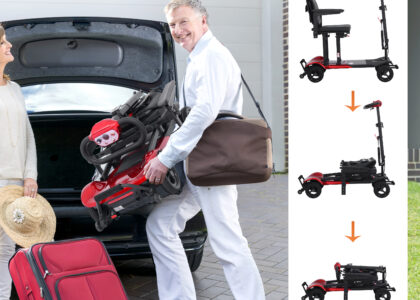
A rider who prioritizes portability may deliberately accept a more compact layout because the scooter needs to fit in a vehicle or limited storage area. The important question is whether that compromise still allows comfortable and controlled riding.
6. When “Bigger” Is Not Automatically Better
Choosing a larger scooter simply because you are worried about feeling cramped can create a different set of problems.
A larger model may require more storage space, occupy more room in a garage or home, need a larger vehicle-loading area, and be harder to maneuver in tight indoor spaces. Additional size can also increase transportation demands.
That is why the goal should not be maximum size. It should be adequate personal space without unnecessary bulk.
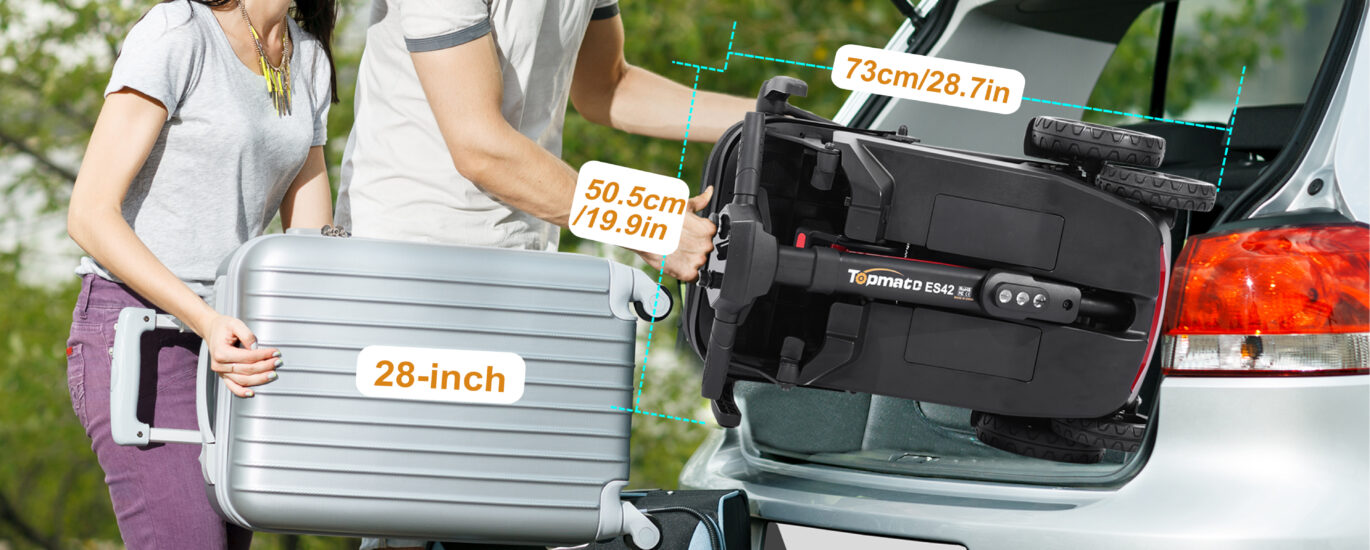
For example, TopMate’s ES35 is designed around a compact foldable format, with an unfolded width of about 22.6 inches and a folded length of about 17.3 inches according to its published specifications. Those dimensions can be useful when portability and storage are major priorities, but they still need to be evaluated alongside the individual rider’s seat and legroom requirements. mobility scooter too small
7. The Final Fit Check
Before buying, work through four questions:
Fits your body → Fits your environment → Fits your transport method → Fits your weight requirements
First, confirm that your hips, thighs, legs, feet, back, and arms can occupy a natural position.
Next, check whether the scooter works in the places where you actually intend to ride: doorways, hallways, shopping areas, sidewalks, and other frequently used spaces.
Then consider transportation. A physically comfortable scooter is less practical if you cannot load, fold, store, or transport it as required.
Finally, verify the manufacturer’s stated weight capacity. Do not substitute your judgment for the published load rating.
When comparing a TopMate scooter, use the product’s current specifications as the technical reference point, then compare those measurements with your own. Manufacturer specifications describe the scooter; your sitting position determines whether it fits you.
FAQ
How do I know if a mobility scooter is too small?
A mobility scooter may be too small if your knees feel cramped near the tiller, your feet lack space, the seat feels narrow, or you must lean forward to reach the controls.
What seat width do I need for a mobility scooter?
Choose a seat that provides enough room for your hips and thighs without feeling restrictive. Measure your seated hip width and compare it with the manufacturer’s published seat width.
How much legroom should I have on a mobility scooter?
You should have enough legroom to place both feet naturally, keep your knees comfortably positioned, and maintain an upright posture without touching the tiller or surrounding components.
Can tall people use compact mobility scooters?
Yes. Tall riders can use some compact mobility scooters, but they should check seat depth, legroom, seat height, foot placement, and tiller reach before buying.

-scaled-2-420x300.jpg)