The Difficult Part Isn’t Always Going Fast
Picture a rider entering a supermarket aisle. The scooter is moving slowly, but the rider still has to keep the front end aligned, avoid a display, leave room for another shopper, and make a controlled turn at the end of the aisle. The same challenge appears when approaching an elevator, passing through a doorway, or navigating a narrow hallway.
A mobility scooter is easier to control at low speed when its throttle responds predictably, steering inputs are manageable, the rider has enough room to position their body, and the scooter’s dimensions suit the environment. Turning radius, wheel configuration, weight distribution, and surface conditions also influence how controllable it feels.
1. Where Low-Speed Control Matters Most
Maximum speed matters on open paths. However, many everyday trips involve situations where travelling slowly and making small steering corrections are more important.
Narrow hallways
At home or in a doctor’s office, a rider may need to travel close to walls without touching them. A scooter that responds abruptly to small steering movements can feel harder to position accurately.
Doorways
Approaching a doorway requires alignment before the front wheels enter the opening. If the scooter is still turning as it reaches the threshold, the rider may need to make several corrections.
Elevators
An elevator combines several low-speed tasks. The rider must approach the entrance, turn or straighten the scooter, stop close enough to the controls, and later reverse or turn out without hitting the walls.
Supermarket aisles
Aisles often contain shelves, displays, carts, and pedestrians. Small changes in direction are common, so predictable steering can be more useful than high top speed.
Crowded pedestrian areas
Shopping centres, waiting areas, and building entrances require frequent speed changes. The rider needs to slow down without losing smooth control and maintain awareness of people moving around the scooter.
Parking lots
A parking area may appear open, but parked vehicles create narrow gaps. Low-speed control becomes especially important when turning around cars or approaching a vehicle for loading.
Doctor’s offices
Reception areas and examination rooms can have tight spaces with furniture placed close together. A scooter that is easy to position precisely can reduce unnecessary reversing and repeated adjustments.
Home environments
Moving between rooms is often a series of small maneuvers rather than a straight journey. Door frames, furniture, kitchen counters, and narrow passages all make slow-speed steering relevant.
2. What the Rider Is Actually Controlling
Low-speed maneuverability is not produced by one specification. Several parts of the scooter work together.
Throttle response determines how easily the rider can increase or reduce speed. A predictable throttle allows small speed adjustments instead of sudden changes.
Steering sensitivity determines how much the scooter changes direction when the rider moves the tiller. Highly responsive steering can be useful in tight areas, but excessive sensitivity may require more careful inputs.
Tiller position affects the rider’s reach and steering leverage. If the controls are too far away or positioned awkwardly, the rider may move their upper body rather than simply guiding the tiller.
Turning radius determines how much space the scooter needs to complete a turn. A smaller turning radius can be valuable in hallways, elevators, and tight indoor spaces, although the actual maneuver also depends on scooter length, width, wheel arrangement, and rider technique.
Scooter width affects clearance. A scooter may have responsive steering but still be difficult to use in a narrow hallway if its overall width leaves little room on either side.
Wheelbase also matters. The distance between the wheels influences how the scooter tracks and how much space it needs when changing direction.
Wheel configuration changes the geometry of turning. Three-wheel and four-wheel scooters can therefore feel different even when their published speeds are similar.
Speed settings can help the rider select a lower maximum speed for environments where precision matters more than travel speed.
The important relationship is:
Specification → physical behavior → real-world situation
For example, a compact width may provide more clearance around furniture, while a shorter overall footprint can make certain turns easier to manage. Neither specification automatically guarantees that every rider will find the scooter easy to control.
3. Why Some Scooters Feel More Predictable
Two scooters can have similar maximum speeds but feel very different when travelling at walking pace.
Progressive control
A predictable control system allows the rider to make gradual speed changes. This matters when approaching a doorway or stopping beside a table because the rider has more opportunity to make corrections.
Steering response
Consider turning around a supermarket display. If a small tiller movement produces a large directional change, the rider needs to be precise. A more gradual response can feel easier for someone learning to steer. mobility scooter low speed
Neither response is universally superior. Rider experience, environment, and personal preference all matter.
Weight distribution
Where the scooter’s weight is positioned can influence how it behaves during steering and changes in direction. The rider’s own position also contributes to the overall balance of the system.
Rider position
A rider sitting centrally with both hands comfortably positioned can generally make more controlled steering inputs than someone leaning forward or reaching awkwardly.
Wheel placement
The position of the wheels affects how the scooter rotates and tracks through a turn. This is one reason a scooter that feels very nimble in an open showroom may behave differently when navigating an actual room.
Tire characteristics
Tire type and condition affect how the scooter interacts with the surface. Hard indoor flooring, textured pavement, loose gravel, and grass do not provide the same traction or steering feel.
4. The Environment Changes the Experience
Imagine taking the same scooter from a smooth shopping-centre floor onto an uneven sidewalk. The controls have not changed, but the riding experience has.
| Surface | What the rider may notice at low speed |
|---|---|
| Smooth indoor flooring | Steering and stopping can feel relatively predictable, with few surface irregularities. |
| Sidewalks | Joints, edges, and small changes in elevation may require additional steering attention. |
| Cracked pavement | Uneven sections can influence wheel tracking and require slower, more deliberate movement. |
| Gravel | Loose material can change traction and make steering feel less consistent. |
| Grass | Surface resistance and uneven ground can make precise maneuvering more difficult. |
| Slopes | Gravity changes how the scooter accelerates, slows, and responds to steering inputs. |
This is why a scooter that feels effortless inside a store should not automatically be assumed to feel identical outdoors.
On uneven or sloped surfaces, reducing speed and allowing additional space can make control easier. Riders should also follow the manufacturer’s guidance regarding surfaces, gradients, and operating conditions.
5. 3-Wheel vs 4-Wheel at Low Speed
The three-wheel versus four-wheel question is often presented as though one configuration is automatically easier to maneuver. In reality, the trade-off is more useful than a simple winner.
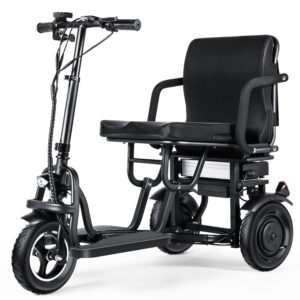
A 3-wheel scooter can offer a tighter turning geometry in some designs, which may be useful when navigating narrow indoor spaces. This can make turning around furniture or positioning in an elevator easier.
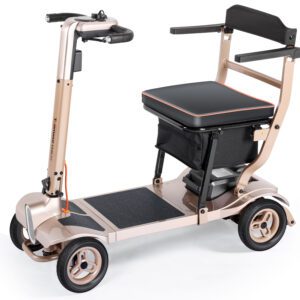
A 4-wheel scooter may provide a different sense of stability and tracking, particularly for riders who prefer a broader support footprint. However, the actual maneuverability depends on the specific scooter’s dimensions and wheel layout.
For indoor use, examine turning space, overall width, length, and the manufacturer’s stated turning specifications. mobility scooter low speed
For outdoor use, consider how the scooter behaves on the surfaces and slopes you actually encounter.
A three-wheel configuration is not automatically easier for every rider, just as four wheels do not automatically mean poor maneuverability.
6. What the Rider Can Do to Improve Control
Good scooter control is partly a vehicle characteristic and partly a riding skill.
Reduce speed before turning. Do not wait until the middle of a turn to slow down.
Keep both hands positioned correctly. This gives you better control over the tiller and makes steering corrections more deliberate.
Look in the direction of travel. Looking toward the space you want to enter helps you anticipate your steering path.
Avoid abrupt steering inputs. Smooth tiller movements are generally easier to control than rapid side-to-side corrections.
Allow extra space on uneven surfaces. Cracks, slopes, gravel, and grass can change how the scooter tracks.
Practice before entering crowded environments. An empty parking area or suitable open space can provide an opportunity to practise starting, stopping, turning, and reversing where permitted.
Low-speed confidence develops through repetition. A rider who understands how much steering input produces a particular response can make better corrections in real environments.
7. A Low-Speed Control Test for Buyers
If you can test a scooter before purchasing, do more than drive it in a straight line.
1. Straight-line movement
Start slowly and travel several metres. Notice whether maintaining a straight path feels natural or requires constant corrections.
2. Gentle turn
Make a wide turn at low speed. Check whether the scooter responds gradually to the tiller.
3. Tight turn
Attempt a tighter turn where the environment permits. Observe how much space the scooter requires and whether you can complete the maneuver without repeated corrections.
4. Doorway approach
Approach a doorway slowly and try to align the scooter before entering. Pay attention to the scooter’s width and how easily you can make small directional adjustments.
5. Stop-and-start
Move forward slowly, stop, and start again. A predictable throttle response should allow you to control these transitions without unnecessary surges.
6. Reverse movement
If the scooter supports reverse operation, practise reversing slowly in an open, controlled area. Look around the scooter rather than relying only on the controls.
The key question is not simply, “Can I turn it?”
Ask instead:
“Can I make small, predictable corrections while remaining relaxed and aware of my surroundings?”
That is much closer to the real meaning of low-speed control.
How TopMate Specifications Can Help
When comparing TopMate scooters, use the published specifications as starting points rather than treating any individual measurement as proof of maneuverability.
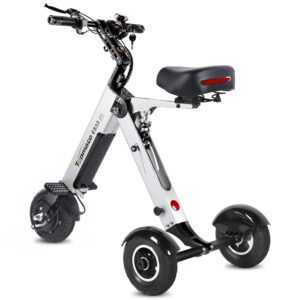
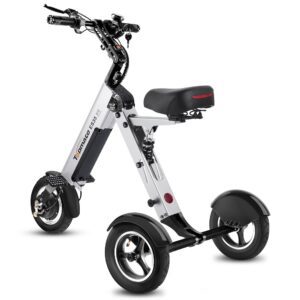
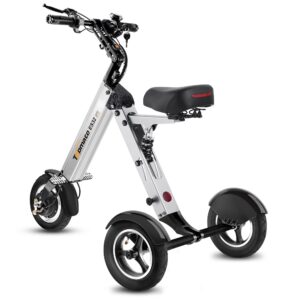
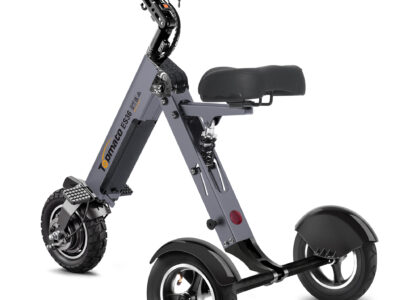
For example, TopMate’s product information for the ES15 describes a three-wheel folding design, while the ES35 is also presented as a compact three-wheel scooter. Their published dimensions, wheel configuration, speed information, and other specifications can help shoppers understand the intended physical layout of each model.
The useful approach is to connect those figures with your environment. A compact overall footprint may matter more to someone navigating an apartment than to someone primarily travelling on open outdoor paths.
Always check the current TopMate product specifications before purchasing because product measurements and configurations can change.
FAQ
What makes a mobility scooter easy to steer?
A mobility scooter is easier to steer when it has predictable throttle response, manageable steering sensitivity, suitable turning geometry, and a comfortable rider position.
Why is low-speed control important on a mobility scooter?
Low-speed control is important when navigating doorways, elevators, narrow hallways, supermarket aisles, crowded areas, and spaces around furniture where precise steering matters more than maximum speed.
Are 3-wheel mobility scooters easier to maneuver?
Three-wheel scooters can offer tighter turning characteristics in some designs, making them useful for confined spaces. However, maneuverability also depends on the scooter’s dimensions, wheel placement, steering response, and rider technique.
Does turning radius affect mobility scooter control?
Yes. A smaller turning radius can make it easier to change direction in confined areas. However, turning radius is only one factor; scooter width, length, wheel configuration, steering response, and rider position also affect control.

-scaled-2-420x300.jpg)