
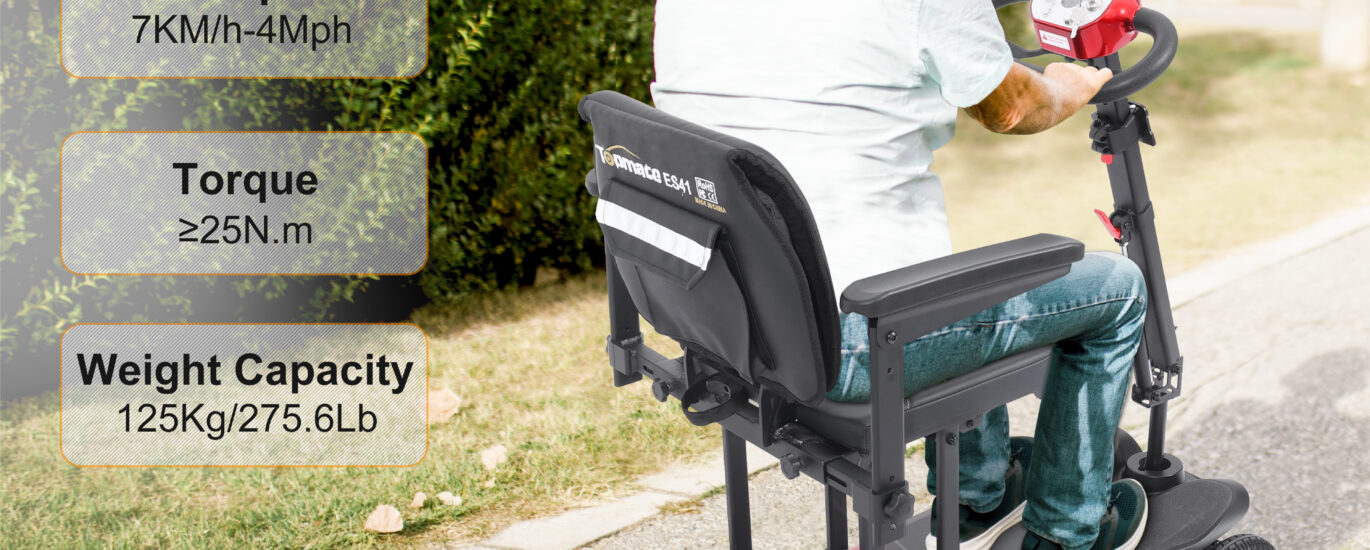
Unstable Doesn’t Always Mean Unsafe
A mobility scooter can feel light, responsive, or unfamiliar without having a mechanical stability problem. Stability depends on the scooter’s geometry, rider position, speed, load, tires, and terrain. However, sudden wobbling, severe pulling, wheel lift, or new steering problems should not be treated as normal handling and warrant stopping for inspection.
1. What Does an Unstable Scooter Feel Like?
Before looking for a cause, describe exactly what you are experiencing.
A scooter that feels unstable during a turn may seem to lean more than expected. This does not automatically mean the scooter is defective; turning changes how forces act on the rider and scooter.
A feeling of wobbling is different. If the steering repeatedly moves from side to side or the scooter does not track predictably, the cause may involve the road surface, tires, steering components, or another mechanical issue.
Some riders describe a scooter as feeling light over uneven pavement. Small bumps can temporarily change how the wheels contact the ground, making the scooter feel less planted.
A scooter that pulls sideways deserves closer attention. A sloped surface can naturally cause some directional movement, but strong or sudden pulling on normally level ground is more concerning.
You may also notice that the scooter feels different at certain speeds, on slopes, or when carrying a particular load. These changes can reveal whether the sensation is related to normal handling or something that requires inspection.
The first question, therefore, is not simply, “Is my scooter unstable?”
It is:
“When, where, and how does the instability occur?”
That distinction helps separate normal handling characteristics from potentially unsafe behavior.
2. Seven Things That Change Stability
1. Wheel configuration
The number and arrangement of wheels influence how a scooter responds during turns and over changing surfaces.
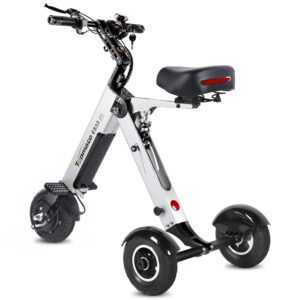
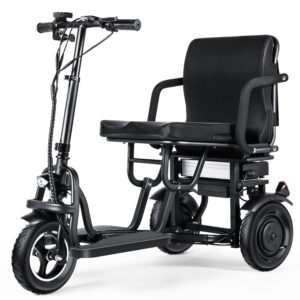
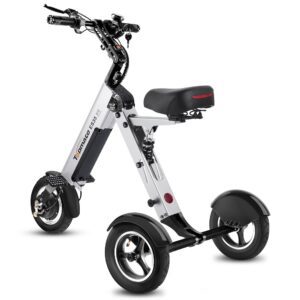
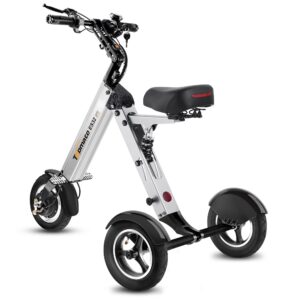
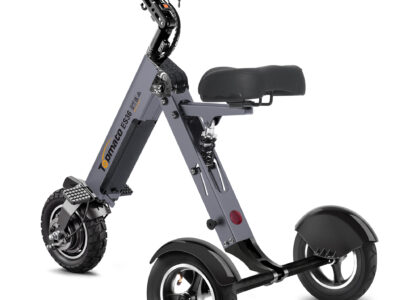
A three-wheel design can provide a tighter turning geometry in some models. That can be useful indoors, but it also produces different handling characteristics from a four-wheel layout.
For example, a rider moving from a four-wheel scooter to a three-wheel model may notice a different steering response even though both scooters are functioning correctly.
Practical example: A three-wheel scooter may feel particularly responsive when turning around furniture in a home. That responsiveness should not automatically be interpreted as instability.
2. Wheelbase
Wheelbase refers to the distance between the front and rear wheel contact areas.
A shorter wheelbase can contribute to easier maneuvering in confined areas, while a longer wheelbase can produce different tracking characteristics.
Practical example: A compact scooter may change direction readily in a narrow hallway, while the same responsiveness can feel unfamiliar when travelling across an open area.
Wheelbase should therefore be considered together with steering geometry rather than treated as an independent safety rating.
3. Track width
Track width describes the lateral spacing between wheels on the same axle or wheel arrangement.
A wider stance can provide a more planted feel for some riders, but it also requires more room. A narrower scooter can be easier to position through doorways and confined spaces.
Practical example: A narrow scooter may be convenient inside an apartment, but a rider moving onto uneven outdoor surfaces may perceive its handling differently.
Neither wider nor narrower is automatically safer for every user.
4. Center of gravity
The center of gravity describes where the combined mass of the scooter and rider is concentrated.
Rider position, battery placement, seat height, and load placement can all affect the overall balance of the system.
Practical example: A rider leaning significantly to one side while turning changes how their body weight is distributed. The scooter may consequently feel different from when the rider sits upright and centered.
This is one reason posture matters even when the scooter itself has not changed.
5. Terrain
The ground underneath the scooter can dramatically change how stable it feels.
Smooth flooring provides relatively consistent wheel contact. Cracked pavement, gravel, grass, potholes, surface edges, and cross-slopes introduce changes that the rider can feel through the wheels and steering.
Practical example: A scooter that feels completely predictable inside a shopping centre may feel noticeably more active when one side passes over a raised pavement joint.
Terrain is therefore part of the stability equation, not merely background scenery.
6. Speed
Speed changes how much time the rider has to respond to steering and terrain changes.
At higher speeds, a small steering input can have greater consequences because the scooter covers more ground before the rider can correct its direction.
Practical example: A turn that feels comfortable at a slow walking pace may feel very different when approached faster.
Reducing speed before turns and around uneven surfaces gives the rider more time to respond.
7. Tires and load distribution
Tires provide the physical connection between the scooter and the ground. Their condition can influence tracking, steering feel, and traction.
Uneven tire wear, visible damage, or a tire that is not properly inflated according to the manufacturer’s instructions can change how a scooter behaves.
Load distribution matters too. Carrying additional items can alter the combined weight distribution of the scooter and rider.
Practical example: A heavy item positioned awkwardly can change how the scooter feels during acceleration, turning, or movement across a slope.
Always follow the manufacturer’s specifications for tire condition, pressure, carrying capacity, and accessory loads rather than relying on a universal number. mobility scooter stability factors
3. Why the Same Scooter Feels Different in Different Places
A scooter does not operate in isolation. The surface and environment influence its behavior.
| Riding environment | Why the stability sensation can change |
|---|---|
| Smooth indoor flooring | Consistent surface contact generally makes steering feel predictable. |
| Sidewalks | Joints, edges, and small changes in elevation can introduce steering corrections. |
| Uneven pavement | Different wheel positions may encounter bumps at different times. |
| Grass | Uneven ground and surface resistance can change handling. |
| Gravel | Loose material can reduce the predictable feel of steering and traction. |
| Sloped surfaces | Gravity can influence speed and directional control. |
| Cross-slopes | One side of the scooter may sit differently relative to the other, requiring steering correction. |
Consider a sidewalk that slopes slightly toward the road. Even if the scooter itself is operating correctly, gravity can cause it to drift toward the lower side.
The rider may interpret this as the scooter “pulling,” but the same effect may disappear when returning to level ground.
That is why stability should always be evaluated in relation to the surface on which the scooter is being used.
4. What the Rider Can Control
Some aspects of handling are built into the scooter, but riders can reduce unnecessary instability through technique.
Manage speed
Reduce speed before entering a turn, approaching an uneven surface, or travelling through a confined area. Avoid waiting until the scooter is already in the turn to make a major speed adjustment.
Turn smoothly
Abrupt steering movements can make the scooter change direction more quickly than intended. Use gradual tiller movements and allow the scooter time to respond.
Keep the load positioned correctly
Follow the manufacturer’s instructions for baskets, bags, accessories, and other carried items. Avoid placing heavy objects where they can interfere with steering or shift the scooter’s load distribution.
Maintain a centered posture
Sit in the intended seating position rather than leaning heavily to one side. Keep your hands positioned as recommended by the manufacturer and avoid using the tiller to support your body weight.
Choose an appropriate route
If a route includes steep slopes, loose gravel, rough grass, or badly damaged pavement, consider whether the scooter is designed for that environment.
Check the tires
Inspect tires regularly for visible damage and abnormal wear. Follow the manufacturer’s specified tire-pressure requirements where applicable.
5. When the Feeling Is a Warning Sign
Not every unusual sensation means the scooter needs repair. However, certain changes deserve immediate attention.
More likely to be a normal handling characteristic
- A different steering feel compared with another scooter
- Slightly different behavior on a cross-slope
- Increased movement over rough surfaces
- More responsive turning from a compact scooter
- A change in feel when travelling faster
Potential warning signs
- Sudden new instability
- Excessive or persistent wobbling
- Severe pulling to one side
- Wheel lift during ordinary operation
- Visible tire damage
- Loose steering components
- Grinding, clicking, or unusual mechanical noises
If the scooter suddenly behaves differently from how it normally does, stop in a safe location and inspect it according to the manufacturer’s instructions.
Do not continue riding if you cannot maintain safe control. A qualified service professional or the manufacturer should inspect suspected mechanical problems before the scooter is used again.
6. Choosing for Stability Without Overbuying
A larger or heavier scooter is not automatically safer for every rider.
Instead, start with the environment.
Where will I ride?
An apartment, shopping centre, suburban sidewalk, and rough outdoor route create very different requirements.
What surfaces will I encounter?
Smooth floors require different handling characteristics from gravel, grass, cracked pavement, or slopes.
How much maneuverability do I need?
A rider navigating tight indoor spaces may value compact dimensions and turning characteristics more than someone travelling mainly outdoors.
How much stability do I need?
Consider your preferred riding environment, experience, posture, and the handling characteristics you find comfortable.
What load will the scooter carry?
Check the manufacturer’s stated maximum load and consider the combined requirements of the rider and any permitted cargo.
For TopMate shoppers, published specifications such as wheel configuration, dimensions, weight capacity, wheel size, speed, and other model-specific information can provide a useful starting point. The important step is connecting those specifications to your actual route rather than assuming one model characteristic guarantees a particular stability experience.
Always use the current model documentation for the specific scooter you are considering.
7. Stability vs Maneuverability
Stability and maneuverability are related, but they are not identical.
| Characteristic | Potential advantage | Potential trade-off |
| Narrower design | Easier to position in tight spaces | May provide a different feel on open or uneven terrain |
| Shorter wheelbase | Easier maneuvering | Different tracking and handling characteristics |
| Wider stance | Can provide a more planted feel | Requires more space |
| 3-wheel layout | Tight turning capability in some designs | Different stability characteristics |
| 4-wheel layout | Can provide a more planted feel for some riders | May require more turning space |
The right balance depends on where and how the scooter will be used.
A rider who spends most of the day indoors may have different priorities from someone who regularly travels across outdoor paths. The objective is not to maximize one characteristic, but to find handling that matches the rider’s environment and comfort level. mobility scooter stability factors
FAQ
Why does my mobility scooter feel unstable?
A mobility scooter may feel unstable because of its wheel configuration, wheelbase, terrain, speed, tires, load distribution, or rider position. Sudden wobbling or severe pulling can indicate a mechanical issue.
Are 3-wheel mobility scooters less stable?
Three-wheel mobility scooters have different handling characteristics and can offer tighter turning capability. They are not automatically less safe, but riders should consider their intended terrain and personal comfort.
Can uneven pavement make a mobility scooter feel unstable?
Yes. Cracks, bumps, gravel, grass, slopes, and cross-slopes can change wheel contact and steering behavior, making a scooter feel less predictable than it does on smooth surfaces.
When should I stop riding an unstable mobility scooter?
Stop riding if you experience sudden instability, excessive wobbling, severe pulling, unexpected wheel lift, damaged tires, loose steering components, or unusual mechanical noises. Have the scooter inspected before riding again.

-scaled-2-420x300.jpg)