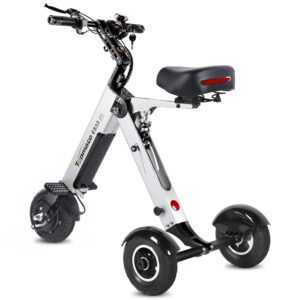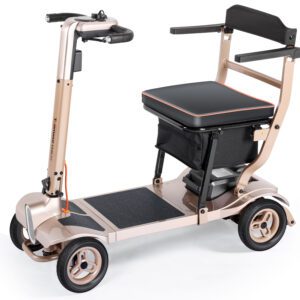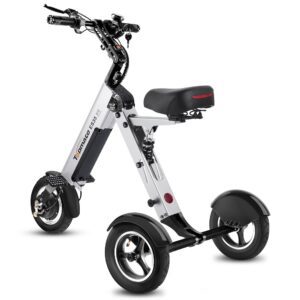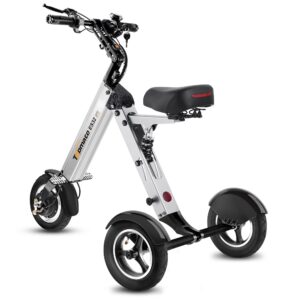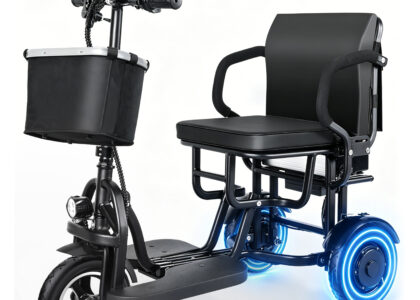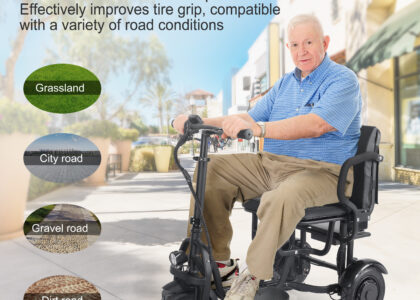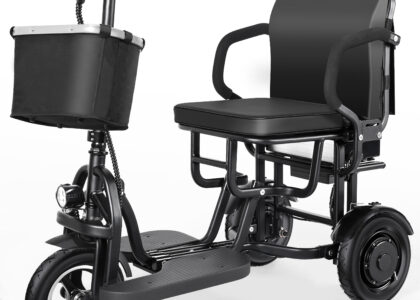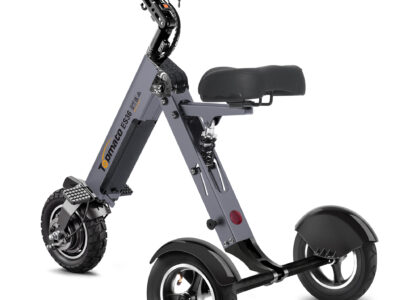
Choosing the best mobility scooter indoors is less about maximum speed or long-range travel and more about how easily the scooter can move through the spaces you use every day. For seniors, caregivers, and family members, the important questions are practical: Can it get through the doorway? Can it turn in a hallway? Will it fit inside an elevator? Can the rider control it smoothly around furniture and people?
For indoor use, prioritize width, overall length, turning behavior, low-speed control, stability, and portability before comparing range or top speed.
What Makes a Scooter Easy to Maneuver Indoors?
Indoor riding is different from outdoor riding. Outside, a scooter may have plenty of room to accelerate, turn, or avoid obstacles. Inside a home, apartment, retirement community, office, or shopping center, the available space is often fixed.
A rider may need to:
- Turn around a kitchen counter
- Enter a bathroom or bedroom
- Navigate a narrow hallway
- Position the scooter inside an elevator
- Pass through a doorway without hitting the frame
- Maneuver around shopping displays or other customers
- Stop and reverse in a crowded area
This is why a scooter that performs well outdoors is not automatically the easiest scooter to use indoors.
The best choice is the one that fits the rider’s actual environment without sacrificing necessary stability or control.
The Specifications That Matter Most
Turning Radius
Turning radius is one of the most useful specifications for indoor maneuverability. It describes how much space a scooter needs to make a turn.
A smaller turning radius generally makes tight corners easier. However, buyers should not estimate turning radius from photographs, width, or overall length. Manufacturers do not always publish this measurement.
For example, TopMate publishes a minimum turning radius of ≤1,200 mm (47.2 inches) for the four-wheel ES40. For models where the manufacturer does not provide a verified turning-radius figure, treat it as not specified rather than assuming it is exceptionally tight.
A useful test is to identify the tightest turn in the rider’s normal route and compare that space with the manufacturer’s maneuverability information.
Steering and Low-Speed Control
Indoor riding requires precision.
A scooter may have a high maximum speed, but that does not make it better for a crowded hallway or store. The rider needs predictable acceleration, responsive steering, easy braking, and controlled reversing.
Some models offer multiple speed settings. For example, TopMate’s ES15 provides three speed settings of approximately 3, 7, and 15 mph, plus reverse functionality.
For indoor use, the lowest controllable speed is often more useful than the highest available speed.
Stability
Compactness should not come at the expense of confidence.
Three-wheel scooters can be attractive for tight spaces because their configuration can support maneuverability. Four-wheel scooters can provide a different stability profile, particularly for riders who feel more comfortable with four points of contact.
The right choice depends on the rider, floor conditions, route, and how confidently they can control the scooter.
A compact scooter that feels unstable to the rider is not a good indoor scooter simply because it has a small footprint.
Weight and Portability
Weight becomes important when the scooter must be folded, stored, transported, or moved without the rider.
The TopMate ES33 has a published net weight of 35.4 lb, while the ES35 is listed at about 37.5 lb in current manufacturer documentation.
The ES40 weighs 38.36 lb without its battery.
Remember that a listed scooter weight does not always include the battery. Always check what the manufacturer’s weight figure represents before deciding whether one person can safely handle it.
Which Type of Rider Needs Which Setup?
1. Small Apartment Resident
If the scooter will be used mainly inside a small apartment, prioritize width and turning space.
Measure the narrowest doorway, hallway, kitchen route, and elevator entrance. Storage is another consideration. A folding model can be useful when there is limited floor space.
The ES33 is worth considering in this situation because its published unfolded width is 20.8 inches, while its folded dimensions are approximately 15.7 × 20.8 × 33.6 inches.
2. Retirement Community Resident
A retirement community may combine private rooms with hallways, elevators, lounges, dining areas, and common rooms.
Here, the scooter needs to be narrow enough for corridors but also predictable around other residents. Low-speed control and braking may matter more than maximum range.
A rider should also practice turning and reversing before using the scooter in busy communal areas.
3. Shopping Center User
Shopping centers provide more open space but introduce different challenges: people, displays, checkout areas, elevators, automatic doors, and narrow aisles.
A scooter with simple controls and predictable low-speed response can be easier to manage than one chosen primarily for speed.
The ES15, for example, uses a three-wheel layout, joystick control, adjustable speed settings, and reverse functionality. Its manufacturer lists a 56.88-lb weight without battery and a 300-lb maximum load.
4. Mixed Indoor/Outdoor User
Someone who moves from an apartment to sidewalks, shopping areas, appointments, and occasional outdoor paths needs a compromise.
The TopMate ES40 is an example of a different approach: it uses four wheels, weighs 38.36 lb without the battery, supports up to 275.6 lb, and has a published minimum turning radius of ≤1,200 mm.
Its lower maximum speed and four-wheel configuration may appeal more to someone prioritizing controlled mobility than fast travel.
Mobility Scooter Comparison
| Characteristic | What Indoor Buyers Should Look For | Example: ES33 | Example: ES35 | Example: ES40 |
|---|---|---|---|---|
| Overall width | Narrow enough for actual doorways | 20.8 in | 22.6 in | 18.1 in |
| Unfolded length | Shorter can simplify positioning | 37.2 in | 38.98 in | 40.16 in |
| Wheel configuration | Match maneuverability and stability needs | 3-wheel | 3-wheel | 4-wheel |
| Turning radius | Manufacturer-published figure preferred | Not specified | Not specified | ≤47.2 in |
| Weight | Important for moving and transport | 35.4 lb | 37.5 lb | 38.36 lb without battery |
| Folding | Useful for storage/transport | Yes | Yes | Yes |
| Indoor suitability | Especially useful where space is limited | Strong fit | Strong fit | Good for controlled mixed use |
| Best use case | Compact indoor/travel use | Small spaces | Indoor + portable travel | Indoor/outdoor + stability |
Specifications above are based on TopMate’s published manuals and product information; where a measurement is not published, it is deliberately shown as not specified rather than estimated.
Best Options for Different Indoor Situations
Small Apartment
Look first at width, turning behavior, and folded storage dimensions. A lightweight three-wheel folding model such as the ES33 can make sense when compactness is a major priority.
Retirement Community
Prioritize controlled steering, predictable braking, width, and stability. The smallest scooter is not necessarily the best if the rider does not feel confident operating it.
Shopping Center
Look for easy low-speed control and manageable dimensions. Speed should not be the deciding factor. The ability to make controlled turns around people and displays is more relevant.
Mixed Indoor/Outdoor Use
Consider the ES40 if four-wheel stability, folding portability, and a published turning-radius specification are important. Its design is more about controlled mobility and transport than high-speed travel. best mobility scooter indoors
Common Buying Mistakes
Choosing by weight alone: A lightweight scooter can be easier to transport but may not provide the stability or capacity the rider needs.
Ignoring width: Measure the narrowest doorway and not just the main entrance.
Assuming three wheels automatically mean a tiny turning radius: Wheel configuration can influence maneuverability, but the manufacturer’s actual measurements matter more.
Buying for outdoor performance when most riding is indoors: Long range, high speed, and large tires may matter less than precise control and compact dimensions.
Forgetting elevators: Measure both the elevator doorway and the interior floor space. The scooter needs room not only to enter but also to position itself.
Assuming folded dimensions describe riding space: Folded dimensions are useful for storage and transportation. Unfolded dimensions determine whether the scooter can actually move through the home.
How to Make the Final Choice
Start with the rider’s route rather than the product catalog.
Measure the narrowest doorway, the tightest corner, elevator entrance, elevator interior, hallway, and storage area. Then compare those measurements with the scooter’s unfolded width, length, turning radius, and folded dimensions.
Next, consider the ride Do they feel stable on the scooter? Can they safely handle its weight when it needs to be folded or moved? best mobility scooter indoors
For many indoor users, the best mobility scooter for indoor maneuvering is not the fastest or longest-range model. It is the scooter that fits the environment, responds predictably at low speeds, provides enough stability, and can be handled comfortably every day.
That is the standard worth using when comparing compact mobility scooters for homes, apartments, retirement communities, elevators, and busy indoor spaces.
FAQ
What makes a mobility scooter easy to maneuver indoors?
A mobility scooter is easier to maneuver indoors when it has a compact width, a tight turning radius, predictable low-speed control, and comfortable steering. These features help when navigating hallways, furniture, doorways, elevators, and crowded indoor spaces.
Is a 3-wheel or 4-wheel mobility scooter better for indoor use?
A 3-wheel mobility scooter often offers easier maneuvering in tight spaces because of its turning design. A 4-wheel scooter can provide greater stability and may be preferable for riders who regularly transition between indoor areas and outdoor surfaces.
How wide should a mobility scooter be for indoor use?
There is no single ideal width for every home. The scooter should be narrower than the doorways and passages it needs to use, while still providing enough space for comfortable and stable riding. Measure doorways, hallways, elevator entrances, and tight corners before buying.
What is the best mobility scooter indoors for small spaces?
The best mobility scooter indoors for a small space is one that combines a compact footprint, manageable turning behavior, simple low-speed controls, and easy storage. A narrower folding model can be especially useful for apartments where storage and maneuvering space are limited.