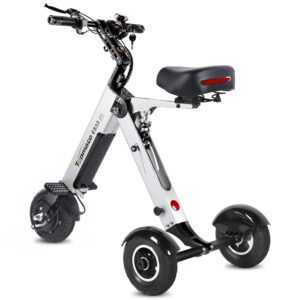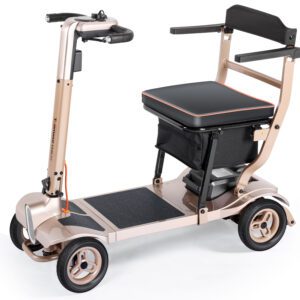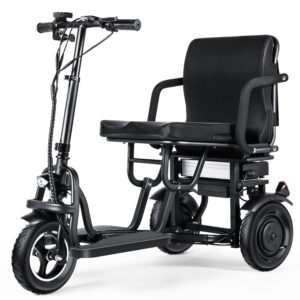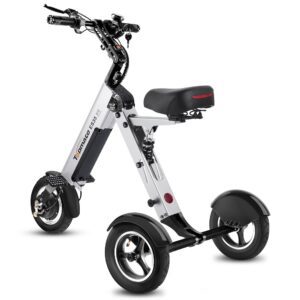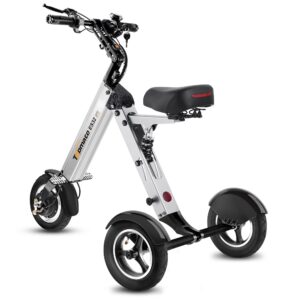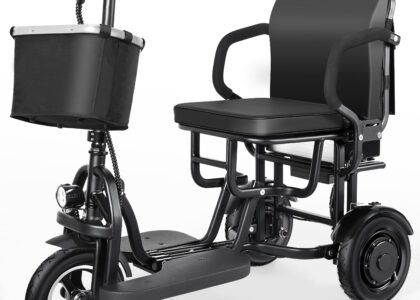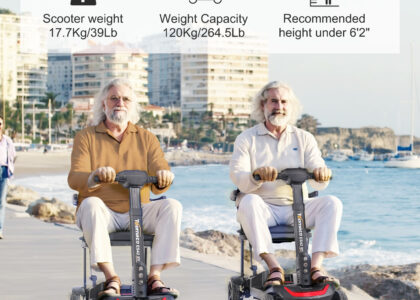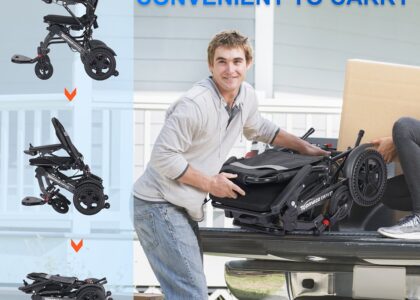
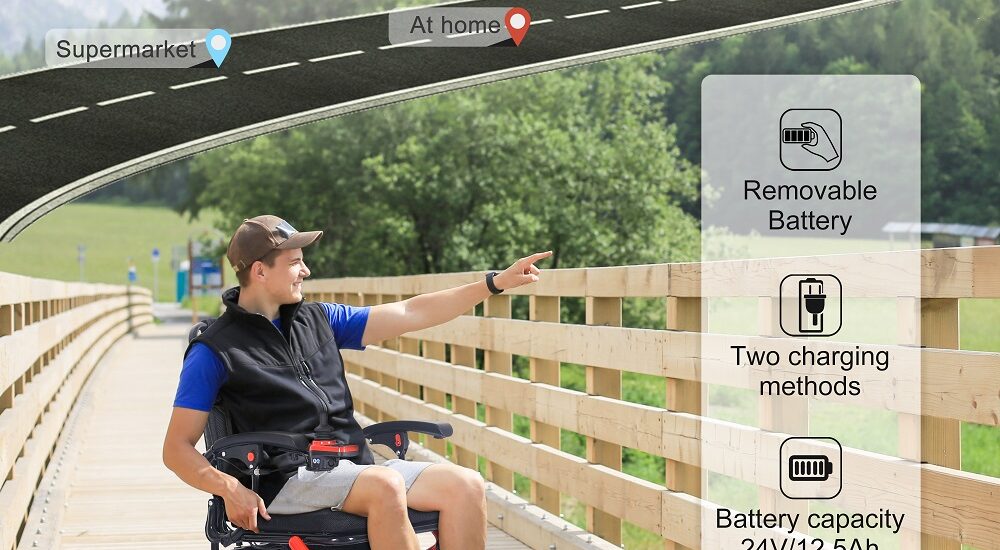
A mobility scooter can handle your daily route when its real-world range, width, turning radius, ground clearance, weight capacity, hill-climbing ability, and terrain capability match the conditions you actually travel through. Do not rely only on advertised speed or battery range. Measure your route and compare each section with the scooter’s specifications.
Start With the Route, Not the Scooter
A specification sheet tells you what a scooter can do under particular test conditions. Your daily route tells you what it needs to do in real life.
Consider this typical journey:
Home → doorway → sidewalk → uneven pavement → small hill → road crossing → grocery store → parking area → home
Instead of asking, “Is this scooter powerful enough?”, break the journey into sections and identify the requirement at each point.
For example, suppose the complete round trip is 4 miles. The scooter may advertise a range of 10 miles, but that does not automatically mean you have 6 miles of dependable spare capacity.
Rider weight, hills, frequent stops, rough pavement, temperature, tire condition, speed, battery age, and repeated acceleration can all affect practical range.
The goal is therefore to create a route audit before buying.
Route Audit: What Should You Check?
| Route section | What to measure | Scooter specification to check | Possible problem |
|---|---|---|---|
| Home doorway | Narrowest opening | Scooter width | Scooter cannot pass through |
| Sidewalk | Width and obstacles | Overall width, turning radius | Difficult maneuvering |
| Uneven pavement | Surface condition | Ground clearance, tires, suspension | Bumping or reduced stability |
| Small hill | Slope/grade | Hill-climbing capability | Reduced speed or difficulty climbing |
| Road crossing | Distance and surface | Speed, braking, stability | Crossing may take longer than expected |
| Grocery store | Aisle/turning space | Turning radius, width | Difficult turns |
| Parking area | Surface and slope | Ground clearance, traction | Rough or inclined surface |
| Return trip | Total distance | Practical battery range | Insufficient remaining charge |
This approach gives you a much more useful answer than simply comparing advertised top speeds.
1. Home: Can You Get the Scooter Out?
Start at the point where the scooter will normally be stored.
Measure the narrowest doorway, not just the main entrance. Include doors between rooms, exterior doors, gates, and any narrow passage the scooter must use.
For example, if the narrowest doorway is 30 inches wide, a scooter measuring 27 inches wide has approximately 3 inches of total clearance.
That may be workable, but it leaves little room for steering errors or door frames that narrow the usable opening.
Also check the storage area. A scooter that fits through the door may still be difficult to park, fold, or turn around inside the home.
Check:
- Narrowest doorway
- Hallway width
- Storage footprint
- Space needed to turn
- Charging location
2. Sidewalk: Is the Scooter Narrow Enough?
Once outside, measure the usable sidewalk width.
Do not measure only the paved section. Consider poles, trash cans, parked vehicles, landscaping, mailboxes, and other obstacles that reduce usable space.
A scooter with a 26-inch overall width may technically fit on a 36-inch path, but frequent obstacles can make the route feel much narrower.
The turning radius becomes important when the rider needs to turn around, enter a driveway, avoid an obstacle, or navigate a tight corner.
If possible, measure the tightest turning area on the route.
3. Uneven Pavement: Look Beyond the Range Number
A route can be short but demanding.
Cracked sidewalks, curb transitions, gravel, broken pavement, grass edges, and uneven paving can place more demands on the scooter than a smooth road.
This is where ground clearance, tire design, wheel configuration, and suspension become relevant.
For example, if a route contains a raised surface or uneven section approximately 2 inches high, compare that obstacle with the scooter’s stated ground clearance and operating guidance.
Do not assume that a scooter designed for outdoor use can safely cross every type of rough surface.
The question is not simply, “Does it have suspension?” It is whether the scooter is appropriate for the specific surface and obstacles on your route.
4. Small Hill: Measure the Actual Slope
A “small hill” can mean very different things to different people.
If possible, determine the slope or grade of the steepest section. A smartphone measurement tool, mapping information, or a simple physical measurement can help identify the approximate grade.
Suppose your route contains a hill with a 6% grade. Compare that figure with the manufacturer’s stated hill-climbing capability.
Also consider what happens when the hill is combined with other conditions.
A scooter may manage a particular grade under ideal conditions, but performance can change with:
- Higher rider weight
- Loose or wet surfaces
- Low battery
- Frequent stopping
- Heavy cargo
- Cold temperatures
- Tire-pressure problems
Never treat a maximum climbing specification as a guarantee that every rider will experience the same performance. mobility scooter daily route
5. Road Crossing: Think About the Whole Crossing
At a road crossing, the important question is not simply how fast the scooter travels.
Measure the approximate crossing distance and consider whether the route includes a curb ramp, uneven transition, slope, or waiting area.
For example, a 40-foot crossing may require more time than expected if the rider slows down near traffic or needs to stop and start.
Braking, steering control, visibility, and stability can therefore matter as much as top speed.
Always follow local traffic and accessibility rules and use designated crossings where available.
6. Grocery Store: Can It Turn and Maneuver?
Inside the grocery store, the challenge changes.
The scooter may have plenty of outdoor capability but still be awkward in narrow aisles.
Check the turning radius and overall width against the spaces you regularly use. Look at checkout areas, entrances, automatic doors, elevator doors, and the space around shopping carts.
If you normally carry groceries on the scooter, include their weight in your calculations.
For example:
Rider: 190 lb
Personal items: 10 lb
Groceries: 15 lb
Total operating load: 215 lb
Compare the total with the scooter’s stated weight capacity. Do not calculate capacity using body weight alone.
7. Parking Area: The Return Trip Still Counts
After shopping, the scooter may need to travel across a parking lot before starting the journey home.
Check for slopes, potholes, loose surfaces, drainage channels, and uneven transitions.
Most importantly, remember that the battery has already been used.
A route that works perfectly on the outward journey may become less comfortable if the battery is significantly depleted before returning home.
Sample Route Calculation
Suppose:
- Home to grocery store: 2 miles
- Grocery store to home: 2 miles
- Total round trip: 4 miles
- Advertised scooter range: 10 miles
It might appear that the scooter has a 6-mile buffer.
However, suppose you conservatively estimate that real-world conditions reduce usable range by 25%.
10 miles × 0.75 = 7.5 miles of estimated practical range
The 4-mile journey would leave approximately:
7.5 − 4 = 3.5 miles of estimated remaining range
This is only an example, not a guaranteed battery calculation. Actual range can vary substantially depending on conditions and battery age.
For a frequently used route, it is sensible to leave a meaningful margin rather than planning to arrive home with almost no charge remaining.
Measure Your Route Before You Buy
Use this checklist to record the route before comparing scooters.
Printable Route-Audit Checklist
Distance
-
One-way distance: ______ miles
-
Round-trip distance: ______ miles
-
Extra stops/detours: ______ miles
Access
-
Narrowest doorway: ______ inches
-
Narrowest path: ______ inches
-
Tightest turning area: ______ inches
Terrain
-
Steepest slope: ______% grade
-
Roughest surface: __________________
-
Largest obstacle/transition: ______ inches
-
Wet, gravel, grass, or loose surfaces: Yes / No
Load
-
Rider weight: ______ lb
-
Typical carried items: ______ lb
-
Total operating load: ______ lb
Battery
-
Advertised range: ______ miles
-
Estimated practical range: ______ miles
-
Charging location: __________________
-
Charging available during route: Yes / No
Storage
-
Storage location: __________________
-
Charging outlet available: Yes / No
-
Scooter can fit through storage access: Yes / No
What About Advertised Specifications?
Treat specifications as reference points, not guarantees.
Manufacturers typically publish performance figures based on particular testing conditions. Your daily route can be different.
Range can be affected by rider weight, cargo, terrain, temperature, speed, stopping and starting, tire condition, battery condition, and hills.
Similarly, a published hill-climbing figure does not mean every rider should expect identical climbing performance.
The most useful approach is to compare specifications with measured route conditions and then leave a practical margin.
The Simple Decision Rule
After measuring your route, look for mismatches rather than trying to find the scooter with the biggest numbers. mobility scooter daily route
If the scooter is wider than a doorway, range is too close to the round-trip distance, ground clearance is unsuitable for your roughest section, weight capacity is too close to the actual operating load, or the steepest hill exceeds its stated capability, that is a clear reason to reconsider that particular model.
A scooter does not need the highest advertised specifications. It needs specifications that fit the route you actually use.
That makes route planning a more useful starting point than choosing a scooter based on speed, range, or appearance alone.
FAQ
How much extra range should I allow for a daily mobility scooter route?
There is no universal amount of extra range that guarantees a trip will be completed safely. Instead, avoid planning around the scooter’s maximum advertised range. Consider hills, rider weight, carried items, temperature, speed, frequent stops, tire condition, battery age, and possible detours. Leaving a reasonable reserve is better than relying on the maximum figure.
How do I know if my doorway is wide enough for a mobility scooter?
Measure the narrowest usable part of the doorway and compare it with the scooter’s overall width. For example, a 30-inch doorway and a 27-inch-wide scooter provide about 3 inches of total clearance. Also consider the approach angle, door frame, threshold, and whether there is enough space to turn into or out of the doorway.
Does rider weight affect mobility scooter range?
Yes. Rider weight and carried items can affect energy consumption and practical battery range. If a rider weighs 190 pounds and carries 20 pounds of groceries or other items, the operating load is approximately 210 pounds. Compare the total load with the scooter’s stated weight capacity and consider it when assessing expected range.
Should I measure my daily route before buying a mobility scooter?
Yes. Measuring your regular route can reveal issues that product specifications alone cannot show. Record the total distance, narrowest doorway or path, steepest slope, roughest surface, tightest turning area, charging opportunities, and storage location. You can then compare those measurements directly with the scooter’s specifications.