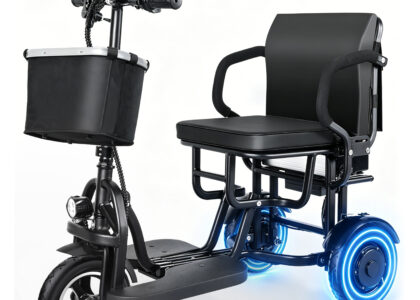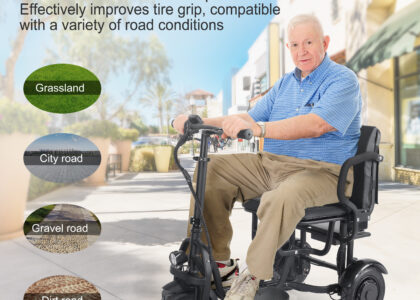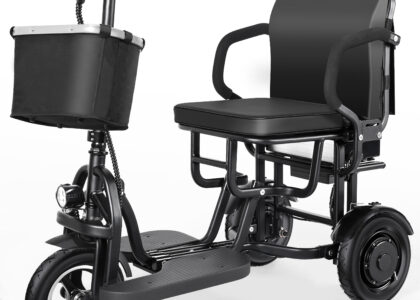
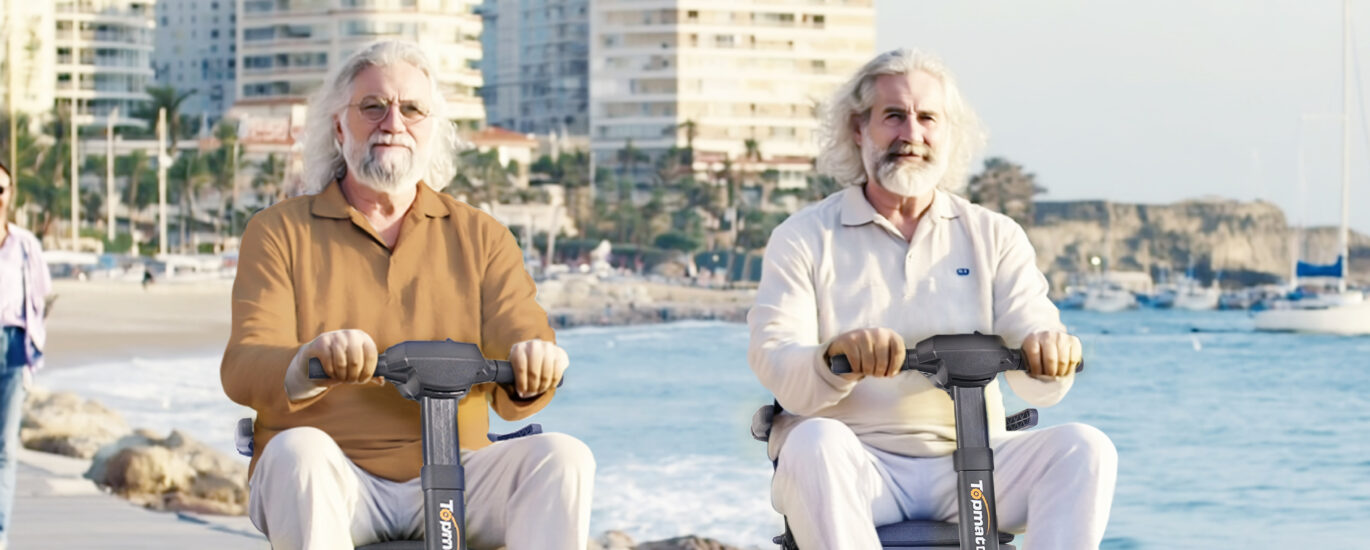
Attending an outdoor event sounds simple until you think about the actual journey. A short community event may involve a few paved paths and a nearby parking space. A full-day festival can mean several hours of riding, crowds, food stalls, uneven surfaces, and a long walk between parking and activities. A large outdoor fair may require even more battery capacity and comfort.
The Scooter You Need Depends on the Event
Before choosing a scooter, ask what your typical event day actually looks like.
If you attend a neighborhood gathering for an hour or two, a compact folding scooter may be more practical than a larger model. If you spend most of the day at a festival, seating comfort, battery planning, and terrain become more important. Meanwhile, an outdoor market may require excellent maneuverability because of narrow aisles and crowds.
The right decision starts with the situation.
The 5 Outdoor Event Situations
1. Short Local Event
What you may encounter:
A community concert, neighborhood celebration, church event, school gathering, or local outdoor meeting may involve paved paths, parking areas, sidewalks, and relatively short distances.
What matters:
Prioritize maneuverability, easy controls, compact dimensions, and transportability.
What can become inconvenient:
A large scooter may be difficult to load into a vehicle or maneuver around parked cars and groups of people when you only need it for a short outing.
What type makes sense:
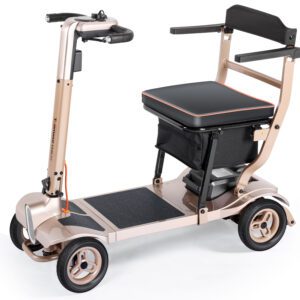
A lightweight folding mobility scooter is often practical when transportation and storage are major concerns. The scooter does not need exceptionally long range if the event is close and the riding distance is modest.
2. Large Festival or Fair
What you may encounter:
Large festivals can involve long pathways, crowds, frequent stops, food and merchandise areas, and several hours away from home.
What matters:
Battery planning, comfortable seating, maneuverability, and suitable tires become increasingly important.
What can become inconvenient:
A scooter with insufficient real-world range may require an inconvenient recharge. A seat that feels comfortable for 30 minutes may become less suitable after several hours.
What type makes sense:
Look for a scooter with enough published range to cover the planned outing with a reserve. Remember that manufacturer range figures can vary in real use because of rider weight, terrain, speed, temperature, tire condition, and stop-and-go riding.
3. Outdoor Market
What you may encounter:
Farmers markets, craft fairs, street markets, and seasonal markets often combine outdoor paths with narrow spaces, pedestrians, displays, and frequent turns.
What matters:
Compact dimensions, responsive steering, controlled speed, reverse capability, and storage.
What can become inconvenient:
A scooter that is physically wide or difficult to turn can make crowded market areas frustrating.
What type makes sense:
A compact three-wheel folding scooter can make sense when maneuverability is a priority. However, riders should compare the actual dimensions and handling characteristics rather than assuming every three-wheel model has the same turning performance.
4. Community Gathering
What you may encounter:
Outdoor community gatherings often take place at parks, recreation areas, retirement communities, or neighborhood centers. You may travel from parking to the event, remain seated for a while, then move between different activity areas.
What matters:
Comfort, battery reliability, storage, and easy controls.
What can become inconvenient:
A scooter that is difficult to operate at low speed can be awkward around pedestrians. Limited storage can also become inconvenient if you carry personal belongings.
What type makes sense:
Choose a model that balances portability with comfortable riding. For recurring community events, the scooter should also fit easily into your normal storage and transportation routine.
5. Event Requiring Substantial Walking Between Parking and Activities
What you may encounter:
Large fairgrounds, outdoor exhibitions, sporting events, tourist attractions, and sprawling festival grounds can require significant travel before you even reach the main activity.
What matters:
Range, seating comfort, tire size, terrain capability, and battery planning.
What can become inconvenient:
A compact scooter may be easy to transport but less appropriate if the route involves long distances over uneven surfaces or moderate inclines.
What type makes sense:
For extended outdoor distances, compare larger wheels, published gradeability, tire design, weight capacity, and seating before prioritizing minimum carrying weight.
Outdoor Event Decision Matrix
| Event type | Main challenge | Important scooter characteristics | What to prioritize |
|---|---|---|---|
| Short local event | Short trip and transportation | Lightweight, folding, maneuverable | Portability |
| Large festival or fair | Long day and greater distance | Range, seating, tires, controls | Battery + comfort |
| Outdoor market | Crowds and tight spaces | Compact size, maneuverability, reverse | Handling |
| Community gathering | Mixed riding and waiting | Seat comfort, storage, controls | Ease of use |
| Long parking-to-event distance | Extended outdoor travel | Range, wheels, terrain capability | Endurance + terrain |
What Matters Most — Ranked
1. Maneuverability
Outdoor events are rarely empty spaces. You may encounter pedestrians, tables, parked vehicles, barriers, and narrow pathways.
A scooter that is easy to position and control at low speed can be more useful than one with impressive headline specifications. Overall width and wheel arrangement both matter, but do not assume a published wheel count alone tells you the complete steering experience.
2. Battery Planning
Range becomes especially important when an event lasts several hours.
Do not plan to use the manufacturer’s maximum range down to the final mile. Leave a practical reserve because hills, heavier loads, frequent stops, higher speeds, and surface conditions can reduce actual range.
3. Transportability
If someone must load the scooter into a vehicle before every event, transportation becomes part of the buying decision.
Check the actual lifting weight, folded dimensions, vehicle opening, and cargo space. A scooter can be technically foldable while still being difficult for one person to lift repeatedly.
4. Seating
Outdoor events can involve several hours of riding or waiting. Seat design, back support, foot positioning, and overall riding posture therefore matter more for long events than for a quick local visit.
5. Terrain Capability
Paved sidewalks and smooth event pathways are very different from grass, gravel, slopes, or uneven ground.
Look at wheel size, tire design, gradeability, ground clearance, and the manufacturer’s stated limitations. Do not interpret an “off-road” tire description as permission to ride on any terrain.
6. Storage
A small storage area can be useful for personal belongings, but do not overload it. Added weight affects the scooter’s total load and can influence handling and range.
7. Controls
Crowded events reward simple, predictable controls. Adjustable speed settings can also be useful when moving between open pathways and pedestrian-heavy areas.
When a Lightweight Scooter Makes More Sense
A lightweight folding mobility scooter makes particular sense when the event itself is only part of the journey.
For example, imagine a senior attending a weekend craft fair. The scooter must be lifted into an SUV, removed at the venue, folded again for storage, and loaded after the event. In that situation, saving weight may matter more than having the largest battery or frame.
The same logic applies to users who:
- Frequently travel by car
- Have limited storage space
- Attend relatively short events
- Need to combine scooter use with other travel
- Have someone assisting with loading but still need manageable equipment
Portability should always be judged against the person’s actual ability to lift and transport the scooter.
When You May Need Something Larger
A lightweight folding scooter is not automatically the right choice for every outdoor event.
A larger or more substantial scooter may make more sense when you regularly travel long distances outdoors, encounter uneven surfaces, need greater seating support, or require a higher weight capacity.
This is particularly important for large fairgrounds or outdoor venues where the rider may spend most of the day on the scooter.
For example, TopMate’s ES36 uses 10-inch off-road pneumatic front tires and has a published 15.5–18.6-mile range, while the ES35 uses 10-inch wheels and has a published 15.53–18.64-mile range.
TopMate Options for Different Situations
Once the decision framework is clear, several TopMate models illustrate how different specifications can suit different event situations.
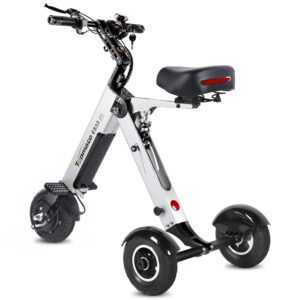
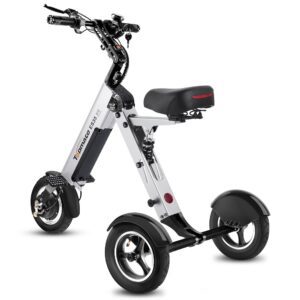
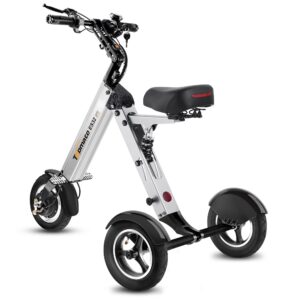
TopMate ES33: Its 35.4-lb published weight, 220.4-lb maximum load, 8-inch wheels, folding dimensions of approximately 15.7 × 20.8 × 33.6 inches, and stated 15.53–18.64-mile range make it worth considering when compact transportation and maneuverability are important.
TopMate ES35: The current published specifications include a 250W brushless motor, 10-inch wheels, approximately 37.5-lb net weight, 220.4-lb maximum load, and 15.53–18.64-mile stated range. Its folding design can suit event-goers who frequently transport the scooter by vehicle.
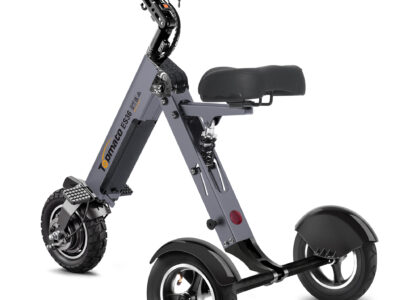
TopMate ES36: This model puts more emphasis on outdoor-oriented tires while remaining foldable. TopMate lists a 39.2-lb configuration, 220.5-lb load capacity, 10-inch off-road pneumatic front tires, and a 15.5–18.6-mile stated range. That combination may be relevant for events involving maintained uneven outdoor surfaces.
TopMate ES15: For riders who need a higher published load capacity, the ES15 lists a 300-lb maximum load, 10-inch pneumatic tires, dual 250W motors, and approximately 16–19 miles of stated range. Its higher transport weight means the trade-off should be considered carefully.
Final Recommendation
There is no single mobility scooter that is automatically the right choice for every outdoor event.
For short local events, prioritize portability and maneuverability. large festivals and fairs, give more weight to battery planning, seating, and terrain capability. And for events involving long distances between parking and activities, range and outdoor capability deserve greater priority.
The best mobility scooter for outdoor events is therefore the one whose specifications match the event you actually attend—not simply the scooter with the longest range, largest motor, or lightest frame.
FAQ
What is the best mobility scooter for outdoor events?
The best mobility scooter for outdoor events depends on the event, travel distance, terrain, and transportation needs. A lightweight foldable scooter can make sense for short events and easy vehicle transport, while a larger model may be more suitable for longer outings or uneven outdoor surfaces.
What should I look for in a mobility scooter for outdoor festivals?
Look for good maneuverability, sufficient battery range, comfortable seating, suitable tires, easy-to-use controls, and enough portability for your transportation needs. Also consider how far you may need to travel between parking areas, entrances, and activities.
How much battery range do I need for an outdoor event?
Choose a scooter with enough claimed range to cover your expected trip with a reasonable reserve. Real-world range can be lower because of rider weight, terrain, speed, temperature, stop-and-go riding, tire condition, and battery age.
Are lightweight mobility scooters good for outdoor events?
Yes, lightweight mobility scooters can be practical for outdoor events when portability and vehicle transportation are priorities. However, riders who regularly travel over rougher terrain, longer distances, or for extended periods may prefer a model with larger tires, more substantial seating, or greater outdoor capability.