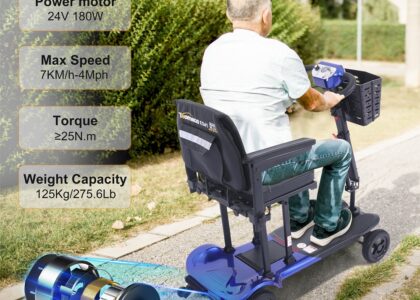
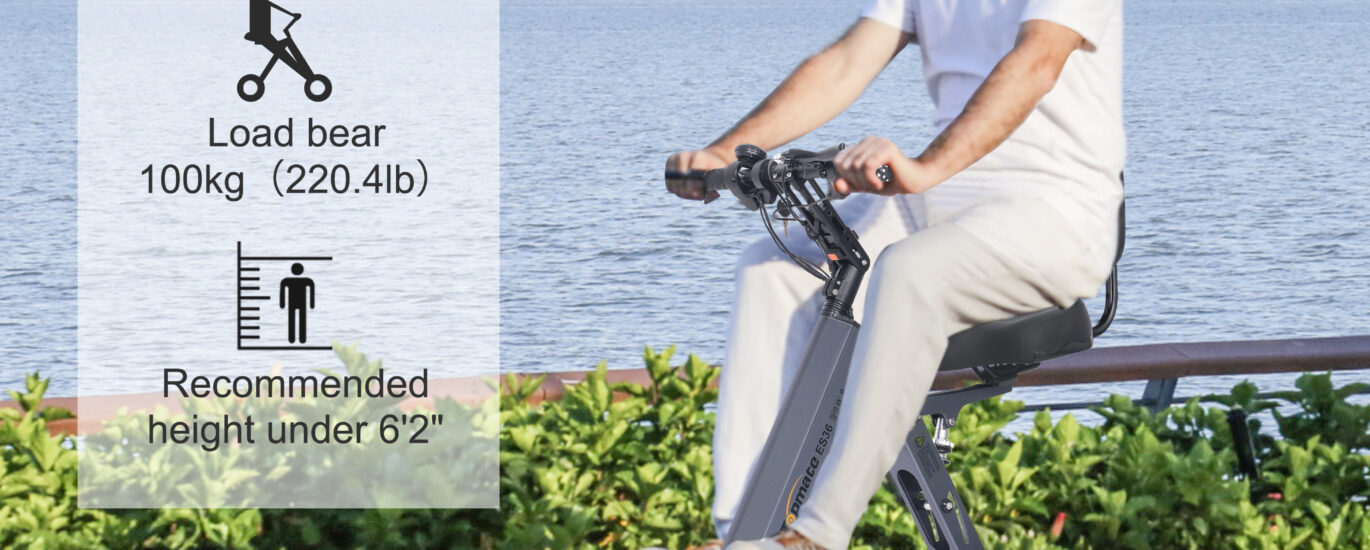
A mobility scooter for small apartment living should be chosen around folded size, storage footprint, and ease of handling—not simply the scooter’s advertised weight. A compact folding model with a manageable folded profile, removable battery, and easy folding mechanism can make daily storage much easier in studios, condos, retirement communities, and other limited spaces.
Key Takeaways
- Folded dimensions can matter more than total scooter weight when closet or entryway space is limited.
- Measure your actual storage area and doorways before choosing a scooter.
- A removable battery can make carrying and charging more convenient.
- Consider where the scooter will be stored every day, not just where it fits temporarily.
- The best small-space mobility scooter is the one you can comfortably fold, move, store, and retrieve as part of your normal routine.
What Makes a Mobility Scooter Good for a Small Apartment?
Living in a small apartment changes the buying decision. A scooter that works well outdoors may become inconvenient if it blocks a hallway, cannot fit through an interior doorway, or takes up most of a bedroom corner.
For apartment living, look beyond the scooter’s riding specifications.
The most important questions are:
- How much space does it occupy when folded?
- Can I move it without assistance?
- Where will I store it every day?
- Can I get it through my apartment doorway and into an elevator?
- How easy is it to fold and unfold?
- Can the battery be removed for charging?
A compact mobility scooter should fit naturally into your home rather than forcing you to reorganize your living space around it.
Folded Dimensions vs. Overall Weight
One of the easiest mistakes is assuming that the lightest scooter is automatically the best choice for a small apartment.
That is not always true.
Imagine two scooters. One is slightly lighter but remains relatively long when folded. Another weighs somewhat more but folds into a shorter, narrower package.
If your main problem is where to put the scooter, the second option may be more practical.
Why folded dimensions matter
Folded dimensions determine whether the scooter can fit:
- Beside an entryway cabinet
- Inside or near a closet
- In a bedroom corner
- Under or beside suitable furniture
- In a utility area
- In an elevator without creating unnecessary obstruction
Weight becomes especially important when you regularly need to lift the scooter into a vehicle or carry it up steps.
Therefore, think of the decision this way:
Storage problem → prioritize dimensions.
Frequent lifting problem → prioritize weight.
Both problems → look for a balance between the two.
The Storage Features That Actually Matter
1. Folded Dimensions
Always check the manufacturer’s listed folded length, width, and height.
Do not rely on descriptions such as “compact” or “space-saving.” Measure the actual storage location and compare those measurements with the folded scooter.
2. Overall Footprint
Even when a scooter folds, consider how much floor space it occupies while stored.
A scooter that is technically compact can still become inconvenient if it sticks into a walkway.
3. Weight
Weight matters when you need to reposition the scooter frequently.
However, a heavier scooter with a convenient folding design may sometimes be easier to manage than a lighter scooter with an awkward shape.
4. Removable Battery
A removable battery can be useful when the scooter is stored away from a convenient electrical outlet.
Instead of positioning the entire scooter beside a wall outlet, you may be able to remove the battery and charge it separately, depending on the scooter’s design and manufacturer instructions.
5. Folding Mechanism
Think about how often you will fold the scooter.
If you fold it once every few weeks, a slightly more involved mechanism may not matter much.
If you fold it every morning and evening, simplicity becomes much more important.
Where Can You Store a Scooter in a Small Apartment?
Entryway
An entryway can be convenient because the scooter is ready when you leave.
However, make sure it does not block the main walking path, door swing, emergency access, or other residents’ shared areas.
Bedroom Corner
A bedroom corner can work well when the scooter is folded tightly enough to avoid interfering with furniture.
This is particularly useful when the apartment does not have a dedicated storage room.
Closet
A closet can provide excellent protection from clutter, but never assume a folding scooter will fit.
Check the door opening, internal width, depth, and available height—not just the closet’s advertised dimensions.
Under or Near a Table
Some very compact folded scooters may fit underneath or beside suitable furniture.
Before using this option, make sure there is enough clearance and that the scooter can be retrieved without awkward lifting or bending.
Utility Area
A utility or laundry area can be practical if it has sufficient floor space and a safe charging arrangement.
Keep the scooter and battery away from water, excessive heat, and anything that could damage the electrical components.
Balcony
A balcony may appear to be an easy storage solution, but it is not automatically appropriate.
Only consider outdoor storage if the scooter and battery manufacturer permits it and the space protects the equipment from rain, extreme temperatures, moisture, and direct exposure. Building rules may also restrict balcony storage.
Real-Life Apartment Scenarios
1. Senior Living in a Studio Apartment
For a studio resident, every square foot matters.
A small-space mobility scooter with a compact folded profile may be preferable because it can be stored in a bedroom corner or near an entryway without dominating the room.
Here, folded dimensions should be one of the first specifications checked.
2. A Couple Sharing a Small Apartment
A couple may already have limited storage for furniture, household equipment, and personal belongings.
The scooter should have a predictable storage location that does not interfere with the other person’s daily movement.
A compact folding scooter can be especially useful if it can be stored against a wall or in an unused corner.
3. Scooter Stored Near the Entrance
For someone who uses a scooter several times a day, storing it close to the apartment entrance can save effort.
However, the storage position should not block the doorway or hallway.
The ideal setup allows the scooter to be unfolded without moving several pieces of furniture first.
4. Retirement-Community Resident
A retirement-community resident may need to navigate an apartment door, corridor, elevator, and shared spaces.
In this situation, consider both the scooter’s folded dimensions and its maneuverability when moving it through common areas.
Also check community rules regarding scooter storage and charging.
5. Someone Who Folds the Scooter Every Day
Daily folding changes the priority list.
For this user, the folding mechanism, manageable weight, battery arrangement, and ease of retrieving the scooter may matter as much as its folded size.
A scooter that technically fits a closet is not a good solution if folding it every day is frustrating or physically difficult.
Apartment Storage Decision Matrix
| Apartment situation | Most important characteristics |
|---|---|
| Very small studio | Small folded dimensions, narrow footprint |
| Limited closet space | Compact folded height and depth |
| Daily folding | Easy folding mechanism, manageable weight |
| Frequent vehicle travel | Low carry weight, removable battery |
| Elevator building | Folded dimensions, doorway clearance |
| Entryway storage | Compact footprint, easy access |
| Limited charging locations | Removable battery, suitable charging setup |
| Retirement community | Easy storage, doorway access, elevator compatibility |
How to Measure Your Storage Space Before Buying
Do this before ordering a scooter.
Step 1: Measure the storage area
Record:
- Width
- Depth
- Height
Leave some extra clearance rather than buying something that fits exactly.
Step 2: Measure the doorway
Measure the clear opening, not simply the door itself.
Check both your apartment entrance and any interior doorway the scooter must pass through.
Step 3: Check elevator access
If you live above the ground floor, consider the elevator door opening and interior floor space.
The scooter may need to enter the elevator unfolded or folded, depending on your building and personal needs.
Step 4: Identify the charging location
Decide whether the scooter itself will be charged in storage or whether the battery can be removed and charged elsewhere.
Never place a charger where it creates a trip hazard.
Step 5: Test the daily routine
Ask yourself:
Can I retrieve the scooter, unfold it, use it, fold it, and store it again without moving half of my apartment?
If the answer is no, the scooter may not be the right fit.
TopMate Models as Small-Space Examples
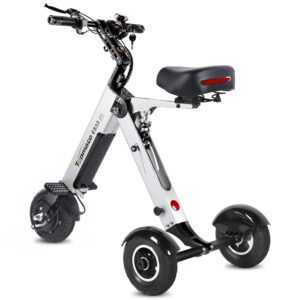
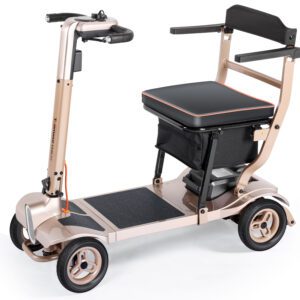
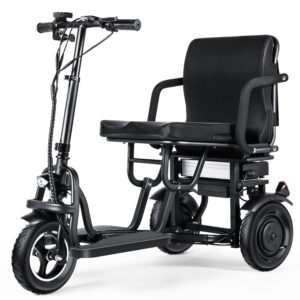
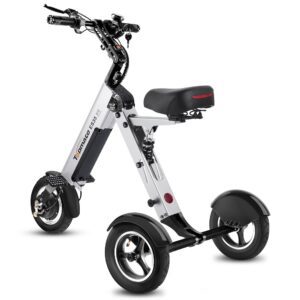
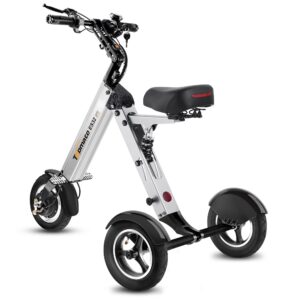
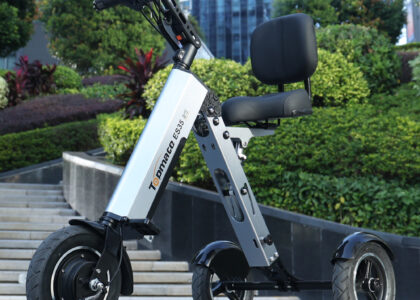
TopMate offers several folding scooter designs that can be considered when apartment storage is an important requirement.
For example, the TopMate ES15, ES35, ES36, and ES40 represent different compact-scooter approaches. Rather than choosing between them solely by model name, compare their current manufacturer specifications for folded dimensions, weight, battery configuration, and folding method against your available storage space.
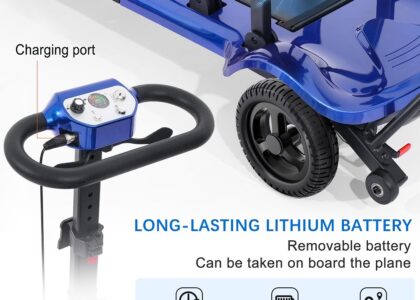
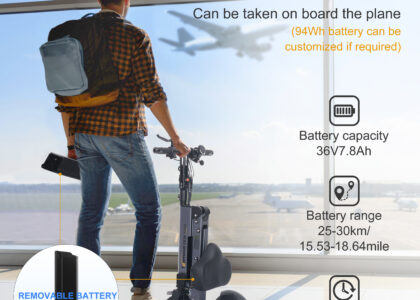
The ES40, for example, is designed around portability and folds into a relatively compact form. Its removable lithium battery can also be relevant for users who prefer charging flexibility. However, buyers should still measure their intended storage location and confirm the current specifications before purchasing.
The important lesson is that a product being marketed as portable does not automatically mean it will fit your particular closet, doorway, or apartment.
Common Storage Mistakes to Avoid
Choosing only by weight
A lightweight scooter may still occupy too much space when folded.
Assuming “folding” means “closet-friendly”
Different folding scooters have very different folded shapes.
Measuring only the closet
The scooter has to reach the closet first. Check hallways, doors, corners, and elevator access.
Ignoring daily use
A storage solution that works occasionally may become frustrating when used twice every day.
Forgetting charging
A convenient storage location is not useful if the charging setup is unsafe or impractical.
Buying before measuring
This is perhaps the biggest mistake. Take measurements first, then compare them with the manufacturer’s specifications.
How I’d Choose a Mobility Scooter for Small Apartment Living
Start with the storage location, not the scooter.
If you have a studio apartment, prioritize the smallest practical folded footprint. If you need to carry the scooter frequently, give more attention to weight. If you fold it every day, prioritize an easy folding mechanism. If your apartment is in a high-rise, consider doorway and elevator access.
FAQ
What is the best type of mobility scooter for a small apartment?
A compact folding mobility scooter is often the most practical option because it can reduce the amount of floor space required for storage. The right choice depends on folded dimensions, weight, folding ease, doorway access, and where you plan to keep it.
Can a folding mobility scooter fit in a closet?
Some can, but you should never assume it will. Measure the closet’s clear opening, internal width, depth, and height, then compare those measurements with the scooter’s folded dimensions.
Is scooter weight or folded size more important for apartment living?
It depends on your situation. Folded size is usually more important when floor or closet space is the main problem. Weight becomes more important if you frequently lift or carry the scooter.
Can I store a mobility scooter in an apartment entryway
An entryway can be a convenient storage location if there is enough room and the scooter does not block doors, hallways, emergency routes, or shared access areas. Check your building’s rules before using common areas.
Should I remove the battery when storing a mobility scooter?
If the scooter has a removable battery, removing it may make charging more convenient. Follow the manufacturer’s instructions for battery storage, charging, temperature, and handling.