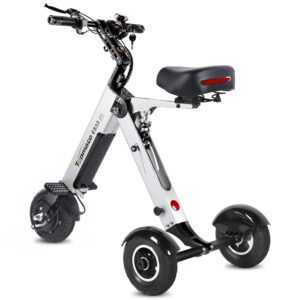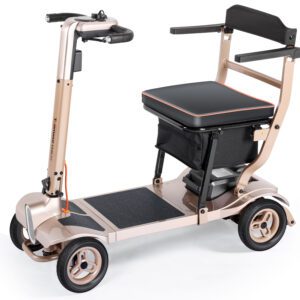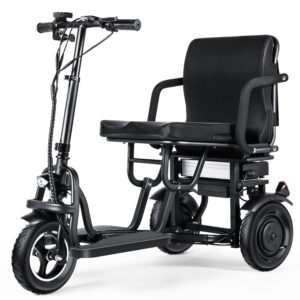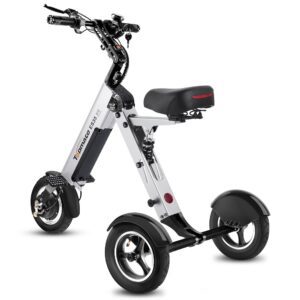
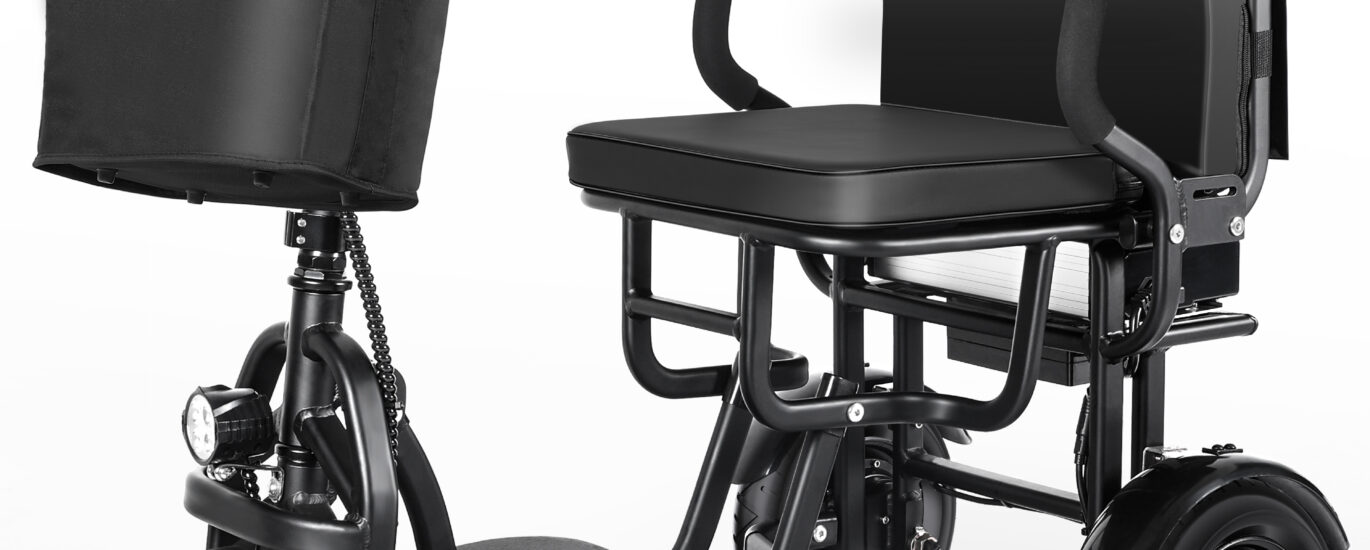
Quick Answer: A folding mobility scooter can make a weekend road trip much easier, but the scooter itself is only part of the planning. Vehicle space, lifting weight, battery handling, charging, realistic range, weather, hotel access, and destination surfaces all matter. After one weekend trip, I learned that planning how I would use the scooter was just as important as choosing it.
Key Takeaways
- Measure your vehicle’s cargo area before the trip, including the height and width of the opening.
- Check the scooter’s folded dimensions and actual lifting weight, not just its advertised portability.
- Plan charging around the trip rather than assuming the battery will always have enough range.
- Protect the folded scooter from suitcases, groceries, and other heavy luggage.
- Check hotel entrances, elevators, room access, and storage options before arriving.
- Expect different surfaces at attractions, restaurants, sidewalks, and parking areas.
- Build extra time into stops so you are not forced to walk farther than expected.
- Keep basic backup equipment and emergency contact information with the scooter.
1. Planning the Trip
I thought planning a weekend road trip would be simple.
The destination was only a few hours away, and I had a folding mobility scooter that I could take in the car. My original plan was basically: pack the scooter, put it in the trunk, drive to the hotel, and use it whenever I got tired.
That turned out to be too vague.
Before leaving, I should have looked at the entire trip as a series of mobility decisions. How far would I walk at the roadside attractions? Would the hotel have an elevator? Where could I charge the scooter? Would the sidewalks at the destination be smooth?
A folding mobility scooter road trip is easier when these questions are answered before departure.
2. Packing the Scooter
The first surprise came while packing.
A folding scooter takes up much less space than a full-size mobility scooter, but “folding” does not automatically mean effortless. I had to think about where I could safely grip the scooter, how I would lift it, and whether I needed help getting it into the vehicle.
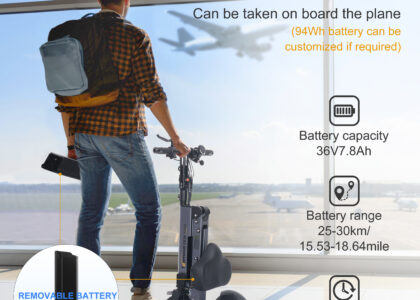
I also packed the charger and made sure the battery was handled according to the manufacturer’s instructions.
For a portable mobility scooter, I recommend making a simple checklist:
- Scooter and key
- Battery
- Charger
- User manual or important specifications
- Any required mobility accessories
- Basic tools or manufacturer-recommended spare items
- Phone and emergency contacts
The goal is not to pack every possible accessory. It is to avoid discovering that one small but important item is missing after you have already left home.
3. Loading the Car
This was probably the most useful lesson of the weekend.
I had measured the trunk, but I had not considered the shape of the folded scooter plus the luggage.
Once the suitcases were inside, the scooter had fewer places to go than I expected.
For mobility scooter car travel, measure more than the trunk’s total capacity. Check the cargo opening, rear-seat configuration, and the space available when other passengers and luggage are included.
I placed the scooter where it would not be crushed or hit by luggage. Heavy bags went around it rather than on top of it.
If the scooter or battery is removable, follow the manufacturer’s instructions for removing and transporting those components. Do not assume every scooter or battery should be handled in exactly the same way.
4. The Drive
The drive itself was uneventful, which was exactly what I wanted.
However, I realized that the scooter did not need to be immediately accessible while driving. What mattered was keeping it secure and protected from shifting luggage.
I also planned stops based on my own comfort rather than simply the car’s fuel range.
That changed the trip. Instead of thinking, “We can drive another 100 miles,” I started thinking, “Where can I safely stop, rest, use the restroom, and get back on the road without creating another long walk?”
That is a much better way to plan a mobility scooter for road trips.
5. First Stop: The Roadside Attraction
Our first stop was a small roadside attraction.
I expected to get out, look around for ten minutes, and leave. Instead, the parking area was farther from the main viewing area than I expected.
The scooter immediately proved its value.
6. Hotel Arrival
The hotel was another lesson.
The entrance was accessible, but I had not thought about where the scooter would go once we reached the room.
Fortunately, the folded scooter could be stored without taking over the room.
Next time, I would confirm several things before booking:
- Accessible entrance
- Elevator availability if needed
- Doorway and room access
- A safe place to store the folded scooter
- A suitable electrical outlet for charging
- Parking close enough to the entrance to minimize unnecessary walking
A hotel can be technically accessible while still being inconvenient for someone using a mobility scooter.
7. Sightseeing: The Visitor Center
The next morning, we visited a large visitor center.
This was where I most appreciated having a folding scooter for travel.
The building looked compact from outside, but once inside, there were long corridors, several exhibits, and a large gift shop.
I did not need to move quickly. I needed to turn comfortably, stop safely, and navigate around people.
8. Downtown and Restaurant Stop
Later that day, we explored a downtown area and stopped at a restaurant.
The restaurant itself was accessible, but the sidewalk outside was uneven in places.
I also discovered something I should have considered earlier: a scooter is useful only where you can actually use it.
Some surfaces may be unsuitable because of loose gravel, steep slopes, wet conditions, narrow pathways, steps, or other obstacles.
9. Charging Overnight
That evening, I charged the scooter.
This sounds obvious, but it is easy to overlook after a long day.
I had used the scooter several times, and the next day’s plans included another attraction. I did not want to start the morning wondering whether I had enough battery.
Charging overnight gave me a fresh starting point.
I also realized that advertised range should be treated as a planning reference, not a promise that every trip will achieve exactly that distance. Terrain, rider weight, speed, temperature, battery condition, and riding conditions can affect actual performance.
For longer trips, I would build a reasonable reserve rather than planning to use every last mile of available range.
10. The Second Day
On day two, I changed my approach.
Instead of deciding at each location whether I needed the scooter, I planned ahead.
For a shopping area, I considered the distance from parking to the entrance. For another attraction, I checked the walking route. At the hotel, I used the scooter for longer corridors rather than saving it for when I was already tired.
That small change made the day less tiring.
A mobility scooter is not necessarily something you use only after your legs are exhausted. For many travelers, using it earlier can help conserve energy for the entire day.
11. The Trip Home
The trip home was much easier to organize.
I already knew how the scooter fit into the vehicle. where the charger was packed. I knew how much space the luggage required.
Most importantly, I did not leave the scooter buried underneath everything else.
The return journey reminded me that a good road-trip setup should be repeatable. If packing the scooter requires completely rearranging the vehicle every morning, the system is probably too complicated.
How I’d Plan the Next Road Trip
My next folding mobility scooter road trip would start with this checklist.
Vehicle Space
- Measure the trunk or cargo area.
- Measure the opening, not just interior volume.
- Account for passengers and luggage.
- Practice loading and unloading before departure.
Scooter Weight
Know the actual lifting weight. If the scooter can be separated into lighter components, understand how those pieces are removed and carried.
Folded Dimensions
Check the folded length, width, and height. Compare those measurements with the vehicle’s usable cargo space.
Battery and Charging
- Confirm how the battery should be transported.
- Pack the correct charger.
- Know where overnight charging will happen.
- Check whether your destination has any battery-related restrictions.
- Do not plan a route that depends on reaching the theoretical maximum range.
Weather
Check the forecast before leaving and again during the trip. Rain, extreme temperatures, wet surfaces, and poor visibility can change how practical or safe a route is.
Destination Accessibility
Check entrances, elevators, sidewalks, parking, trails, visitor centers, restaurants, and other places you expect to visit.
Hotel Storage
Confirm where the scooter can be stored and charged. If you are unsure about room access, ask the hotel before booking.
Emergency Planning
Carry the manufacturer’s recommended backup items, keep important contact information available, and know what you will do if the scooter develops a problem.
What I Wish I Had Planned Differently
The biggest mistake I made was treating the scooter as another piece of luggage.
It was actually part of the trip’s transportation plan.
The best folding scooter for travel is not necessarily the one with the most features. It is the one whose weight, folded size, battery setup, range, and maneuverability fit the way you will actually travel.
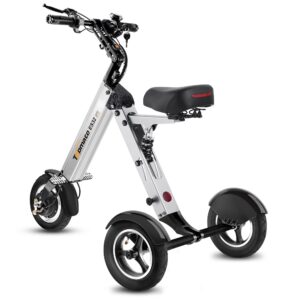
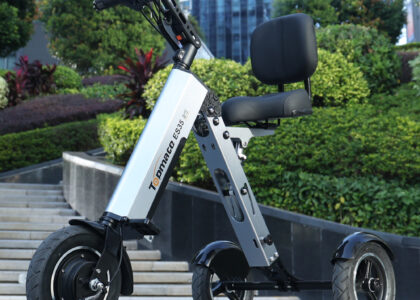
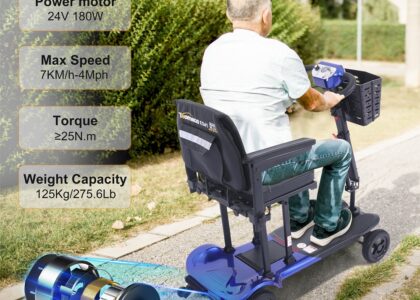
Models such as the TopMate ES15, ES35, ES36, and ES40 can be examples to consider when comparing portable scooters for car travel, but the right choice depends on the vehicle, traveler, destination, and expected daily use.
For a weekend trip, I would now spend as much time planning the routes and logistics as I spend choosing the scooter.
That is what makes the difference between simply bringing a mobility scooter and actually traveling comfortably with one.
Should I remove the mobility scooter battery during a road trip?
If the battery is removable, taking it out can make the scooter easier to handle and may help protect the battery during transportation. Follow the scooter and battery manufacturer’s instructions for storage and transport, and keep the battery secure rather than loose among luggage.
How much scooter range do I need for a weekend road trip?
Choose a scooter with enough range for your planned daily activities, not just the distance between destinations. Allow extra range for sightseeing, parking areas, shopping, and unexpected detours. It is also smart to identify where charging will be available at your hotel or destination.
What should I pack with a folding mobility scooter for a road trip?
Pack the charger, battery if removable, user manual, keys, any essential accessories, and basic items for protecting the scooter during transport. It is also helpful to carry a phone, emergency contact information, and a backup plan in case weather, terrain, or accessibility prevents you from using the scooter.
Can a folding mobility scooter fit in a car for a road trip?
Yes, many folding mobility scooters can fit in a car, but the available trunk or cargo space matters. Before leaving, measure the scooter when folded and compare those dimensions with your vehicle’s usable storage area. Also consider whether you can comfortably lift the scooter into and out of the car.